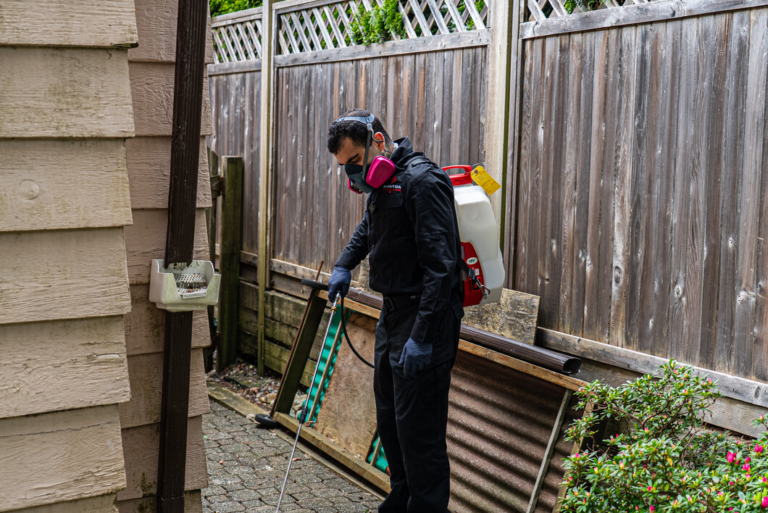

Summer pest control in Vancouver starts with knowing where to look. Indoors, watch for house spiders in basements and garages, bed bugs along mattress seams after travel, cluster flies on sunny upstairs windows, fleas in carpets and pet bedding, and cockroaches under kitchen and bathroom sinks. Outdoors, watch eaves, deck rails, garbage bins and holes in the lawn for yellowjackets and other wasps. Check the kitchen sink, the beds and the busiest door to the yard first.
If you find activity you cannot identify, our residential pest control in Vancouver starts with an inspection to confirm the pest and how it is getting in.
On this page6 sections
Five Pests to Watch for Indoors
Some of these pests follow the seasons and some do not. Spiders and cluster flies change with the weather. Bed bugs, fleas and indoor cockroach infestations can show up in any month, but summer travel, open windows and more time outdoors often bring them to your attention. For each one, here is a clue, a place to check and a sign worth a closer look.
House Spiders
Identifying clue: Brown, long legged spiders that run fast across floors at night, and funnel shaped webs low in corners. Most house spiders in the Lower Mainland are harmless to people.
Where to check: Basement and garage corners, window frames, behind stored boxes, and around doors to the yard.
Look closer if: Webs keep coming back in the same spots, you find round silk egg sacs, or spiders turn up alongside plenty of small flies, which means they have a steady food supply indoors.
Seasonal pattern: Sightings usually rise from late summer into fall, when males of some common house spiders wander indoors looking for mates. Our guides on how to keep spiders out of your home and spiders in your home this fall cover prevention, and our spider control in Vancouver service can confirm what you are seeing.
Bed Bugs
Identifying clue: Flat, oval, brown insects up to about 10 mm long that look reddish after feeding. Young bed bugs are about 1.5 mm and paler.
Where to check: Mattress seams and piping, box springs, bed frames, headboards, night tables and outlets near the bed, plus luggage after a trip.
Look closer if: You find live bugs, shed skins, or small dark spots on sheets and mattress seams. Bites alone are not enough to confirm bed bugs. Health Canada notes that reactions range from nothing at all to small skin marks and can take up to 14 days to appear, and many other insects bite too.
Seasonal pattern: Bed bugs are a year round problem. Summer travel and used furniture can bring them home, but warm weather does not cause them. Our article on signs of bed bugs shows what to check next, and our bed bug control in Vancouver service starts with confirming the problem.
Cluster Flies
Identifying clue: Larger and slower than house flies, dull grey with golden hairs on the back, and often found sluggish or dead on windowsills.
Where to check: Sunny upstairs and attic windows, window frames, light fixtures and the attic.
Look closer if: You find dozens at once, or they return to the same rooms every year.
Seasonal pattern: Cluster flies spend summer outdoors, where their larvae develop inside earthworms, so summer is usually not when you see the most of them indoors. From late summer, adults look for sheltered places to spend the winter, such as attics and wall voids, and then turn up at windows on warm days through fall, winter and spring. Sealing gaps around windows, soffits and utility openings before late summer helps, and our fly control services in Vancouver can help when they keep coming back.
Fleas
Identifying clue: Tiny, dark brown insects, flattened from side to side, that jump. Flea dirt looks like specks of black pepper that turn reddish when pressed on a damp white paper towel.
Where to check: Pet bedding, carpets and rugs where animals rest, upholstered furniture and the edges of floors. Walking across the carpet in white socks can show whether fleas are jumping on.
Look closer if: You see jumping insects or flea dirt, or bites keep appearing around the ankles and lower legs. As with bed bugs, bites alone do not confirm fleas.
Seasonal pattern: Warm weather and pets spending more time outdoors can make fleas more noticeable in summer, but an indoor flea problem can continue in any season. Our guide to bed bugs vs fleas explains how to tell them apart, and our flea control services in Vancouver cover the home as well as the yard.
Cockroaches
Identifying clue: German cockroaches, the species usually found living indoors, are light brown, about 13 to 16 mm long, with two dark stripes on the shield behind the head.
Where to check: Under kitchen and bathroom sinks, cabinet hinges, behind the fridge and stove, and around the dishwasher. Use a flashlight after dark.
Look closer if: You find droppings that look like ground pepper, light brown egg cases, small dark nymphs, or cockroaches out in daylight.
Seasonal pattern: An indoor German cockroach infestation is a year round problem, because heated homes keep them active in every season. One large, dark cockroach near a floor drain may be a different species, so check for the signs above before assuming an infestation. Our articles on signs of a cockroach infestation and what attracts cockroaches go further, and our cockroach control in Vancouver service begins with an inspection.
Summer Pests Around Yards and Patios
Outdoors, the summer pests most people notice are yellowjackets and other wasps around food, bins and doorways. Focus on what you can see, what draws them in and where they are coming from.
Yellowjacket colonies start in spring, when a single queen builds a nest, and grow through the summer. In BC and the Pacific Northwest they reach their largest numbers in late summer and early fall, which is when they become hard to ignore at patios and garbage bins. Researchers in the Journal of the Entomological Society of British Columbia describe the same late summer and early fall build up in the Lower Mainland.
Timing varies with weather and species. Oregon State University Extension notes that a warm, dry spring helps queens succeed and can lead to large populations in late summer, and that a hard freeze kills most of the colony so only new queens overwinter. Some yellowjackets nest underground or inside wall voids, while bald faced hornets build exposed paper nests in shrubs, trees and under eaves.
What to watch for:
- A steady line of wasps flying in and out of one spot, such as a hole in the lawn, a gap in siding or a vent.
- Wasps returning again and again to garbage and recycling bins, fallen fruit, pet food or drinks.
- A grey paper nest under eaves or deck rails, or inside a hedge.
- Wasps inside the house near one wall or ceiling, which can point to a nest in a wall void.
Food and garbage: Keep lids on bins, rinse recycling, pick up fallen fruit, cover food and drinks on the patio, and do not leave pet food outside.
Suspected nests: Keep people and pets away, and do not block the entrance or try to knock the nest down. Wasps are most defensive near the nest. Our guides on getting rid of wasp nests, a wasp nest under siding and why you should never remove a wasp nest yourself explain the next steps, and our wasp control in Vancouver service handles nests near entrances.
Summer Pest Prevention Checklist
Walk through these lists once in early summer and again in late summer. The indoor list covers where pests hide; the outdoor list covers what draws them toward the house.
Indoors
- Check mattress seams and luggage after every trip, and inspect used furniture before it comes inside.
- Look under kitchen and bathroom sinks for droppings, and fix drips and leaks.
- Store food in sealed containers and wipe up crumbs and grease.
- Vacuum carpets, rugs and pet bedding often, and keep pets on the flea prevention your vet recommends.
- Clear webs and clutter from basement and garage corners.
- Repair window screens and seal gaps around windows, soffits and utility openings before late summer.
Outdoors
- Keep lids on garbage, recycling and compost bins, and rinse containers.
- Pick up fallen fruit and cover food and drinks on the patio.
- Walk the yard and watch for steady wasp traffic at the ground, siding, eaves and vents.
- Trim shrubs back from the house and keep firewood and stored items away from the walls.
- Watch for animals denning under decks or in crawlspaces, which can bring fleas with them.
When to Call a Pest Professional
Book an inspection when the pest is hard to control with home measures, when activity keeps returning, or when a nest puts people at risk.
- Cockroach activity keeps coming back, or you see cockroaches in daylight.
- You suspect bed bugs because of live bugs, shed skins or dark spots on mattress seams.
- A wasp or yellowjacket nest is near a busy door, deck, play area or walkway, or inside a wall.
- Fleas persist after vacuuming and pet treatment, or you have fleas and no pets.
- Cluster flies return to the same rooms every year.
- Someone in the home is allergic to insect stings and there is a nest nearby.
Our article on when to call pest control covers broader warning signs. For pests that hide in the home in any season, see our guide to hidden pests in your home.
Conclusion: What to Check First at Home
Start with three checks this week: the cabinet under the kitchen sink, the seams of each mattress, and the eaves and bins near your busiest door. Note what you find, fix the food, water or entry point behind it, and watch the same spots for a week or two. If you find signs of bed bugs, cockroaches that keep coming back, or a nest near an entrance, request an estimate. We start by finding out what the pest is and how it is getting in.
Frequently Asked Questions
1. When are yellowjackets most active in Vancouver?
Yellowjackets are usually most active in Vancouver in late summer and early fall, typically August and September, when colonies reach their largest size. Colonies start in spring from a single queen and grow through the summer. A warm, dry spring can lead to larger numbers later in the year, and a hard frost ends the season for most workers. Exact timing shifts from year to year with the weather and varies between species.
2. Why do cluster flies gather around windows?
Cluster flies gather around windows because they are drawn to light and warmth after sheltering inside the house. From late summer, adults move into attics, wall voids and other protected spaces to spend the winter. Oregon State University Extension notes that they become active on warm days from early autumn to mid spring, especially around sunny windows, and that they do not breed in buildings. That is why most indoor sightings happen outside the summer months.
3. Can you get fleas without pets?
Yes, you can get fleas without pets. A common source is a previous occupant’s pet: Mississippi State University Extension explains that immature fleas left in a home can develop after the pets have moved out. Animals such as raccoons, squirrels or rats nesting under decks, in crawlspaces or in attics can also bring fleas, as can visiting pets and used rugs or upholstered furniture. Because many insects bite, confirm fleas by finding live fleas or flea dirt before treating.