Stored Product Pest Control in Vancouver, BC
Phantom Pest Control finds and treats stored product pests, the beetles, weevils and moths that breed in flour, grain, spices, nuts, dried fruit and pet food, for warehouses, food plants, grocers, restaurants and other businesses in Vancouver, BC and across the Lower Mainland and Fraser Valley. A site inspection is free for businesses, and a custom quote follows it.
- Fully licensed, insured and certified
- Read our Google reviews
- Inspection Free A site inspection for businesses, then a custom quote
- Stay out 6–8 hours After a treatment in a food business, as the kitchen preparation sheet asks; for other sites the inspection report lists it
- Hours Monday to Friday Office and Service Hours, 9Â AM to 5Â PM; open 24/7 for pre-arranged commercial services
- Area 24 communities From Squamish to Abbotsford
How to Identify Stored Product Pests
Stored product pests are the beetles, weevils and moths that breed inside dry food and other stored goods. The beetles drawn here are 2 to 4 mm long. The Canadian Grain Commission tells them apart by shape and marks: saw-toothed sides on one beetle’s thorax, the rice weevil’s four reddish patches, the Indian meal moth’s two-coloured wings.
Indian meal moth Plodia interpunctella
A 14 to 20 mm wingspan, with forewings cream to yellow near the body and coppery red to dark grey on the outer part. Only the larvae feed, covering cereal products, nuts, dried fruit, cocoa and spices in silky webbing, the Grain Commission notes.
Sawtoothed grain beetle Oryzaephilus surinamensis
Small, brown and slender, about 3 mm long, with serrated sides on the thorax. It infests oats, milled products, dried fruit and packaged foods, and builds up fast in heated buildings. The merchant grain beetle looks almost the same.
Red flour beetle Tribolium castaneum
Reddish brown, flat and about 4 mm long; the confused flour beetle looks the same. The Grain Commission finds it mostly in grain bins, elevators, railcars and mills, and occasionally in stores and warehouses; it eats flour, grain, beans, spices and chocolate and leaves a pungent smell. Red flour beetles fly; confused flour beetles don’t, B.C.’s household guide notes.
Cigarette beetle Lasioderma serricorne
Oval, reddish brown and 2 to 3.5 mm long, with saw-toothed antennae and smooth wing covers. Its larvae feed in tobacco, spices, seeds, dried leaves and dried meat, and burrow into packaging. It survives the winter only in heated buildings.
Drugstore beetle Stegobium paniceum
Oval, reddish brown and 2.5 to 3 mm long. Unlike the cigarette beetle, its antennae end in a 3-segment club and its wing covers are grooved. It infests spices, chocolate, seeds, flour, dog food and grain products, and adults chew holes in packaging as they come out.
Rice weevil Sitophilus oryzae
Dark brown and 2.5 to 4 mm long, with four reddish patches on the wing covers and, like most weevils, a long snout (NC State, North Carolina). Its larvae grow inside kernels of rice, wheat and barley and in pasta, so round exit holes are the sign. The granary weevil is plain dark brown, about 5 mm long, and can’t fly.
Warehouse beetle Trogoderma variabile
The larvae do the damage: hairy, with tufts of dense hairs on the last segments, and their cast skins are the clearest sign of an infestation. The adult is an oval beetle 2 to 4.6 mm long with lighter bands that feeds on nectar and pollen. Larvae feed in stored seeds, nuts, animal feed and packaged food.
Illustrations, drawn to one scale with a 5 mm bar; sizes are the Canadian Grain Commission’s, and the warehouse beetle is shown as its larva. Not drawn: spider beetles, which have more species in B.C. than in any other province and turn up in elevators, mills and warehouses, the Grain Commission notes.
Easy to Mistake for a Stored Product Pest
Psocids (booklice)
Tiny, 1 mm or less, soft and often see-through, with long thread-like antennae. The Grain Commission ties them to damp: grain over 14% moisture, humidity over 60% and mould. The Canadian Conservation Institute calls them a warning of damp.
Phorid, drain and fruit flies
Lots of small flies on stored-product traps point to a different problem, such as leaking product or dirty drains, TG 27 (a U.S. military guide) notes. They need a different treatment: see fly control.
Signs of Stored Product Pests in Your Stock
Webbing, larvae, cast skins and holes are the signs. The Grain Commission lists silky webbing, frass, cast skins and pupal cases for the Indian meal moth, holes chewed in packaging by drugstore beetles, round exit holes in kernels for weevils, and cast larval skins as the warehouse beetle’s clearest sign.
Points to stored product pests
- Silky webbing on flour, cereal, nuts or dried fruit, or clumped product
- Small moths flying in a storage area or around bulk dry goods
- Larvae, frass, cast skins or empty pupal cases in or on stock
- Small holes in cartons and bags, or round exit holes in grain
- Small brown beetles in product, on pallets or along shelf edges
- A pungent smell in flour or grain
- A few insects caught regularly at the same trap
Not on its own
- A small moth near wool, fur or fabric: it may be a clothes moth (moth control)
- Tiny pale insects on damp cartons: psocids, a sign of damp
- Small flies at drains or produce: fruit or phorid flies
- One or two insects at scattered traps: often strays, or arrivals on pallets and packaging
- Hairy larvae on wool, carpet or dead insects: carpet beetles (beetle control)
You can add a photo of the insect or the damaged product to your estimate request. Found them in a home kitchen? See pantry pest control.
Where Stored Product Pests Start in a Storage Area
Look where stock comes in, sits, spills or gets damaged. B.C.’s household pest guide warns that damaged packages can already be infested and bring the insects in, and that even a little spilled food can feed a population; CFIA’s guidance has incoming goods checked on arrival. The letters show where to look in a dry-storage bay.
Coming in
- A
Receiving dock
CFIA’s guidance for food businesses has incoming ingredients and materials checked for insects when they arrive, and docks kept free of spilled product. Check pallets for webbing, holes and live insects before stock goes into storage.
- B
Damaged packaging
Damaged packages can already be infested (B.C.’s household guide), and thin or broken packaging lets insects in (NC State, North Carolina). Cigarette beetle larvae burrow into packaging, and drugstore beetles chew holes in it as they come out.
Where it builds up
- C
Spillage under the racking
Spilled flour, grain or feed under the bottom beam feeds insects out of sight. Even a little spilled food can feed a population, B.C.’s household guide notes, and NC State (North Carolina) counts removing it among the most important steps.
- D
Wall–floor junction and floor joints
Dust and spilled product collect where the slab meets the wall and in floor joints. CFIA’s guidance has floor expansion joints checked and sealed, and Phantom’s preparation sheet asks for wall–floor junctions to be cleared before a treatment.
- E
Slow-moving stock
Product that sits longest gives insects time to build up. CFIA’s guidance has stock rotated so old product doesn’t build up, and NC State (North Carolina) advises first in, first out.
What it eats
- F
Pet food, seed and feed
Dry pet food, bird seed and animal feed are common sources. TG 27 (a U.S. military guide) hangs moth traps near dry pet food and cereal, and the Grain Commission lists animal feed for the warehouse beetle.
- G
Spices, cocoa and dried fruit
Cigarette and drugstore beetles infest spices, and Indian meal moth larvae feed on cocoa, chocolate, nuts and dried fruit, the Grain Commission notes.
What finds it
- H
Monitors
Lure traps show which species is present and roughly where: each lure is made for one species or a few close relatives (CCI). Beetle lures sit at floor level and moth traps hang higher, away from exterior doors (TG 27). On Warehouse & Storage Preventive Services visits, the technician reads them and the written report shows the trend.
At a dock door
Checking the floor gap at a warehouse roller door with a flashlight.
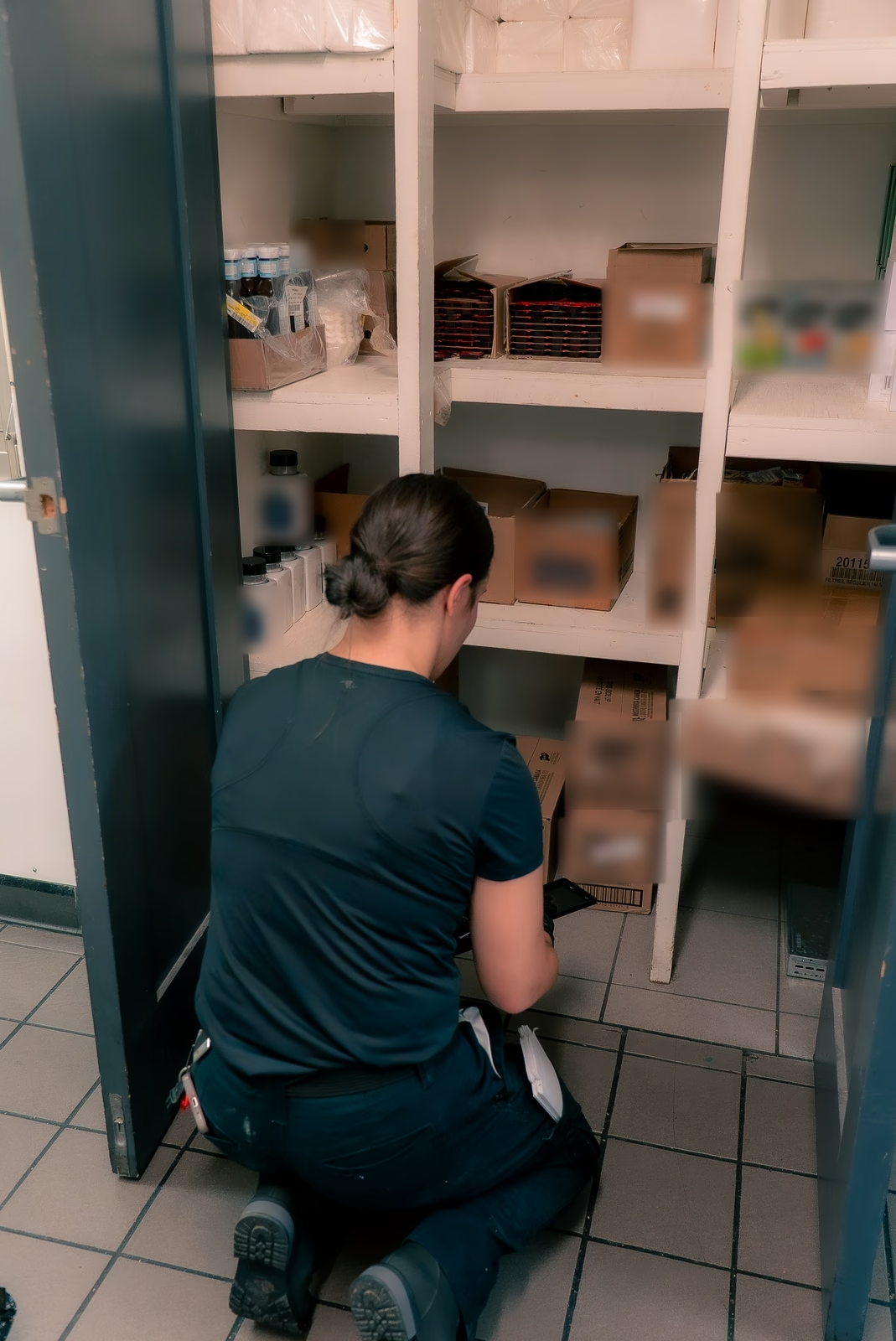
Under the shelving
Checking the floor under dry-storage shelving in a restaurant storeroom.
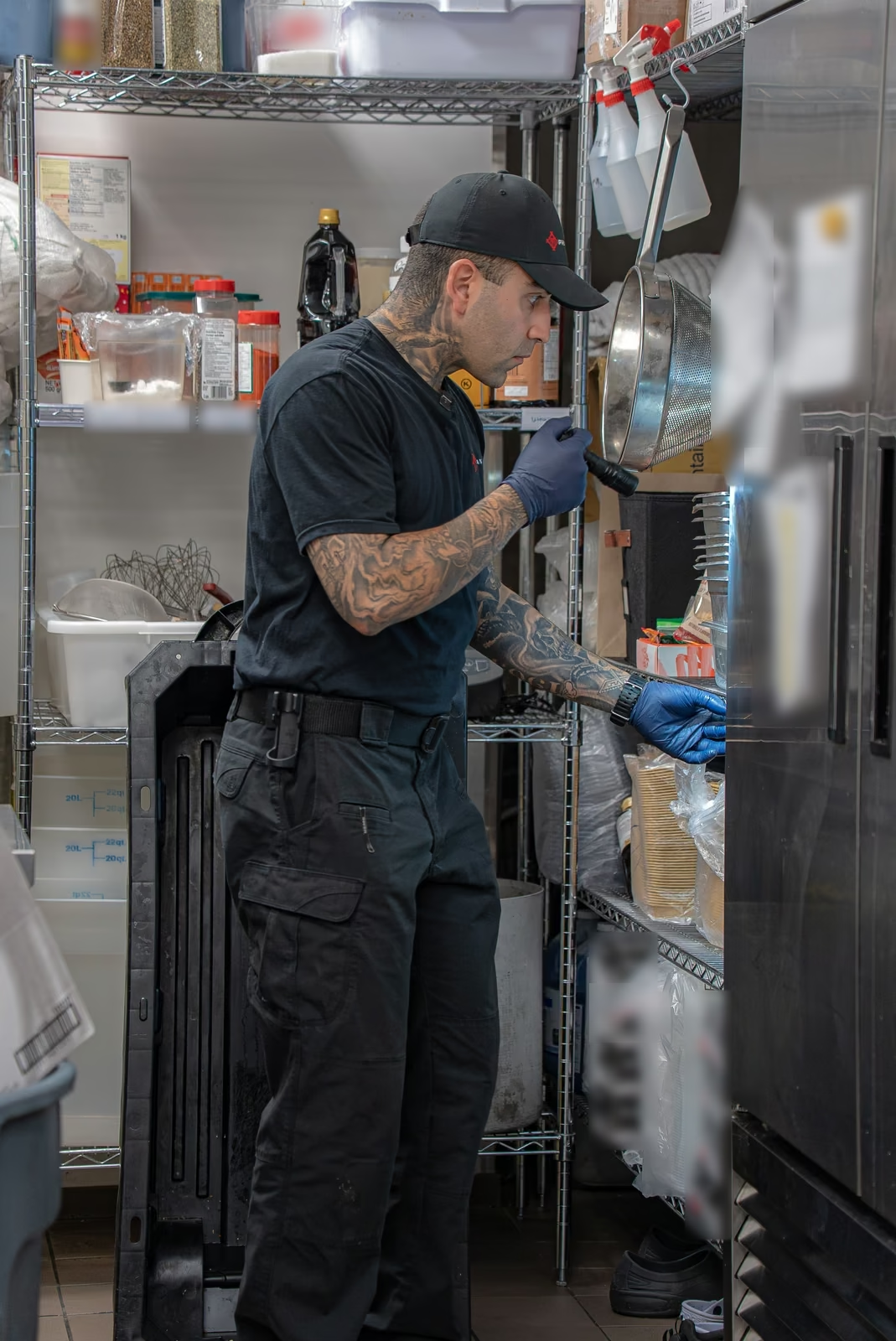
Along the shelves
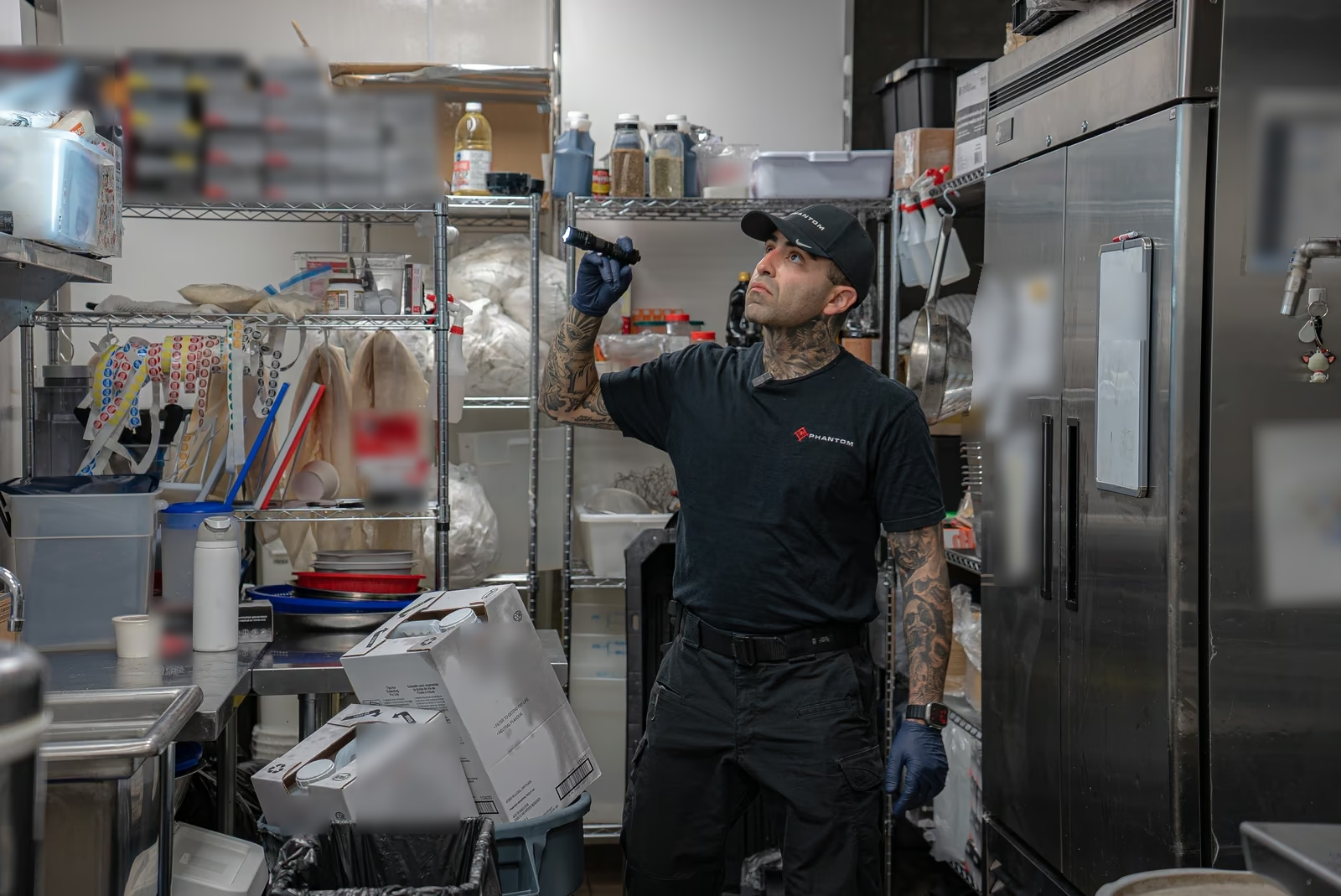
Inspecting wire shelving in a restaurant’s dry storage with a flashlight.

Our Stored Product Pest Control Process
A stored product job starts with a free commercial site inspection to find and identify the insect and its source. The infested product comes out, and the areas where the inspection finds activity get a targeted treatment. Food businesses prepare with Phantom’s kitchen sheet and keep the area empty for 6 to 8 hours afterwards.
Inspection
A free site inspection looks for activity, starting where the insects were found.
Identification
The insect is identified from specimens, damage and catches on glue boards or monitors, so the treatment fits the species.
Treatment
Once the infested product is out, a targeted treatment goes where the inspection found activity, after the area is prepared as the kitchen preparation sheet asks.
Report
A written service report is left after every commercial visit. Our monitoring programs add a numbered device map and trend summaries.
Kitchen and storage treatment Kitchen after-hours preparation sheet
- Area empty The kitchen preparation sheet asks for the area to be vacated for 6 to 8 hours after the treatment is complete.
- Ventilate Ventilate the area for 2 hours after the service, then sanitize counters, shelves and equipment.
- Baseboards No mopping or cleaning within 6 inches of treated baseboards and surfaces for at least 2 weeks.
Your booked service’s preparation sheet lists the exact steps for your site.
How to Prepare a Storage Area for Treatment
For food businesses, Phantom’s kitchen preparation sheet asks for everything to be done a couple of hours before the visit, so surfaces are dry: in storage areas, remove or cover open boxes, clear the floor and make the wall–floor junctions reachable. For warehouses and other sites, the inspection report lists your preparation.
Before the visit
- Remove or cover any open boxes
- Clear everything off the floor
- Make the wall–floor junctions reachable
- Clean the area, empty the trash and unlock storage rooms and offices
- Keep floors dry: don’t mop before the treatment
After the treatment
- Sanitize counter and shelf surfaces and equipment
- Flush drink dispenser nozzles and the coffee and tea machines
- Don’t use store-bought sprays or cleaners on treated areas
Stored Product Pest Control Cost for Businesses
For businesses, Phantom’s site inspection is free. After it you get a custom quote for the treatment and any monitoring program, based on what the inspection finds.
Businesses
- Commercial site inspection Free
Treatments and monitoring programs for businesses are quoted after the free site inspection, with the schedule set per site.
One Treatment or Ongoing Monitoring
A one-time treatment fits a single source found early. Sites that hold food in bulk, face audits or keep finding insects are better served by a scheduled program that keeps monitors in place and reports trends. The pages below cover each type of site.
One-time treatment
- When it fits One source found early, such as a single infested lot.
- What you get A free inspection, a targeted treatment where activity is found, and a written service report.
Warehouse & Storage Preventive Services
- Sites Warehouses, distribution centres, 3PL buildings and self-storage.
- Each visit Monitors in racking, returns and damaged-goods areas, with follow-up where moths or beetles show.
Food Facility Maintenance Program
- Sites Food plants, grocery stores and cold stores that hold food.
- Each visit In down-time or sanitation windows, never on running lines; nights and weekends by pre-arrangement.
Restaurant Pest Prevention Program
- Sites Restaurants, cafés, bakery-cafés, commissaries and their storerooms.
- Each visit An inspection that includes dry storage and walk-ins, and a written report after every visit.
Plants and farms
- Packaging and other plants Pheromone monitors for beetles and moths in raw materials and packaging stock (manufacturing pest control).
- Farms Feed rooms, bins and stored grain or seed: inspection, monitors and clean-out advice, no fumigation (farm pest control).
How to Keep Stored Product Pests Out of Your Stock
Keep stock moving, sealed and clean. B.C.’s household guide advises refusing damaged packages, storing dry food in hard containers with tight lids rather than plastic bags, cleaning up spilled food and using stored food within about 2 months. Monitors then show early which species is present and where. Our grocery store pest control tips put this in a store’s routine.
What helps in storage
- Check incoming product for insects when it arrives
- Refuse damaged packaging and replace torn bags
- Keep opened dry goods in hard plastic or glass containers with tight lids
- Clean up spills on the dock, under racking and along walls
- Use the oldest stock first: first in, first out
- Keep pallets off the floor and about 46 cm (18 in) from walls, with aisles to clean
- Check and seal floor joints, and keep wall–floor junctions reachable
- Match lure traps to the species you’re watching for
What Traps, Freezing and Sprays Can and Can’t Do
Pheromone traps
What it does Show which species is present and help find the source; each lure is made for one species or a few close relatives (CCI).
Where it falls short An Indian meal moth trap catches males only and won’t draw beetles (UC IPM, California), and even high-dose lures hold an infestation down without ending it (TG 27).
Glue boards
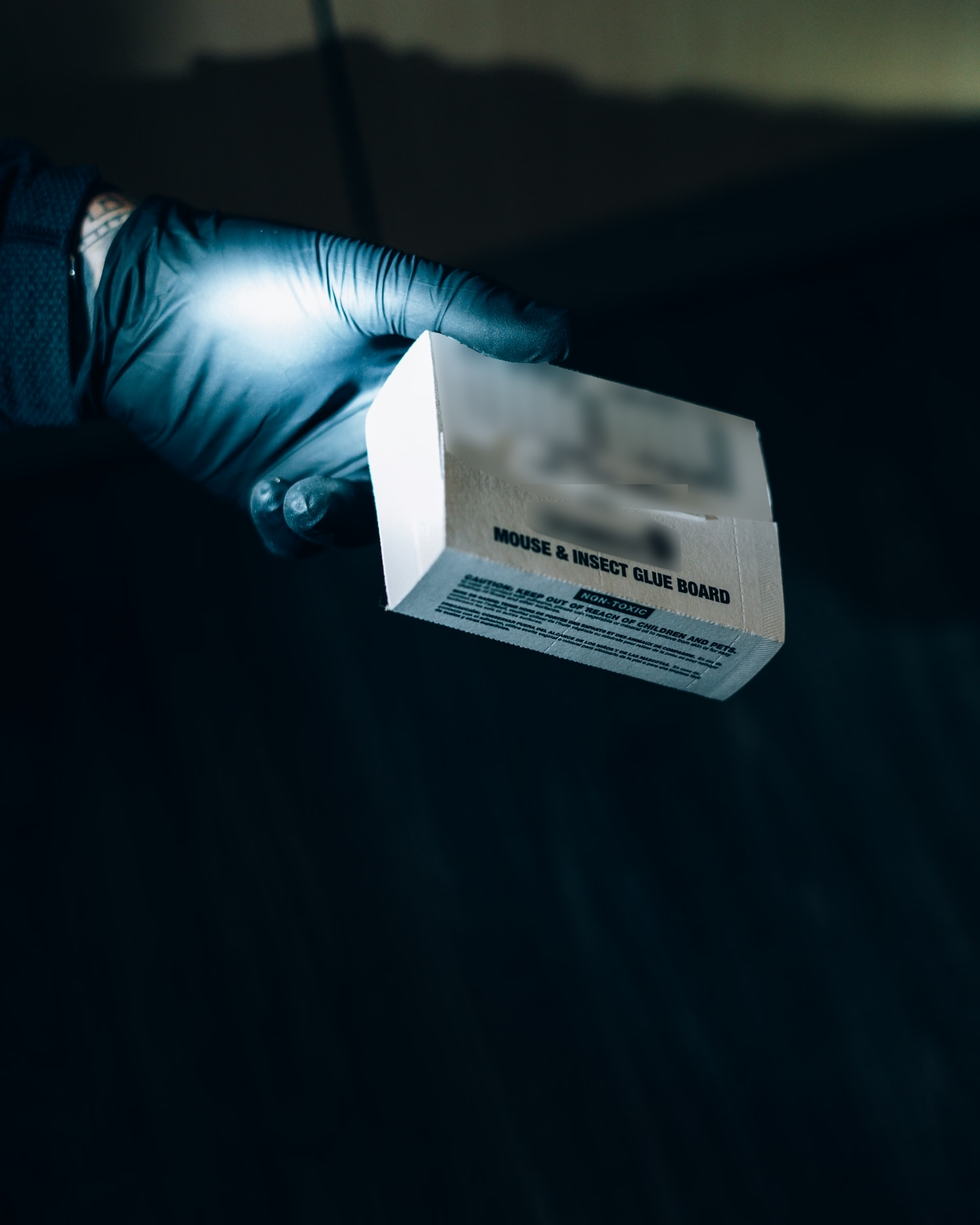
What it does Catch crawling beetles along walls and under shelving.
Where it falls short You need more of them than lure traps to watch the same space (TG 27, a U.S. military guide).
Insect light traps
What it does Catch flying insects in kitchens and food areas.
Where it falls short They catch mostly flies and few stored product insects (TG 27); they’re for flies, serviced in our fly prevention program.
Freezing
What it does Kills every stage: over 2 days, B.C.’s household guide says; when the insect is unknown, a week at −30 °C or two weeks at −20 °C, the Canadian Conservation Institute advises museums.
Where it falls short Only for what fits in a freezer; infested lots still have to be found and pulled.
Store-bought sprays
What it does Kill the insects they touch.
Where it falls short B.C.’s household guide says not to use insecticides in the kitchen or pantry or on food, and poor sanitation makes every treatment work less well (NC State, North Carolina).
Checking product by hand is luck of the draw when an infestation is small, TG 27 notes, which is why lure traps are its main detection tool and why an inspection reads them before anything is treated.
Why Vancouver Businesses Call Phantom for Stored Product Pests
Phantom Pest Control inspects businesses for free, publishes its preparation sheets and is fully licensed, insured and certified. It has serviced 29,000+ locations across the Lower Mainland and Fraser Valley from 2019 to 2026.
- Our owner 15+ years of pest control experience serving British Columbia
- Since 2019 29,000+ locations serviced from 2019 to 2026
- Credentials Fully licensed, insured and certified Licensed under B.C.’s pest control regulations
- Businesses Free inspections Open 24/7 for pre-arranged commercial services
Video, 1:37
Industrial sites
Phantom’s walkthrough of pest control for warehouses, manufacturing plants and distribution centres.
In a steel plant
Two technicians in hard hats and high-visibility vests heading into a plant’s main bay with their kit.
At a dock door
Checking a roller door on an industrial service, with a flashlight and the service kit at hand.
Setting up
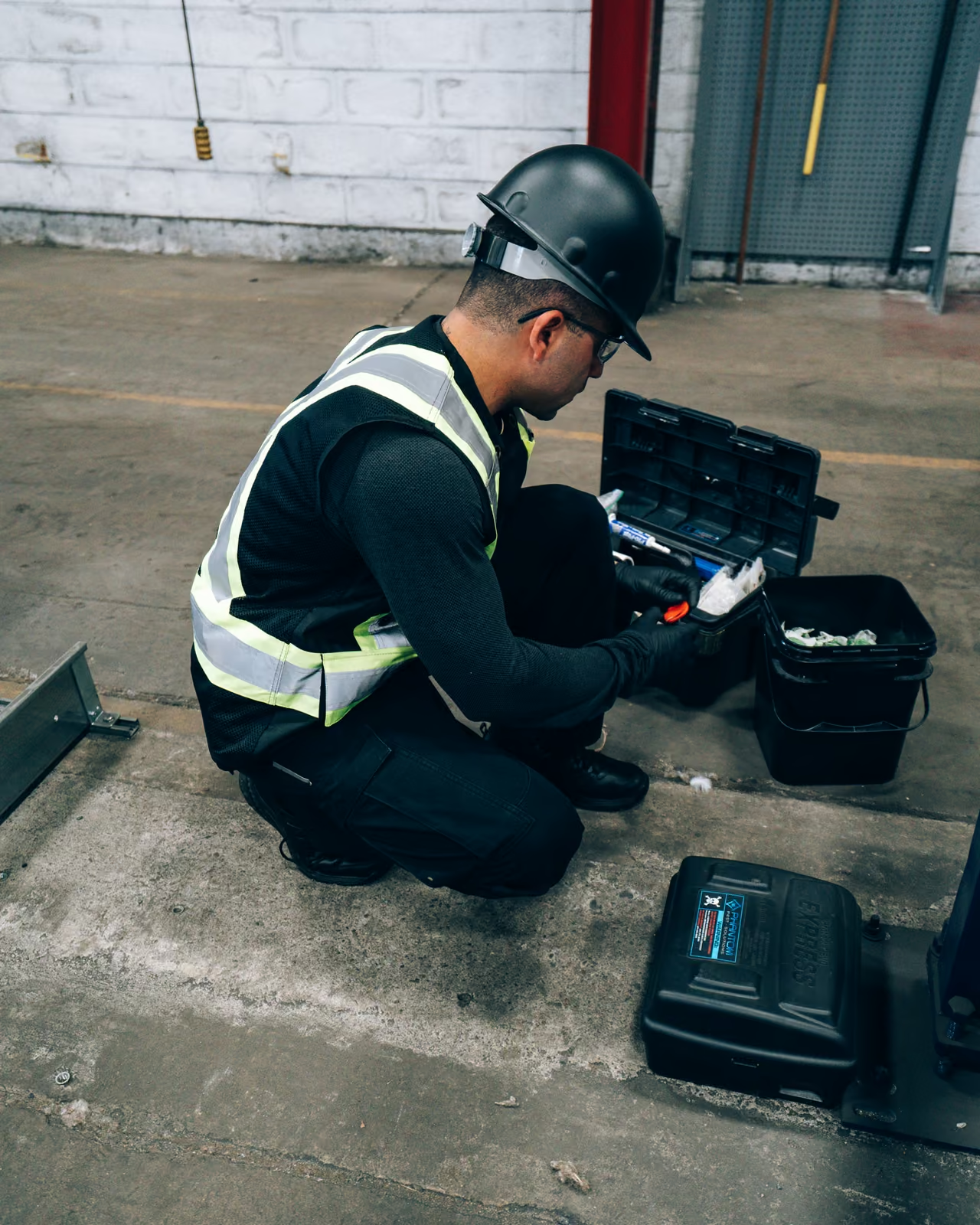
Preparing supplies from a toolbox on an industrial floor.
Along the floor
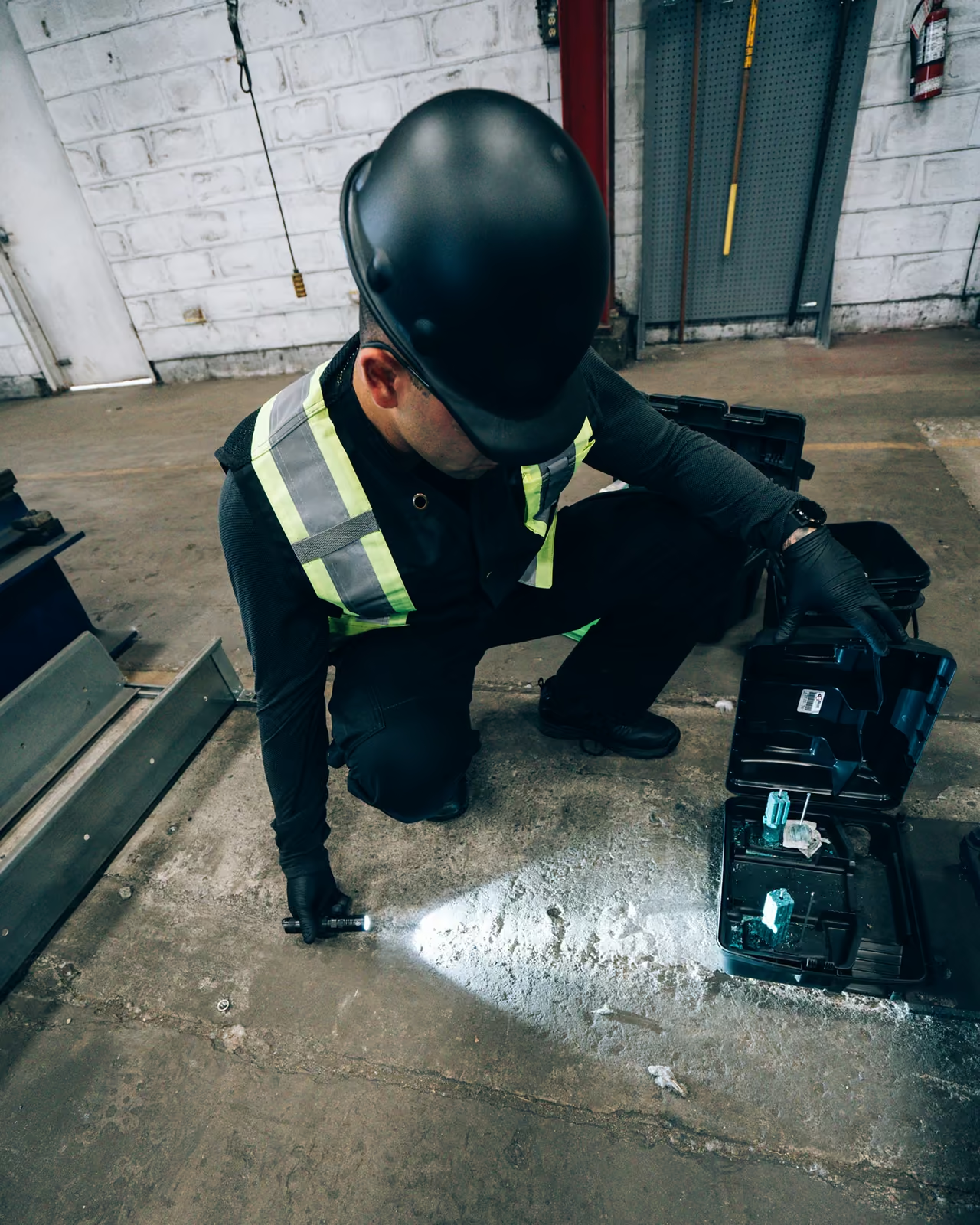
Shining a flashlight across a dusty concrete floor beside a steel beam.
Treatment gear
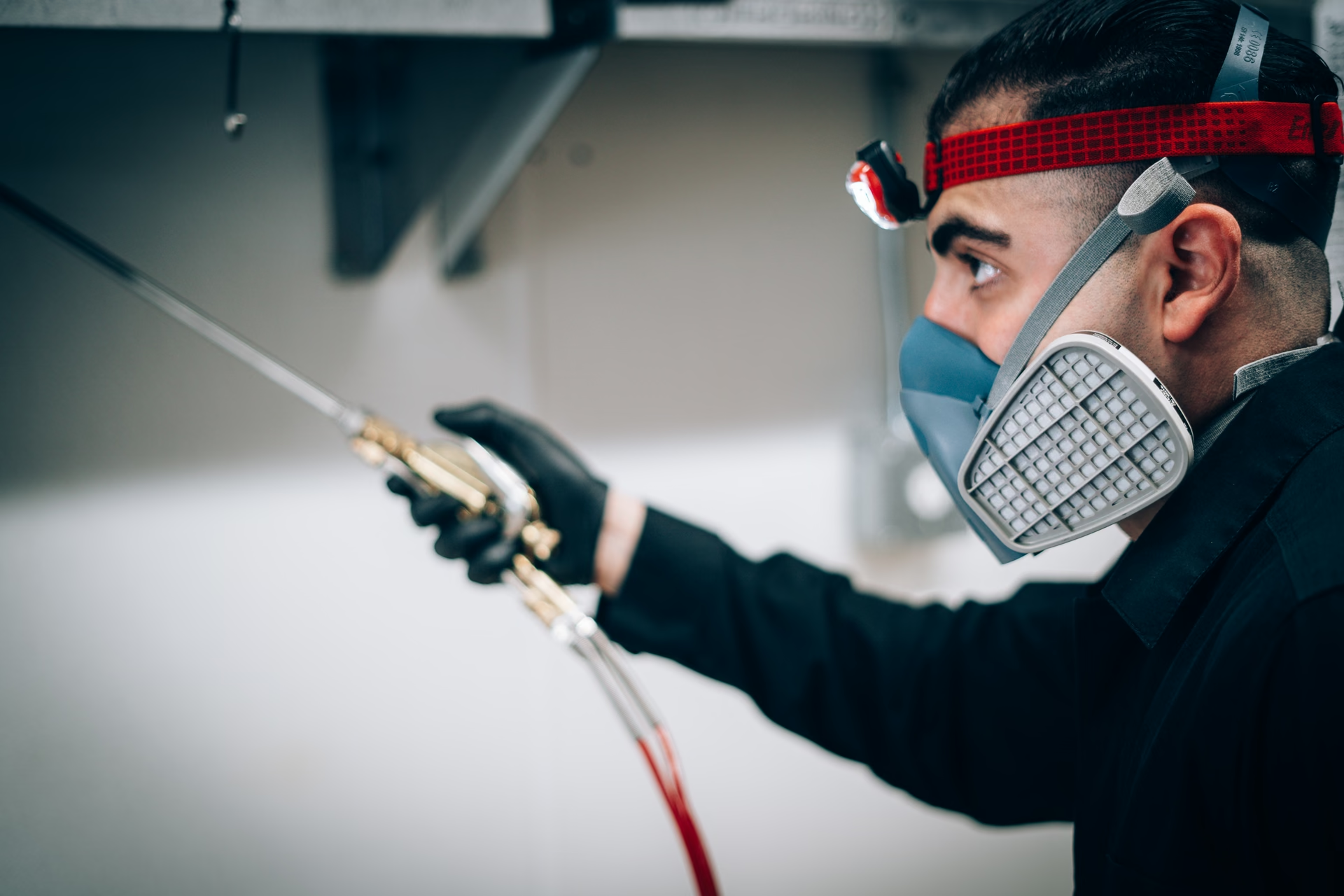
A half-face respirator and headlamp on a commercial job.
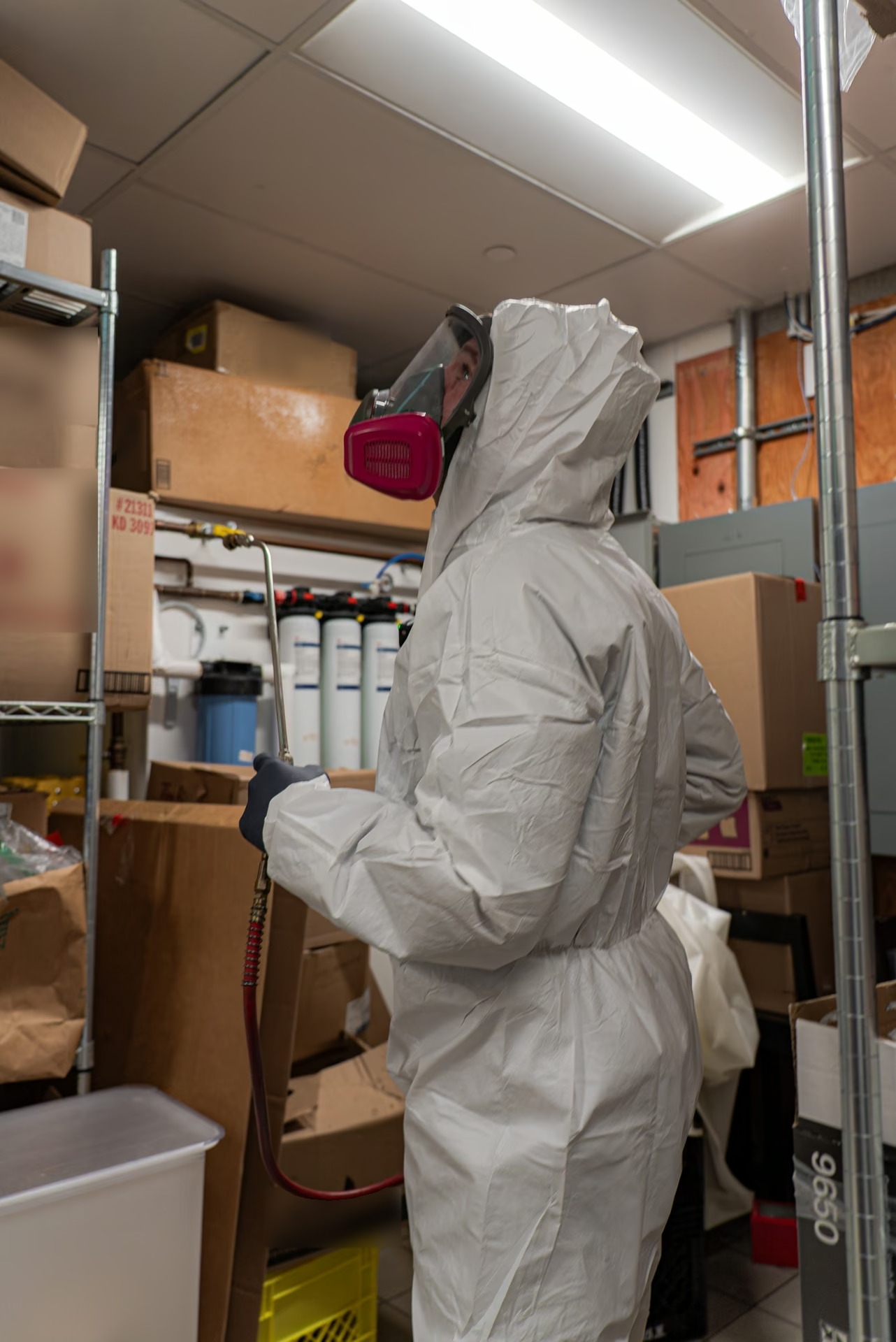
In a storeroom
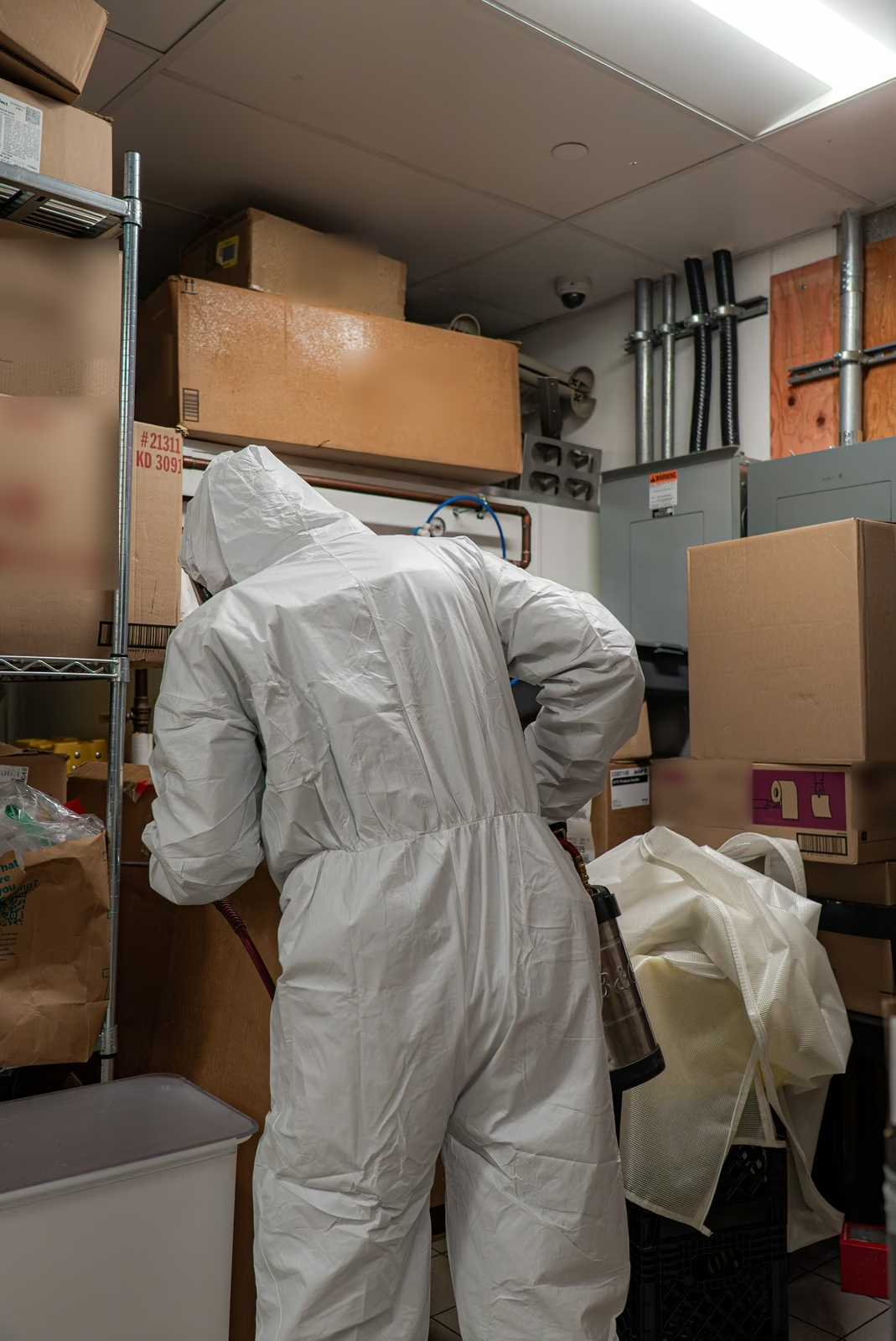
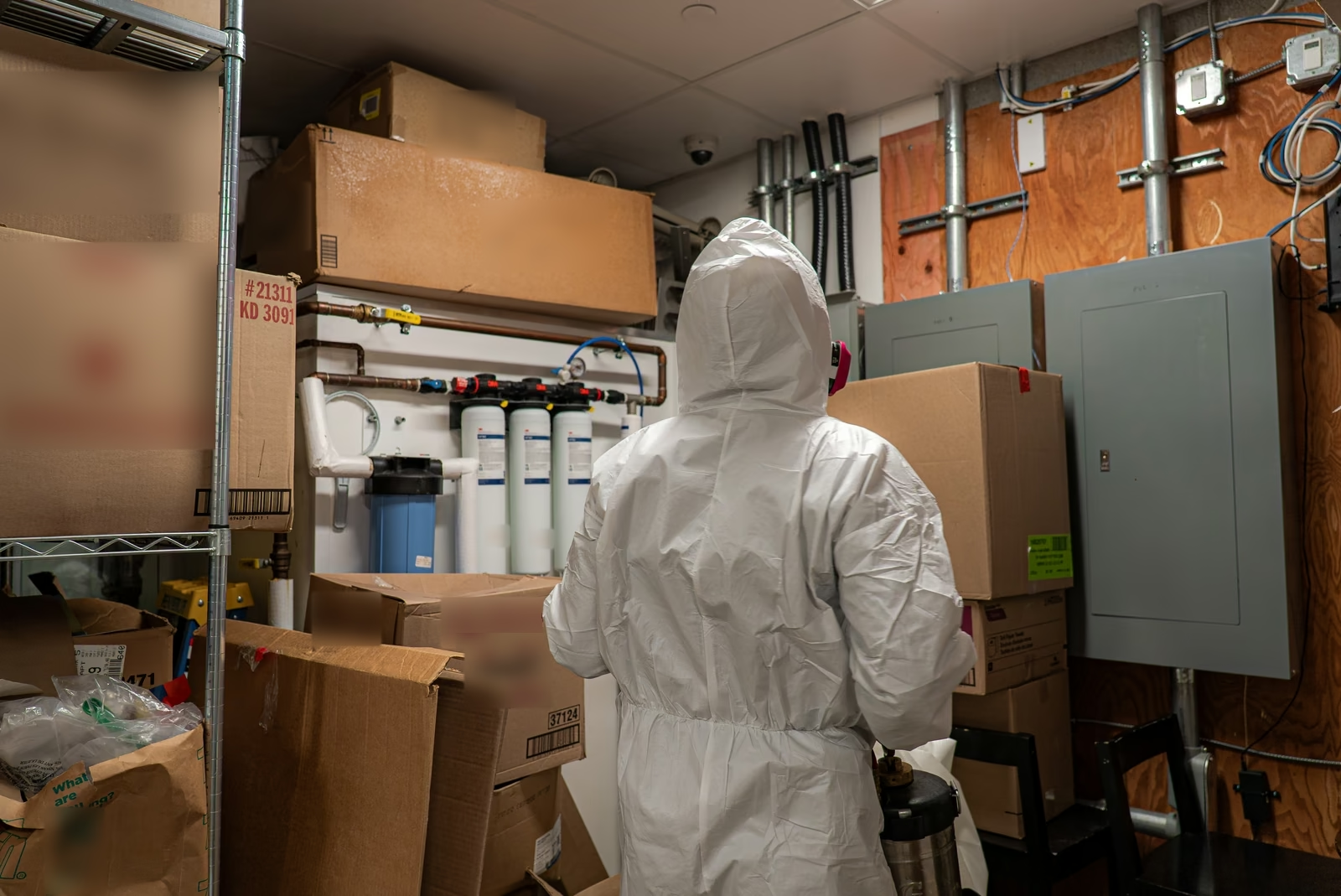
In a white coverall in a coffee shop’s back storage room.

Stored Product Pest Control Across Vancouver & the Fraser Valley
Phantom serves businesses in 24 communities with a local service page, from Squamish to Abbotsford. Not on the list? Tell us your city in the form, or call the office.
Vancouver, the North Shore and Squamish
Burnaby, the Tri-Cities and Ridge Meadows
Richmond and Delta
Surrey, Langley and Abbotsford
Stored Product Pest Control FAQs
Prefer to talk?
604-771-0404Is a stored product pest infestation a health-code issue in B.C.?
It can be: B.C.’s Food Premises Regulation covers places where food for the public is stored, and section 26 requires them to be free of pests. It also requires them to be free of conditions that let pests breed, and protected against pests getting in. Federally licensed food businesses must also keep insects out of their facilities under the Safe Food for Canadians Regulations.
What should we do with infested product?
Discard it, and check the stock stored around it and the delivery it came in with. TG 27, a U.S. military guide, notes that a trap catching 10 or more insects often means an already-infested pallet was brought in. Then book the inspection, so the source is found before new stock goes on the shelf.
Will stored product pests spread to other stock?
Usually they already have by the time anyone notices: UC IPM (California) says insects found in one package have most often spread to others. Sealed packages are less at risk than opened ones or stock left on the shelf a long time, so the inspection checks the opened and slow-moving stock around the first find, not just the infested bag.
How do we know they’re gone?
Keep monitors up after the infested stock is gone, and check the stock again after any new catch, as UC IPM (California) advises. These insects can live for weeks without food, so a few quiet days don’t prove they’re gone.
Can you help us get ready for a food safety audit?
Yes: start with the free commercial site inspection, well before the audit date. If your site needs a pest file for auditors, the Food Facility Maintenance Program keeps one and reviews it with your QA team before a CFIA or health inspection, or an SQF, BRCGS or AIB audit. For food-grade warehouses, Warehouse & Storage Preventive Services keeps device maps, service reports, trend summaries and corrective-action notes.
Will we still see insects after the treatment?
Some, for a while: Phantom’s kitchen preparation sheet says wandering insects and some activity for up to 7 to 10 days after a treatment are normal, as insects may come out at unusual times. Usually one treatment is enough, but another may be needed 14 to 21 days later, and the result depends on the preparation done.
Book a Free Site Inspection
Tell us what you’ve found and where, and the office will call you back. You can add a photo of the insect or the damaged product to the request.
Free estimate request
Prefer to talk?
604-771-0404Office and Service Hours: Monday to Friday, 9Â AM to 5Â PM.