Theatre & Film Pest Control in Vancouver & Fraser Valley
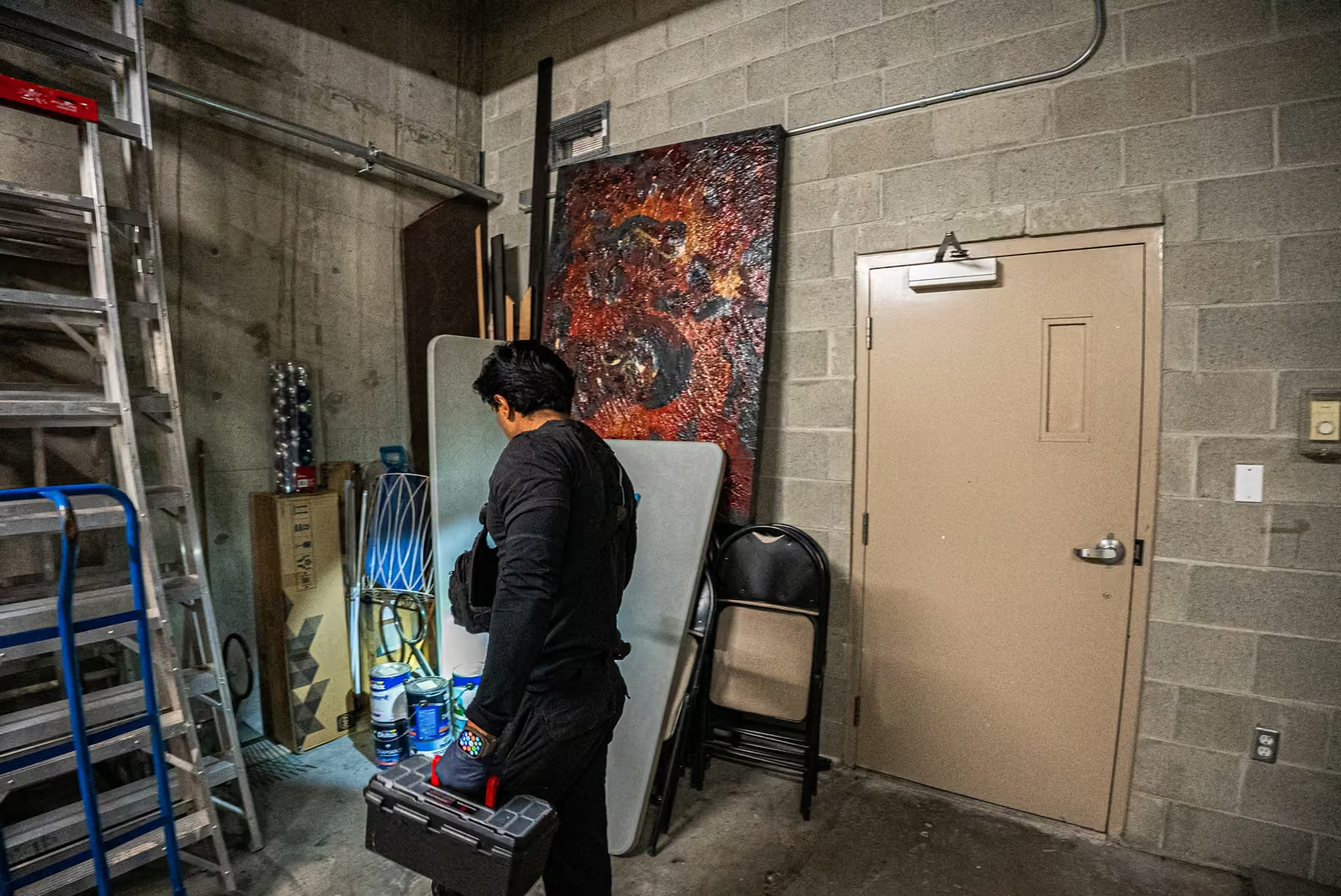
Phantom Pest Control provides theatre pest control in Vancouver, BC and the Fraser Valley for live theatres, concert halls, cinemas, film and TV studios, and the stores that hold costumes, props and sets. Visits work around your shows and shoot days. A written service report is left after every commercial visit.
Facility type
Theatres, cinemas, studios, sets
Common pests
Where they get in
Service area
Why Pests Settle Into Theatres and Film Sets
Food, fabric and quiet rooms. A theatre or studio keeps concessions or catering out front, racks of costumes and stacks of props in back, and stores that sit untouched between runs, while the dock opens wide for every load-in. Rodents look for food, shelter and warmth, and food left out, clutter and gaps give them all three.
Age adds to it. Records the City of Vancouver released in July 2016 cover rodents at the Queen Elizabeth Theatre, the Orpheum and the Vancouver Playhouse from January 2015 to May 2016. In March 2015 a city building services supervisor wrote: “This will never be more than a control program. Given the age of the buildings, we are likely to always have a mice population.” A pest report in the same records lists clothing moths in the Queen Elizabeth Theatre’s coat check room in March 2016. In an older venue the job is steady control, not a one-off visit.
Productions add their own routes. Actsafe’s safety bulletin on pests in British Columbia, written for film and TV productions, describes the more common pests in B.C., including stinging and biting insects, snakes, spiders, rodents, raccoons, skunks, bats and birds. Rented furniture and costume stock can also carry bed bugs or moths onto a set. Our K9 bed bug detection and moth control pages cover those two in depth, and other kinds of business are covered from our commercial pest control overview.
Concessions, bars and catering tables feed mice, cockroaches and flies.
Costume stock in wool, fur, feathers and leather is food for moth and beetle larvae.
Bed bugs hide in furniture seams and travel on clothes and bags.
Docks stay open through load-ins, and worn seals and gaps let rodents in.
Moths can do serious damage unnoticed in items stored for a season and not checked.
In 2015, a city supervisor expected Vancouver’s civic theatres always to have mice, given their age.
Pests Found in Theatres, Cinemas and Production Stores
What turns up from the concession counter to the wardrobe store, with the full service page for each pest.

Mice follow dropped food from the seats to the stores, and slip in through small gaps around pipes.

They ride in on luggage, clothing and second-hand furniture, then hide in seams and small cracks.

Their larvae eat wool, fur, feathers and leather, often unseen in costumes kept in storage.

Warm counters, drains and deliveries bring them into concessions and keep them breeding.

Spilled drinks and the buildup in bar floor drains let fruit flies and drain flies breed fast.

Nests grow in eaves and wall cavities, and workers follow sweet food to outdoor catering.

Pigeons roost on ledges and docks, and starlings and sparrows nest in signs, vents and roof voids.
Attach a photo to your estimate request; it helps us see what you found before the walk-through.
When Pest Pressure Peaks Around a Theatre or Set
Indoors, bed bugs, clothes moths and cockroaches keep going in any month, so the chart covers what pushes in from outside. Nesting birds follow Environment and Climate Change Canada’s nesting periods, which matters for work on marquees and roof edges.
The bars turn the seasons on Phantom’s Lower Mainland pest pages into months, and the nesting row uses ECCC’s zone A1 for the B.C. coast.
Coastal nesting runs from late March to mid-August, so netting on a marquee or roof waits for nests to be checked.
Most active from late spring through early fall, when outdoor shoots and patios put food within their reach.
Not seasonal
They arrive with people, bags and furniture, so the risk follows the audience and the cast, not the weather.
Vancouver’s mild climate keeps them active in wardrobe stores in most months.
Heated concession areas keep them active indoors through the Lower Mainland winter.
Where Pests Get Into a Theatre
A walk-through follows the routes pests take, from the roof and marquee to the seats, the stage and dock, and the rooms behind and under the stage.
- ARoof & fly tower
Pigeons roost on the tower’s ledges and roof edges, and starlings nest in its vents.
- BMarquee & front doors
Sign boxes and canopies give birds nest sites, and doors propped open let mice in.
- CAuditorium seats
Bed bugs travel in on clothes and bags, and popcorn under the rows feeds mice.
- DConcessions & bar
Syrup, spills and floor drains draw cockroaches and flies, and dry stock can carry beetles.
- EStage, wings & pit
Crowded wings and the pit give mice cover close to food left backstage.
- FScene dock & loading door
It stands open through load-ins; in 2015 the Queen Elizabeth Theatre and Playhouse fitted door sweeps to their dock and front doors against mice.
- GDressing & green rooms
Snacks feed mice, and couches and piled costume bags give bed bugs cover.
- HWardrobe store
Wool, fur, feathers and leather left on racks feed moth and carpet beetle larvae.
- ITrap room & basement
Pipe runs and quiet corners give mice runways and nest sites, and droppings pile up unseen.
Where Your Crew Helps, and Where a Technician Takes Over
Housekeeping and quick reporting keep pressure low between visits. Anything involving pesticide, bait or an active nest goes to a technician.
Your crew can
Food left on the floor feeds mice; the City’s 2015 records name candy, chocolate and spilled pop.
Look over hired costumes, furniture and set dressing for holes, webbing, larvae or bugs before they join stock.
Close them between loads, and report any gap that shows daylight at floor level.
Needs a technician
Under section 4 of B.C.’s Integrated Pest Management Act, providing pesticide services takes a licence, and under the federal Pest Control Products Act every product must be used as its label directs.
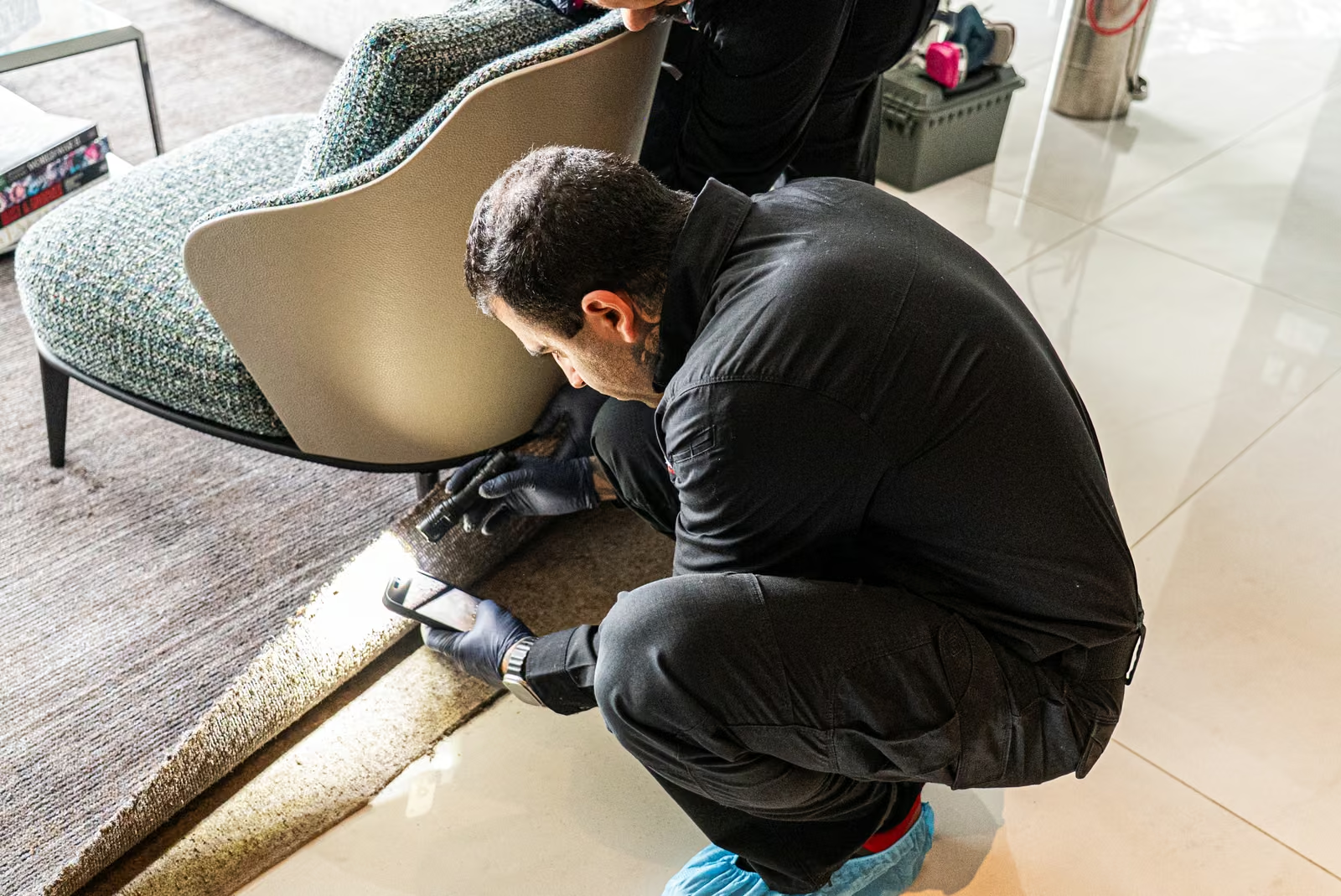
A K9 search comes first: the dogs are trained to find live bed bugs and eggs in furniture and baseboards.
Our carpet beetle and moth work targets where larvae feed and develop, including wardrobes and stored clothing.
Netting, spikes and wire go up on ledges, docks and marquees once nests are checked.
How Our Theatre and Film Pest Control Program Works
Five steps from the first walk-through to a program that runs between shows and shoots, with the visit schedule agreed after the walk-through.
We go from the roof, marquee and dock to the seats, stage, dressing rooms, wardrobe and trap room, and note where food, clutter and gaps line up.
Droppings, gnaw marks, larvae, webbing or a K9 alert show which pest it is and which room it’s coming from.
Traps for mice and rats, gel bait for cockroaches and drain work for flies go in while the house is empty. Service is open 24/7 for pre-arranged visits, so treatment can go in on a dark day or after the last show.
A rodent program closes small gaps, up to toonie size, along the way; the scene dock, stage doors and roof openings are quoted on their own as exclusion work.
Follow-up visits check the traps and monitors, and each visit ends with a written service report for your file.
Our regular maintenance program sets scheduled visits with clear documentation.
Getting Ready for the First Walk-Through
These six steps let the first walk-through start from what your crew already knows. Our preparation sheets cover the treatments they name, and the walk-through settles which steps apply to your building.
A plan with room names helps us cover the house, stage, dock, stores and basement in one pass.
Dark days, load-ins and strikes show when a visit won’t meet an audience, a cast or a crew.
Note where and when someone found droppings, bites, holes in costumes or live insects.
We check the trap room, fly gallery, wardrobe and locked stores, so plan keys or an escort.
The office books visits Monday to Friday, 9 a.m. to 5 p.m., and service is open 24/7 for pre-arranged visits, so a dark day or a late slot works.
If bed bugs are suspected, skip cleaners and disinfectants in the areas to be searched for at least 24 hours before the search, as the K9 sheet asks.
From Walk-Through to a Running Program
What follows the first walk-through. The schedule is agreed with your operations or production office.
Walk-through
A complimentary inspection, then a quote built for your building.
Gaps sealed
Openings found on the walk are closed or quoted as exclusion work.
Scheduled visits
Visits follow the agreed schedule, worked around shows and shoot days.
Service reports
A written report is left after each visit for your records.
Program review
The program adapts as the seasons change and productions come and go.
If a trap or monitor is in the way of a set or a sightline, tell us instead of moving it, so it isn’t lost.
A sighting written down with the room and the time sends the next visit to the right place; the Queen Elizabeth Theatre and Playhouse kept that kind of log in 2015.
What Travels In With Costumes, Props and Rentals
Bed bugs, clothes moths and carpet beetles can all arrive inside the things a show brings in: hired costumes, second-hand furniture, set dressing and touring cases. Checking each item before it joins your stock keeps a problem to one piece instead of a whole store.
Wool, cashmere, fur and leather feed clothes moth larvae.
Second-hand pieces are a common way for bed bugs to get in.
Carpet beetle larvae feed on wool, hair and feathers.
Bed bugs travel in luggage and clothing, so cases are worth checking on arrival.
Museums handle the same risk with a routine the Canadian Conservation Institute sets out for collections: isolate everything that comes in, inspect it thoroughly, and treat anything suspect before it joins the rest. For textiles that means front and back, inside and out, pockets, folds, sleeves, collars and seams, and the cardboard or felt it was packed in can harbour pests too.
For fabric pests, the institute’s guidance on low-temperature control gives −20°C for 1 week as a practical treatment, with each item sealed in polyethylene first; its newer pest guide gives 2 weeks at −20°C, or 1 week at −30°C, when the pest hasn’t been identified. It also warns that rubber, oil paint, acrylic paint and soft vinyl turn brittle in the cold, so painted props stay out of the freezer. For bed bugs, a K9 search of the racks and furniture checks whether any came in with them.
Why Choose Phantom for Your Theatre or Production
The team, the record you keep after each visit, and where to read client reviews.
Experience
15+ years of pest control in Vancouver
Credentials
Fully licensed, insured and certified
Reporting
A written service report after every commercial visit
Bed bug detection
Quotes
Free site inspection, then a quote for your building
EXCELLENTTrustindex verifies that the original source of the review is Google. Just wanted to say that we're very happy to have Darcey Walker as our pest control technician as he's always personable, knowledgeable about taking care of our past pest control issues and does a great job!Posted on GoogleTrustindex verifies that the original source of the review is Google. JC from Phantom was very professional and friendly to work with. He came prepared for the first inspection and carefully reviewed our problem and clearly explained the treatment options and timelines. Then we scheduled the follow-on work on the spot for him to come back. In between the two appointments, I found a wasp nest and was able to communicate that to Phantom to add as additional work. All works were completed without issue and the areas tidied to remove any debris. Thank you for taking care of everything so efficiently! Would definitely go back to JC and the team for future needs.Posted on GoogleTrustindex verifies that the original source of the review is Google. Joy and Yash have been great to work with, very prompt and thorough.Posted on GoogleTrustindex verifies that the original source of the review is Google. June was fantastic!! I was concerned that having a termite inspection done by a pest control company would just lead to an aggressive sales pitch for their services, so I specifically chose a company like Pantone who don’t do free inspections. June did a thorough inspection, checked everything available nook and cranny explained everything he was seeing and allayed my worries. Not once did he try to upsell a service or push for some needless preventative measure. I was very happy with the service.Posted on GoogleTrustindex verifies that the original source of the review is Google. The technicians that came to our building to try and exterminate a wasp nest did a great job. Darcy and June we're very capable of removing the Wasps from the eaves in our roof. I can highly recommend them.Posted on GoogleTrustindex verifies that the original source of the review is Google. Exceptional service from Darcy! Always professional, and knowledgeable. He has a knack for attention to detail, and really takes the time to explain the issues with a resolve. Reliable and very friendly A+ Highly recommend!Posted on GoogleTrustindex verifies that the original source of the review is Google. June was so kind and tremendously helpful!Posted on GoogleTrustindex verifies that the original source of the review is Google. Phantom pest did a great job with our mouse and cockroach problem. JC was a wonder to work with and we will be using them in the future if need be. Thanks!Posted on GoogleTrustindex verifies that the original source of the review is Google. This is a very good company. The technician Mark is so nice and very professional.Posted on GoogleTrustindex verifies that the original source of the review is Google. Had a rodent problem, Darcey came over and took care of it. Appreciate the quick response and great job! Thank you!
Theatre Pest Control Across Vancouver & Fraser Valley
Our theatre and film program covers venues, studios and production stores across Metro Vancouver and the Fraser Valley, from downtown Vancouver and the North Shore to Burnaby, Richmond, Surrey and Langley.
Vancouver & North Shore
Burnaby & Tri-Cities
Richmond & Delta
Fraser Valley
Related Services for Theatres and Productions
Services that can run alongside a theatre or production program.
Trained dogs search seats, furniture and rooms for live bed bugs and eggs.
Clothes moth work for wardrobes, stored textiles and storage rooms.
Treatment once a K9 search has confirmed where bed bugs are.
Steel mesh, flashing and sealants for the gaps mice and rats use.
Theatre and Film Pest Control FAQs
Bed bugs in seats, nests and costumes, locations and how visits fit a schedule, one question at a time.
Prefer to talk?
Can movie theatres get bed bugs?
Yes. Bed bugs turn up in public places such as offices, gyms, transit stations and movie theatres, as our post on how people get bed bugs explains: someone who sits in an infested seat can carry them home on clothes or a bag, and the same route brings them in. Upholstered seats give them seams to hide in. If bed bugs are reported, a K9 search comes before any treatment, so the treatment goes where the dogs find them.
Can a mouse or pigeon problem lead to carpet beetles in costumes?
It can. The Canadian Conservation Institute notes that dead rodents, shed hair and droppings attract and support insects that eat keratin and protein, which can then spread into collections, and that bird nests and droppings support the same insects. Its table of materials and pests names clothes moths and dermestid beetles, the carpet beetle family, as the insects that strip hair and fur. Old nests in the roof, vents or trap room can feed a wardrobe problem, so clearing them belongs in the plan.
How do you keep clothes moths out of costumes?
Store them clean and look at them often. Clothes moths go for natural fibres that sit for long periods without being cleaned or disturbed, and body oils and food stains give the larvae more to eat, so costumes are cleaned before they go back on the rack. Racks left in a stock room between seasons are where damage goes unnoticed. If larvae, webbing or fresh holes turn up, our moth control service treats where the larvae feed, including wardrobes and storage rooms, and leaves prevention recommendations for the store.
Is it bed bugs or carpet beetles in the wardrobe?
Look at the insect. Carpet beetle larvae look like small, hairy worms and feed on wool, hair and feathers, so wigs and trims are at risk; carpet beetles do not bite people, though the larvae’s bristles can irritate sensitive skin. Adult bed bugs are flat and oval, and they feed on blood. Our guide to bed bugs vs carpet beetles shows the differences, and a photo sent with your estimate request helps us identify it.
Is hantavirus a risk on film locations in B.C.?
It can be in a building where mice have nested. Actsafe’s bulletin on pests notes that people can be exposed to hantavirus by breathing in mouse or rat droppings that are disturbed, and says pest control and clean-up should be done by trained professionals. The Public Health Agency of Canada sets out the clean-up in order:
- Wear rubber or plastic gloves, and an N95 respirator in a confined space.
- Don’t sweep or vacuum the droppings: that puts particles in the air.
- Spray droppings, nesting material and the area around them with disinfectant or 1 part bleach to 9 parts water.
- Let the area soak for 10 minutes.
- Wipe everything up wet, with paper towels or a wet mop.
- Wash the gloves in disinfectant and hot soapy water before taking them off.
- Seal everything used in double plastic bags for the trash, then wash your hands with soap and water.
Our hantavirus guide lists the rest of the protective gear.
Who deals with wildlife on a film location?
It depends on the animal. Actsafe’s bulletin lists raccoons, skunks, bats and birds among the more common pests in B.C., and tells crews never to feed or approach raccoons or skunks, because food-conditioned animals can turn aggressive. Raccoons and skunks denning under a building or deck are covered on our wildlife control page. Bears, cougars, wolves and coyotes are outside that bulletin; Actsafe covers them in a separate wildlife bulletin.
Can bed bugs spread from one auditorium to another?
They can. Bed bugs travel on clothing, bags and furniture, and the same staff and audiences move between screens. Our bed bug page notes that in multi-unit buildings and hotels they move between units through walls, hallways and shared spaces; a multiplex’s auditoriums share walls and hallways too, so a report from one is a reason to check its neighbours. Our K9 page explains how dogs can screen whole floors or buildings rather than a single room.
Do cinema concessions have to meet food safety rules?
Yes. A concession stand or theatre bar that sells or serves food to the public is a food premises, and section 26 of B.C.’s Food Premises Regulation requires the operator to keep it free of pests, free of conditions that let them harbour or breed, and protected against their entrance. Its definitions in section 1 name rats, mice, cockroaches and flies as pests. In the Lower Mainland, health officers from Vancouver Coastal Health or Fraser Health inspect food premises. Our restaurant pest control page covers kitchens in more depth.
How often should a theatre have pest control visits?
As often as the building and the season call for. The schedule is set after the first walk-through, and Phantom’s Rodent Program sheet notes that many clients choose monthly, bi-monthly or quarterly maintenance. Food in every row gives pests more to live on than a quiet studio between productions, so a busy cinema may need closer visits, and the service reports show whether the schedule is working.
How much does pest control for a theatre or set cost?
It’s quoted per building, after a complimentary inspection, because the size of the building, how far a problem has gone and the treatment it needs all change the work. The walk-through is where we see the house, the stores and the schedule, and the quote follows from it.
Book a Walk-Through
Tell us about the building, the schedule and what your crew has seen, and we’ll plan the first walk-through around your shows or shoot days.
Commercial site inspections are complimentary, and the quote comes after the walk-through.