Mining Pest Control in Vancouver & Fraser Valley
Phantom Pest Control provides mining pest control across Vancouver, BC, the Fraser Valley and Sea-to-Sky for sand and gravel pits, rock quarries and their crushing and wash plants. Visits are pre-arranged around your shifts, and every commercial visit ends with a written service report.
Site type
Pits, quarries, crushing and wash plants
Common pests
Where they get in
Service area
Why Pests Move Into Pits, Quarries and Plant Sites
Warm buildings on an exposed site. The shop, parts room and electrical room stay dry and warm when the pit floor doesn’t, the trailers and cabs hold food, and the plant’s high steel gives pest birds ledges out of reach.
In B.C., a sand and gravel pit is a mine. The province regulates all mineral, coal, placer, sand, gravel and quarry operations, which need a Mines Act permit and work under the Health, Safety and Reclamation Code for Mines. The Mines Act counts the excavation, its equipment, its processing and its buildings, other than bunkhouses and cook houses, as part of the mine, so a pest program has to work inside the site’s own safety rules.
Our rodent control and bird control pages cover those two pest groups in depth, and a road-building or site-prep job sits with our construction site program. Other industries are listed on our commercial pest control page.
Shops, parts rooms and electrical rooms stay warm and dry, the shelter rats and mice look for in the colder, wetter months.
Lunchroom fridges, garbage and snacks left in a machine’s cab are what mice, ants and wasps find first.
Rodents gnaw constantly, and the wiring, insulation and stored supplies in a shop or panel room are within reach.
Conveyors, screen decks and plant roofs give pigeons and starlings ledges to roost and nest on, out of reach.
A loader parked for the season or a spare trailer gives mice and wasps a sheltered, undisturbed spot.
Uncovered garbage and food waste near the trailers draw wasps, flies and pest birds.
Pests Found at Pits, Quarries and Plant Sites
The pests that turn up between the scale house and the pit face, each linked to its full page.

They move into shops, parts rooms and electrical rooms for warmth and gnaw wiring, insulation and stored supplies.
The main hantavirus carrier in North America, so take care in sheds and in buildings left unoccupied for a long time.

They roost on conveyors, screen decks and shop rafters, and their droppings make walkways slippery.

From late spring through early fall they nest in equipment, under trailers and scale houses, and in conveyor frames.

They nest inside damp or damaged wood, so wooden steps, sheds and trailer skirting can hide a colony.

Warm lunchrooms and dry rooms with food and water suit them, and they arrive with deliveries.

They ride in on bags and work clothes, and settle where people sleep or sit for long breaks.
Describe it in your estimate request and attach up to 3 photos or a short video, and we’ll review it before the site walk-through.
When Pest Pressure Peaks Around a Pit or Quarry
Pest birds, cockroaches and bed bugs keep going in every season, so the chart follows the pests that move with the weather: wasps around the trailers and equipment, ants and flies in the warm months, and rodents once it turns cold and wet.
Each bar turns the season on Phantom’s own pest page into months; the three pests under the chart have no season there.
Late spring through early fall, while nests grow in machines, trailer skirting and conveyor frames.
The colder, wetter months push them into the shop, the scale house and the electrical room.
Not seasonal
Phantom’s bird page describes them as present here in every season, so the plant steel can be roosted in any month.
A heated lunchroom or dry room keeps them going whatever the weather on the pit floor.
They follow people, bags and work clothes, so crew changes matter more than the calendar.
Where Pests Get Into a Pit or Quarry
The walk-through traces how pests reach each part of the site: from the gate and trailers, past the shop and electrical room, to the plant, the stockpiles and the yard.
- AGate & scale house
A small heated building with lunches inside and cables running in is quick for mice to find.
- BOffice & lunchroom trailers
Fridges and garbage draw mice and cockroaches, and wasps build under the steps and skirting.
- CShop & parts room
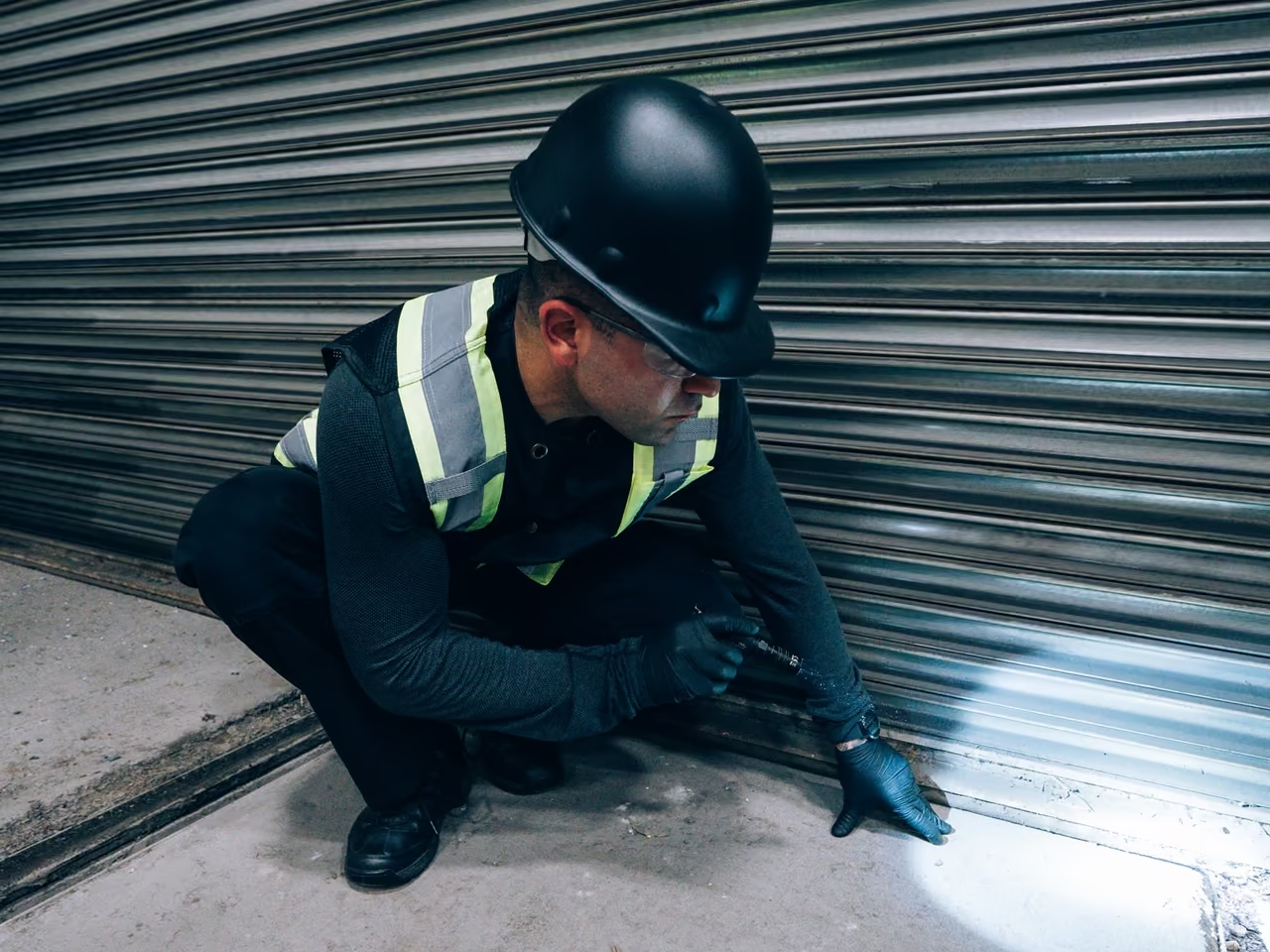
Gaps under roller doors let rodents in, and stored parts, rags and cardboard give them cover.
- DElectrical room
Cable entries lead rodents to warm panels, where gnawing damages wiring and insulation.
- ECrusher, screens & conveyors
Pigeons and starlings roost on the high steel, and their droppings foul walkways and platforms.
- FWash plant & ponds
Water and sheltered framework draw birds, so the wash plant gets the same roost check as the conveyors.
- GStockpiles & pit face
Bank swallows dig nest burrows in near-vertical faces and sand stockpiles; they are a threatened species, so their colonies are left alone.
- HEquipment yard
Machines parked for weeks give mice shelter next to wiring, and wasps a sheltered place to build.
- IFuel, lube & garbage
Open bins and food waste draw wasps, flies and rats to the corner of the yard where crews refuel.
What Your Crew Can Handle, and What Needs a Technician
Habits between visits keep pest pressure down across the site. Pesticides, rodent bait, nest work and bird deterrents stay with a technician.
Your crew can
Keep food in sealed containers, lids on the bins and lunches out of the cabs at the end of each shift.
Roller doors down, sweeps intact and new gaps reported keep the shop and electrical room closed to rodents.
Note droppings, gnawed wiring or a nest with the place and date, and leave droppings undisturbed; the FAQ below explains why.
Needs a technician
Under section 4 of B.C.’s Integrated Pest Management Act, providing a pesticide service takes a licence, and federal law has each product used the way its label directs.
Bait goes only in locked, tamper-resistant stations placed by a technician; the bait rules below explain why the strongest baits are off the table.
Nests on machines, trailers and conveyors are treated by a technician; our post on why crews shouldn’t knock a nest down themselves explains the risk.
Deterrents go on the ledges and steel where pigeons and starlings roost, and protected birds are left alone.
How Our Mining Pest Control Program Works
Five steps from the first walk-through to a program that runs around your shifts.
From the gate and scale house through the trailers, shop, electrical room, plant and yard, noting where food, shelter and gaps meet.
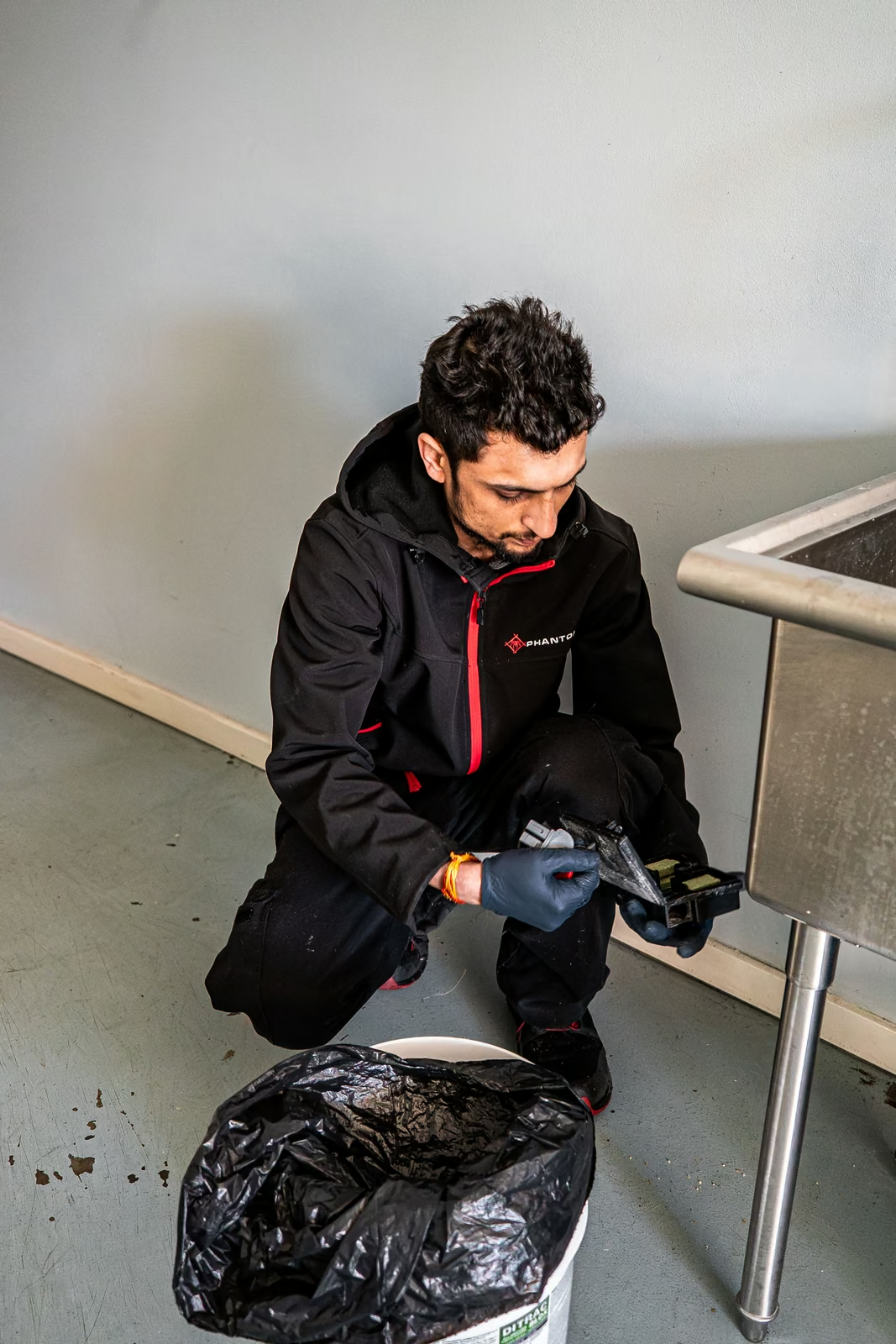
Locked bait stations go outside along the buildings and traps go inside, each numbered on a device map.
Entry points are sealed or quoted as exclusion work, and netting or spikes go where pest birds roost.
Visits are pre-arranged around shifts and production, and a treated room stays closed until its re-entry time has passed.
A written report closes each visit, and the program changes with the seasons and with what crews log.
Our regular maintenance program sets recurring visits, with clear documentation for each, for sites that need ongoing control.
Before the First Site Walk-Through
Six things that let the first walk-through start from what your crew already knows. Rodent, cockroach, ant, bed bug and kitchen treatments, and K9 inspections, each have their own preparation sheet on our client forms page.
A plan or aerial photo with building names lets one walk-through cover the gate, trailers, shop, plant and yard.
Tell us your orientation and safety requirements, how check-in works at the gate, and who will meet the technician.
Note the pest, the place and the date: droppings in the parts room, a nest on a loader, birds on the screen deck.
Lay a coin beside any droppings for scale, and attach the photos to your estimate request.
Before a K9 search of crew rooms or bunkhouses, the K9 sheet asks for no cleaners or disinfectants in the area for at least 24 hours.
Move pallets, parts and stored gear off the walls in the shop and trailers so corners and entry points can be checked.
After the Walk-Through: How the Program Runs
What follows the first walk-through. The visit schedule is agreed with your site or operations manager.
Walk-through
The first visit maps the buildings, the plant and the yard, and the quote is written from what it finds.
Entry points
The rodent program seals gaps up to the size of a toonie, and larger openings, like a roller door that no longer closes tight, are quoted as exclusion work.
Device map
Each bait station and trap carries a number that matches the site’s device map.
Service reports
Every visit is closed with a written service report you can file with your site records.
Program review
The program shifts with the seasons and with what crews log between visits.
If a station is in the way of a machine or a haul route, tell us rather than moving it, so it isn’t lost or crushed.
A short log by the lunchroom door, with what was seen, where and when, points the next visit at the problem.
What B.C.’s Rodent Bait Rules Mean at a Pit or Quarry
The strongest rodent baits can’t be used. Section 81 of B.C.’s Integrated Pest Management Regulation bars a licensed applicator from using a second-generation anticoagulant rodenticide (SGAR) at a site that isn’t an essential service location, and none of the 28 locations in its Schedule 6 is a mine, a quarry or a gravel pit.
Where runways follow the walls and roller doors meet the slab.
Close to the food, the garbage and the skirting gaps.
Near the cable entries that lead in to the panels.
Fastened to the fence or the ground where a station sits farther from the buildings.
Other baits are still allowed, inside stations: Health Canada’s bait station rules require outdoor, above-ground bait that children, pets, livestock or wildlife could reach to sit in tamper-resistant stations that lock. Around buildings, bait should stay within 15 m of the structure, or within 100 m along a fence when the station is fastened down, and the product label has the final word. So the stations ring the shop, the trailers and the fence line, not the stockpiles or the pit floor.
The province restricted those baits to essential services in response to concerns over their effects on owls and other wildlife, so the weight falls on monitoring and sealing. Before any pesticide goes down, section 68 of the Integrated Pest Management Regulation has a licensee identify the pest, monitor where and how many there are, and weigh prevention and practical alternatives. On a Phantom rodent program, traps work inside the buildings, each station and trap is numbered on the device map, and entry points are sealed or quoted; our rodent control page has the full program.
Why Choose Phantom for Your Pit or Quarry
Who does the work, what you get in writing after each visit, and how the devices on your site are tracked.
Experience
15+ years of pest control experience serving British Columbia
Credentials
Fully licensed, insured and certified
Reporting
A written report left after each commercial visit
Quotes
Free site inspection and a quote written for your site
Bed bug detection
EXCELLENT Based on 830 reviews
 Posted on Google

 Ashley WoodWe were having some problems with mice at our home so we contacted Phantom and Darcey came and resolved the issues quickly. Darcey was friendly, great with our dog and made sure we understood everything he was doing and what to expect. Happy to report no more mice! Thank you, Darcey!Posted on Google
 Michelle HerrExcellent pest control service! The team was professional, friendly, and knowledgeable. They arrived on time, explained the treatment process clearly, and made sure everything was taken care of. Their attention to detail and commitment to customer satisfaction were impressive. I really appreciate their prompt service and effective results. Highly recommend them to anyone looking for reliable and professional pest control services!Posted on Google
 Nasib AbdulMark was great and he did a great job and was very knowledgeable.Posted on Google
 HenryDarcey provided exceptional support in resolving our pest concerns. He was punctual, highly knowledgeable, and professional throughout the process. We have been trying to deal with these issues for quite some time without any luck but thankfully the matter is now resolved. We appreciate the dedication he demonstrated and will be sure to reach out should we require his services again.Posted on Google
 Jacqueline BruceI want to let you know that June did an amazing job on our house for the moths. He was really friendly, patient, professional and conscientious. I wasn't fully ready for the treatment when he arrived and he managed to move some clients so he could return later. He explained a lot about the treatment and the moths' habits which really helped with other areas that he wasn't even treating. He kindly helped me moved some things to barricade the area from pets. I would get Phantom back and highly recommend them.Posted on Google
 Fraser HannayDarcey was amazing at helping us deal with a wasp nest. Friendly, knowledgeable and on time! Thank you!Posted on Google
 JanetWe hired Phantom Pest Control to eliminate a wasp nest inside our house and the service was great. Information on the phone when I first called to book an appointment was clear and we got an appointment quickly. Juan, the specialist who arrived to do the job, fully explained the process, did the work, and explained what to watch in the outside chance additional work might be needed. We are happy with the job and were glad to have Juan as our technician.Posted on Google
 Jenny WuWe received exceptional service from Joy. She was both professional and knowledgeable, explaining the service thoroughly.Posted on Google
 Sean AbbottThey showed up on time, early actually. Mark was very professional and explained how the cockroaches work. He was personable and efficient, and hygienic with how he worked (wearing protective boot covers and gloves). I was impressed and would definely call again if needed.
Mining Pest Control Across Vancouver & Fraser Valley
Our mining program covers pits, quarries and plant sites across the Lower Mainland, the Fraser Valley and Sea-to-Sky. Each city links to its own local page.
Vancouver & North Shore
Burnaby & Tri-Cities
Richmond & Delta
Fraser Valley
Related Services for Pits, Quarries and Plant Sites
Services that can run alongside a mining site program.
Locked stations outside, traps inside and exclusion for rats and mice around shops and trailers.
Netting and spikes on plant steel and roofs where pigeons and starlings roost.
Nest treatment on equipment, trailers, scale houses and conveyors.
Trained dogs search crew rooms and bunkhouses before any bed bug treatment.
Mining Pest Control FAQs
Swallows in the stockpiles, re-entry, which safety rules apply, shifts and cost, one question at a time.
Prefer to talk?
Can you remove swallows nesting in a pit face or stockpile?
No. Bank swallows, which dig their nest burrows in sand and gravel faces and stockpiles, are listed as threatened under the federal Species at Risk Act, and disturbing their nests or burrows without a permit is an offence. Environment and Climate Change Canada’s guidance for sandpits and quarries puts their nesting season at mid-April to late August and recommends a buffer of at least 50 metres around an active colony.
Before mid-April, the guidance’s steps are the operator’s: grade faces below 70 degrees where work will go on, and leave a face of 70 degrees or more where it won’t. Our bird work covers pigeons and starlings and leaves swallows alone.
When can crews use a treated room again?
Once the re-entry time for that treatment has passed. For a cockroach or crawling insect treatment, the preparation sheets ask everyone to stay out for at least 6 to 8 hours from the start of treatment, and for 24 hours in the case of pets, people with respiratory conditions, nursing mothers and children under 2.
For a lunchroom kitchen, our food-area sheet asks for 6 to 8 hours away after the treatment is complete. For any other product, its label sets the interval, so ask for it with the booking; each sheet is on our client forms page.
Does WorkSafeBC set the rules for pest control at a pit?
No. At a pit or quarry, health and safety rules come from the Mines Act and the 2026 Health, Safety and Reclamation Code for Mines, and pesticide rules from B.C.’s Integrated Pest Management Act and the product label. Section 3 of the Workers Compensation Act says its occupational health and safety provisions, and the regulations under them, don’t apply to mines under the Mines Act.
Section 25 of the Mines Act also makes a contractor share the duty to follow the Act and the Code for the work it controls, so send us your orientation and safety requirements when you book.
Can you work around shifts and production?
Yes, by pre-arranging the visits. Our office takes bookings Monday to Friday, 9 AM to 5 PM, and our service is open 24/7 for pre-arranged commercial services, so a visit can be set for a shift change, a shutdown or a quiet stretch at the plant. Tell us when you book which areas are off-limits while equipment is running, and who will meet the technician.
How do pests affect safety and equipment at a pit?
Mostly through wiring, walkways and stings. Our rodent control page notes that rodents’ constant gnawing can damage wiring and insulation, which matters in panels, cable runs and parked machines; our post on rats and mice in parked vehicles covers what to check before a machine is started again. Bird droppings build up into slip hazards on walkways and platforms, and our wasp control page warns that multiple stings can cause serious allergic reactions in some people, including anaphylaxis, so a nest on a machine someone climbs every shift needs treating.
What should crews do about mouse droppings in a closed-up trailer?
Leave them alone for now. Phantom’s post on hantavirus explains that people are infected mainly by breathing airborne particles when they disturb places where infected rodents have been living, and that the deer mouse is the main carrier in North America. The same post warns that dry sweeping and ordinary vacuuming put contaminated particles into the air, so keep crews out of the trailer and book an inspection; the cleanup and the entry points are then handled together.
Do you check crew rooms and bunkhouses for bed bugs?
Yes, with a K9 search first. Our K9 teams search the rooms, directed by their handlers, to pinpoint where the bed bugs are before treatment is planned, and lunchrooms and dry rooms are covered for cockroaches in the same program. Where five or more of your employees live on site, B.C.’s Industrial Camps Regulation also has the operator keep each structure built and maintained to exclude pests, and take adequate steps to exterminate them and keep the premises free of them once aware.
Do you service remote mine sites and fly-in camps?
No. Remote mines and fly-in camps are outside this program, which runs as regular commercial visits to the cities named in our service areas. Inside those cities, a road-building or site-prep job is handled by our construction site program, and a concrete or scrap recycling yard by our waste facilities page.
How often should a pit or quarry have pest control?
It depends on the site and on what the walk-through finds, so the schedule is set after it. Phantom’s Rodent Program sheet notes that many clients choose monthly, bi-monthly or quarterly maintenance, and our regular maintenance program books those visits, with programs that adjust with the seasons.
How much does mining pest control cost?
It depends on the size of the site, the number of buildings and devices, and how often visits are needed, so the price follows a walk-through. For commercial clients that site inspection is complimentary, and the quote is written for your site.
Book a Site Walk-Through
Tell us about the site, your shifts and what your crew has seen, and we’ll plan the first walk-through around your operation.
For commercial sites the inspection is complimentary, and the quote comes after the walk-through.