Spider Control in Vancouver, BC

Phantom Pest Control treats spiders and their webs in homes and businesses across Vancouver, BC, the Lower Mainland and the Fraser Valley. Our certified technicians find where spiders are settling inside and out, brush down their webs, treat the rooms, the outside walls or both where they’re active, and may recommend fixes for the gaps, lights and clutter that keep them coming back.

  • Interior treatment $295–$425 + GST For a house; $275–$395 + GST for a condo, apartment or townhouse
  • Exterior treatment $325–$375 + GST For a house; $225–$375 + GST for a condo, apartment or townhouse
  • Inspection From $125 + GST $150 + GST for a house; +$50 for an attic or crawl space, waived if you book the treatment the same day
  • Stay out 6–8 hours After the treatment; the spider preparation sheet recommends 24 hours for some people and pets
  • Area 24 communities From Squamish to Abbotsford
The giant house spider (Eratigena duellica), a male, at a funnel web. Illustration.

Common Spiders in Vancouver Homes

The Royal BC Museum says only one B.C. spider has venom harmful to people, the western black widow, and the brown recluse has never been found in B.C. Most spiders you find indoors are house species that live their whole lives in the building, the Burke Museum notes. Their webs help you tell them apart.

  • Giant house spider Eratigena duellica

    The big, fast, hairy brown spider in the tub or on the basement floor. Its body reaches about 2.5 cm and a large adult’s legs can span about 10 cm, a Washington State University fact sheet says; it spins a sheet web with a funnel in garages, basements and woodpiles, and its bite isn’t known to pose a threat to people.

  • Hobo spider Eratigena agrestis

    A brown spider with long, unmarked legs, found in very localized pockets of southern B.C., according to the B.C. Home and Garden Pest Management Guide. It closely resembles the giant house spider, and the Royal BC Museum says research shows its venom isn’t toxic to people.

  • Cross orb weaver Araneus diadematus

    The garden spider with a white cross on its back, recorded at many Vancouver-area sites. A Washington State University guide notes it hangs its round wheel web across paths, in front of doors and windows, and near lights where insects gather, and is very rarely found inside a house.

  • Long-bodied cellar spider Pholcus phalangioides

    The “daddy long-legs spider”: a small body under 1 cm on very long, thin legs, in loose, messy webs in the corners of basements and cellars. Health Canada calls cellar spiders harmless and says removing the webs and lowering the humidity can control them.

  • False black widow Steatoda grossa

    Widespread across B.C. and can be mistaken for a black widow, but it has no red hourglass, E-Fauna BC notes. Round and dark brown, up to about 1 cm, it lives indoors all year; the Royal BC Museum compares its rare bite to a bee sting.

  • Western black widow Latrodectus hesperus

    Shiny black with a red hourglass on the underside, body about 12 mm. It lives outdoors in woodpiles, sheds, garages and under rocks, with Lower Mainland records in the Vancouver area and Chilliwack, and it is the only B.C. spider whose venom is harmful to people, says the Royal BC Museum.

Illustrations, drawn to one scale. Colour and markings vary a lot within each species, so the shape, the web and where you found it tell you more.

Lookalikes That Aren’t Spiders

  • Harvestman

    The “daddy-longlegs” of gardens: one round body with no waist, two eyes on a bump, no silk and no venom. It is an arachnid but not a spider, as the Burke Museum explains.

  • Crane fly

    Some Canadians call this long-legged fly a daddy long-legs too, the Burke Museum notes. It has six legs and wings, and no venom.

  • Tick

    Eight legs but no waist: a tick is a mite that feeds on blood, about the size of a sesame seed before it feeds. If one bites you, see HealthLink BC on tick bites.

  • House centipede

    Long antennae and fifteen pairs of legs on a body 2.5 to 5 cm long; Health Canada notes it eats spiders. Phantom treats house centipedes as part of crawling insect control.

A Few Spiders or a Spider Problem

A few spiders indoors is normal: the Burke Museum notes fewer than 5% of the spiders you see inside have ever been outdoors, and the big ones you see in late summer and fall are mostly males looking for mates. Webs rebuilt in the same corners, egg sacs and spiders in several rooms point to a population that’s settled in.

Points to a spider problem

  • Webs that keep coming back in the same corners after you clear them
  • Egg sacs in corners, window frames or under the eaves
  • Spiders in several rooms, night after night
  • Webs packed around outdoor lights and windows, where insects gather
  • Lots of other insects indoors: spiders follow their food

Normal on its own

  • One big spider in the tub or sink: it went after water and can’t climb the smooth sides
  • A few spiders in the garage, shed or basement
  • A single orb web on the porch or across a window
  • A cellar spider in a ceiling corner

Send a photo of the spider or web with your estimate request, and see why you see more spiders in the fall.

Where Spiders Settle Around a Vancouver Home

Spiders settle where insects gather and nobody disturbs them. Outside, that means eaves, lights, window frames, doors, window wells, woodpiles and plants against the walls; inside, basements, garages, crawl spaces and storage. University of California IPM notes outdoor lighting draws insects, which in turn draws spiders.

Illustration: a Vancouver house at night, in section. Each letter marks a place where spiders settle.
  • Eaves and soffits

    Orb webs and egg sacs build up under the eaves and soffits, and a technician brushes the webs down with a long-handled cobweb brush. In addition, regularly removing webs from interior and exterior areas can discourage spiders from settling.

  • Outdoor lights

    Lights draw insects, and insects draw spiders. Health Canada suggests yellow bulbs outdoors, which attract fewer insects and so discourage webs near the house.

  • Window frames and screens

    Orb weavers often web across backlit windows at night, a Washington State University sheet notes. Caulk gaps around the frames and keep the screens tight.

  • Doors and sweeps

    The Royal BC Museum says sweeps on every door and screens on every window close the easiest ways in. Gaps under doors are part of the inspection.

  • Window wells and vents

    Webs collect in window wells and around foundation vents. The B.C. Home and Garden Pest Management Guide recommends screens over crawl-space vents and basement windows.

  • Basement and garage storage

    Boxes, papers and clutter give house spiders cover. Store boxes off the floor and away from the walls, taped shut, as University of California IPM advises.

  • Crawl space

    Crawl spaces stay dark and undisturbed. Checking one costs extra on top of the inspection (see the price list), and the B.C. guide advises protective clothing in an infested crawl space.

  • Yard, woodpile and shed

    Plants that touch the siding are a bridge to the walls, and black widows and giant house spiders both use woodpiles. Keep firewood and dense plants away from the house, and wear gloves when you move wood, as the B.C. guide advises. How to keep pests out of your shed

  • A Phantom technician reaches a long-handled cobweb brush up to the eave above a ground-floor window

    Eaves and soffits

    Webs are brushed down where the roof meets the walls.

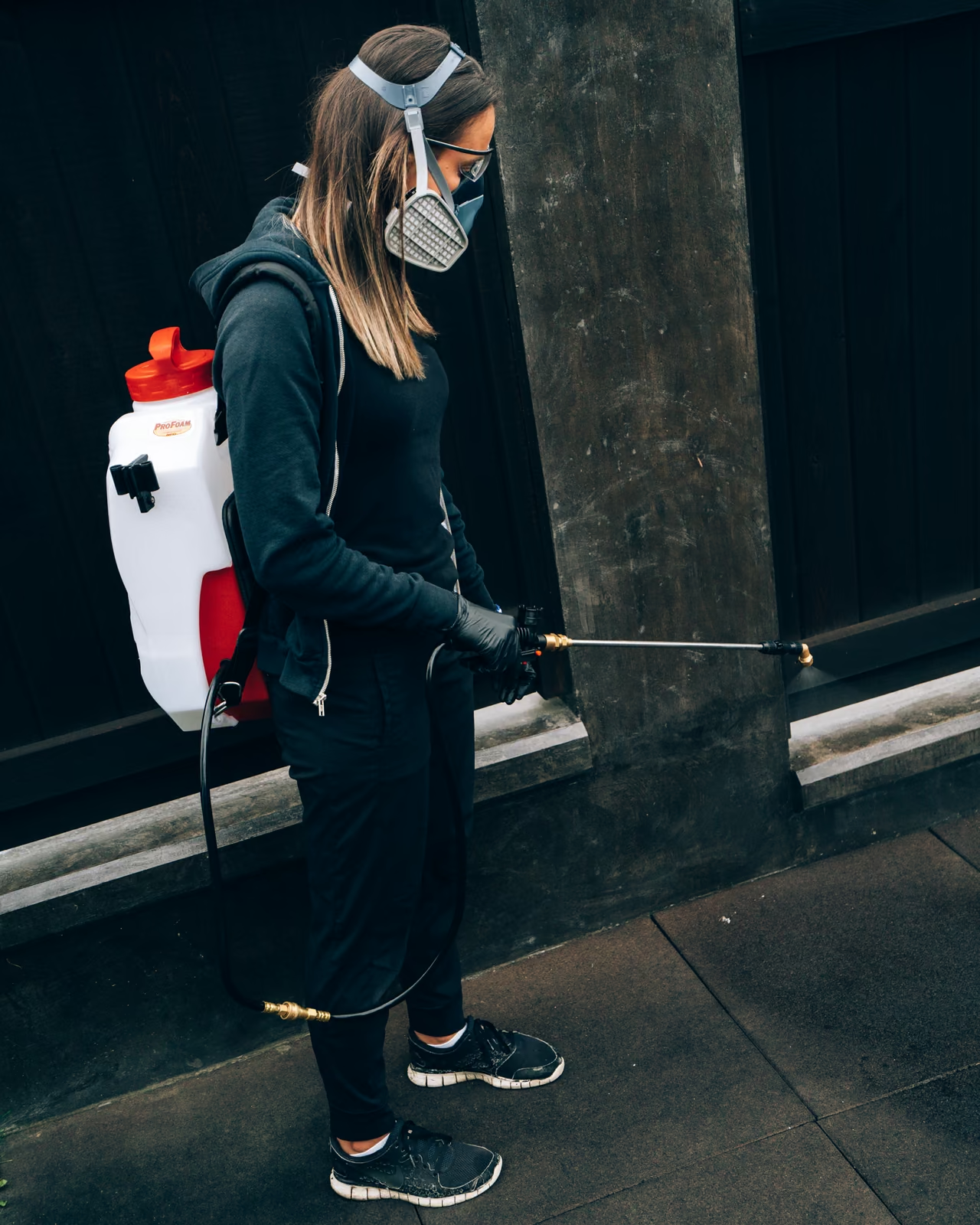
  • A Phantom technician with a backpack sprayer treats the base of a dark wooden fence beside a walk

    Fences and plants

    Fence lines and shrubs that touch the siding give spiders a bridge to the walls.

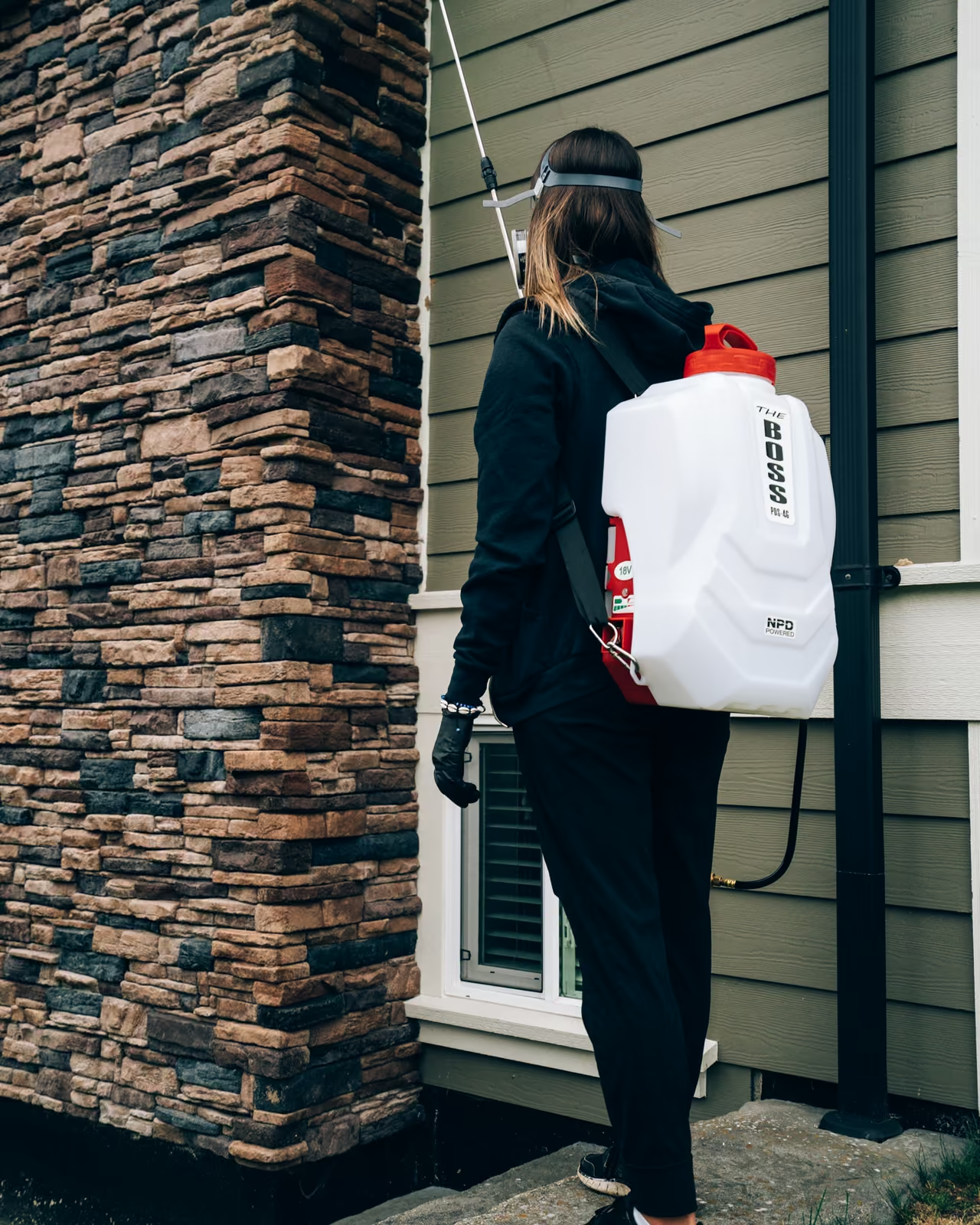
  • A Phantom technician with a backpack sprayer treats the siding beside a stone-clad column and a basement window

    Siding and basement windows

    Webs build along the siding and around basement windows, where the outside treatment goes.
How Our Spider Treatment Process Works

Each visit begins wherever you’ve been seeing spiders and webs, inside, outside or both, as booked. The technician brushes down webs, treats where spiders are active, and points out what keeps them coming back. The spider preparation sheet lists what to do before the visit.

  1. A Phantom technician with a backpack sprayer crosses a front lawn toward a house’s porch steps and stone column

    Inspection

    A technician checks where you’ve seen spiders and webs, then the quiet places nearby: ceiling corners, window frames, basements and storage inside; eaves, lights, doors, window wells and woodpiles outside.

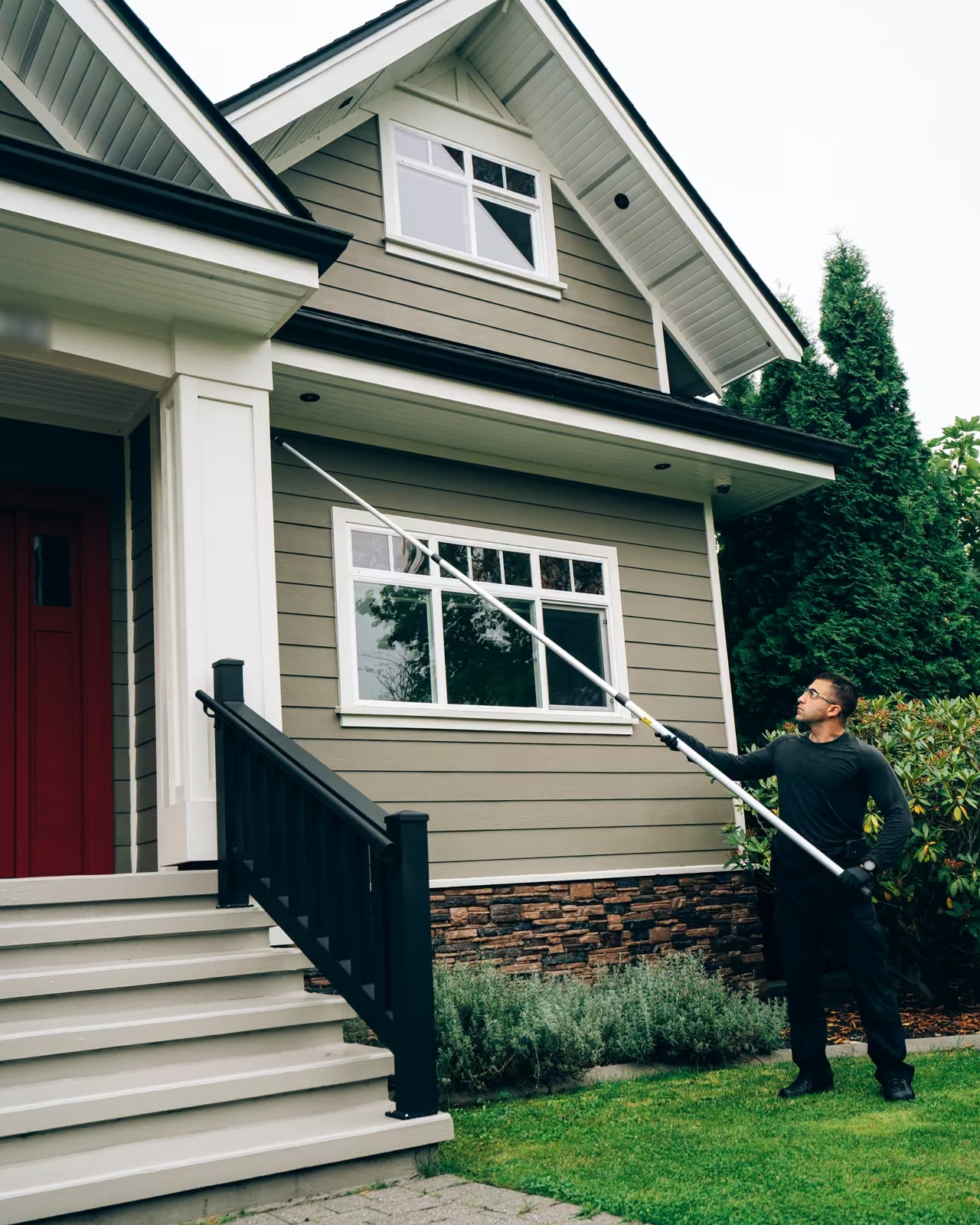
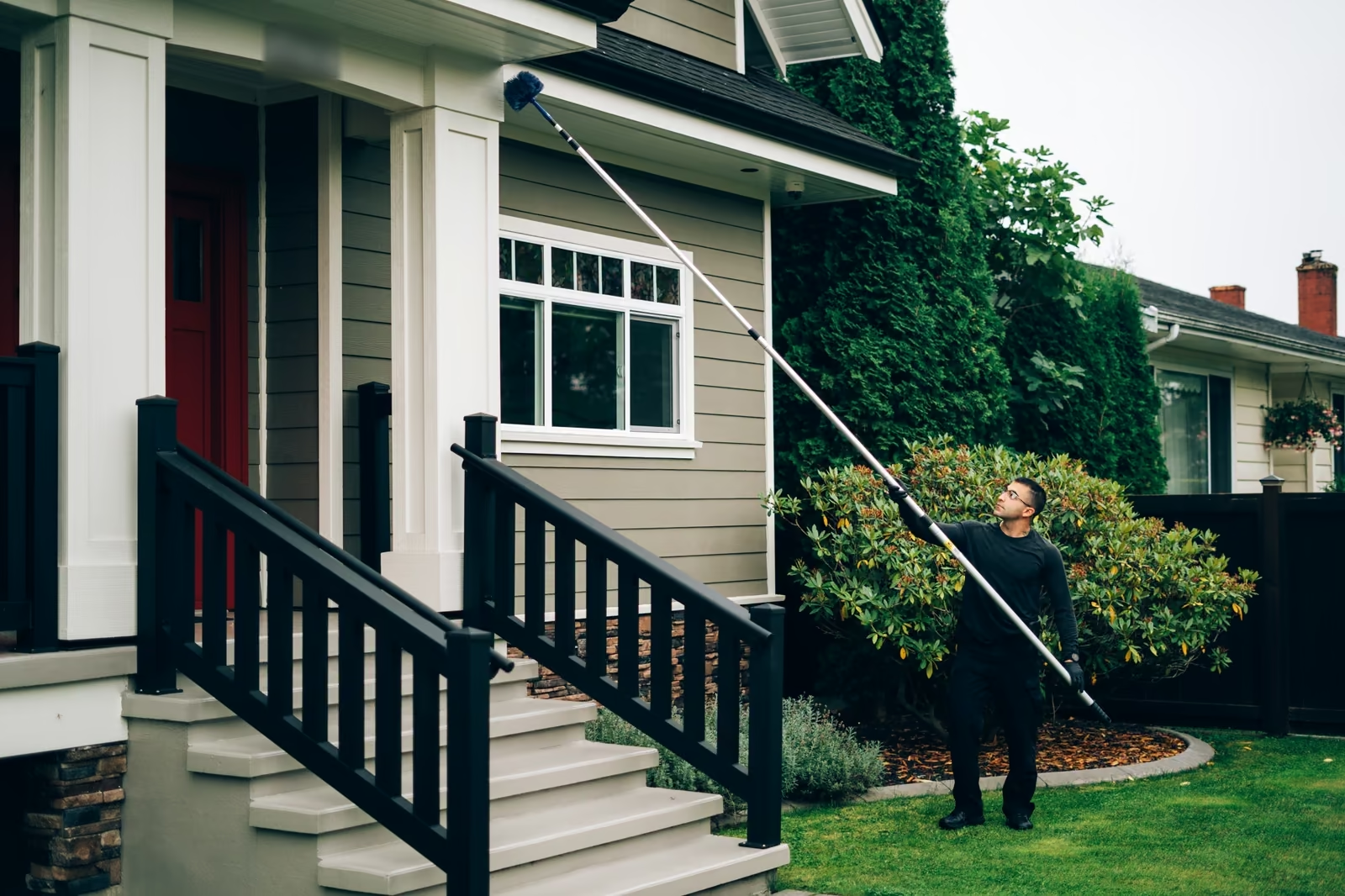
  2. A Phantom technician on a front lawn reaches a telescopic cobweb brush up to the soffit of a house’s porch

    Web removal

    Webs are brushed down with a cobweb brush on a long pole, from the eaves and the porch ceiling to the window frames.

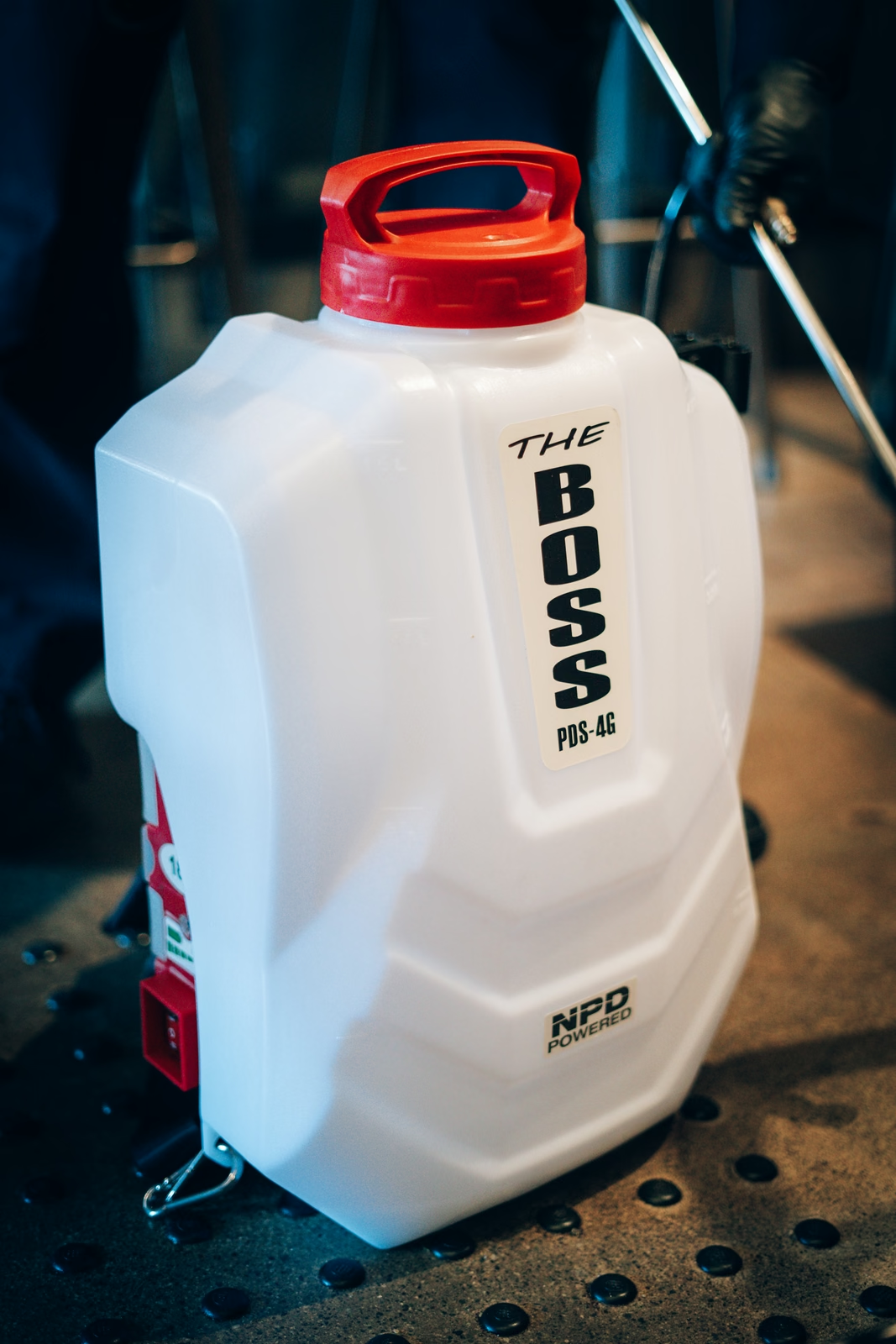
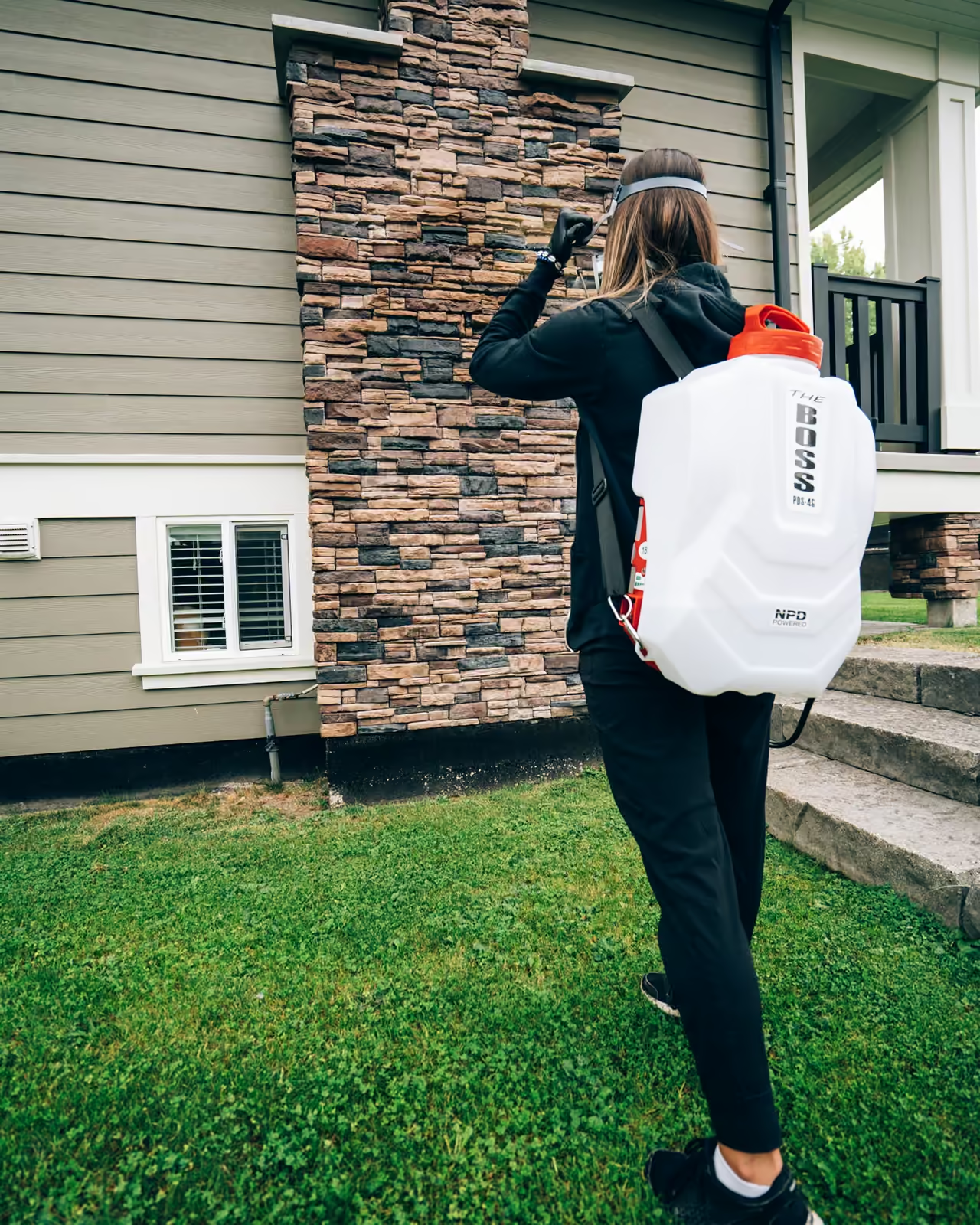
  3. A white backpack sprayer with a red cap, a technician holding the spray wand behind it

    Inside and outside treatment

    The technician applies targeted treatments where spiders are active: inside along the baseboards and other treated surfaces, and outside where webs and spiders gather on the house. Interior and exterior treatments are priced separately.

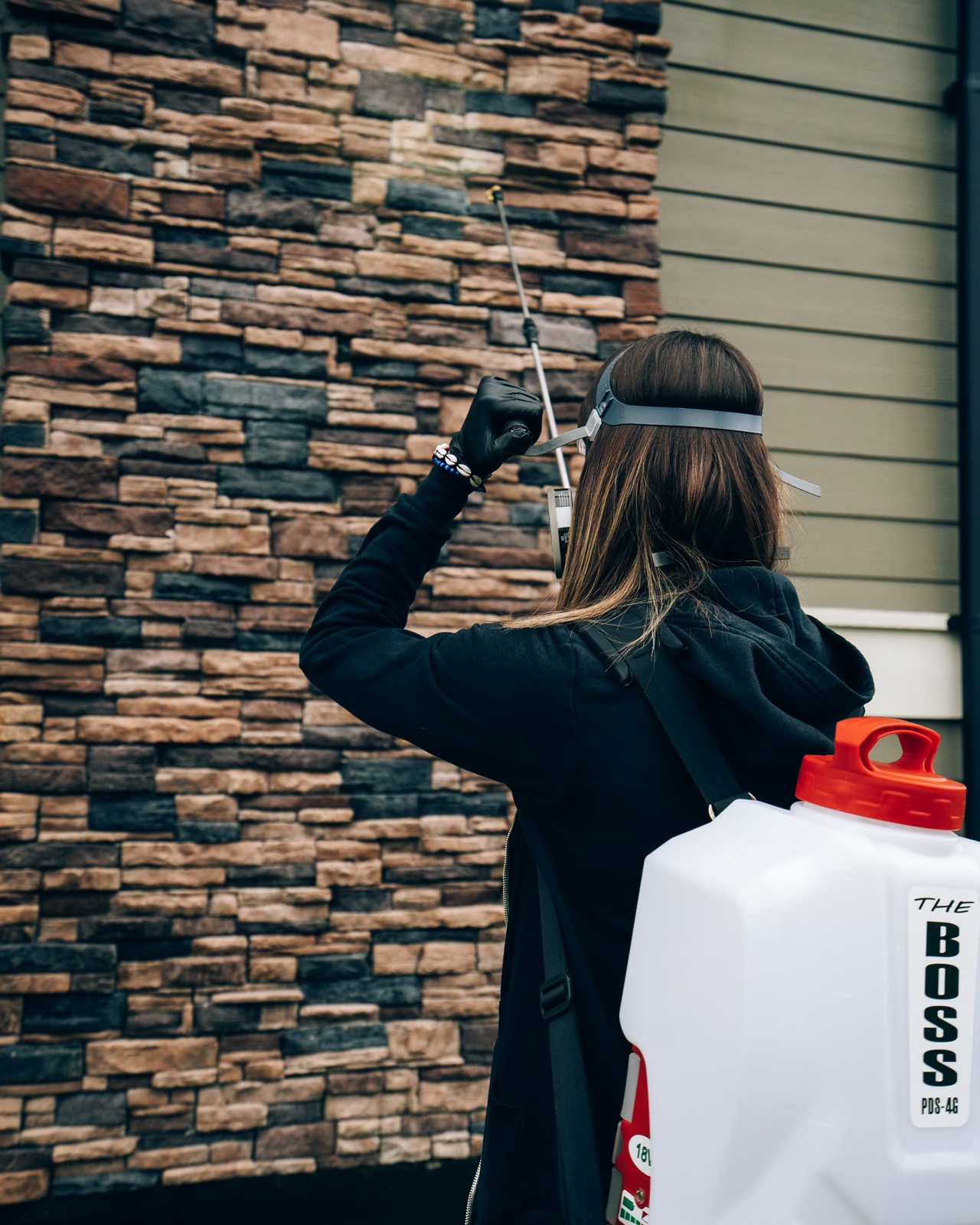
  4. A Phantom technician with a backpack sprayer raises the wand toward a stone-clad column at a front entry

    Entry points and aftercare

    Gaps where spiders get in are part of the visit, and larger openings can be sealed as exclusion work. The sheet notes a second cycle of spiders may appear as they grow, while the residual keeps working for up to 3 months.
After a spider treatment

Spider treatment Spider preparation and aftercare sheet

  1. Stay out The spider preparation sheet asks everyone to stay out for at least 6 to 8 hours once the job is done.
  2. Some people and pets The sheet recommends 24 hours for children under 2, expecting and nursing mothers, people with respiratory ailments, and pets.
  3. Knockdown The sheet says to expect a significant knockdown within 72 hours.
  4. Baseboards No vacuuming, mopping or cleaning within 6 inches of the baseboards and treated surfaces for at least 4 weeks, the sheet says.
  5. Residual The residual keeps working for up to 3 months; the sheet notes a second cycle of spiders may arrive as they grow.

Your booked service’s preparation sheet lists the exact times for your treatment.

How to Prepare for a Spider Treatment

Before the visit, empty the lower kitchen and bathroom cupboards, pull furniture and plants a foot away from the walls and clear the closet floors. Afterwards, everyone stays out for 6–8 hours or longer, as the spider preparation sheet explains.

Before the treatment

  • Empty the lower kitchen and bathroom cupboards
  • Pull furniture and plants at least a foot away from the walls
  • Clear all closet floors
  • Pick up toys, clothes and books from the floor
  • Unplug the fish tank’s air pump and lay a wet towel over the tank

After the treatment

  • Keep everyone out for 6–8 hours or more, as the spider preparation sheet asks; it recommends 24 hours for children under 2, expecting and nursing mothers, people with respiratory ailments, and pets
  • Open the windows to air out your home when you come back
  • Don’t vacuum, mop, sweep or clean within 6 inches of the baseboards and treated surfaces for at least 4 weeks
  • Expect a significant knockdown within 72 hours
  • A second cycle of spiders may appear as they grow; the residual keeps working for up to 3 months
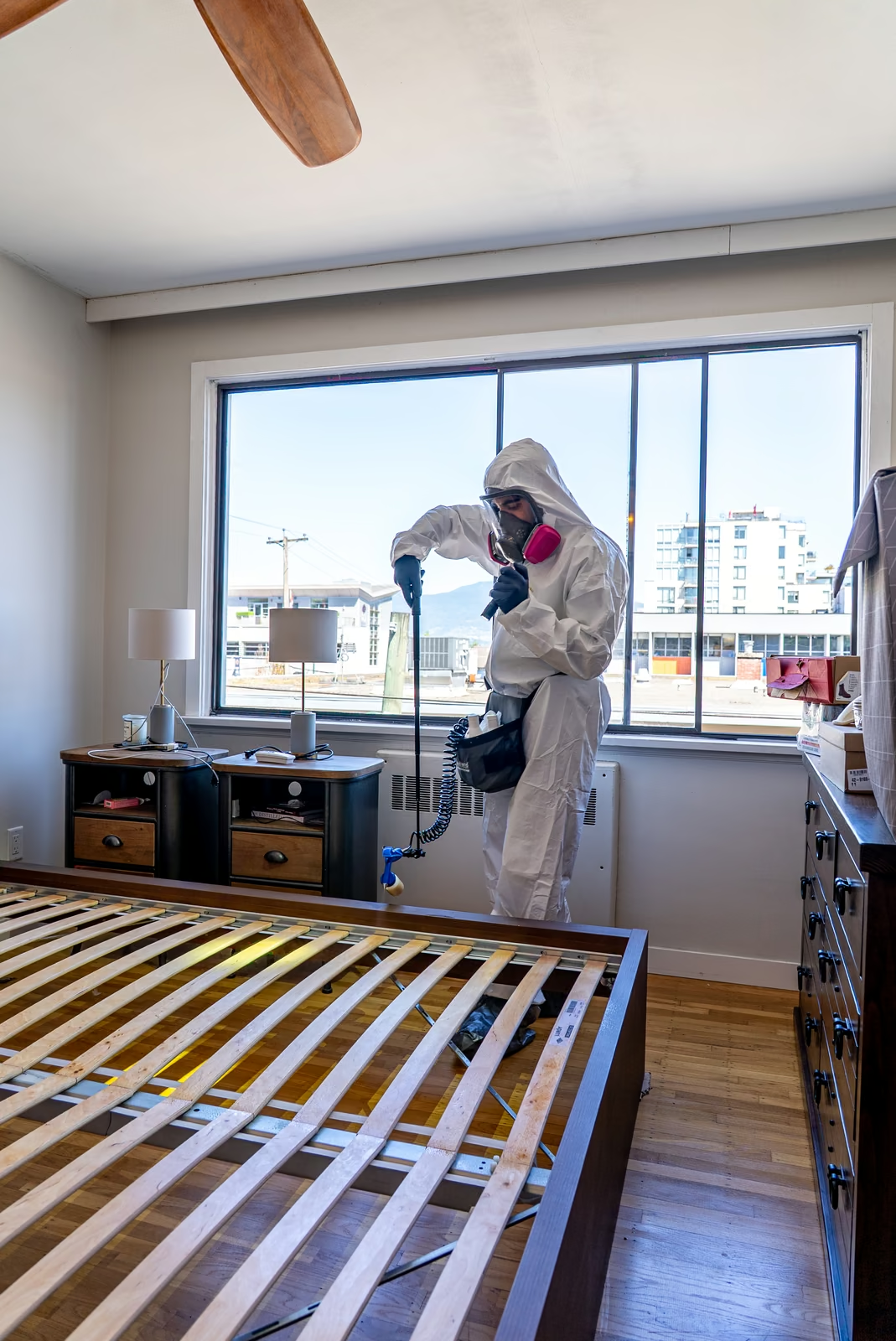
A Phantom technician in a coverall and respirator treats along the window wall of a cleared bedroom

Spider preparation and aftercare sheet

Spider Treatment Cost in Vancouver

A spider treatment costs $295–$425 + GST inside a house and $325–$375 + GST outside it. For a condo, apartment or townhouse it’s $275–$395 + GST inside and $225–$375 + GST outside. Inspections are $150 + GST for a house or $125 + GST for a condo, apartment or townhouse, and phone estimates are free.

Interior treatment

  • House $295–$425 + GST
  • Condo, apartment or townhouse $275–$395 + GST

Exterior treatment

  • House $325–$375 + GST
  • Condo, apartment or townhouse $225–$375 + GST

Estimate and inspection

  • Estimate over the phone Free
  • Inspection, house $150 + GST
  • Inspection, condo, apartment or townhouse $125 + GST
  • Attic or crawl space, added to the inspection +$50 Waived if you book the service the same day.

Savings

  • Two or more services together 15% off
  • Seniors 5% off
  • Referrals, for both you and the new client $25 off

Prices are in CAD and exclude GST. These are standard prices for homes in Greater Vancouver and the Lower Mainland, and they can change with the size of the property, how severe the infestation is and the treatment it needs.

All pests and prices

One-Time Spider Treatment or a Seasonal Program

Book a one-time treatment for the spiders and webs you have now. If webs keep returning on the outside of the house, the Seasonal Perimeter Protection program treats the outside and clears webs at the eaves on every visit, on a schedule set for your property.

Spider treatment

  • When it fits Spiders and webs in or around your home now.
  • Visits One treatment, inside, outside or both.
  • Price $295–$425 + GST inside a house and $325–$375 + GST outside; $275–$395 + GST inside and $225–$375 + GST outside for a condo, apartment or townhouse.

Seasonal Perimeter Protection

  • When it fits Webs and spiders that keep coming back on the outside of the house.
  • Visits Each visit of our seasonal perimeter protection program treats a band around the outside and clears webs and new wasp nests at the eaves.
  • Price A free estimate; the schedule is set for your property.

Crawling Insect Seasonal Maintenance

  • When it fits Spiders that keep coming back inside and out, or alongside earwigs or silverfish.
  • Visits Each visit of our crawling insect seasonal maintenance program is an inspection inside and out, treatment indoors where insects are active, the exterior band and insect monitors.
  • Price $250–$450 + GST per visit for a house; condos, townhouses and businesses are quoted after an inspection.

Strata and rental buildings

  • When it fits Spiders and webs in several suites of one building, or in its common areas.
  • Notice B.C.’s Integrated Pest Management Regulation asks for a treatment notice to the resident and the owner or manager at least 72 hours before pesticide use in an occupied suite.
  • Program The multi-unit pest control program schedules visits across the building.

How to Keep Spiders From Moving Back In

Spiders follow the insects they eat and the quiet places they hide, so lasting control is about lights, gaps, plants and clutter, plus clearing webs. The B.C. Home and Garden Pest Management Guide notes insecticides are not generally effective against spiders, which is why a treatment works best alongside these fixes.

What helps at home

  • Switch outdoor bulbs to yellow ones, which draw fewer insects, as Health Canada suggests
  • Keep lights off the walls and away from doors where you can, as University of California IPM advises
  • Keep firewood and dense plants well away from the house
  • Screen crawl-space vents and basement windows, and caulk cracks around doors, window frames and pipes
  • Keep door sweeps and weather-stripping in good repair
  • Keep basements free of clutter such as boxes, papers, clothing and lumber
  • Sweep away webs as they appear, and vacuum webs and egg sacs often, except near treated baseboards for 4 weeks after a treatment
  • Keep clothes, shoes and blankets off the floor

Sprays, Traps or a Spider Exterminator: What Works

  • Store-bought spider sprays

    What it does Kill the spiders they hit.

    Its limits The Burke Museum notes sprays kill little beyond what they touch and egg sacs resist them; the B.C. guide says insecticides are not generally effective against spiders.

  • Sticky traps

    What it does Catch wandering spiders, the B.C. guide notes, and show where they get in, a Washington State University guide adds.

    Its limits They need to sit where pets and children can’t reach them, University of California IPM notes, and they don’t stop webs outside.

  • Vacuuming and sweeping

    What it does Removes webs, egg sacs and spiders quickly.

    Its limits Some spiders survive and rebuild, so it has to be repeated, the B.C. guide notes; after a treatment, the spider sheet asks you not to vacuum within 6 inches of treated baseboards for 4 weeks.

  • Peppermint oil and other repellents

    What it does Widely sold as spider repellents.

    Its limits The Burke Museum says no research supports peppermint oil, or hedge apples.

  • Professional treatment

    What it does Finds where spiders are settling, brushes down webs, treats inside and out where they’re active, and points out the fixes.

    Its limits Works alongside the habitat fixes, not instead of them: Health Canada advises against trying to wipe out spiders with chemicals.

More steps you can take yourself: how to keep spiders out of your home.

Why Vancouver Homes Call Phantom for Spiders

Phantom publishes its spider prices and its preparation sheet, and the company is fully licensed, insured and certified. Its technicians have served homes and businesses from Squamish to Abbotsford since 2019.

  • Our owner 15+ years of pest control experience serving British Columbia
  • Since 2019 29,000+ locations serviced from 2019 to 2026
  • Credentials Fully licensed, insured and certified Licensed under B.C.’s pest control regulations
  • Area 24 communities From Squamish to Abbotsford
  • A Phantom technician with a sprayer wand and a respirator around his neck explains spider control at a home

    Watch: a web-free home

    A Phantom technician explains how a spider treatment removes webs and treats key areas, in a 37-second video on YouTube.

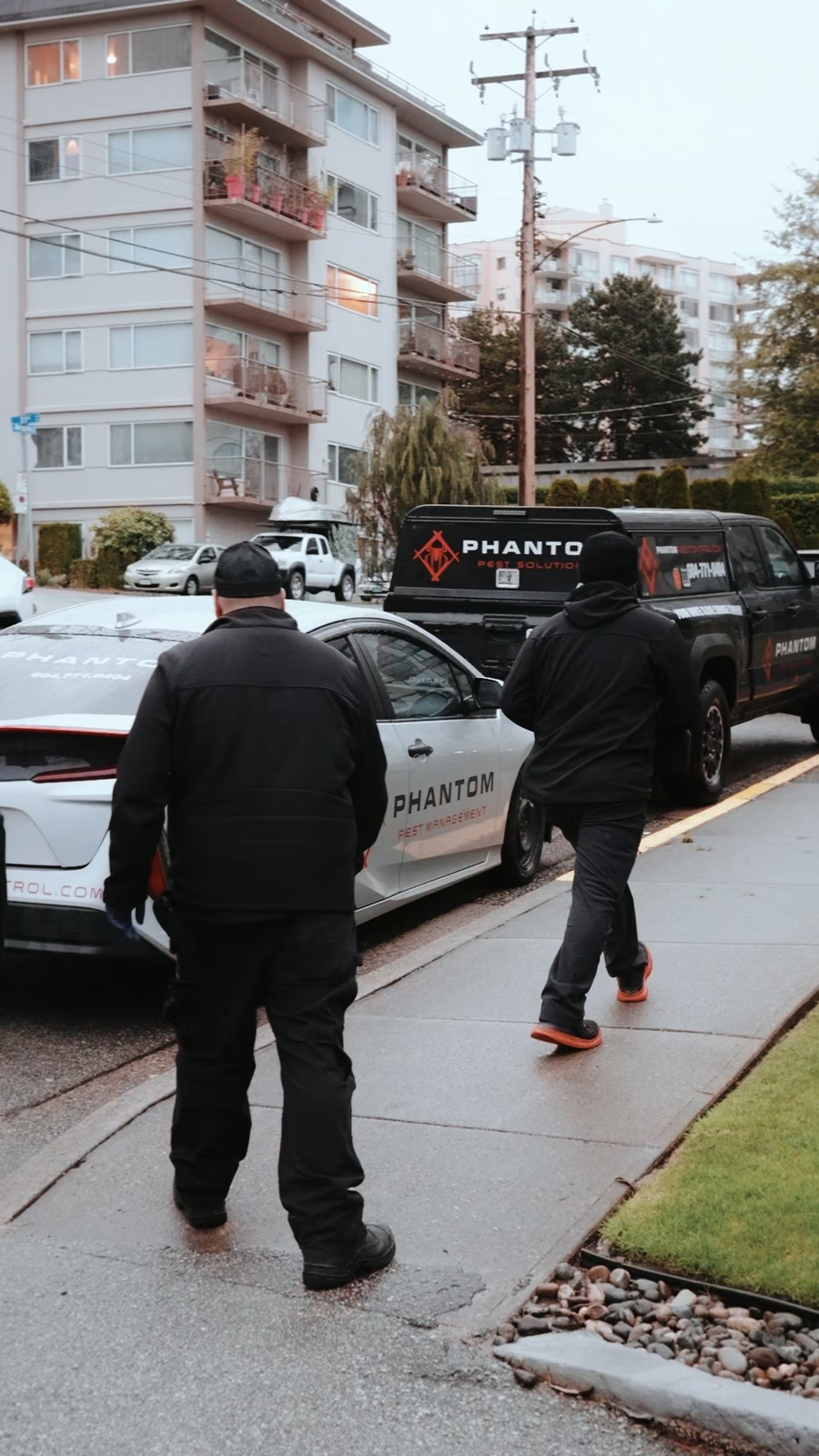
  • Two Phantom technicians walk along a wet sidewalk toward a white Phantom car and a black Phantom pickup

    On the way to a job

    Two technicians head for the Phantom vehicles on a rainy street.

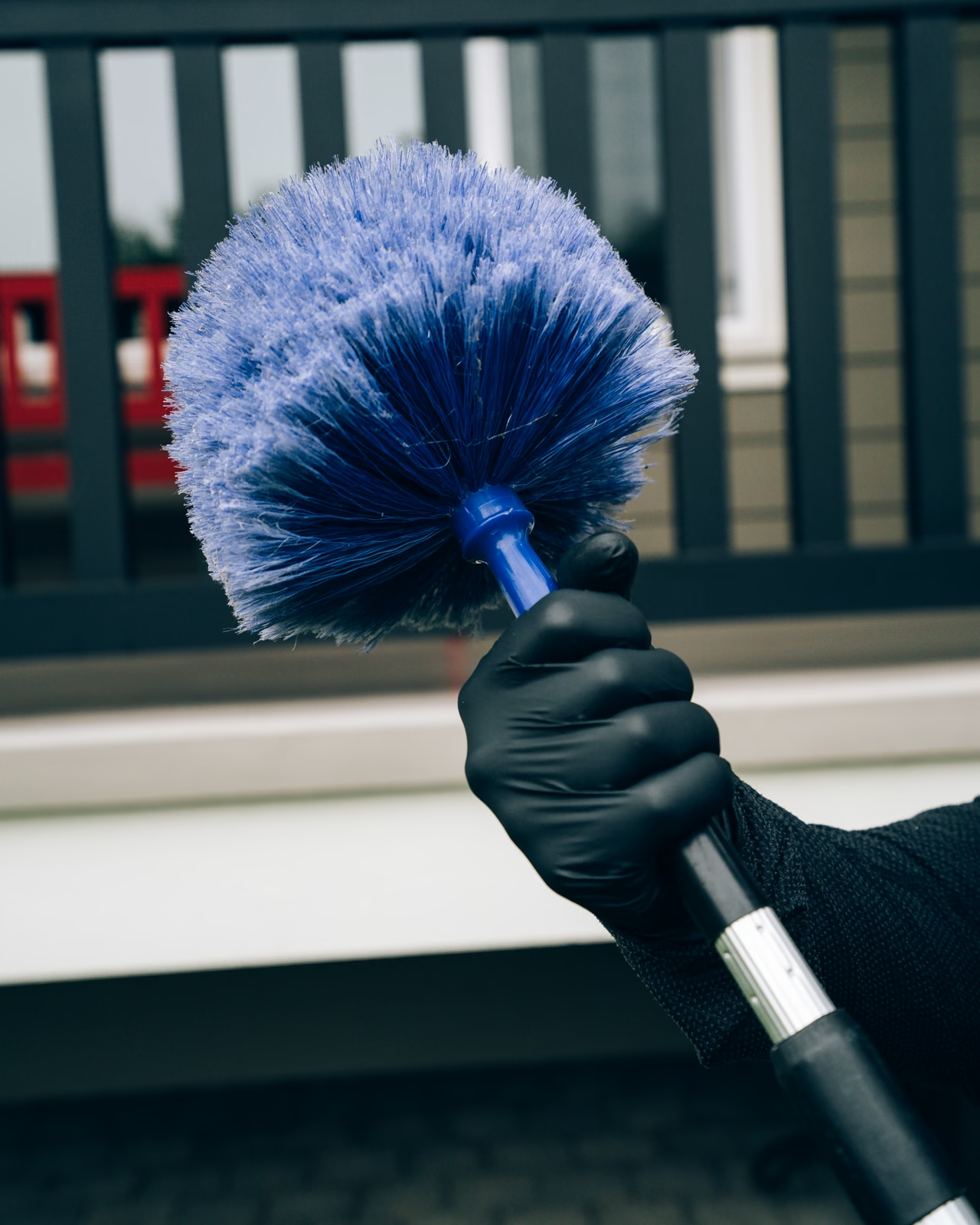
  • A gloved hand holds a round cobweb brush on a telescopic pole beside a porch railing

    The cobweb brush

    A round brush on a telescopic pole reaches webs and egg sacs at the eaves and porch ceilings.

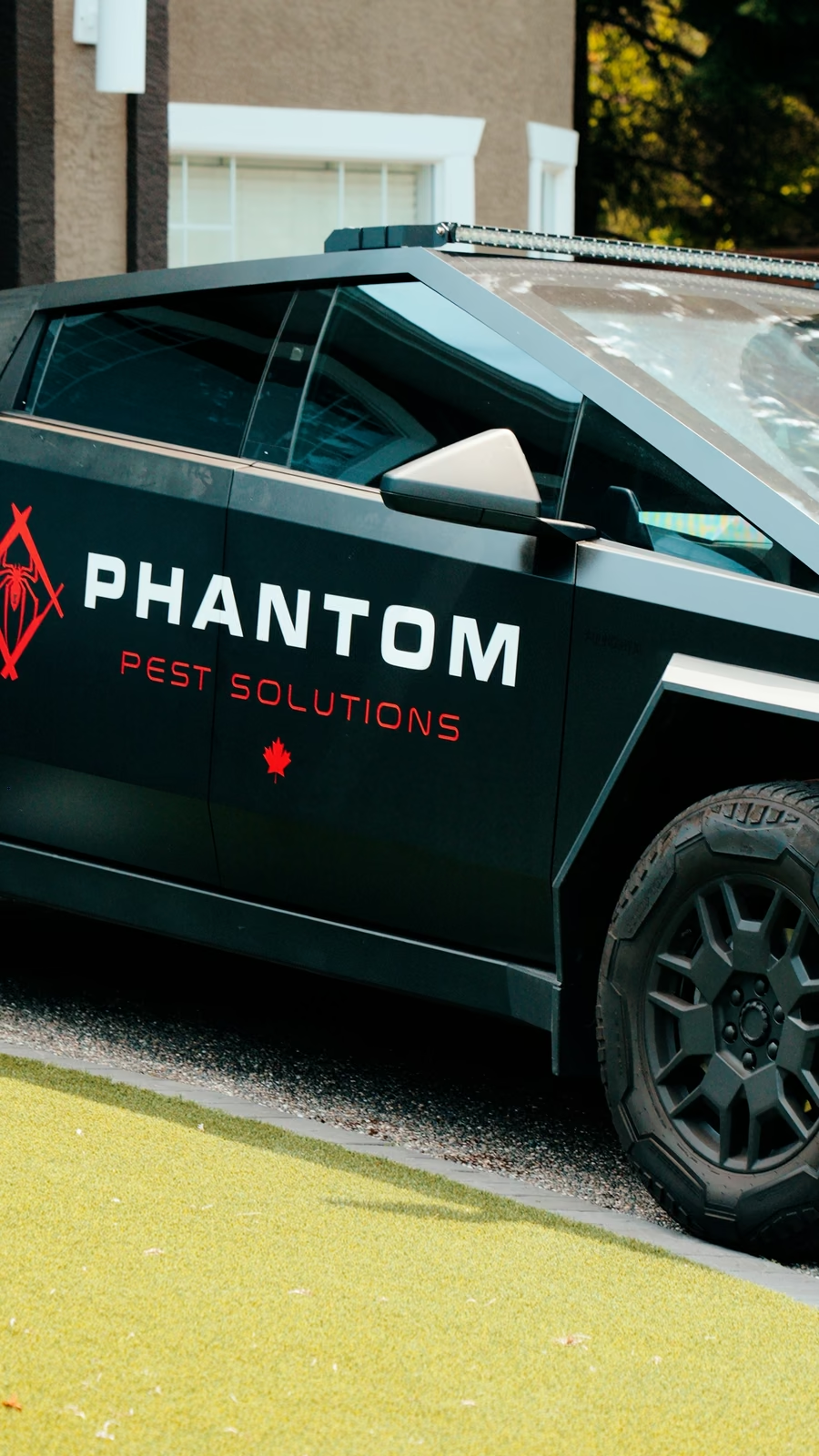
  • The red Phantom spider logo on the door of a black Phantom Cybertruck parked on a home driveway

    The spider in our logo

    The red spider of the Phantom logo, on the door of one of the company’s trucks.

Read our Google reviews

Where We Treat Spiders in Vancouver & the Fraser Valley

Spider treatments cover the 24 communities below, each with its own local page, from Squamish to Abbotsford. If your town isn’t listed, name it in the estimate form or call the office.

All service areas

Spider Control FAQs

Prefer to talk?

604-771-0404

Why do I see more spiders in late summer and fall?

Mostly because it’s mating season, not because spiders are escaping the cold. The Royal BC Museum says more spiders show up in homes in the fall because male spiders are out looking for females, and the Burke Museum notes fewer than 5% of the spiders you see indoors have ever been outdoors. Most live their whole lives in, on or under the house. Why spiders show up in the fall

Can spiders come up through the drain?

No. Modern drains hold water in a trap that spiders can’t get through, the Burke Museum explains, and the Royal BC Museum lists the drain idea among the common fall spider myths. A Washington State University fact sheet notes the giant house spider ends up in sinks and tubs while looking for water, then can’t climb back up the slick sides.

What should I do if I find a black widow?

Leave it alone and don’t touch its web: HealthLink BC notes black widows tend to bite when their webs are disturbed. Health Canada says they spin small webs close to the ground in garages and sheds, or under rocks outside; the B.C. guide adds woodpiles and advises gloves when moving wood. If one bites you, get medical help right away. Are house spiders dangerous?

What do spider egg sacs look like?

It depends on the spider. The long-bodied cellar spider leaves white egg sacs in its messy web, a Washington State University guide notes, and University of California IPM describes the false black widow’s as a cotton ball and the black widow’s as small, tough and yellowish. Clemson University’s extension says a broom or vacuum removes them and can cut spider numbers in a short time, and the Burke Museum notes egg sacs resist pesticides.

Was it really a spider bite?

Often not. B.C.’s spider atlas notes spider bites are often misdiagnosed, and the Burke Museum says many “spider bites” turn out to be infections or bites of bloodsucking insects such as bed bugs. A real spider bite is usually mild, no worse than a bee sting, University of California IPM notes, and HealthLink BC adds that babies and children may react more than adults. If a bite gets worse, shows signs of infection or you feel unwell, call your doctor or HealthLink BC at 8-1-1; if you think a black widow bit you, get medical help right away.

Are house spiders good to have around?

Mostly, yes. Health Canada notes spiders don’t transmit any diseases and calls them natural and efficient pest control agents. Some even keep each other in check: the Royal BC Museum says the false black widow, which it calls the brown house spider, kills and eats its larger relatives. A treatment makes sense when webs and spiders build up in the rooms you use, or around the doors and windows.

How to Book a Spider Treatment

Say where the spiders or webs are and how long you’ve seen them, and the office calls you back. A photo of the spider or the web helps, and estimates over the phone are free.

Free estimate request

Property - Step 1 of 4
What kind of property is it?

Prefer to talk?

604-771-0404

Office and Service Hours: Monday to Friday, 9 AM to 5 PM.