Seasonal Pest Control for Crawling Insects in Vancouver & Fraser Valley
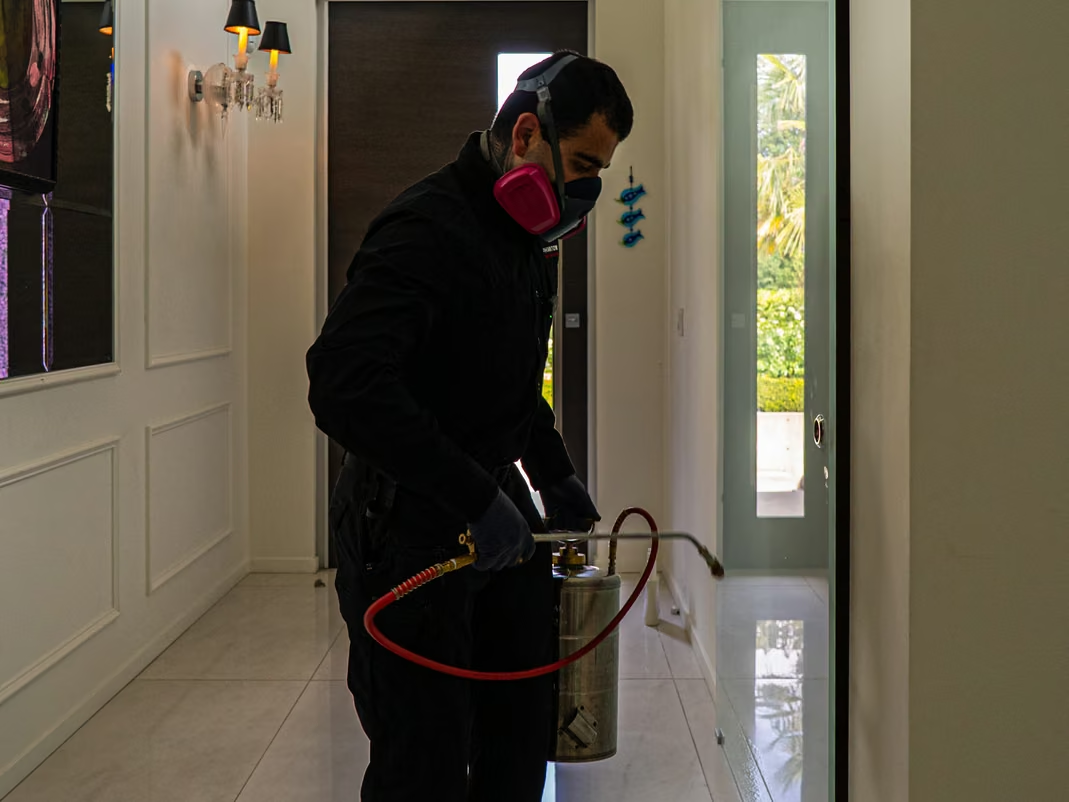
Phantom Pest Control’s Crawling Insect Seasonal Maintenance Program brings seasonal pest control to homes and businesses in Vancouver, BC and the Fraser Valley. Each visit checks inside and out, treats where ants, earwigs, silverfish, spiders or cockroaches are active, and reads the insect monitors.
Per house visit
$250–$450 + GST
Service area
Why Crawling Insects Come Back Each Season
Many of the crawling insects found indoors live just outside, in mulch, leaf litter, damp soil and the gaps at the foundation. As the weather shifts they wander in for food, shelter or moisture, so the same insects can return when the season turns.
The Crawling Insect Seasonal Maintenance Program brings a technician back on a schedule set for your property. Every visit inspects inside and out, treats indoors where insects are active, applies the exterior band and reads the insect monitors.
Need one visit for a problem you have now? Our crawling insect control service treats an active infestation as a one-time service, with its own prices. The seasonal program is for homes and buildings where the same insects keep coming back as the weather changes.
B.C.’s pest guide says wood mulch against the house invites millipedes, sowbugs and earwigs.
Worn door sweeps and unsealed frames and pipe openings let crawling insects walk in at ground level.
House centipedes move in where a sub-floor, drain or basement stays damp, Health Canada notes.
Silverfish favour sinks, floor drains and tubs, and cockroaches the warm, damp spots near plumbing.
Pavement and odorous house ants nest outside and trail indoors for food, mostly from spring into summer.
Cockroaches ride in on used furniture, food, bottles and cartons, according to Health Canada.
Crawling Insects the Program Covers
The pests each visit looks for, most of them linked to a page with more about them.

They nest under paving, stones and stumps and trail inside for food. Health Canada lists the odorous house ant among the ants that invade homes in Canada.

Night feeders that hide in cool, damp places by day and may start wandering indoors in June or July.
Small land crustaceans from wet mulch and compost. Indoors they usually dry out and die quickly, so a steady stream of them inside can point to damp.
Arthropods rather than insects, which B.C.’s pest guide says may move into homes in spring and fall.

They live indoors near sinks, floor drains, tubs and showers, wherever the air stays warm and damp.

They feed on insects, so fewer crawling insects indoors leaves them less to hunt.

They hide in warm, damp kitchens, bathrooms and plumbing areas and come out at night, so the monitors help show where they are.
Note where and when it turned up, and add up to 3 photos to your estimate request so the first visit starts with them.
When Crawling Insects Come Indoors Season by Season
Ants, earwigs, millipedes and house centipedes follow the weather, so each gets a bar for the months its source names. Spiders, cockroaches and silverfish can turn up in any month, so they’re listed below the chart instead of getting a bar.
Bars show the months named by Phantom’s ant page, Health Canada and B.C.’s Home and Garden Pest Management Guide. Sowbugs and pillbugs follow wet soil rather than the calendar, so they have no bar.
Any month
They hunt indoors in any month, following the insects they eat.
Heated kitchens and plumbing let them carry on in any month; the monitors show where.
Damp decides where they live, not the season: sinks, drains, tubs and showers.
Where Crawling Insects Get Into a Home or Building
Many crawling insects move in from the garden edge, through gaps at doors, frames and pipes, into the basement and on to kitchens and bathrooms. The inspection checks every stage of that route.
- AMulch and leaf litter
Wood mulch against the walls, which B.C.’s guide says invites moisture-loving pests.
- BDownspouts and wet soil
Water pooling at the foundation keeps the soil damp for sowbugs and earwigs.
- CDoor thresholds
Worn sweeps and gaps under doors, where millipedes slip in at night.
- DWindow frames and pipe entries
Gaps around frames, and where pipes and cables pass through the walls.
- EVents and window wells
Crawl space vents without screens, and basement window wells that millipedes fall into.
- FFloor drains and damp corners
Wet sub-floors and drains, which draw house centipedes and sowbugs.
- GUnder sinks and around tubs
Warm, damp plumbing areas used by silverfish and cockroaches.
- HBaseboards and wall seams
Where crawling insects travel and hide, so the technician needs to reach them.
- IHeat-duct outlets
The outlets of heat ducts, which B.C.’s guide names among the places to treat for silverfish.
What Keeps Crawling Insects Out Between Visits
Much of what keeps crawling insects out happens between visits: drier soil at the walls, tighter doors and less clutter on basement floors. The treatments themselves are a technician’s job.
You can
B.C.’s guide suggests a 2–3 foot band with no wood mulch around the house, left bare or filled with gravel.
Replace worn door sweeps, turn downspouts away from the house and stack firewood off the ground, away from the walls.
Run a dehumidifier or a fan in a damp basement, and fix dripping taps and sweating pipes.
Needs a technician
Cracks, crevices and baseboards are treated only where activity is found, and the preparation sheet sets the time to stay out.
A residual spray at the foundation and around door and window frames, renewed on each visit.
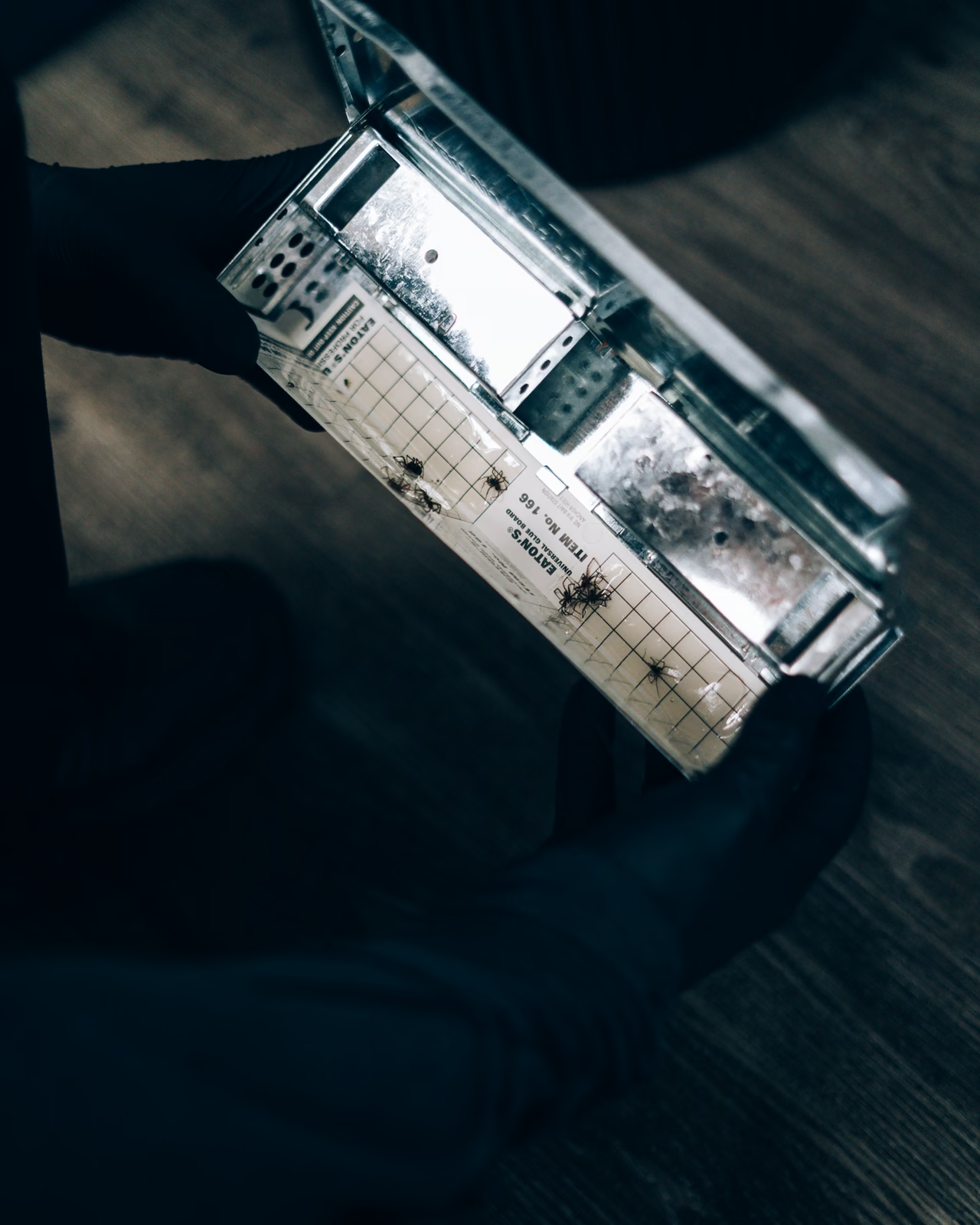
Insect monitors go in basements, bathrooms or crawl spaces and are read on every visit.
Millipedes, sowbugs and centipedes aren’t insects, and Health Canada advises against indoor pesticides for millipedes and sowbugs, so the identification decides the treatment.
How a Seasonal Pest Control Visit Works
Every visit follows the same five steps, for a house, a townhouse or a business.
The technician checks kitchens, bathrooms, the basement and the crawl space, and walks the outside, for activity and entry points.
The monitors in basements, bathrooms or crawl spaces show which insects are moving, and where.
Cracks, crevices and baseboards are treated where the inspection or the monitors find activity.
A residual spray along the foundation and around door and window frames, booked for a dry spell.
B.C.’s IPM Regulation has the pest control company identify ways to prevent pests before any pesticide is used, and check afterwards whether the treatment worked.
Rodent, ant and other recurring programs are listed together on one page.
Before a Visit With an Indoor Treatment
For a home, the preparation sheet for your booked service lists what to do before an indoor treatment. These steps are from Phantom’s crawling-insect sheet, on our client forms page.
Take everything out of the lower kitchen and bathroom cupboards and drawers, and store it sealed, away from the treatment area.
Move furniture, plants and appliances at least one foot from the walls so baseboards and wall seams can be reached.
Bag or box what’s on those floors, and seal it.
Toys, clothing and books come off the floor.
Switch off air pumps, lay a wet towel over each tank, and take pets out, birds and reptiles included.
A little air while you’re out lets the space ventilate.
After the Visit: Stay-Out Time and Aftercare
What the sheet asks once an indoor treatment is done, and what to expect over the following weeks.
The stay-out time
For a crawling-insect treatment indoors, Phantom’s preparation sheet asks everyone to stay out for at least 6 to 8 hours from the start of treatment, and 24 hours for pets, people with respiratory conditions, nursing mothers and children under 2. Your booked service’s preparation sheet lists the exact time.
Air the rooms
Open the windows for another 30 minutes to an hour when you come back.
Leave the baseboards alone
Don’t vacuum, sweep, mop or clean the treated areas, especially within 6 inches of baseboards, for at least 4 weeks, and use no store-bought sprays or cleaners on them.
Expect a few wanderers
Insects crossing the residual come out into the open, and a second wave can follow as eggs hatch.
Watch the first 72 hours
Activity should drop clearly within 72 hours, and the residual keeps working for up to 3 months if the aftercare is followed.
Health Canada advises keeping people and pets out of a treated area until the pesticide has fully dried.
A monitor moved or thrown out can’t show the next visit what passed by.
Damp Rooms: Where Crawling Insects Settle In
Basements, bathrooms and crawl spaces can stay damp when the rest of the house dries out, and many indoor crawling insects live there. House centipedes move in where the sub-floor or drains stay wet, and Health Canada says a persistent indoor infestation of sowbugs, pillbugs or millipedes may point to a serious moisture problem.
A dehumidifier or fan, and boxes kept off the floor.
Fix dripping taps and run the fan after showers.
Screens on the vents, and no wet wood or cardboard left inside.
Insulate sweating pipes and keep the floor drains clear.
Sowbugs and millipedes usually die quickly indoors because the air is too dry for them, so Health Canada advises against indoor pesticides for them and points to drying the space: a dehumidifier or a small fan in a damp basement, and repairs to foundation and window cracks before the fall. House centipedes hide in cracks, crevices and behind baseboards, it adds, and sometimes under the bark of firewood stored indoors, so keep the firewood outside until it’s needed.
Silverfish in bathrooms answer to the same fix. B.C.’s guide says they are most common in older buildings, and that frequent airing and getting rid of dampness discourage them, and that sticky traps on the floor beside the baseboards often give good control. That is why each visit reads the monitors in these rooms: a monitor that keeps catching insects in one corner points to the damp spot, or the gap, worth fixing first.
Why Choose Phantom for Seasonal Pest Control
Who does the work, what a visit includes, how the schedule is set and the rules it follows.
Experience
15+ years of pest control experience serving British Columbia
Credentials
Fully licensed, insured and certified
Every visit
Inspection, indoor treatment where active, exterior band, monitors
Rules
Work follows B.C. Ministry of Environment rules
Preparation
EXCELLENT Based on 830 reviews
 Posted on Google

 Ashley WoodWe were having some problems with mice at our home so we contacted Phantom and Darcey came and resolved the issues quickly. Darcey was friendly, great with our dog and made sure we understood everything he was doing and what to expect. Happy to report no more mice! Thank you, Darcey!Posted on Google
 Michelle HerrExcellent pest control service! The team was professional, friendly, and knowledgeable. They arrived on time, explained the treatment process clearly, and made sure everything was taken care of. Their attention to detail and commitment to customer satisfaction were impressive. I really appreciate their prompt service and effective results. Highly recommend them to anyone looking for reliable and professional pest control services!Posted on Google
 Nasib AbdulMark was great and he did a great job and was very knowledgeable.Posted on Google
 HenryDarcey provided exceptional support in resolving our pest concerns. He was punctual, highly knowledgeable, and professional throughout the process. We have been trying to deal with these issues for quite some time without any luck but thankfully the matter is now resolved. We appreciate the dedication he demonstrated and will be sure to reach out should we require his services again.Posted on Google
 Jacqueline BruceI want to let you know that June did an amazing job on our house for the moths. He was really friendly, patient, professional and conscientious. I wasn't fully ready for the treatment when he arrived and he managed to move some clients so he could return later. He explained a lot about the treatment and the moths' habits which really helped with other areas that he wasn't even treating. He kindly helped me moved some things to barricade the area from pets. I would get Phantom back and highly recommend them.Posted on Google
 Fraser HannayDarcey was amazing at helping us deal with a wasp nest. Friendly, knowledgeable and on time! Thank you!Posted on Google
 JanetWe hired Phantom Pest Control to eliminate a wasp nest inside our house and the service was great. Information on the phone when I first called to book an appointment was clear and we got an appointment quickly. Juan, the specialist who arrived to do the job, fully explained the process, did the work, and explained what to watch in the outside chance additional work might be needed. We are happy with the job and were glad to have Juan as our technician.Posted on Google
 Jenny WuWe received exceptional service from Joy. She was both professional and knowledgeable, explaining the service thoroughly.Posted on Google
 Sean AbbottThey showed up on time, early actually. Mark was very professional and explained how the cockroaches work. He was personable and efficient, and hygienic with how he worked (wearing protective boot covers and gloves). I was impressed and would definely call again if needed.
Seasonal Pest Control Across Vancouver & Fraser Valley
The program reaches houses, townhouses, condos and businesses throughout the Lower Mainland and the Fraser Valley. Each community links to its local page.
Vancouver & North Shore
Burnaby & Tri-Cities
Richmond & Delta
Fraser Valley
Related Services
Pests this program leaves out, and work that can run alongside it.
Sealing the gaps and openings insects use, booked as its own service.
Mice and rats aren’t part of this program and have one of their own.
Wasp and yellowjacket nests are treated as a separate service.
Flies and fruit flies aren’t part of this program and have a service of their own.
Seasonal Pest Control FAQs
Seasons, visit schedules, prices, the outside only, rain, notices, strata and businesses, millipedes, spiders and ants.
Prefer to talk?
Is pest control seasonal in Vancouver?
For the crawling insects that live outdoors, yes, and the timing matters. Health Canada says to begin earwig control measures in early spring, in dry, warm weather while the earwigs are young, with any insecticide in June or early July. It also advises repairing cracks in foundation walls and around windows before the fall, ahead of the millipedes, sowbugs and centipedes.
Indoor pests such as cockroaches and silverfish don’t wait for a season, so the monitors keep track of them on every visit.
How often are seasonal pest control visits?
It depends on the property. Phantom sets the visit schedule per property, timed to the crawling-insect seasons around your home or building: when ants, earwigs, millipedes and house centipedes are active, plus the indoor pests the monitors track in any month.
Call or text 604-771-0404 to talk through what your property needs.
How much does seasonal pest control cost?
A program visit for a house costs $250–$450 + GST. Condos, townhouses and businesses are quoted after an inspection.
Estimates over the phone are free: call or text 604-771-0404 with the type and size of the property and the insects you’ve seen, and where.
Can I book only the outside of the house?
Yes. Phantom’s Seasonal Perimeter Protection Program treats the outside of the building only. This program adds the inside of a home or building: the indoor inspection, treatment where insects are active, and the monitors read on every visit, so it suits properties where insects already turn up indoors.
What happens if rain is forecast for my visit?
The exterior part waits for a dry spell. It needs 3 days of dry forecast, and B.C.’s IPM Regulation bars residual pesticides on water-saturated soil, during heavy rainfall or when heavy rain is imminent (s. 71 (9)).
Dry spells are easier to find in summer: Vancouver’s airport averages 6.2 days with rain in July and 19.3 in November (Environment and Climate Change Canada, 1991–2020 normals).
Will I get notice before an indoor treatment?
Yes. B.C.’s IPM Regulation asks a licensed company to give a written treatment notice at least 72 hours before using a pesticide in an occupied home, to the occupant and, if different, the owner or manager (s. 10 (2)).
The notice names the pest, the product’s registration number and active ingredient, the planned date and how long to stay out of the area (s. 63).
Does the program work for strata buildings, rentals and businesses?
Yes, on the same four-part visit, and Phantom is open 24/7 for pre-arranged commercial services. For councils and managers, our strata and apartment building page covers whole-building work. On a property with two or more separate homes, a house with a rented suite included, shared indoor areas and outdoor areas within 5 m of a door or window are common areas under B.C.’s rules.
Treating them takes a notice to the owner or manager at least 48 hours ahead (s. 10 (4)). Crack-and-crevice treatments and gel bait placed in a hidden spot out of reach of children and pets are exempt only from the second part, the notice to residents or the posted signs (s. 12).
Are millipedes, sowbugs and centipedes harmful?
Not seriously. Health Canada says most house centipedes can’t bite through human skin, and the few that can cause something like a mild bee sting that usually fades within a few hours. Sowbugs and pillbugs don’t bite, sting or carry disease, and they don’t infest food, clothing or wood. B.C.’s pest guide adds that millipedes and centipedes do no damage.
What a crowd of them can tell you is where the damp is.
Why aren’t spiders simply sprayed?
Because spraying alone does little for them. B.C.’s Home and Garden Pest Management Guide says insecticides are not generally effective against spiders, and Health Canada doesn’t recommend trying to remove every spider with chemicals.
Fewer insects indoors, screens on crawl space vents and sealed frames do more, and registered products around the outside of door and window frames help keep them from coming in. Our guide to keeping spiders out of your home has the details.
Are carpenter ants and pharaoh ants included?
No. Carpenter ants have their own carpenter ant control program, and pharaoh ants their own treatment and prices. B.C.’s pest guide says a carpenter ant nest inside the walls has to be found and destroyed, and that spot-treating where the ants are seen entering a building isn’t effective.
Pharaoh ants don’t live outdoors in our climate, the guide adds, so a seasonal visit doesn’t fit them either.
Plan Your First Seasonal Visit
Tell us about your home or building, which insects you’ve seen and where. We’ll set a schedule for your property and book the first visit.
Office and Service Hours: Monday to Friday, 9 AM to 5 PM. Open 24/7 for pre-arranged commercial services.