
Silverfish in bathroom spaces often find the combination they need: moisture, sheltered crevices and accessible food. Condensation or a plumbing leak can make a bathroom suitable, but one insect does not establish a large infestation. Start by removing the insect and checking beneath the sink and around fixtures for recurring dampness.
If activity continues, Phantom Pest Control offers silverfish control in Vancouver and the Lower Mainland. First, confirm what you have found and look for a pattern rather than assuming every sighting requires treatment.
On this page7 sections
How to Identify Silverfish in Your Bathroom
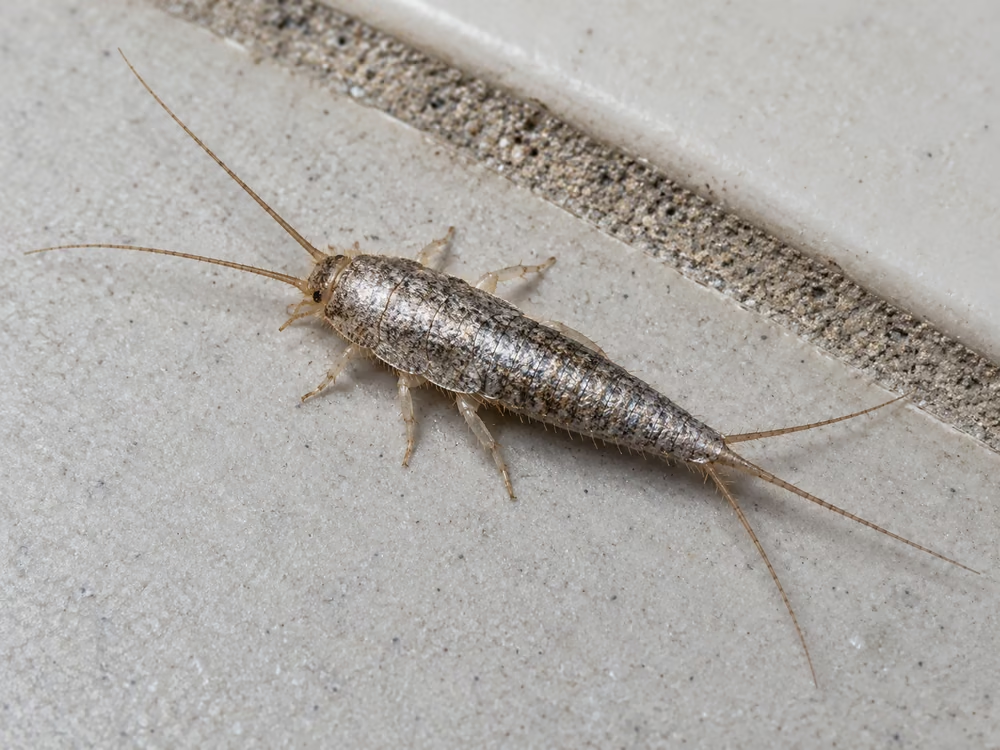
Take a clear photograph before removing the insect, if possible. A close view of the head, legs and rear end is more useful than a distant photograph of a grey shape on a tile.
What Silverfish Look Like and How They Differ From Other Bathroom Bugs
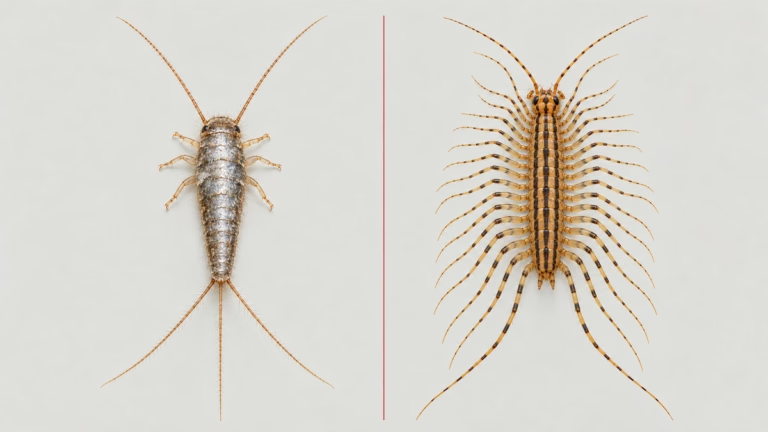
Silverfish have a flattened, carrot-shaped body that narrows towards the rear. Look for silvery scales, two long antennae, six legs and three thin, tail-like rear appendages. They have no wings and dart away with a quick, wiggling movement. Adults are often roughly 10–15 mm in body length, excluding antennae and rear appendages; size varies with species and age.
A few visible differences help narrow the identification:
- Firebrats: similarly shaped, but usually mottled grey or brown; they favour hotter locations, such as spaces near heating equipment.
- Booklice: much smaller, soft-bodied insects, often pale or light brown, without the silverfish’s three conspicuous rear filaments.
- Drain flies: tiny, fuzzy flies with hairy wings, rather than a wingless, tapering body.
If the insect has numerous long legs along its body, compare our guide to silverfish vs centipedes. Do not select a pesticide solely because an insect appeared in a bathroom.
One Silverfish vs. Signs of an Infestation
One encounter tells you an insect was present, not how many are hidden. Silverfish shelter during the day, so an occasional sighting also cannot prove that there are no others.
Repeated sightings, captures at several monitoring points, activity in other rooms and recurring damage to susceptible materials provide a more useful picture. Record where and when insects appear. For example, repeated captures beside the vanity justify inspecting that area more closely; a single insect in the tub does not locate its hiding place.
Scraped paper, irregular holes, shed skins or small debris can support an investigation. Damage, stains and specks alone cannot reliably identify the pest. There is no universal sighting count that separates an occasional visitor from an established problem.
Why Are Silverfish Attracted to Bathrooms?
A bathroom can offer favourable conditions within a small space. The important question is which conditions remain between uses, when the mirror has cleared and the floor looks dry.
High Humidity, Condensation and Hidden Leaks
Showering adds moisture to the air. Poor ventilation can leave condensation on cold surfaces, while small leaks can keep cabinet bases or spaces behind fixtures damp. A dry floor does not rule out moisture beneath a vanity or behind a wall.
Check accessible plumbing connections, the toilet base and cabinet corners. For example, a damp vanity corner that becomes wet again after drying calls for investigation. The wet patch alone does not establish whether the cause is condensation, a loose connection or water entering from elsewhere.
Common silverfish favour humid conditions, but related species differ. Long-tailed silverfish tolerate drier rooms better. A humidity reading can help assess conditions; no single relative-humidity number guarantees that every species or concealed harbourage has been controlled.
Paper Products, Food Sources and Dark Hiding Places
Silverfish feed on materials containing starches, sugars or proteins. Paper products, some adhesives, wallpaper paste, dead insects and accumulated organic debris can provide food. Moisture supports suitable living conditions; it is not their food, and silverfish do not eat ceramic tiles.
Inspect cardboard toiletry packaging, spare paper supplies and undisturbed cabinet edges. Damaged paper packaging beneath a sink is worth checking alongside nearby gaps. Removing that box may reduce accessible food and shelter, but it does not explain where every insect is living.
Behind baseboards, beneath cabinets and around plumbing gaps, darkness and narrow spaces provide cover. Silverfish can also arrive with stored belongings or move through openings elsewhere in a building.
Are Bathroom Silverfish Harmful to People or Property?
Silverfish do not bite people or sting, and they are not known to transmit human disease. Their main household significance is nuisance activity and possible damage to belongings, rather than a direct threat from a single encounter.
Feeding can scrape paper surfaces or leave irregular holes in susceptible materials. Books, wallpaper, cardboard and some textiles may be affected, particularly when activity continues unnoticed. Damage to a valued document can matter even when the overall amount of feeding is small.
This is material damage, not evidence that silverfish are undermining structural timber. Likewise, finding one does not establish dangerous mould, contaminated plumbing or an unsafe home. Investigate actual dampness or damaged building materials on their own evidence.
How to Get Rid of Silverfish and Keep Them From Returning
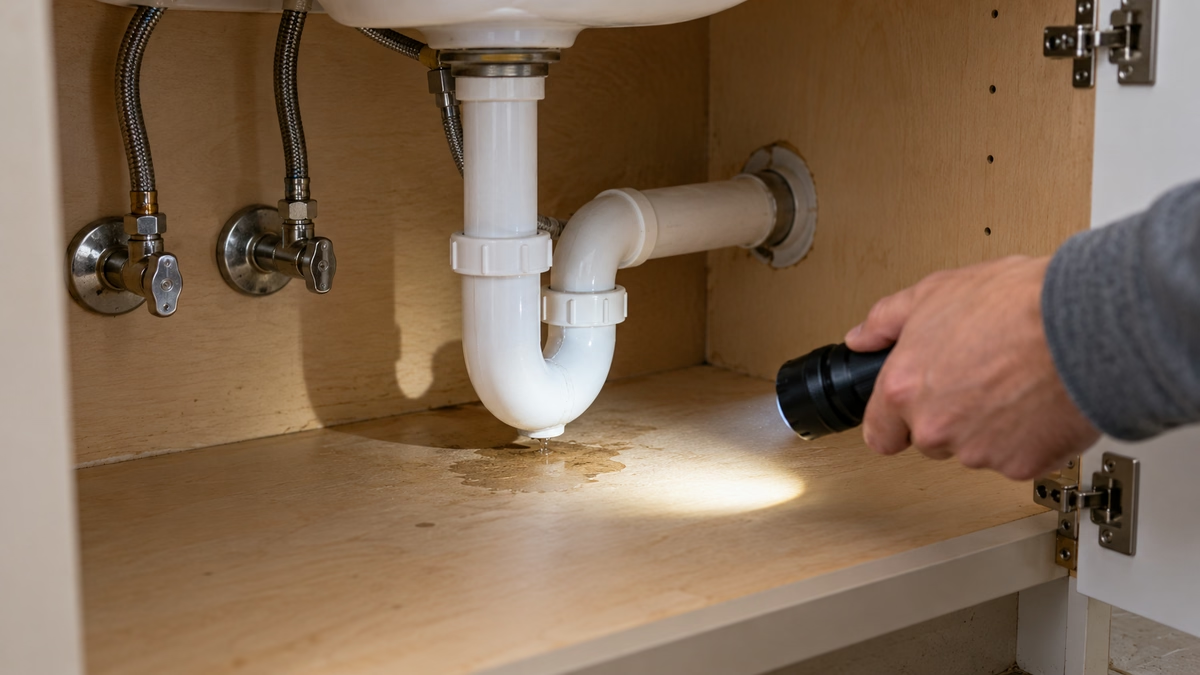
Removing visible insects deals with what you can see. Lasting silverfish control also requires finding the conditions and hiding places supporting continued activity. Work through the following steps, then use your observations to decide whether further help is needed.
Fix Leaks, Improve Ventilation and Reduce Humidity
Start with accessible areas rather than dismantling fixtures:
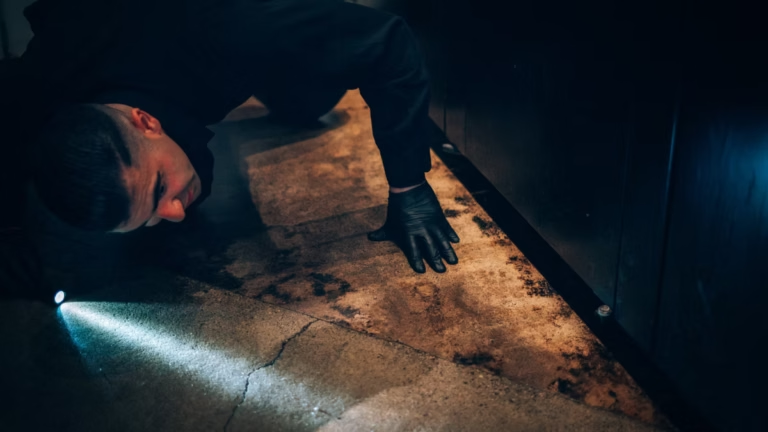
- Inspect: use a flashlight to check beneath the sink, around visible pipe connections and beside the tub and toilet. Note dampness, staining or softened cabinet material.
- Address leaks: arrange suitable repairs. Ask a plumber or building maintenance professional to investigate inaccessible pipework or unexplained recurring wetness.
- Improve ventilation: run the bathroom exhaust fan during bathing and afterwards. Health Canada recommends at least 30 minutes afterwards; the fan should move air outdoors.
- Dry recurring wet areas: squeegee shower surfaces and allow wet mats and towels to dry. Recheck spots that repeatedly become damp.
A fan cannot repair a concealed leak. If condensation persists despite normal fan use, have ventilation performance checked. A hygrometer, if available, helps compare conditions at different times, including between showers. It measures room air, however, not every cavity. Dehumidification may help persistent dampness, but any appliance must be suitable for its location and used according to its safety instructions.
Vacuum Crevices and Remove Accessible Food Sources
Use a crevice attachment along dry, accessible baseboards, cabinet edges and floor-wall junctions. Remove loose debris and visible insects without forcing tools into concealed services. Do not use an ordinary dry vacuum on wet surfaces.
Seal and discard collected material promptly in an outside waste container. For a bagless machine, empty it carefully into a bag and maintain the container and filters according to the manufacturer’s instructions.
Remove damaged cardboard packaging and unnecessary paper piles. Keep spare paper products dry, preferably in closed storage, and move vulnerable books or documents out of a persistently damp bathroom. There is no need to discard every belonging. Targeted cleaning reduces accessible food and makes inspection easier; ordinary housekeeping alone cannot guarantee eradication.
Seal Gaps Around Pipes, Baseboards and Cabinets
After moisture problems have been addressed and surfaces are dry, seal suitable small gaps around pipe penetrations, cabinet edges and baseboards with a material appropriate to the surface. This can reduce hiding places and movement routes, including openings around pipes rather than inside them.
Do not block ventilation grilles, drainage paths, access panels or required building openings. A gap involving concealed wiring, plumbing, a fire separation or a building defect needs appropriate maintenance advice. In a rental, coordinate repairs before altering the building.
Sealing one visible opening does not establish that all insects are excluded. Keep monitoring nearby areas, especially if activity continues elsewhere.
Use Sticky Traps to Locate Activity and Monitor Progress
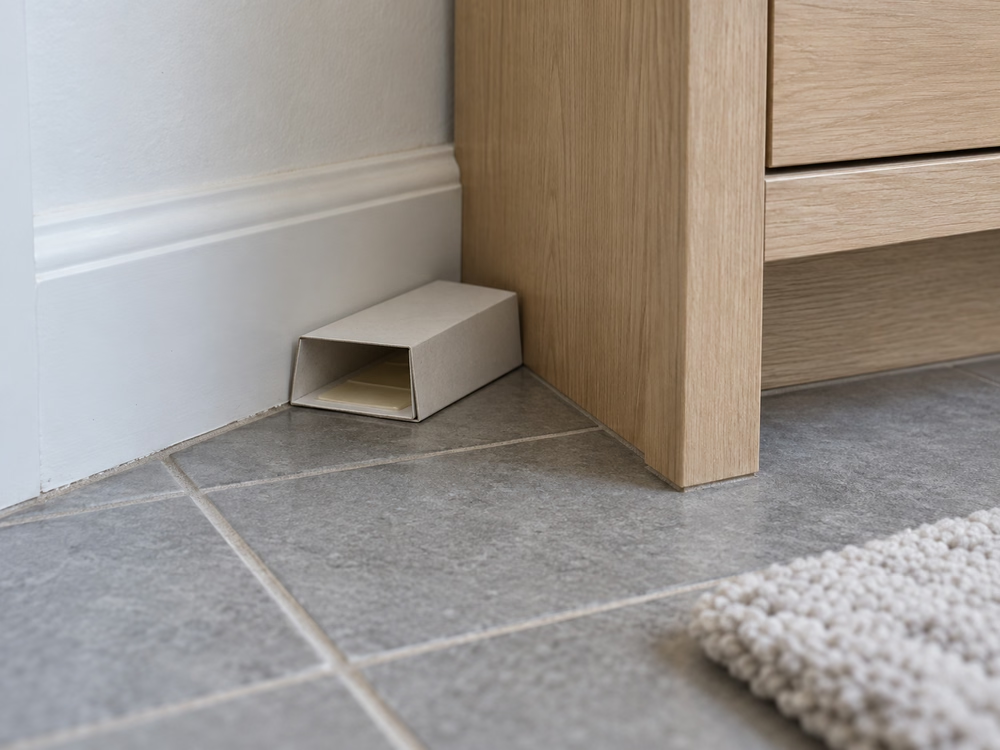
Place enclosed sticky insect monitors along suspected travel routes: beside a dry baseboard, at a sheltered vanity edge or near an accessible pipe opening. Keep them away from splashes and inaccessible to children and pets, following the trap instructions.
Label each location in your notes and record the placement date. Check consistently, identify captures and note any leak repair, cleaning or other change. Replace wet, dusty or full monitors as directed. Comparing the same locations helps you see whether activity is declining or shifting.
Traps mainly help locate and monitor activity, although they remove captured insects. They are not a guaranteed standalone solution. A short period without captures may reflect placement or limited insect movement, so it does not prove elimination.
Understand the Limits of Natural Remedies and Use Treatments Safely
Claims for vinegar, cedar or essential oils often blur repelling an exposed insect with controlling a hidden population. Evidence for reliable household eradication using these remedies is limited. A temporary change in where insects appear does not demonstrate that eggs or concealed insects have been controlled.
Avoid homemade pesticide mixtures and casual scattering of boric acid or diatomaceous earth around a bathroom. “Natural” does not establish safety. Dust exposure and accidental contact matter, and Health Canada warns that boric acid overexposure can harm health, especially in children.
If treatment is needed, choose only a product authorized for use in Canada, bearing a Pest Control Product registration number and labelled for silverfish and the intended indoor site. Follow all directions, including placement, protective measures and re-entry requirements, plus applicable local restrictions. Do not improvise doses or mix products.
Do not put pesticides into drains or apply them to wet fixtures, towels or personal-care items. If the label does not clearly permit your intended use, do not apply the product. Ask a professional about suitable targeted treatment when access requirements are unclear.
When to Call a Pest Control Professional
Seek help when sightings or captures persist despite corrective measures, activity appears in several rooms, susceptible belongings suffer recurring damage, or identification remains uncertain. Inaccessible harbourages are another reason for an inspection rather than repeated surface spraying.
A useful assessment confirms the insect, examines likely activity areas and moisture conditions, and explains suitable control and follow-up. Ask how progress will be evaluated and what repairs or preparation are needed.
Renters should share dated observations and photographs with their landlord or property manager. In multi-unit properties, movement through shared building spaces may require coordinated inspection; treating one bathroom may leave other sources unaddressed.
Across its Lower Mainland and Fraser Valley service areas, Phantom Pest Control documents silverfish inspection, targeted treatment and moisture-prevention advice. To request an assessment, describe where insects appear, how often and what changes you have already made.
Conclusion
Confirm the insect, correct recurring moisture, reduce accessible food and hiding places, and monitor the result. If activity persists, ask Phantom Pest Control about an inspection to identify what needs attention.
Frequently Asked Questions
1. Do Silverfish Come Up Through Bathroom Drains?
Finding silverfish in a bathtub does not show that they travelled through its drain. Health Canada’s silverfish guidance explains that they can fall into plumbing fixtures and become trapped by smooth sides. They can move along pipe routes and through surrounding gaps; that differs from travelling through a water-filled drain trap. Inspect nearby crevices and moisture sources. Do not pour pesticides or household chemicals down the drain to control silverfish.
2. Does Having Silverfish Mean Your Bathroom Is Dirty?
No. Moisture and concealed shelter can support activity in a regularly cleaned bathroom, and insects can arrive with belongings or move from other areas. Accessible paper, debris and clutter can contribute, so targeted cleaning helps without making the sighting a judgement on housekeeping.
3. How Long Does It Take to Get Rid of Silverfish?
Removing one visible insect is immediate; resolving persistent activity takes longer. Timing depends on the species, extent of activity, hidden moisture, access to harbourages and treatment approach. Repairs, targeted control and follow-up may all be needed. Evaluate the trend in sightings and monitoring captures rather than treating a few quiet days as proof that the problem is gone.