Pest Control on Annacis Island, BC
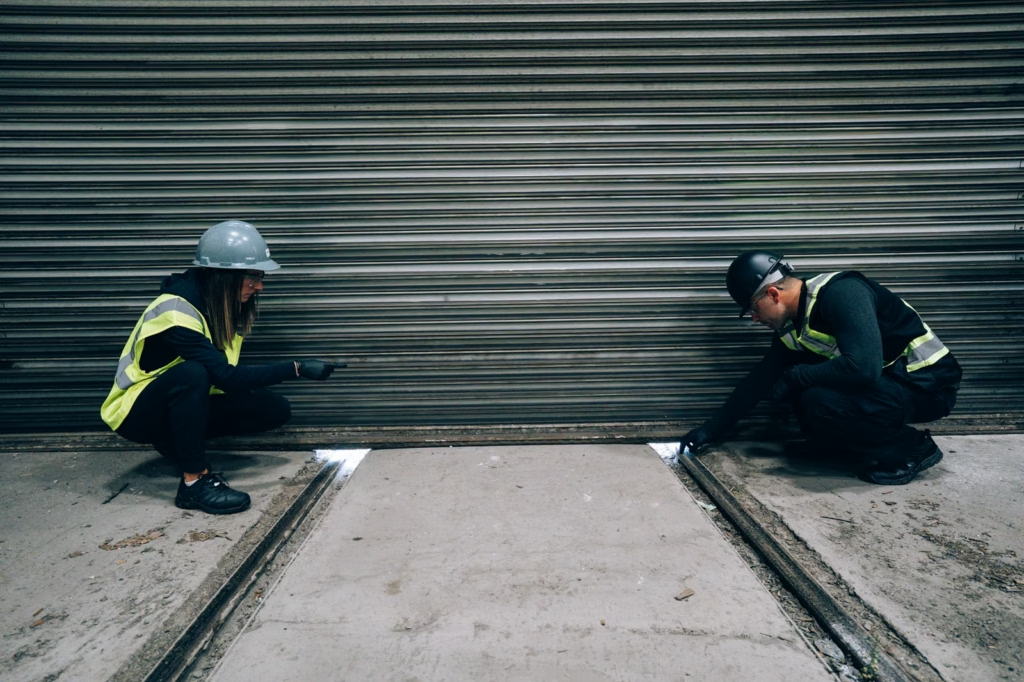
Phantom Pest Control is a licensed pest control and exterminator service for warehouses, plants and other businesses on Annacis Island, the industrial island in the Fraser River in Delta, BC.
- Fully licensed, insured and certified
- Read our Vancouver Google reviews
- Annacis Island
- Fraser River shores
- Serves
- Annacis Island, in the City of DeltaAbout 525 hectares of industrial land in Delta’s community plan
- Pests to watch
- Rats, mice, flies, stored-product insects and birdsAlso German cockroaches and wasps
- Health authority
- Fraser HealthIts Delta/White Rock office serves Delta
- Hours
- Office and Service Hours: Monday to Friday, 9 AM to 5 PMOpen 24/7 for pre-arranged commercial services
What to Expect From Phantom
What a business can expect from us, and what to have ready when you call.

Why book Phantom
- A written service report after every commercial visit
- A free commercial site inspection
- 15+ years of pest control experience serving British Columbia
- 29,000+ locations serviced (2019–2026)
- Preparation sheets for common treatments, on the client forms page
Before you call
- Your street and building, for example on Derwent Way or Cliveden Avenue, and whether you own or lease
- What you’ve noticed, where it is and for how long; photos help
- What the site stores or makes, and any inspection or audit coming up
Estimates over the phone are free, Monday to Friday, 9 AM to 5 PM.
Where to Watch for Pests on Annacis Island
Annacis Island is one long industrial strip in the Fraser, from Purfleet Point to Shoal Point, and even its name is a chart error for Francis Noel Annance, a Hudson’s Bay Company clerk. What each part draws depends on the site, so these lists are the pests to watch there, not a record of finds.
- A
The west end
Purfleet Point, Fosters Way, Eaton Way and BCIT’s campus on Cliveden Avenue
The gazetteer names the island’s west tip Purfleet Point, and BCIT’s 142,000-square-foot campus here is home to its motive power programs. Delta’s land-use map keeps strips at the tip and along the island’s north side as Conservation and Leisure, the only non-industrial designation on the island’s land. Norway rats burrow along foundations and under rubbish or woodpiles, so check a yard’s edge and its stored materials first.
Pests to watch here
- B
Highway 91 and the treatment plant
The Alex Fraser Bridge landing, Highway 91 and Metro Vancouver’s wastewater treatment plant
Highway 91 crosses the island to the Alex Fraser Bridge, opened in 1986, and Metro Vancouver is expanding its treatment plant here to serve 1.5 million residents. CFIA’s guidance asks food businesses to eliminate nesting and roosting sites and screen exposed outside rafters, a fair check for any roof along this stretch. Rock pigeons and starlings need no permit; gulls are protected, so a gull’s nest gets checked before anyone touches it.
Pests to watch here
- C
Mid-island rail and warehouses
Chester Road and the Southern Railway tracks between Derwent Way and Cliveden Avenue
Southern Railway of B.C. added a second rail yard on the island in 2021, and the I2 zoning on almost all of the island allows warehousing, courier services and cold storage. CFIA’s guidance for food businesses asks that incoming goods be inspected on receipt and that the areas under dock levellers stay clean and rodent proof. Rodents can nest in the insulated walls or under the floors of coolers and freezers, and pantry moth infestations often start at the packaging or warehouse level.
Pests to watch here
- D
The east end
Audley Boulevard, Belgrave Way and Grosvenor Square
Grosvenor, which still owns 185 acres on the island, says it opened in the 1950s as Canada’s first industrial park, and Delta’s heritage inventory calls Audley Boulevard the line between the earliest development and later buildings. On an older building, start with door seals, dock areas and wall openings. Delta’s Bylaw 8066 bars overflowing or poorly kept dumpsters and commercial containers visible from a public place, and garbage can draw Norway rats, flies and wasps.
Pests to watch here
- E
The north-east end
The Annacis Auto Terminal, Dock Road, Annacis Parkway and Shoal Point
The Encyclopedia of Raincoast Place Names says this end was once a separate island, its channel filled in when the park was developed, and the gazetteer names its tip Shoal Point. Southern Railway describes a rail-served Port of Vancouver auto terminal here. Our beetle page says port and import activity raises the risk of exotic beetles in goods, packaging and containers, and our bird control page calls gulls a growing concern at industrial and waterfront properties near the Fraser. CFIA’s general warning for any cargo: vessels, containers and used vehicles can carry flighted spongy moth egg masses from regulated areas, 2 to 4 cm long, gold to dark brown, with fine hairs. Scrape them into a sealed container, don’t paint over them, and contact the nearest CFIA office.
Pests to watch here
Who Handles What on Annacis Island
Keeping pests out of a private site is the owner’s or occupant’s duty, and a licensed company like ours is who they hire. Fraser Health and the City of Delta enforce the rules, and CFIA licences follow what you do with food.
| If you have | Who handles it | What to know |
|---|---|---|
Pests in a food plant, food store or food warehouse | The operator. Fraser Health regulates food storage and handling; ask its Delta/White Rock office how yours is inspected: 604-507-5478 | B.C.’s Food Premises Regulation (s. 26) has the operator keep the premises free of pests and of conditions that let them shelter or breed, and protected against their entry. A manager, owner or lessor can count as the operator, and the ticket is $230. The regulation leaves out premises under the Milk Industry Act or the Fish and Seafood Act and licensed slaughter establishments, among others. Source: Food Premises Regulation, Fraser Health |
Food you import, export or send to another province | The licence holder, with the Canadian Food Inspection Agency (CFIA) | A federal licence depends on what you do with the food, not on your type of business. Storing it only to maintain its condition, even in a cold store, needs none, except edible meat held in its imported condition for CFIA inspection. Processing, including freezing, can. Licensed sites must keep vermin out, and most licence holders must keep a written preventive control plan. Source: CFIA, Safe Food for Canadians Regulations |
Rats, a messy yard or an overflowing dumpster | The owner or occupant. City of Delta Bylaw Enforcement: 604-946-3340 | Delta’s Bylaw 8066 puts rodents, and whatever feeds or shelters them, on the owner or occupant, including an occupant under a lease. Bylaw Enforcement takes reports from 8:30 am to 8:30 pm, every day of the week. Source: Bylaw 8066, City of Delta |
Birds on roofs, ledges and loading docks | The owner or occupant, within the provincial and federal bird rules | Which rule applies depends on the species, so identify the bird first. Herons, eagles and geese are protected as well as gulls, and rock pigeons and starlings are not, so one roof can fall under different rules. Source: Province of B.C., Environment Canada |
Spongy moth egg masses on goods, containers or vehicles from regulated areas, or unmarked imported wood packaging | The nearest CFIA office | Wood packaging from outside the continental U.S. must be debarked, treated by an approved method and carry the IPPC mark; packaging coming directly from the continental U.S., of Canadian or U.S. wood, is exempt. Costs of non-compliance fall on the owner, the importer or whoever has care of the goods. Source: CFIA wood packaging rules |
When Pests Peak on Annacis Island
We found no published pest counts for the island, and most sources give seasons rather than months, so the bars for rats, mice and flies are our reading of those seasons. The wasp bar is the season we publish, with Washington State biology for its peak, and the bird dates are federal nesting data.
This month: November 2026
- Rats & mice
Not seasonal
- Stored-product insects
- Cockroaches
October to March
Rats and mice look for food, shelter and warmth indoors, especially in colder or wet seasons, and October to March are the wet months at Vancouver International. In a building with food they can stay all year, and the Province’s residents’ guide advises inspecting at least twice a year, in spring and fall.
June to September
Fly pressure rises in the warmer months. Fruit flies and drain flies stay active year-round in commercial kitchens and food service.
May to September
Colonies reach maximum size in August or September in the Pacific Northwest. One species, the German wasp, runs later, peaking in October and early November.
March to August
The general nesting period for protected birds on the B.C. coast runs from late March to mid-August. Pigeons breed all year, most commonly in spring and summer.
Not seasonal
Stored-product beetles stay active indoors year-round, and moth infestations can develop indoors in any season.
Health Canada says German cockroaches are particularly fond of restaurants and food processing facilities, and they and their egg cases can ride in on food items and shipping cartons.
Streets We Serve on Annacis Island
We serve the whole island. Delta’s zoning map shows no land zoned for housing here, so this is a list of main streets rather than neighbourhoods. For homes nearby, see the Delta page.
Annacis Island
- Derwent Way
- Cliveden Avenue
- Belgrave Way
- Audley Boulevard
- Fosters Way
- Annacis Parkway
- Chester Road
- Eaton Way
Nearby service areas
Not on the list? Call or text 604-771-0404 and the office will confirm.
What Pest Control Costs on Annacis Island, and How a Visit Works
On Annacis Island the commercial line is the one that applies: a site inspection is free, and so is an estimate over the phone. The same card runs on all our location pages, so it lists the home fees too.
Inspection fees
- House
- $150 + GST
- Condo, apartment or townhouse
- $125 + GST
- Attic or crawl space
- + $50
- Waived if the service is booked on the same day.
- Commercial site inspection
- Free
- Estimate over the phone
- Free
Treatment prices for each pest
Describe the problem by phone
Call or text 604-771-0404 on a weekday between 9 AM and 5 PM. The estimate costs nothing.
An inspection where one is needed
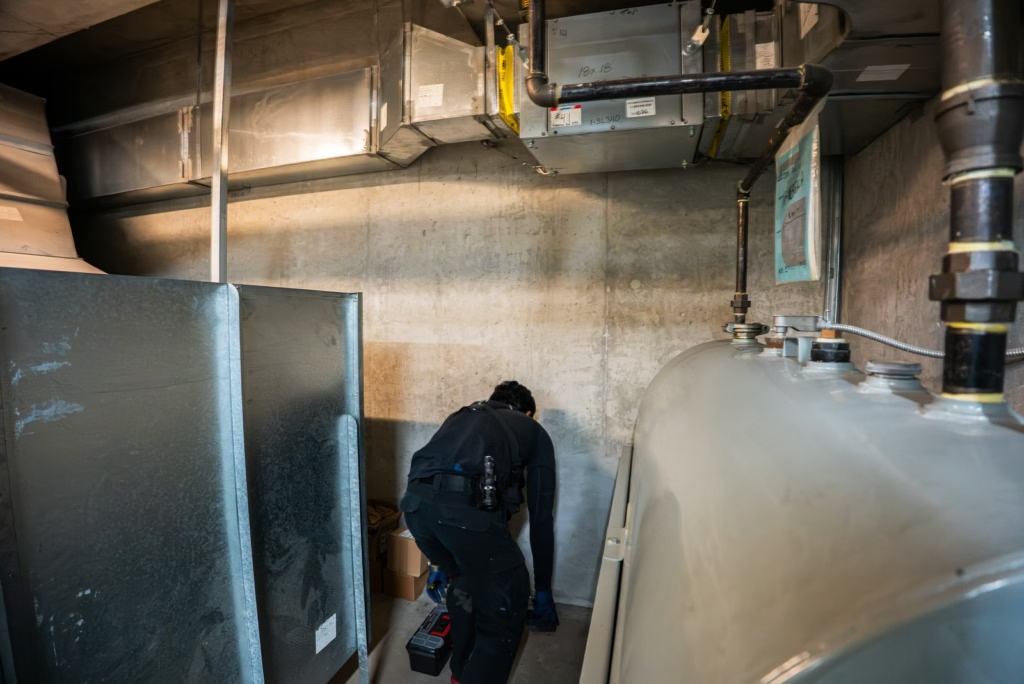
The technician identifies the pest and finds how it gets in.
Get ready with the preparation sheet
For bed bug and cockroach treatments, the preparation sheets ask everyone to stay out for at least 6 to 8 hours. The bed bug sheet extends that to 24 hours for infants under 2, pregnant or nursing mothers, people with respiratory or immune conditions, and pets; the cockroach sheet lists its own group. The sheets are on the client forms page.
Treatment, then the weeks after
A few pests for a while after treatment is normal. Past the time on your sheet, call us.
Pest Control Services on Annacis Island
Pick the pest or the kind of site: each page explains how the work is done.
By pest

Rats and mice at loading docks, in cold rooms and around yards and dumpsters.
Netting, spikes, tension wire and visual deterrents for roofs and ledges.

Fly pressure in the warmer months, and drain and fruit flies in food areas.
Pantry moths, which often start at the packaging or warehouse level.
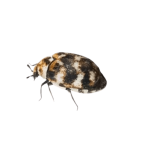
Stored-product beetles, and beetles arriving in goods, packaging and containers.
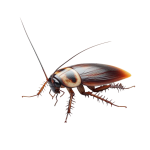
German cockroaches that ride in on food items and shipping cartons.
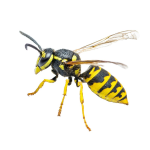
Nests on buildings and in yards, from late spring to early fall.

Raccoons and skunks around yards; conservation officers don’t attend low-risk conflicts.
For commercial sites
Programs for the kinds of site on the island, with a free site inspection.
Device maps, reports and help preparing for CFIA inspections and audits.
Programs written for production and storage areas.
Other services for sites
Sealing the gaps at roller doors, walls and pipe runs.
Scheduled visits instead of one-off calls.
Programs for sites that handle waste.
Annacis Island Pest Control Questions
Answers for facility managers, operators and landlords on Annacis Island.
Prefer to talk?
604-771-0404Which municipality is Annacis Island in?
The City of Delta. The island sits in the lower Fraser River, east of Lulu Island, and the City of Delta’s community plan names it, with Tilbury, among the city’s industrial areas. Queensborough, across Annacis Channel, is in New Westminster, so the municipal bylaws change at the swing bridge. On the island, Delta’s bylaws and Fraser Health’s Delta/White Rock office apply. We haven’t confirmed how they apply on federal port land, so tenants there should ask the Port Authority too.
Who inspects a food facility on Annacis Island, Fraser Health or CFIA?
A site can answer to both, depending on what it does with the food. Fraser Health’s Food Safety Program regulates the source, storage, handling, preparation and transportation of food for public consumption, and its officers inspect food facilities routinely and on complaints. CFIA’s licence rules reach food that’s imported, exported or sent to another province. A CFIA licence isn’t among the exemptions listed in B.C.’s Food Premises Regulation, though it does leave out premises under the Milk Industry Act or the Fish and Seafood Act and licensed slaughter establishments. If you’re not sure, ask Fraser Health’s Delta office at 604-507-5478.
Does a cold store or warehouse on the island need a CFIA licence?
Not for storage alone. CFIA says storing food only to maintain its condition and quality, including in a temperature-controlled facility, needs no licence, and neither does transporting it, though a food operator may ask a carrier for evidence the conveyance is fit. Two things to watch: freezing is on CFIA’s list of licensed activities for exported or interprovincial food, and edible meat in its imported condition, held for CFIA inspection, does need a licence. Provincial rules can still apply, because the Food Premises Regulation’s definition of food premises covers places where food for public consumption is stored or transported.
Is there a local rule on rats for businesses?
Yes. Delta’s Property Enhancement Bylaw 8066 applies to all real property in the city except the City’s own. It bars an owner or occupant from allowing an infestation of rodents, vermin or destructive insects, or conditions that give rodents food or shelter. A bylaw notice for conditions for rodents is $300, or $250 if paid early, and a conviction can reach $50,000, with each day a separate offence. Delta’s pesticide bylaw is a different matter: it covers cosmetic use on residential and City land and lists rodenticides as permitted.
Can second-generation rodenticides be used at our site?
Only at an essential service location, and only within limits. B.C.’s IPM Regulation (s. 81) bars these baits everywhere else. Its Schedule 6 names food production, processing, storage and transportation, commercial or industrial shipping such as ports and terminals, rail and wastewater processing, among others. It doesn’t name plain warehouses or manufacturers. Even at a listed site, rodents or recent activity must be confirmed and practical alternatives tried first, and use stops at 35 days in a row and 120 days a year. Preventive baiting with them is prohibited. Other sites still have prevention, trapping and other baits.
What records should a food site keep from its pest program?
CFIA’s guidance says a food business stays responsible for records of what its pest company does: who did the task, what was done and the result, where, and the date and time. It also has every device numbered and mapped on a floor plan. Where food is processed or prepared, B.C.’s Food Premises Regulation (s. 24) also requires written sanitation procedures, approved by a health officer, that identify all pesticides used. We leave a written service report after every commercial visit. For food plants we also keep a numbered device map current, supply the product list with labels or SDS, and help prepare for CFIA inspections and BRCGS, SQF or AIB audits.
Can we remove pigeon, starling or gull nests from the roof?
Yes for starlings, house sparrows and rock pigeons: B.C. lets them be removed, with their nests and eggs, without a permit. A gull’s nest is different: gulls are protected, and federal rules bar removing a nest with a live bird or viable egg in it without a permit. Gulls aren’t in the rules’ Schedule 1, so an empty gull nest falls outside that bar. The general nesting period on the B.C. coast runs from late March to mid-August. Eagle, osprey and heron nests are protected even when empty. Our bird control uses netting, spikes, tension wire and visual deterrents.
Do staff have to leave after a treatment?
Not always; it depends on the product and the method. WorkSafeBC’s rules have an employer keep people out of a treated area until the restricted entry interval has expired (the label sets it; if it doesn’t, 24 or 48 hours), and workers who can reach the area must be told about the products and precautions. Small spot or crack-and-crevice treatments can be exempt on set conditions. Baits are exempt unless the label says otherwise, though workers entering must be told where the bait is and what it looks like. Our preparation sheets give the time for the treatments they cover; for anything else, ask the office.
Can you work outside office hours?
Yes, when it’s booked ahead. We’re open 24/7 for pre-arranged commercial services, so a visit can be set for a night or weekend shutdown, while the office itself keeps to Monday to Friday, 9 AM to 5 PM. In food plants, technicians work only in scheduled down-time or sanitation windows, never on running lines. Call or text 604-771-0404 during office hours to arrange it.
Get a Free Estimate on Annacis Island
Send a few photos and your street; the office calls back to talk through the job.
- Office and Service Hours
- Monday to Friday, 9 AM to 5 PM: calls, estimates and call-backs.
- Commercial
- Open 24/7 for pre-arranged commercial services: evening, night and weekend visits when booked ahead.
Free estimate request

Book an Annacis Island Site Inspection
Send the address and what you’ve noticed, and we’ll shape the first visit around it.
Estimates over the phone are free, Monday to Friday, 9 AM to 5 PM. Open 24/7 for pre-arranged commercial services.