Manufacturing Pest Control in Vancouver & Fraser Valley
Phantom Pest Control provides manufacturing pest control across Vancouver, BC and the Fraser Valley, with industrial pest control for factories: metal and machine shops, plastics, packaging and print plants, wood product and furniture makers, and electronics assembly. Every plant runs on a numbered device map, and each visit ends with a written report with photos.
Plant type
Metal, plastics, packaging, wood, electronics
Common pests
Where they get in
Service area
Why Pests Get Into Manufacturing Plants
Bay doors that open for every load, raw materials arriving from suppliers, warm machine rooms and a lunchroom on every shift. A plant offers rats, mice, pest birds and insects food, warmth and a way in, and its equipment gives them cover.
Our stored product pest page notes that these insects stay mostly hidden inside products and packaging, and that the damage becomes visible during quality inspections. Our rodent control page lists gnaw marks on packaging, wood or electrical wiring among the signs, so a plant program checks the stores and the cable runs as closely as the doors.
This page covers non-food plants: metal, machine and fabrication shops, plastics, packaging and print plants, wood product and furniture makers, and electronics assembly, cleanrooms included. Food plants have our food processing program, drug and natural health product makers our pharmaceutical facility program, stand-alone warehouses our warehouse program and server rooms our data centre program, and every other industry we serve is listed on our commercial pest control page.
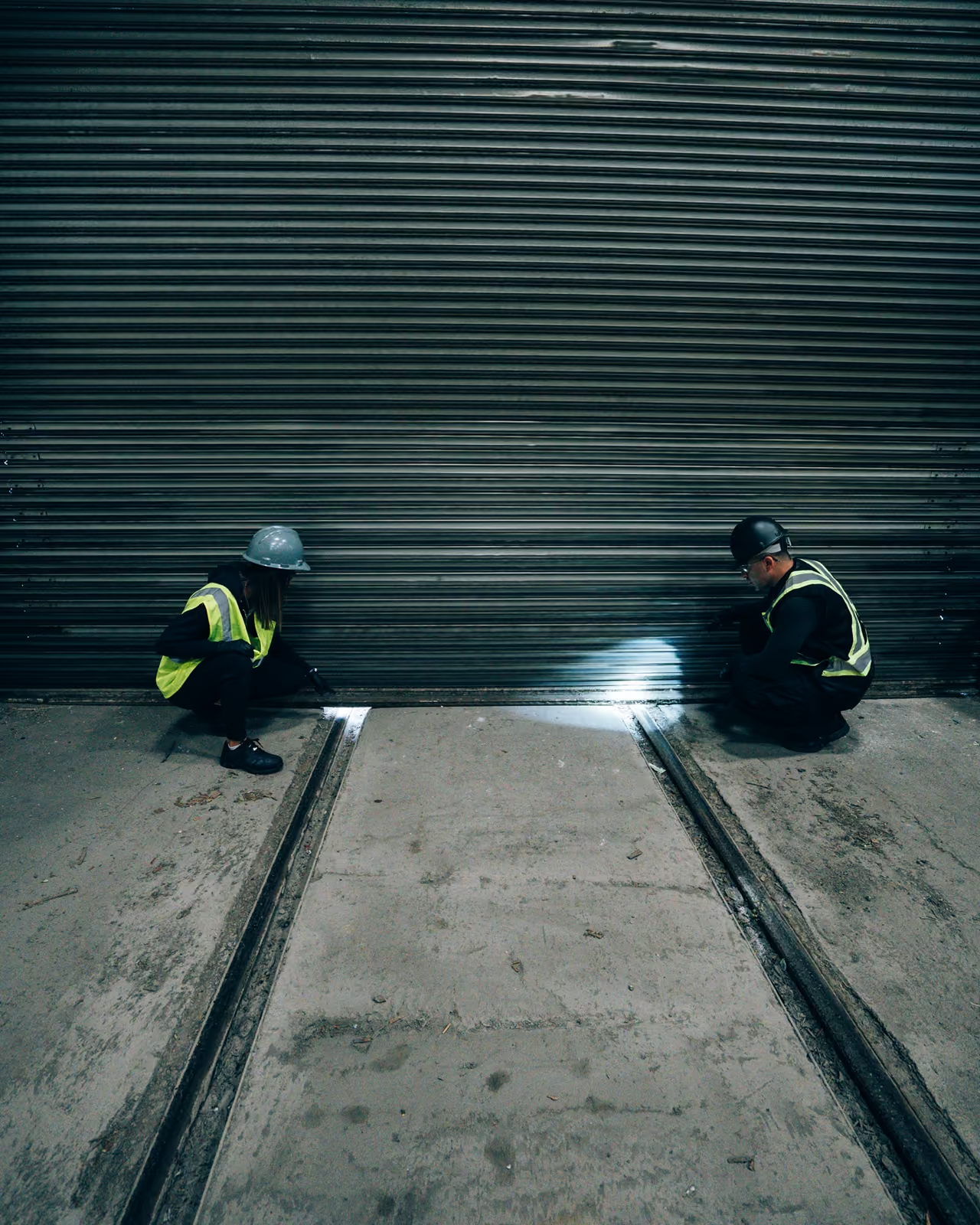
Bay doors stay up while forklifts load and unload, and a worn door bottom or torn seal leaves a gap after they close.
Pallets, cartons and packaging stock arrive from other buildings, and stored-product beetles can travel in them unseen.
Compressor, boiler and electrical rooms stay warm when the floor is quiet, and rodents come indoors for food, shelter and warmth.
Cable trays, conduits and control panels run through the whole building, and rodent gnawing damages wiring and insulation.
Roof trusses, crane rails and high racking give pigeons and starlings ledges well above the work.
Lunchrooms, vending machines and lockers bring food into a building that otherwise holds metal, plastic or wood.
Pests Found in Manufacturing Plants
The pests that turn up between the receiving doors and the roof steel, each linked to its full page.

Norway rats, roof rats and house mice run the walls from the bay doors, shelter in stored stock and gnaw packaging, wood and wiring.
B.C.’s usual hantavirus carrier: droppings in a shut storeroom or a seldom-used building call for wet cleanup, not a broom.

Drugstore and cigarette beetles, two of the commonest kinds here, can hide in packaged goods and the packaging stock waiting for a run.

They roost on roof trusses, crane rails and dock canopies, and their acidic droppings mark painted steel and make walkways slippery.

Open bay doors let them in to the bins and the lunchroom, and light traps hung away from product catch them inside.

Warm lunchrooms, vending machines and locker rooms suit them, and they arrive hidden in deliveries and cartons.

From late spring into early fall they nest under eaves, canopies and the cladding by the doors, and forage at the bins.
Send a short description and up to 3 photos with your estimate request, and we’ll review them before the walk-through.
When Pests Peak in a Manufacturing Plant
Inside a heated plant, three pests breed in every season, so they’re listed under the chart. The bars follow the pests that move with the weather outside the bay doors.
Each bar turns the season named on Phantom’s own pest page into months; the three listed under the chart have none.
Late spring to early fall; a nest left alone can hold thousands of wasps by late summer.
Spring and early summer, when nest material goes into vents, signs and gaps in the cladding.
Not seasonal
Phantom’s stored product page says that conditions here suit them in every season, so the monitors in the stores keep working through winter.
Phantom’s bird page says pigeons breed in any month in mild conditions, so a roost over a production line needs attention in every season.
A warm lunchroom keeps them breeding whatever the weather is doing outside the plant.
Where Pests Get Into a Manufacturing Plant
The walk-through follows the material: in at receiving, through the stores and the production floor, out past finished goods and shipping, then round the staff rooms, the yard and the roof.
- ABay doors & levellers
Mice need a gap only the size of a dime and rats one the size of a quarter, Health Canada notes, so a worn door bottom or the space at a leveller is enough.
- BRaw materials & packaging stock
Cartons, film, paper and wood can sit here for weeks, and pheromone monitors watch the stock for beetles and moths.
- CLines & machine bases
Warm motors and machine bases give mice cover near the floor, so traps sit along the walls and light traps hang away from product.
- DHigh bays & roof steel
Trusses, crane rails and skylight frames give pigeons and starlings a roost over the work, and their droppings land on whatever is below.
- EElectrical & compressor rooms
Warm, quiet and seldom visited, with cables and conduits through their walls, they give rodents shelter, warmth and wiring to gnaw.
- FLunchroom & lockers
Food from every shift, warm appliances and cluttered lockers suit cockroaches, ants and mice.
- GOffices & washrooms
Plumbing and cable runs connect them to the wall voids, and lit windows pull flying insects in after dark.
- HScrap bins, pallets & compactor
Scrap bins, stacked pallets and the waste compactor give rats cover and food waste close to the doors.
- IRoof, vents & rooftop units
Parapets, exhaust vents and rooftop units are where birds nest and wasps build in summer.
What Your Plant Team Can Handle, and What Needs a Technician
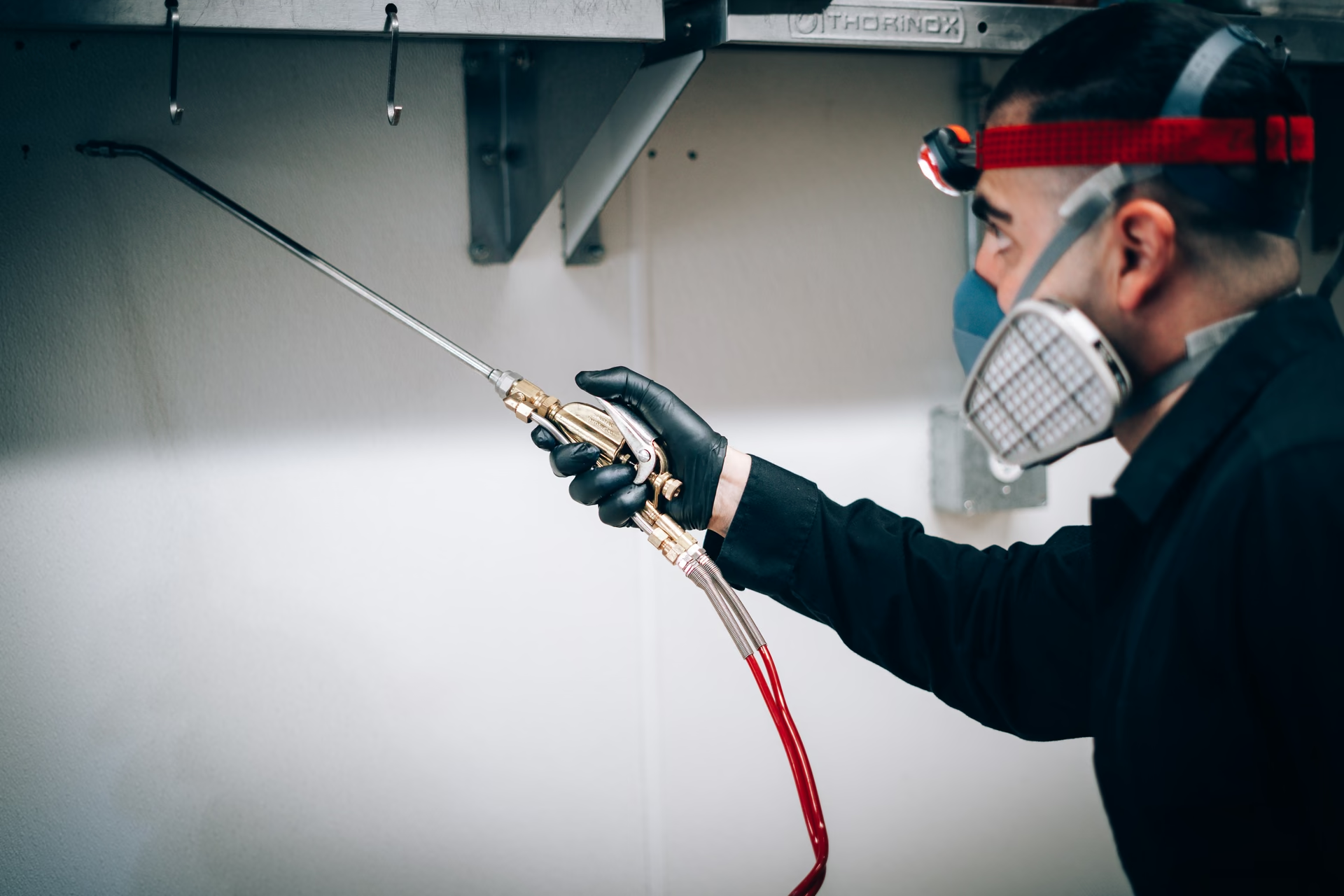
Housekeeping between visits helps prevent problems. Pesticides, bait, monitors, light traps and bird work stay with a technician.
Your team can
Close each bay door when no load is moving, and report a torn seal, a worn door bottom or a new cable hole the day it’s spotted.
Leave a strip along the walls clear of pallets and scrap, so devices stay reachable and droppings show up early.
Keep lunchroom food sealed, wipe up spills and take food waste out of the building at the end of each shift.
Needs a technician
B.C.’s Integrated Pest Management Act requires a licence to offer a pesticide service (section 4) and use that follows the label (section 3).
Bait goes only in locked, numbered stations a technician places; which baits a plant may use is explained in the panel below.
Insect light traps hang away from product, and pheromone monitors sit in the raw-material and packaging stores.
Netting and spikes go into the high bays and over the docks where pigeons and starlings roost, and protected birds are left alone.
How Our Manufacturing Pest Control Program Works
An integrated pest management (IPM) program in five steps, from the first walk-through to visits booked around your shifts.
From receiving and the stores across the production floor to shipping, the lunchroom, the yard and the roof, under your plant’s own site rules.
Locked stations ring the building and traps sit inside along the walls and doors, each carrying its number on the plant’s map.
Pheromone monitors check the raw materials and packaging stock, and light traps placed away from product track flying insects.
Door bottoms, seals and pipe and cable entries are sealed or quoted as exclusion work, and netting or spikes go where birds roost.
Every visit leaves a written report with photos, and device counts are trended so the program changes with what they show.
Our regular maintenance page runs the Rodent Program, Flying Insect Preventive Services and Bird Deterrence Services as recurring visits.
Before the First Plant Walk-Through
Six things to send or have ready before the first walk-through. Treatments for rodents, cockroaches and other insects have their own preparation sheets on our client forms page.
A layout with door numbers, lines, stores and room names lets one walk-through cover the whole site.
Tell us about PPE, the orientation, lockout areas, forklift traffic and who will meet the technician.
Point out cleanrooms, paint lines and any area where nothing may be applied, so devices go only where your rules allow.
Note what was seen, where and when: droppings by a bay door, birds over a line, moths in the packaging stores.
A coin beside droppings gives scale; attach up to 3 photos to your estimate request.
If a food customer audits your packaging line, send the standard and its pest-control clauses with the booking.
After the Walk-Through: Your Device Map, Reports and Reviews
What follows the first walk-through. The visit schedule is agreed with your plant or maintenance manager.
Walk-through
The complimentary first visit covers every area on your layout, and the quote is written from what it finds.
Entry points
Under the rodent program, gaps up to a toonie’s width are sealed; bigger openings, such as a damaged door seal or a cable hole, are quoted as exclusion work.
Device map
Every bait station and trap carries its number on your plant’s map.
Reports and trends
Each visit leaves a written report with photos, and the counts build the trend summary each review works from.
Program review
Counts, staff sightings and changes to your lines or stock move the program over time.
If a station blocks a forklift lane or a machine guard, call us rather than moving it, so the map stays true.
A sheet at the shipping or maintenance desk, with what was seen, where and when, sends the next visit to the right line.
Which Rodent Baits Can a Manufacturing Plant Use in B.C.?
At most plants, not the strongest kind: second-generation anticoagulant rodenticides (SGARs). B.C.’s Integrated Pest Management Regulation allows them only at the essential service locations in its Schedule 6. Food plants are on that list, but no item names manufacturing, so a licensed applicator must confirm that another item, such as shipyards or rail facilities, covers the site.
Traps inside and a locked station outside, where runways reach the opening.
Traps, where pallets and packaging stock give cover.
Traps close to the food, the appliances and the garbage.
Locked stations where food waste and cover meet in the yard.
For a site off the list, the province’s guide for non-essential operations makes traps the first choice and leaves other rodenticides, the first-generation kind among them, for short-term use as a last resort. Health Canada’s bait station rules require tamper-resistant stations for outdoor bait that children, pets or other animals could reach, and ours lock and carry a number on your device map.
Where a site does qualify, section 81 still asks for rodents or recent signs of them, alternatives tried first and limits on how long baiting runs, and the province prohibits preventive SGAR baiting. A packaging plant with food customers can face a stricter rule still: SQF’s Edition 10 code for food sector packaging bars poison rodenticide bait inside packaging manufacturing, handling and storage areas. That is why a plant program here leans on trapping, sealing and housekeeping, laid out on our rodent control page.
Why Choose Phantom for Your Plant
Credentials, the paperwork every visit leaves, and a map that numbers each bait station and trap.
Experience
15+ years of pest control experience serving British Columbia
Credentials
Fully licensed, insured and certified
Reporting
A photo report left at the end of each visit
Audit help
Product labels or SDS and audit prep for packaging plants
Stored stock
EXCELLENT Based on 830 reviews
 Posted on Google

 Ashley WoodWe were having some problems with mice at our home so we contacted Phantom and Darcey came and resolved the issues quickly. Darcey was friendly, great with our dog and made sure we understood everything he was doing and what to expect. Happy to report no more mice! Thank you, Darcey!Posted on Google
 Michelle HerrExcellent pest control service! The team was professional, friendly, and knowledgeable. They arrived on time, explained the treatment process clearly, and made sure everything was taken care of. Their attention to detail and commitment to customer satisfaction were impressive. I really appreciate their prompt service and effective results. Highly recommend them to anyone looking for reliable and professional pest control services!Posted on Google
 Nasib AbdulMark was great and he did a great job and was very knowledgeable.Posted on Google
 HenryDarcey provided exceptional support in resolving our pest concerns. He was punctual, highly knowledgeable, and professional throughout the process. We have been trying to deal with these issues for quite some time without any luck but thankfully the matter is now resolved. We appreciate the dedication he demonstrated and will be sure to reach out should we require his services again.Posted on Google
 Jacqueline BruceI want to let you know that June did an amazing job on our house for the moths. He was really friendly, patient, professional and conscientious. I wasn't fully ready for the treatment when he arrived and he managed to move some clients so he could return later. He explained a lot about the treatment and the moths' habits which really helped with other areas that he wasn't even treating. He kindly helped me moved some things to barricade the area from pets. I would get Phantom back and highly recommend them.Posted on Google
 Fraser HannayDarcey was amazing at helping us deal with a wasp nest. Friendly, knowledgeable and on time! Thank you!Posted on Google
 JanetWe hired Phantom Pest Control to eliminate a wasp nest inside our house and the service was great. Information on the phone when I first called to book an appointment was clear and we got an appointment quickly. Juan, the specialist who arrived to do the job, fully explained the process, did the work, and explained what to watch in the outside chance additional work might be needed. We are happy with the job and were glad to have Juan as our technician.Posted on Google
 Jenny WuWe received exceptional service from Joy. She was both professional and knowledgeable, explaining the service thoroughly.Posted on Google
 Sean AbbottThey showed up on time, early actually. Mark was very professional and explained how the cockroaches work. He was personable and efficient, and hygienic with how he worked (wearing protective boot covers and gloves). I was impressed and would definely call again if needed.
Manufacturing Pest Control Across Vancouver & Fraser Valley
Our plant program covers industrial land across Metro Vancouver, the Fraser Valley and Squamish, Annacis Island included, and each city below links to its own page.
Vancouver & North Shore
Burnaby & Tri-Cities
Richmond & Delta
Fraser Valley
Related Services for Manufacturing Plants
Services that can run alongside a plant program.
Locked stations outside, traps inside and sealing at doors, walls and cable entries.
Netting, spikes and deterrents for high bays, roof steel, canopies and docks.
Finding breeding sources and cutting attractants around bins, drains and lunchrooms.
Sealing around bay doors, pipes and electrical conduits, quoted after the walk-through.
Manufacturing Pest Control FAQs
Audits, incoming materials, re-entry, shifts, cleanrooms, birds, wiring, droppings, schedules and cost.
Prefer to talk?
Will our food customers’ auditors check our pest program?
Yes, if your plant holds certification under a food packaging code. SQF’s Edition 10 code for food sector packaging, for one, asks for a documented pest prevention program that trends pest sightings, a site map giving every monitoring device’s identification, location, number and type, and a list of the chemicals used with their Safety Data Sheets.
It also asks that pest contractors be licensed and approved by the local relevant authority, and leave a written report of the inspection, findings, corrections, recommendations and any treatments after each visit. Our program supplies the numbered device map, a written report with photos and a trend summary after every visit, and the product list with labels or SDS, and we help you prepare for BRCGS, SQF or AIB audits.
What should we do if raw materials arrive with insects?
Keep the lot apart and call us. Leave it wrapped, note the supplier and the delivery, and photograph the insects and the packaging: our stored product pest page lists insects in packaged goods, webbing or cocoons in packaging, and damaged packaging among the signs. A packaging plant with SQF certification must also dispose of material contaminated by pest activity and find and resolve the source (Edition 10, 13.2.4.4).
When can workers go back into a treated area?
Once any restricted entry interval is up. WorkSafeBC’s OHS Regulation has the employer keep people out of a treated area until the label’s interval has expired, or 24 to 48 hours where the label gives none (section 6.89). An authorized early entry can’t start sooner than 4 hours after the application or last over an hour in 24, and needs a qualified person’s hazard check and protective equipment (section 6.90).
Baits are exempt unless their label says otherwise (section 6.98), and so are small spot or crack-and-crevice treatments with slightly toxic products when a qualified person finds workers aren’t at risk (section 6.91). For crawling-insect and cockroach work, Phantom’s preparation sheets, written for homes, ask everyone to stay out for at least 6 to 8 hours from the start of treatment, and pets, people with breathing conditions, nursing mothers and children under 2 for 24 hours.
Can you work around our shifts and shutdowns?
Yes, if the visit is pre-arranged. Our office books visits Monday to Friday, 9 AM to 5 PM, and our service is open 24/7 for pre-arranged commercial services, so a technician can come between shifts, during a planned shutdown or before the first run. Tell us which lines and doors are busiest and who will sign the technician in.
What about electronics assembly and cleanrooms?
We plan around each room’s entry rules. Tell us which rooms are controlled when you book: device placement there follows your site’s procedures, and the walk-through checks the doors, pass-throughs and cable entries that lead into them. A server room in the building is covered by our data centre program.
Can you get pigeons out of the high bay?
Usually by closing off the roost. Netting keeps them out of the roof steel, and spikes stop them landing on the ledges and beams over the lines and the docks; our bird control page covers the deterrents.
Rock pigeons, European starlings and house sparrows are introduced birds that the federal Migratory Birds Convention Act doesn’t protect, and B.C.’s Designation and Exemption Regulation exempts them, their eggs and their nests from the province’s ban on harming birds and nests (section 11.3 and Schedule C). Swallows and most other native birds are protected, so an occupied nest of theirs is left in place.
Can mice really damage our machines?
Yes, through the wiring. Our post on rodent risks for businesses notes that rats and mice chew wiring, insulation, drywall and wooden beams, and that a chewed wire can cause power failures, equipment malfunctions and even fire risks. Report gnawed insulation or droppings near control panels and cable trays the day they’re seen.
Who should clean up mouse droppings in the plant?
Workers your exposure control plan covers, and never with a broom or a vacuum: Health Canada warns against sweeping or vacuuming dry droppings, because the dust raised can cause illness. WorkSafeBC notes that hantavirus is transmitted through deer mice and that an employer whose workers could be exposed must develop and implement an exposure control plan; its list of the riskiest tasks includes compressed air or dry sweeping to clean up wood waste in a sawmill or wood shop. Our hantavirus post sets out Phantom’s disinfect-first cleanup, which wets surfaces with an approved disinfectant before anything is picked up.
How often should a plant have pest control?
The walk-through decides, from what the plant makes and what the first visit finds. Phantom’s Rodent Program sheet notes that many clients choose monthly, every-other-month or quarterly maintenance, and our regular maintenance page books those visits as a standing program.
How much does manufacturing pest control cost?
The price follows a walk-through, because plants differ so much. The floor area, the number of doors and devices, light traps, bird work at height and the visit schedule all change it, and packaging plants that need audit files add to the work. Commercial walk-throughs are complimentary, and the quote is written for your plant.
Book a Plant Walk-Through
Tell us what the plant makes, how the shifts run and what staff have seen, and we’ll plan the first walk-through around production.
A commercial walk-through costs nothing, and the quote follows it.