Fly Prevention Program in Vancouver & Fraser Valley
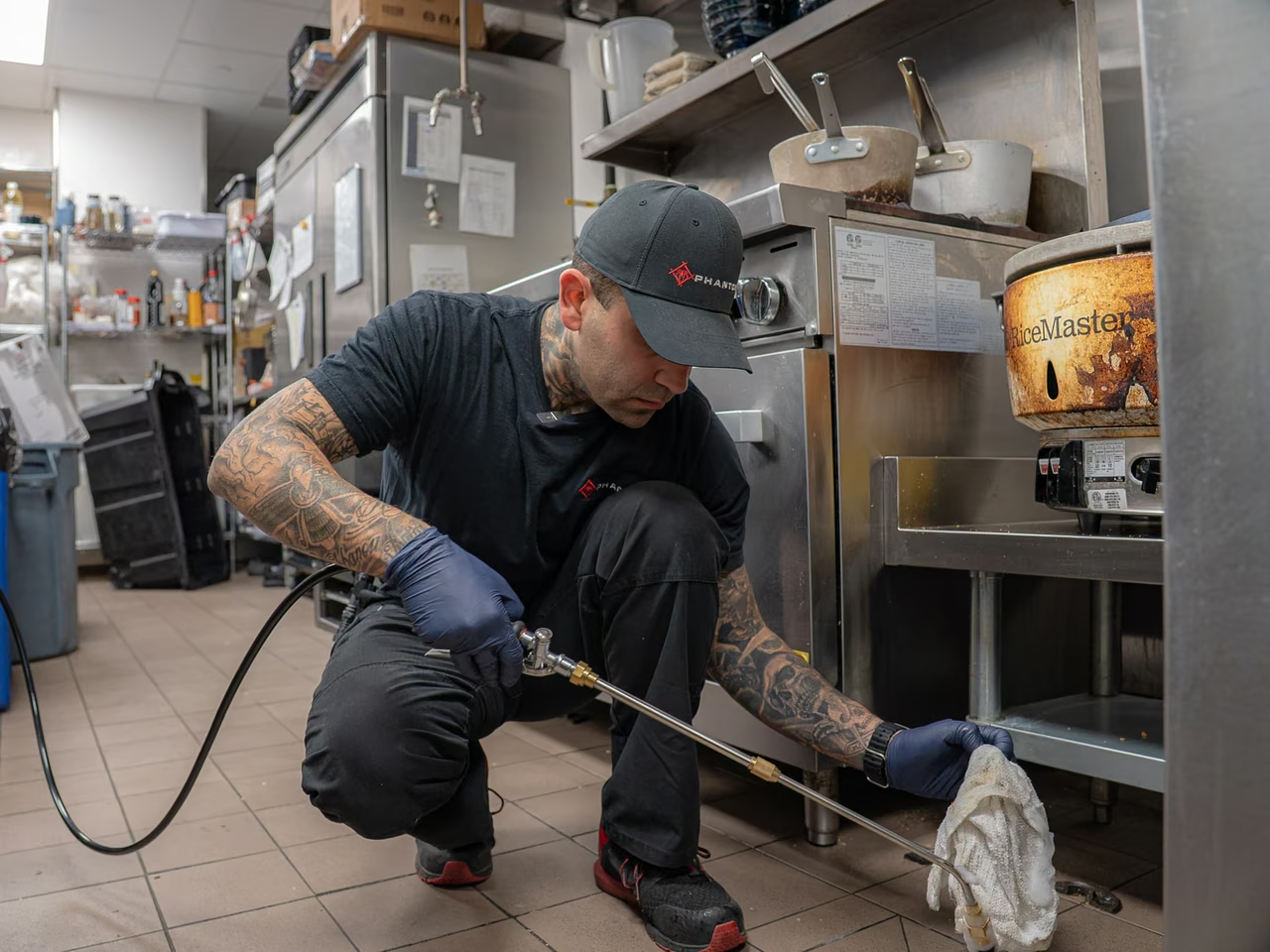
Phantom Pest Control runs a fly prevention program for businesses and managed buildings in Vancouver, BC and the Fraser Valley. Each scheduled visit services the fly lights, treats the floor and sink drains where small flies breed, and ends with a written report on what was caught and what to fix.
Who it’s for
Kitchens, food plants, care homes, hotels, garbage rooms
Common flies
Where they breed
Service area
Why Flies Keep Coming Back to a Business
Flies come back when they still have somewhere to breed and a way in. Small flies breed inside, in the film in drains and in damp waste. House flies breed in garbage, and those found indoors almost always came in from outside, so a program works on the drains, the waste and the doors together.
B.C.’s Food Premises Regulation names flies in its definition of a pest. Section 26 has the operator keep food premises free of pests, free of conditions that lead to their harbouring or breeding, and protected against their entrance. A prevention program works on those last two.
For flies you have now, a one-time treatment is our fly control service. This program is for kitchens, food plants, care homes, hotels and the garbage rooms of managed buildings, where flies return unless their breeding sites are dealt with on a schedule.
Drain, fruit and phorid flies breed in the slimy film that coats drain walls, traps and overflow pipes, where a mop or hose seldom reaches.
House flies lay their eggs in garbage, and blow flies are drawn to food waste, so bags waiting for pickup give them a place to breed.
UC IPM’s fly guide says house flies found inside a building came in from outside in almost all cases, which makes busy delivery and garbage doors the first line of defence.
Fruit flies breed in ripe produce, empty bottles and cans and trash containers; all they need is a moist film of fermenting material.
Dirty mop heads and cleaning rags breed fruit flies and phorid flies, so a fly check includes the mop sink, not only the kitchen.
CFIA’s guidance for food businesses places exterior lights away from the building and puts air curtains or plastic strips on doors that are used often.
Large and Small Flies at a Business
Large flies breed in garbage and come in through doors; small flies breed inside, in drains and damp waste. Each links to the service that handles it outside this program.

They lay eggs in garbage and other warm, moist waste, and in summer can go from egg to adult in as little as 7 days.
Shiny blue or green flies that breed in dead animals and protein-rich waste, and are strongly drawn to food and garbage.
Small flies, usually with red eyes, that breed wherever there is a moist film of fermenting material.
Fuzzy, moth-like flies that breed in the gelatinous film inside drains and overflow pipes and rest on walls nearby.
Also called humpback flies, they breed in drain linings, bin linings, mop heads and food dropped under equipment.
They don’t breed indoors: they come in during autumn to winter in wall voids and attics, so sealing their way in is exclusion work.
Tiny dark flies around potted plants in lobbies and dining rooms, where overwatered soil keeps them breeding; they’re treated under flying insect control.
Send a photo of one beside a coin for scale with your estimate request, and we’ll look at it before the walk-through.
When Fly Pressure Peaks Around Your Building
Outdoor flies follow the warm months: house, blow and fruit flies build up through summer, and cluster flies look for a winter shelter in autumn. Flies that breed indoors, in drains and kitchens, can keep going in any season.
The bars follow university extension fact sheets and Phantom’s flying insect page, which notes that the Lower Mainland’s mild temperatures and high humidity support flying insect breeding. The flies under the chart don’t have a season.
Not seasonal
A drain that stays wet keeps them breeding, and Kentucky’s extension service says their development can continue through the year indoors.
In commercial kitchens and food service, Phantom’s flying insect page notes they stay active year-round.
They breed in drains and damp waste indoors, where NC State puts their development at about 10 days, longer when it’s cool.
Where Flies Breed and Get Into a Kitchen or Building
A walk-through starts at the dumpsters and the back door, follows the waste and the water through the kitchen, and ends at the bar and the front entrance.
- ADumpster & recycling area
Garbage and recycling waiting for pickup breed house and blow flies, and UC IPM advises keeping bins at some distance from a building entrance.
- BBack door & receiving
Deliveries and garbage runs keep this door open, and an air curtain or plastic strips at a busy door act as a barrier for flying insects.
- CDish area drains
Scraps and water reach these floor drains all day, and the film they leave is where drain and phorid flies breed.
- DCook line
Food dropped under fryers and ranges, and the drains beneath them, feed phorid and fruit flies out of sight.
- EPrep & produce storage
Ripe produce and spills draw fruit flies, and already infested fruit can bring them in with a delivery.
- FGarbage room & chute
In a managed building, bags waiting in the garbage room or at the foot of the chute breed flies between pickups.
- GMop sink and janitor’s closet
Dirty mop heads, rags and a slow mop-sink drain breed fruit and phorid flies.
- HBar & drink station
Empty bottles and cans and the bar drain give fruit flies the fermenting film they need.
- IEntrance & patio doors
Doors left open to a patio let flies in from outside; tight-fitting screens on doors and windows help keep fruit flies out.
What Your Staff Can Do, and What the Program Does
Daily habits at the drains, the bins and the doors keep fly pressure down between visits. Fly lights, drain treatment and any pesticide stay with a technician. Our restaurant pest control checklist has more habits for kitchen staff.
Your team can
Lift the grates and scrub the film out of floor and sink drains with a stiff, long-handled brush, then put the grates back.
Bag and seal food waste and wash the bins; UC IPM’s fly guide says garbage left for more than one week is likely to produce blow flies.
Close back doors between deliveries, keep screens on windows that open, and note where flies show up, with the area and the date.
Needs a technician
B.C.’s Integrated Pest Management Act (section 4) requires a licence to provide any service respecting pesticides, apart from exemptions in its regulations.
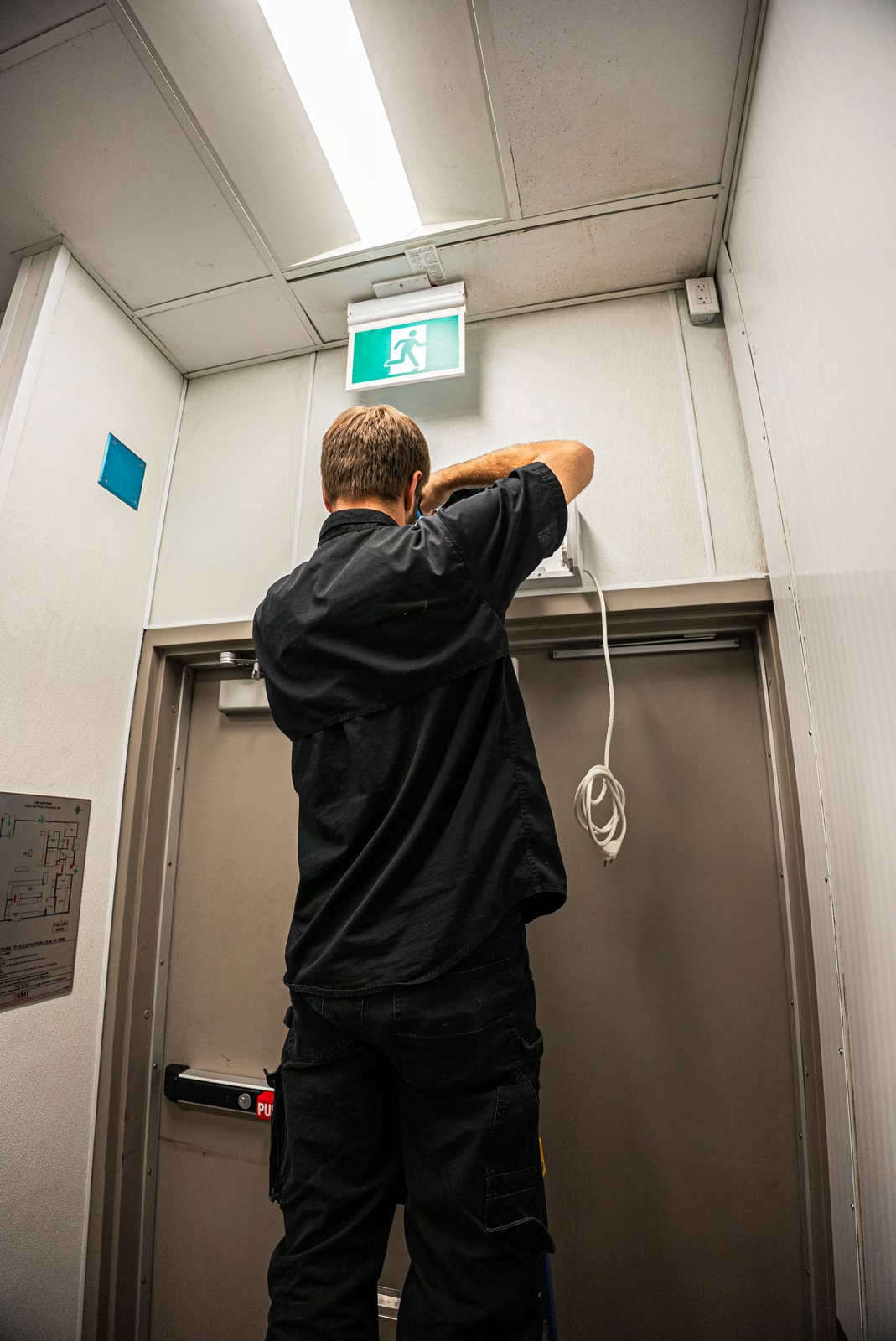
Mounting the lights, choosing their spots and changing their glue boards stay with the technician, so the lights stay away from food.
The foam treatment of floor and sink drains is applied by the technician on each visit.
Gaps and worn weather stripping are sealed as exclusion work, a separate job; screens, door sweeps and air curtains are listed in the report for you to fit.
How Our Fly Prevention Program Works
Five steps, from the first walk-through to a visit that repeats on your site’s schedule.
The first visit follows the waste and the water from the dumpsters to the bar, noting each drain, bin and door where flies breed or get in.
Fly lights placed away from food have their glue boards changed and their catches checked on every visit.
Floor and sink drains get a foam treatment for drain, fruit and phorid flies on each visit.
Garbage rooms, dumpster areas and back doors are treated as needed, after the steps section 68 of B.C.’s Integrated Pest Management Regulation requires of a licensee before any pesticide use: preventing, identifying and monitoring the pests first.
Each visit ends with a written report: what the lights caught, the breeding sources found and the fixes your staff can make.
This program is one of the scheduled programs on our regular maintenance page.
Before the First Walk-Through
With these ready, the first walk-through covers the whole site. Our client forms page holds Phantom’s preparation sheets, including the one for kitchens and food service areas.
Mark the floor and sink drains, the garbage room, the dumpsters and the doors, so the first visit can map them.
Note the area, the time of day and the kind of fly: small ones at a drain, large ones by the back door.
Tell us which floor or sink drains run slowly or smell, since standing water and film are where small flies breed.
Say when drains are brushed and mops are washed, and which days garbage and recycling leave the site.
If a health inspection noted flies, have the report at hand so the walk-through can start there.
Make every room with a drain or a bin reachable on the day, including locked storage, offices and lockers.
After the First Visit: How Your Program Runs
What happens once the program starts. The schedule is set for your site.
Walk-through
The first visit maps the drains, bins, doors and fly light spots the program will cover.
Each visit
The fly lights are serviced, the drains are treated, and the catches are checked.
Treatment days
After a treatment in a food area, our kitchen sheet asks you to ventilate for 2 hours, then sanitize counters, shelves and equipment and flush drink nozzles.
Reports
Keep each visit’s report: together they show where flies were caught and which fixes were made.
Between visits
If flies show up between visits, note the area and the date, so the next visit can start there.
If a light is in the way, ask us to move it rather than unplugging or moving it yourself.
Put each drain cover back after cleaning; covered floor drains are on CFIA’s pest checklist for food businesses.
What a Technician Checks at a Floor Drain
Floor drains are the first place a small-fly check looks. On Phantom’s commercial fly jobs, the breeding source most often turns out to be the drains around the dish area. Drain fly eggs laid in the film on the drain walls hatch in 32 to 48 hours at 21 °C, and the larvae feed there for 9 to 15 days, according to Ohio State’s extension service.
Film on the pipe walls and in the trap, and water that doesn’t drain away.
Buildup where the drain meets the trap, and flies coming up from it.
Adult drain flies resting near the drain, and fruit flies around spills.
Placed away from food, with their glue boards changed and catches checked.
The check lifts the grate and looks at the pipe walls, the trap and any overflow for film and standing water. It looks for larvae in the film and for adult flies resting on nearby walls. Kentucky’s extension service suggests a clear plastic cup, lightly oiled and turned over a drain for several days, to show whether flies are coming up from it.
Film left for two weeks can raise a new generation, which is why the drains are treated on every visit rather than once. Phorid flies call for the same search: NC State’s extension service says the key is finding and removing the places their larvae develop.
Why Choose Phantom for Fly Prevention
Credentials, a written report after every visit, and a schedule set for your site.
Owner’s experience
15+ years of pest control experience serving British Columbia
Credentials
Fully licensed, insured and certified
Reporting
A written report after every visit: catches, sources and fixes
Hours
Open 24/7 for pre-arranged commercial services
Scheduling
EXCELLENT Based on 830 reviews
 Posted on Google

 Ashley WoodWe were having some problems with mice at our home so we contacted Phantom and Darcey came and resolved the issues quickly. Darcey was friendly, great with our dog and made sure we understood everything he was doing and what to expect. Happy to report no more mice! Thank you, Darcey!Posted on Google
 Michelle HerrExcellent pest control service! The team was professional, friendly, and knowledgeable. They arrived on time, explained the treatment process clearly, and made sure everything was taken care of. Their attention to detail and commitment to customer satisfaction were impressive. I really appreciate their prompt service and effective results. Highly recommend them to anyone looking for reliable and professional pest control services!Posted on Google
 Nasib AbdulMark was great and he did a great job and was very knowledgeable.Posted on Google
 HenryDarcey provided exceptional support in resolving our pest concerns. He was punctual, highly knowledgeable, and professional throughout the process. We have been trying to deal with these issues for quite some time without any luck but thankfully the matter is now resolved. We appreciate the dedication he demonstrated and will be sure to reach out should we require his services again.Posted on Google
 Jacqueline BruceI want to let you know that June did an amazing job on our house for the moths. He was really friendly, patient, professional and conscientious. I wasn't fully ready for the treatment when he arrived and he managed to move some clients so he could return later. He explained a lot about the treatment and the moths' habits which really helped with other areas that he wasn't even treating. He kindly helped me moved some things to barricade the area from pets. I would get Phantom back and highly recommend them.Posted on Google
 Fraser HannayDarcey was amazing at helping us deal with a wasp nest. Friendly, knowledgeable and on time! Thank you!Posted on Google
 JanetWe hired Phantom Pest Control to eliminate a wasp nest inside our house and the service was great. Information on the phone when I first called to book an appointment was clear and we got an appointment quickly. Juan, the specialist who arrived to do the job, fully explained the process, did the work, and explained what to watch in the outside chance additional work might be needed. We are happy with the job and were glad to have Juan as our technician.Posted on Google
 Jenny WuWe received exceptional service from Joy. She was both professional and knowledgeable, explaining the service thoroughly.Posted on Google
 Sean AbbottThey showed up on time, early actually. Mark was very professional and explained how the cockroaches work. He was personable and efficient, and hygienic with how he worked (wearing protective boot covers and gloves). I was impressed and would definely call again if needed.
Fly Prevention Program Across Vancouver & Fraser Valley
We run the program for businesses and managed buildings across the Lower Mainland and the Fraser Valley. The cities listed link to their own local pages.
Vancouver & North Shore
Burnaby & Tri-Cities
Richmond & Delta
Fraser Valley
Related Services for Flies and Flying Insects
Services that can run alongside the program. For apartment, condo and townhouse buildings, there is also our multi-unit pest control program. For restaurants and cafés, our restaurant pest prevention program covers the fly lights and drains on the same visits as the cockroach and rodent checks.
Treatment for an active problem with flies, gnats or moths, at homes and businesses.
Sealing the gaps and entry points pests use, as a separate job.
Wasps drawn to garbage bins and outdoor dining, and the nests they build nearby.
Inspection of stored goods and stock for grain, drugstore and cigarette beetles.
Fly Prevention Program FAQs
A program or a one-time treatment, fly lights and zappers, drains and bleach, B.C. rules, closing for a visit, garbage rooms, other flying insects and cost.
Prefer to talk?
How is a fly prevention program different from a one-time fly treatment?
A one-time treatment is for flies you have now; the program is for a site where they keep coming back. If flies have returned after a treatment before, something on the site is still breeding them or letting them in, and a schedule keeps checking those places instead of waiting for the next outbreak.
For homes and single outbreaks, our fly control page lists the one-time treatments and their prices.
How do insect light traps help with flies?
They catch adult flies and show where and when flies are getting in. A light trap won’t clear the drain or the bin a fly came from: Kentucky’s extension service says that unless breeding sites are removed or cleaned, the problem continues no matter how often the adults are treated.
That’s why the program pairs the fly lights with drain treatment and a report on breeding sources.
Where should fly lights go in a kitchen?
Away from food, at a height that suits the flies. CFIA’s pest control guidance for food businesses notes, for insect electrocutors, that fruit flies and house flies fly low while moths fly high, so a trap’s height follows its target.
Phantom places its fly lights away from food, and the spots are chosen on the first walk-through.
Do bug zappers belong in a kitchen?
Not over food. CFIA’s guidance keeps insect electrocutors, the classic bug zappers, out of food handling areas, because insects killed in them can contaminate food, and asks for their catch trays to be checked and cleaned before insect parts build up.
A glue-board light holds the catch on the board instead. On Phantom’s program, the glue boards are changed on every visit.
Does bleach or boiling water get rid of drain flies?
Not for long. Ohio State’s extension service says bleach doesn’t rid pipes of the scum drain flies breed in, and that their larvae are surprisingly resistant to it. Kentucky’s says hot water may give short-term control, and NC State advises against pouring bleach or other strong cleaners down drains.
What removes the film is scrubbing it out with a stiff, long-handled brush on your cleaning schedule. On the program, the floor and sink drains also get a foam treatment on each visit.
What do B.C. food premises rules say about flies?
They count flies as pests. The Food Premises Regulation’s definition of a pest names rats, mice, cockroaches and flies. Section 24 asks for written sanitation procedures that identify all pesticides used in the establishment, with their uses and storage requirements, and where food is processed or prepared, those procedures are approved by a health officer.
The program works on what the regulation asks of the premises themselves: the places flies breed and the ways they get in.
Do we have to close for a visit?
Only for a targeted treatment. Servicing the fly lights and the drain foam treatment don’t need the area empty. If a kitchen or food service area needs a targeted treatment, our kitchen preparation sheet asks for the area to be vacated for 6 to 8 hours after treatment is complete, so that work is booked around your hours.
Our office books visits Monday to Friday, 9 AM to 5 PM, and we’re open 24/7 for pre-arranged commercial services.
Can the program cover a building’s garbage room or chute?
Yes. Garbage rooms and chutes in managed buildings are part of the program: bags waiting for pickup breed house flies and blow flies, so the room is on the visit with the fly lights and drains. The report lists what would cut the breeding, such as how often bags leave and how the room is washed.
Building-wide programs for apartment and condo buildings are on our strata pest control page.
Does the program cover wasps, mosquitoes, moths or cluster flies?
Not as part of this program. Wasps and mosquitoes have their own services, wasp control and mosquito control, and moth control covers both clothes moths and pantry moths.
Cluster flies are different again. They don’t breed indoors: Penn State’s extension service says they come into buildings in autumn to spend the winter, so the fix is sealing the gaps they use, which we quote as exclusion work. Our seasonal perimeter program also checks entry points on each visit.
How much does a fly prevention program cost?
There’s no set price and no set number of visits: both are set per site. The commercial site inspection is free, and a written quote follows from what it finds.
Book a Site Walk-Through
Tell us about the site: where flies show up, which drains are slow, and when the garbage leaves. We’ll plan the first walk-through around your hours.
Send a floor plan with the request, and the first visit can start mapping the drains and fly light spots.