Pest Control in Ladner, BC

Phantom Pest Control provides licensed pest control, pest removal and exterminator services to homes, stratas and businesses in Ladner, BC, from the heritage streets of Ladner Village to the houses beside the farmland along Ladner Trunk Road.

Ladner is one of the three urban communities in the City of Delta, on the south side of the Fraser River. The letters match the five areas below. Map data © OpenStreetMap contributors.
  • River and shoreline
  • City of Delta boundary
  • Ladner’s outline on OpenStreetMap; not a legal boundary
  • Sloughs
  • Parks and wildlife areas
Serves
Ladner, in the City of DeltaNext to the Fraser River, with Westham Island’s farms to the west
Pests we handle
Rats, mice, raccoons, skunks and squirrelsAlso carpenter ants, wasps and pest birds
Health authority
Fraser HealthIts Delta/White Rock office serves Ladner food premises
Hours
Office and Service Hours: Monday to Friday, 9 AM to 5 PMOpen 24/7 for pre-arranged commercial services

Why Book Phantom in Ladner

A photo from one of our rodent jobs, what to have ready when you call, and why clients book Phantom.

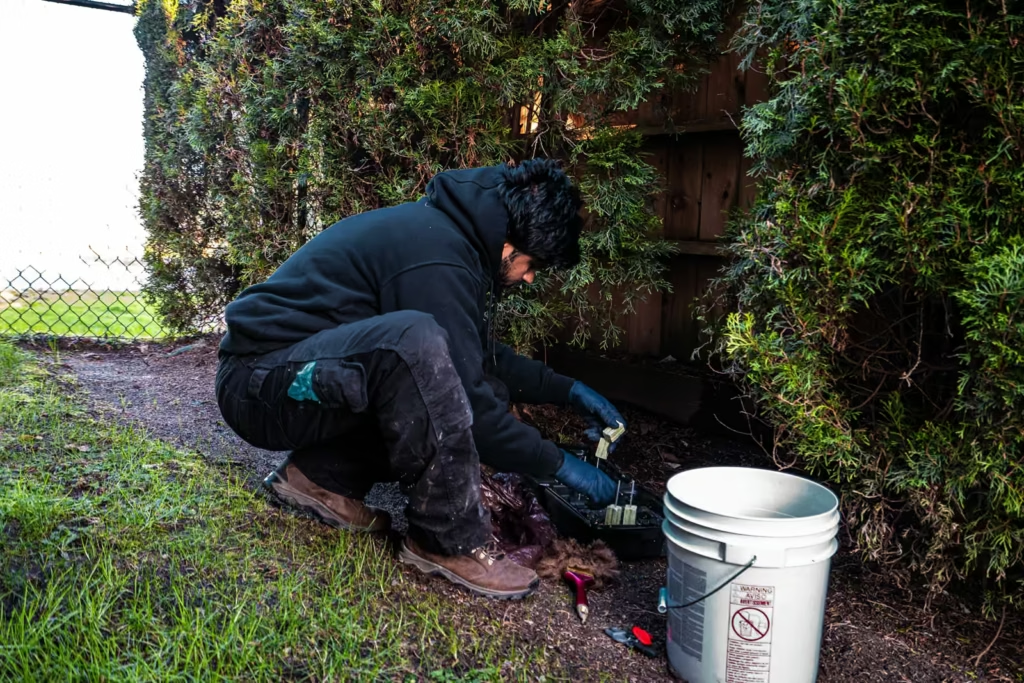
Phantom technician checking bait blocks in a rodent bait station under a cedar hedge by a chain-link fence
Checking a rodent bait station under a cedar hedge.

Why book Phantom

  • 15+ years of pest control experience serving British Columbia
  • Our own K9 teams for bed bug screening
  • A written report with photos after a home buyer or seller inspection
  • Preparation sheets for bed bug, insect and rodent treatments, on the client forms page

Before you call

  • Your part of Ladner, for example Ladner Village, Port Guichon or Ladner East
  • What you’ve noticed, where it is and for how long; photos help
  • Any attic or crawl space to check: + $50 on the inspection, waived when the service is booked the same day

Estimates over the phone are free, Monday to Friday, 9 AM to 5 PM.

Where Pests Come From in Ladner

Ladner runs from the river and its sloughs through a heritage village and newer streets to farmland, with Westham Island’s farms to the west. Each part offers pests different food and shelter.

  1. A

    Ladner Village and Chilukthan Slough

    Delta Street, Chisholm Street, 48 Avenue and Arthur Drive, on both sides of the slough

    Delta’s community plan puts the historic commercial centre and waterfront on the slough’s west side and the modern malls on its east side. Arthur Drive has houses dating from 1880 and as many as 16 identified heritage buildings, among large old trees. Carpenter ants favour moist or unsound wood, Norway rats favour damp building perimeters, and German cockroaches favour restaurants, and the City’s heritage tour points visitors to the village’s many restaurants, pubs and coffee shops.

    Growth is focused here too, and a demolition permit in Delta needs a rodent declaration from a licensed pest control company.

  2. B

    Port Guichon and the river edge

    River Road West, Port Guichon and Ladner Harbour Park, north to Ladner Marsh

    The old port site at Port Guichon is now part of the dike of the neighbourhood that still bears the name. Delta’s mosquito plan names Ladner among the areas with a significant amount of cattail swamp, home to the aggressive cattail mosquito, and the community plan notes that the land beside the Fraser supports mammals and other wildlife. For nearby houses, that can mean raccoons trying attics and crawl spaces, skunks under sheds, and Norway rats burrowing at ground level in damp soil.

  3. C

    Central Ladner and the civic precinct

    The streets around City Hall, Delta Hospital and the Ladner Exchange, along the Ladner Trunk Road corridor

    Single-detached houses make up 53% of Ladner’s homes, and the largest group of homes in the 2016 Census dates from 1961 to 1980. Delta says European chafer has seriously damaged turf in many municipalities, including its own: the grubs eat grass roots, and crows, skunks and raccoons dig up the turf to reach them. Yellowjackets nest under overhanging roofs, in attics and in garden sheds, and hornets in cedar hedges. In 2014 Delta confirmed mosquito larvae in catch basins at several sports fields and parks, Ladner’s among them.

  4. D

    Ladner East and the farmland

    Ladner Trunk Road east of Highway 17A, and Crescent Island to the north

    The community plan sets Ladner East-Urban just east of Highway 17A, with the agricultural Ladner East-Rural strip beyond it, and about half of Delta’s land is in the Agricultural Land Reserve. The Province says farms give rodents plenty of food and nesting sites, and that voles can be a problem in fields and orchards. Raccoons and skunks can also go after poultry and gardens, and Delta’s invasive species strategy calls European starlings a major nuisance to its blueberry farmers.

    Delta’s stewardship advice is to use traps rather than poison for rodents. It also says voles are the main food of many of its overwintering birds of prey, and its biodiversity strategy asks for public education on what rat poison does to raptors.

  5. E

    Westham Island and the bird sanctuary

    The island’s farms and roadside farmstands, with the Reifel sanctuary and Alaksen at its north end

    Westham Island’s farms sit next to protected wetland. In March 2023, researchers worked among 10,000 to 12,000 geese using the island and Brunswick Point, and snow geese eat the roots of grasses as well as the blades, sometimes overgrazing fields to the ground. Geese are migratory birds under federal rules, so they aren’t a removal job: see the table below.

    Around houses, barns and farmstands, watch for rodents and for wasps at fruit; the Province warns to look before reaching into berry bushes. The sanctuary and Alaksen are protected wildlife sites, listed here only as landmarks.

    Pests to watch here

Who Handles What in Ladner

Pests on private property are the owner’s or occupant’s to deal with, and we’re who they call. The City enforces its property bylaw, the Province takes wildlife that threatens people, federal rules cover geese, and Fraser Health oversees food premises.

If you haveWho handles itWhat to know

Rats, mice or another infestation on a property

The owner or occupant, usually with a pest control company. To report a property: City of Delta Bylaw Enforcement, 604-946-3340

Bylaw 8066 bars an owner or occupant from allowing an infestation of rodents, vermin or destructive insects, or conditions that may give rodents food or shelter. A bylaw notice is $300, or $250 within 14 days. Bylaw Enforcement takes calls from 8:30 a.m. to 8:30 p.m., 7 days a week.

Source: City of Delta, Bylaw 8066, City of Delta, Bylaw Enforcement

An aggressive coyote or bear

BC Conservation Officer Service: 1-877-952-7277

Officers respond where dangerous wildlife is a risk to public safety, and Delta’s animal shelter sends these calls to the same line. They don’t attend low-risk conflicts: the Province’s examples include raccoons, squirrels, skunks, crows and geese.

Source: Province of B.C., City of Delta

Raccoons or skunks damaging a building

A licensed pest control company

The Province points people to a licensed company for raccoon and skunk damage. A raccoon mother and her babies can’t be removed until the pups can leave with her, at about 12 weeks. Poisoning wildlife is an offence under the Wildlife Act.

Source: Province of B.C., Wildlife Act

Geese on your land, or a goose nest

Canadian Wildlife Service, which issues the federal permits

Geese are migratory birds, so federal rules limit what anyone can do to them, their eggs and their nests. The Province sends goose and waterfowl damage to the Canadian Wildlife Service. The questions below have the details.

Source: Migratory Birds Regulations, 2022

Pests in a restaurant or food business

The operator, usually with a pest control company. Fraser Health’s Delta/White Rock Health Protection Office inspects: 604-507-5478

The office, at 201-11245 84 Avenue, serves Ladner. The Food Premises Regulation requires premises to be free of pests and of conditions that let pests harbour or breed, and protected against their entry.

Source: Fraser Health, Food Premises Regulation

When Pests Peak in Ladner

Ladner’s pests don’t all keep a calendar.

The mosquito, carpenter ant and snow goose months come from Delta’s mosquito plan, B.C.’s home and garden pest guide and the groups that study the local geese. Where a source gives only “spring”, “fall” or a span of weeks, as for wasps, mice, litters and the start of chafer feeding, the months are our reading of it.

This month: November 2026

  • Chafer beetles
  • Mice moving in
  • Snow geese on farm fields

Not seasonal

  • Rats
  • Bed bugs
  • Cockroaches

Carpenter ant swarms

February to May

Winged carpenter ants appear as early as February and are most numerous in May.

Mosquitoes

April to August

Delta monitors mosquito habitat from late April through August, the same months its plan gives for the main species.

Raccoon and skunk litters

April to July

Litters are born from late April to early June, and a raccoon mother and babies can’t be removed for about 12 weeks.

Wasps

May to September

Only mated queens survive the winter, so new nests start each spring and die out each fall. Nests are smallest early on.

Chafer beetles

September to May

Grubs feed from fall to late May, most damage comes in fall and early spring, and adults swarm around trees at sunset in June.

Mice moving in

October to March

Deer mice near fields may invade buildings in the fall.

Snow geese on farm fields

October to April

They arrive by early October and leave in spring: a farm season, not a service we offer.

Not seasonal

Rats

B.C.’s poultry-farm factsheet gives rats 6 to 7 litters a year, so there’s no off-season.

Bed bugs

They travel on infested objects, so any month can bring them.

Cockroaches

German cockroaches live indoors, so there’s no off-season.

Areas We Serve in Ladner

We work across Ladner and the areas next to it. We didn’t find a full list of Ladner’s neighbourhoods from Delta, so these names come from its community plan, its heritage tour and BC Geographical Names.

Ladner

  • Ladner Village
  • Ladner East
  • Arthur Drive
  • Delta Street
  • Ladner Trunk Road
  • River Road West

Around Ladner

  • Port Guichon
  • Westham Island
  • Crescent Island

Nearby service areas

Not on the list? Call or text 604-771-0404 and the office will confirm.

What Pest Control Costs in Ladner, and How a Visit Works

The inspection fees we publish for Ladner homes and businesses, and the four steps of a visit.

Inspection fees

House
$150 + GST
Condo, apartment or townhouse
$125 + GST
Attic or crawl space
+ $50
Waived if the service is booked on the same day.
Commercial site inspection
Free
Estimate over the phone
Free

Treatment prices for each pest

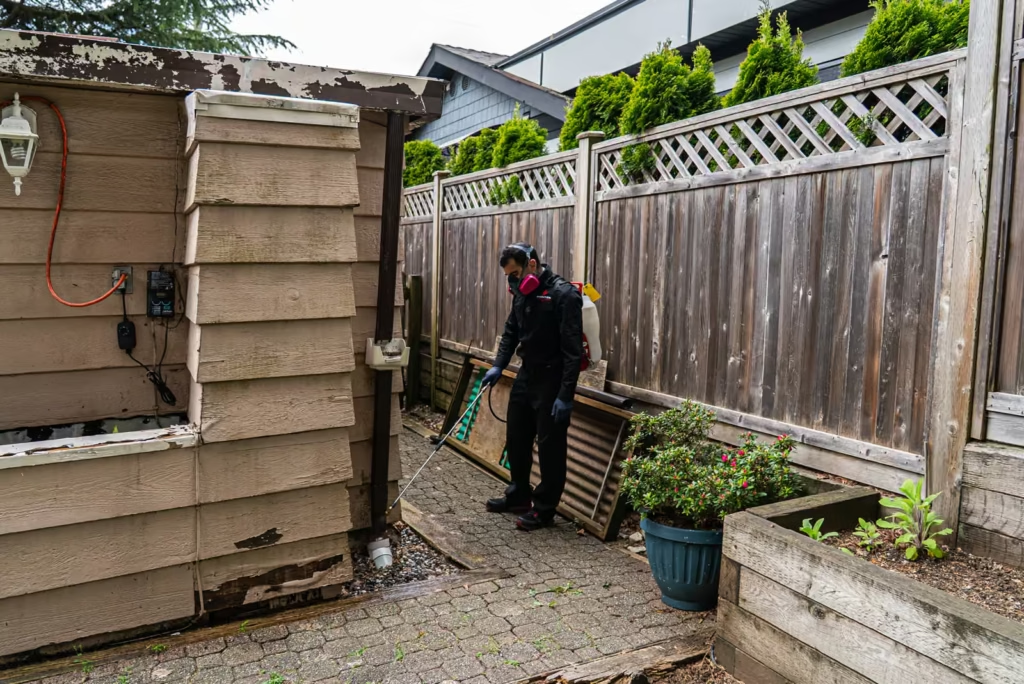
Phantom technician spraying the base of a weathered house wall beside a cedar fence for carpenter ants
  1. Describe the problem by phone

    Call or text 604-771-0404 on a weekday between 9 AM and 5 PM. The estimate costs nothing.

  2. An inspection where one is needed

    The technician identifies the pest and finds how it gets in.

  3. Get ready with the preparation sheet

    For bed bug and cockroach treatments, the preparation sheets ask everyone to stay out for at least 6 to 8 hours. The bed bug sheet extends that to 24 hours for infants under 2, pregnant or nursing mothers, people with respiratory or immune conditions, and pets; the cockroach sheet lists its own group. The sheets are on the client forms page.

  4. Treatment, then the weeks after

    A few pests for a while after treatment is normal. Past the time on your sheet, call us.

Pest Control Services in Ladner

Pick the pest or the kind of property: each page explains how the work is done.

By pest

Rodent control

Norway rats along damp building perimeters, and mice moving in from the fall.

Wildlife control

Raccoons, skunks and squirrels: we find the way in and seal it once the animal has left.
Bird control

Spikes, netting and wire for pigeons, seagulls and starlings on ledges and rooflines.
Wasp control

Yellowjacket nests under eaves and in sheds, hornet nests in cedar hedges.
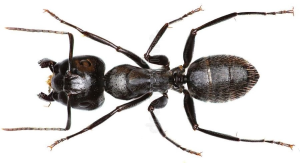
Ant control

Carpenter ants in moist or unsound wood; winged swarms peak in May.
Beetle control

European chafer grubs in lawns, where crows, skunks and raccoons dig for them.
Bed bug control

K9 detection first, then treatment; in rentals, insects generally fall to the landlord.
Cockroach control

German cockroaches in restaurant kitchens and other food businesses.

For homes

Single-family and laneway homes

Single-detached houses are 53% of Ladner’s homes.

Townhouses

Semi-detached and row houses are 15% of Ladner’s homes, against 9% across Delta.

Home buyers and sellers

A written report with photos for either side of a sale.

Attics and basements

Raccoons in attics and Norway rats in damp crawl spaces.

Rodent abatement for demolition

Rodent work before a demolition, and what Delta’s declaration form asks the company for.

For buildings and businesses

Restaurants

Kitchen programs for the restaurants, pubs and coffee shops of Ladner Village.

Strata and apartment buildings

Apartments, counting flats in duplexes, are 31% of Ladner’s homes.

Property management

Programs for managers of Ladner’s rental buildings: 21% of households rent.
Ladner Pest Control Questions

Answers for homeowners, renters, landlords and businesses in Ladner.

Prefer to talk?

604-771-0404

Do you remove raccoons, skunks and squirrels in Ladner?

Yes, through wildlife control. We find where the animal gets in and seal it once it has left. Catching an animal can’t be guaranteed, so the work focuses on keeping it out, including the Province’s advice to cut back tree limbs that overhang the roof. Spring litters can change the timing, so tell us if you hear young in an attic. For squirrels in a garden, see seven humane ways to keep them out.

How much does wildlife removal cost in Ladner?

On our wildlife control price list, a house starts with 2 traps and 2 visits over one week for $350 + GST. Rebaiting or resetting traps is $78 + GST, each trap beyond the first 2 adds $50 + GST, and a second week of 2 visits is $125 + GST. Catching the animal isn’t guaranteed. The inspection fees are in the costs section above.

How much does rodent control cost in Ladner?

Our rodent control program is three visits: $495–$650 + GST for a house, or $395–$495 + GST for a condo. It seals gaps up to the size of a toonie; larger openings go to exclusion work. Where it fits, exterior baiting starts with a $150 + GST minimum setup, then $78.75–$95 + GST per visit, with 30 days’ notice to cancel.

Can you use rat poison in Ladner?

Not the strongest kind at homes. B.C.’s Integrated Pest Management Regulation allows second-generation anticoagulant rodenticides only at essential service locations. Those include land used for agriculture, where an operator with a pesticide licence and applicator certificate may use them under strict limits; a house beside the farm can’t. For homes, the Province calls snap or electronic traps the best option. Delta also tells residents to use traps rather than poison, and its biodiversity strategy asks for public education on what rat poison does to raptors.

Who pays for pest control in a Ladner rental?

It depends on the pest. The Residential Tenancy Branch says landlords are generally responsible for insect infestations such as bed bugs, and that municipal standards of maintenance bylaws decide who manages rodents. In Delta, Bylaw 6262 says exterior wall openings other than doors and windows must be protected against rodents, insects and vermin, and Bylaw 8066 bars an owner or occupant from allowing an infestation. We also run programs for property managers.

What can I do about geese on my Ladner property?

Geese are migratory birds under federal law, so the limits are strict. Without a permit you may scare geese that are causing or likely to cause damage, as long as you don’t use aircraft or firearms. An empty nest with no live bird or viable egg may be removed. Destroying eggs or an active nest takes a permit, which goes to someone who owns, leases or manages the land, or holds certain rights over it.

On cropland, Delta’s Noise Bylaw says audible bird scare devices can only be used under a Bird Predation Management Plan. The Province sends waterfowl crop damage questions to the Canadian Wildlife Service, and its Agriculture Wildlife Program can compensate enrolled producers for waterfowl damage to forage.

Can you keep pigeons and other birds off a Ladner building?

Yes. Bird control uses netting, spikes, tension wire and visual deterrents, chosen for the species, the level of activity and the building. Netting suits enclosed spaces such as parkades and loading docks; spike and wire systems suit ledges, parapets, signs and rooflines where birds land and roost. Most birds’ occupied nests are protected, so timing can matter; B.C. exempts pigeons (rock doves) and European starlings, whose nests can be removed without a permit.

Why are there so many mosquitoes in Ladner, and does the City treat them?

Delta’s plan names Ladner among the areas with a significant amount of cattail swamp. The City applies a biological larvicide in known breeding areas on public lands and teaches residents to clear habitat on private property, under a plan running to April 2031. To report standing water or adult mosquitoes, call the City’s offices at 604-946-3253.

On your own property, empty anything that holds water: a container holding it for seven to ten days can produce mosquitoes. Letting a pond, pool or hot tub go stagnant can also bring a $300 bylaw notice. For help around a home, see mosquito control.

Do I need a rodent declaration to demolish a house in Ladner?

Yes. Delta’s Building Bylaw 8065 requires a demolition permit application to come with a Rodent Inspection and Control Declaration, and the City’s form says a licensed pest control company must prepare it, or the permit won’t be issued. The form asks that company for its structural pesticide licence number and a Delta or inter-municipal business licence. The owner must keep to the rodent plan until the demolition is complete, and breaking it carries a $250 ticket. Our rodent abatement for demolition page explains how the work is done.

Why are animals digging up my Ladner lawn?

It may be European chafer grubs. Delta says crows, skunks and raccoons dig up turf to eat the larvae, leaving lawns pecked, rolled up or bare, and it treats 20 or more larvae per square foot as a heavy infestation. Most damage comes in fall and early spring. Nematodes work only shortly after the eggs hatch, around mid-July to early August, so timing matters. We treat chafers: see beetle control.

Get a Free Estimate in Ladner

Send a few photos and your part of Ladner; the office calls back to talk through the job.

Office and Service Hours
Monday to Friday, 9 AM to 5 PM: calls, estimates and call-backs.
Commercial
Open 24/7 for pre-arranged commercial services: evening, night and weekend visits when booked ahead.

Free estimate request

Property - Step 1 of 4
What kind of property is it?
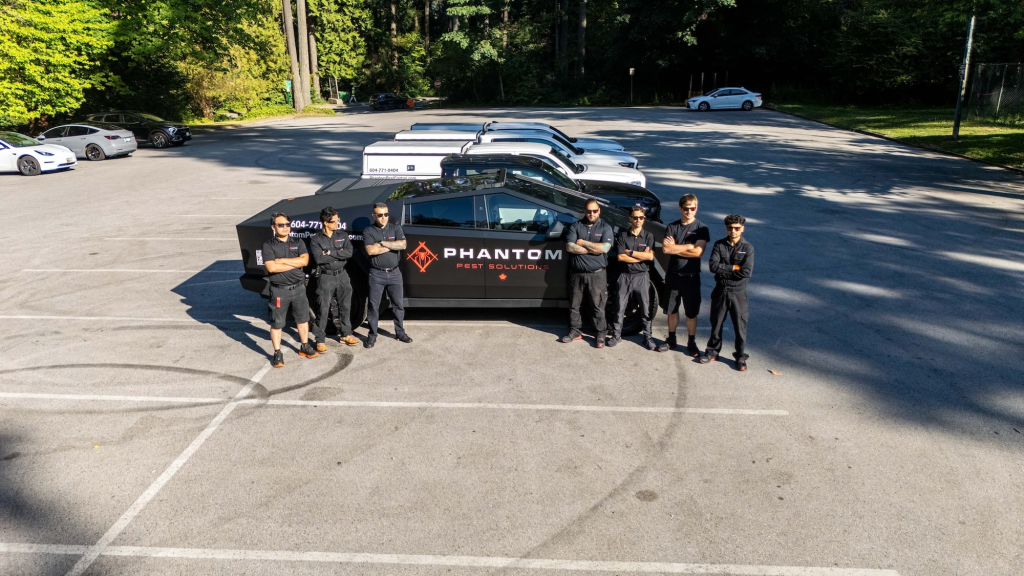
Seven Phantom technicians standing beside a branded service vehicle

Book a Ladner Inspection

Say which part of Ladner you’re in and what you’ve noticed, and the first visit gets planned around it.

Estimates over the phone are free, Monday to Friday, 9 AM to 5 PM. Open 24/7 for pre-arranged commercial services.