Property Management Pest Control in Vancouver, BC

Phantom Pest Control provides property management pest control in Vancouver, BC, the Lower Mainland and the Fraser Valley: pest control for property managers, landlords and building owners across rental houses, apartment buildings, condos, townhouses, short-term rentals, offices and retail. We inspect the building and the suites tenants report, treat them, and plan each job around B.C.’s notice rules for rented homes.

  • Estimate Free over the phone Call the office or send the form
  • Inspection Free for commercial sites Homes and suites: from $125 + GST
  • Notice 72 h for an occupied suite, 48 h for common areas B.C.’s pesticide notice periods, built into the schedule
  • Hours Office and Service Hours: Monday to Friday, 9 AM to 5 PM Open 24/7 for pre-arranged commercial services

Pest Control for Each Kind of Property You Manage

Each kind of rental property and building has its own page: the pests it gets, how the work is planned and what residents or tenants do to prepare. Pick the one that matches, or tell us about the whole portfolio when you ask for an estimate.

Strata & Apartment Buildings

For the people who run a building, from owners of rental apartment buildings to strata councils and their managers. It covers common property, the suites residents report, K9 checks of the neighbouring suites, and the list to send us before a building job.

Condos & Apartments

For one suite you rent out or manage for its owner. The page is written for the people living there: who pays in a condo, how renters raise a problem with the landlord, how to prepare the suite, and the treatments for cockroaches, bed bugs and rodents.

Townhouses

For one home in a row. Mice, cockroaches and bed bugs travel through the cavity between two units, and connected roof spaces let rodents move along the row. The page explains when an inspection finds that neighbouring units or common areas also need attention.

Single-Family & Laneway Homes

For a rental house, with or without a laneway home behind it. The page starts with how pests get in: the inspection covers the house, the roofline, the foundation, the yard, the garage and the laneway home, then treats what it finds and suggests steps against a return.

Airbnb & Short-Term Rentals

For hosts, co-hosts and property managers with short-term rentals across Metro Vancouver and the Fraser Valley. It starts at the turnover: what your cleaners can check between guests, what needs a technician, and how B.C.’s principal residence rule limits which homes can be listed.

Office Buildings

For managers of office towers, business parks and multi-tenant complexes. The lease decides who arranges pest control, for each suite and for the shared spaces. The page covers how the suites with activity and the shared spaces that feed them are inspected, and B.C.’s rodenticide rules for offices.

Retail & Shopping Centres

For centre managers and retail tenants. Usually the lease sets who books service inside each unit and who looks after the common areas, such as the corridors and the loading dock. The common areas and each tenant’s unit can run on different schedules.

Managing several kinds of property?

List the properties and what tenants are seeing when you ask for an estimate.

What Property Management Pest Control Costs

Estimates over the phone are free, and so are site inspections for commercial properties. These are the prices Phantom publishes for homes and single suites. A building program and exclusion work are quoted after an inspection.

Estimate and inspection

  • Estimate over the phone Free
  • Site inspection, commercial property Free
  • Inspection, house $150 + GST
  • Inspection, condo, apartment or townhouse $125 + GST
  • Attic or crawl space, added to the inspection +$50 Waived if you book the service the same day.

K9 bed bug detection

  • One home or unit $195–$275 + GST Priced by the size of the property.
  • Multi-unit, the first unit and the common area $250 + GST
  • Each additional unit $35 + GST

Treatment, one condo or apartment

Outside the building

  • Exterior bait stations, setup From $150 + GST
  • Each service visit $78.75–$95 + GST 30 days’ notice to cancel; the final visit is chargeable.

Prices are in CAD and exclude GST. They are Phantom’s published prices for homes and single suites in Greater Vancouver and the Lower Mainland, and they can change with the size of the property, how severe the infestation is and the treatment it needs.

All pests and prices

How a Pest Control Job Works in a Managed Building

It starts with an inspection of the building and the reported suites. Then come the notices, the prep and the treatment, with follow-ups booked across the units that need them. The table below shows who gives which notice, and when.

  1. Report

    Send us the suites where residents have reported pests, the units above, below, beside and across from them, and any that sit empty. Name one person as the contact: B.C.’s notice rules send treatment notices to the owner or manager as well as to residents.

  2. Inspection

    A technician walks the building before anything is quoted: the outside, the garbage and recycling rooms, the parkade, storage and mechanical rooms, then the reported suites.

  3. Notice and prep

    You give tenants the entry notice; the treatment notice goes to the occupants and to you. Bed bug, cockroach and rodent treatments come with a preparation sheet for residents.

  4. Treatment

    Suites are treated unit by unit, and suites on one cockroach stack may be treated together. Phantom requires a K9 detection before any bed bug treatment, and our own dogs do it.

  5. Follow-up

    Second treatments and follow-up inspections are booked across the units that need them. A cockroach treatment may need a second visit 15–21 days after the first.

Who tells whom before a treatment in a rented building

SituationWho tells whom, and whenThe rule
Entering an occupied suiteThe landlord, or you as the owner’s agent, gives the tenant written notice of the purpose, date and time, 24 hours to 30 days ahead, for a time between 8 a.m. and 9 p.m. unless the tenant agrees. A technician entering for you needs the same notice. A notice posted on the door counts as received three days later, so the 24 hours start then.Residential Tenancy Act, s. 29 and s. 90
Treating an occupied suiteThe pest control licensee gives the occupant, and you as the owner or manager, written notice at least 72 hours ahead. A shorter period needs the consent of everyone entitled to the notice.IPM Regulation, s. 10(2) and (10)
Treating a common areaFor garbage rooms, parkades, corridors and the outdoors within 5 metres of a door or window: notice to you and the residents at least 48 hours ahead, directly or posted, and a posted notice stays up 48 hours after. No tenancy entry notice is needed. Crack-and-crevice sprays, hidden gel or bait stations, outdoor wasp nests and rodenticide under s. 81 need no residents’ notice, but you are still told.IPM Regulation, s. 10(4) and s. 12
Treating an empty suiteYou are told before or right after the treatment. Anyone moving in within 48 hours is told, or a notice stays posted at each entrance for 48 hours.IPM Regulation, s. 10(3)
After a treatmentAfter a treatment that needed a notice, the licensee tells you in writing that the pesticide was used, and of any differences from the notice.IPM Regulation, s. 10(12)

Phantom’s bed bug preparation sheet asks everyone to stay out for at least 6 to 8 hours after treatment, and 24 hours for infants under 2, pregnant or nursing mothers, people with respiratory issues or compromised immune systems, and pets. Agree the time with each tenant before the 72-hour notice goes out. This is general information, not legal advice: the Residential Tenancy Branch sets out the access rules in full.

One-Time Treatment or a Building Program

A one-time treatment deals with the pest a tenant reports now. A building program adds scheduled visits to the common areas and the outside stations, with a written report after each one. Exclusion work closes the openings pests use to get in.

One-time treatment

  • When it fits A pest reported in one suite or one area now.
  • Visits One visit, or more when the treatment calls for them, such as a second cockroach treatment or the 3-visit rodent program.
  • Price Published for one suite on each pest’s page; see the price list above.
  • Paperwork The treatment notices, and a preparation sheet for residents.

Multi-Unit Property Maintenance Program

  • When it fits A building that wants its common areas and outside stations checked on a schedule.
  • Visits Every visit covers the common areas and the bait stations outside, and suites are treated when residents report pests.
  • Price Set for your building after the inspection.
  • Paperwork A written report after each visit: what was found, what was done and which suites need follow-up.

Exclusion work, then re-checks

  • When it fits Rats, mice or birds getting in through openings in the building.
  • Visits Exclusion work closes the openings a building has today; the pest proofing program re-checks them on a schedule.
  • Price Quoted for each property after a visit from our pest-proofing specialist.
  • Paperwork The pest proofing program leaves a written report with photos after every visit.

Pests We Treat in Rental and Managed Buildings

Each row links to the pest’s own page, with its prices and its preparation sheet. In a building, the line below each pest says what changes when it moves between suites or lives in the shared spaces. To check what you’re seeing first, see our guide to common household pests in Vancouver.

  • Bed bugs

    They move between units through walls, hallways and shared spaces, so the suites around a reported one are screened by our own K9 teams. A K9 detection is required before any treatment.

  • German cockroaches

    Shared plumbing and walls carry them between units, so suites on one stack may be treated together, and a second treatment can follow 15–21 days later.

  • Rats and mice

    The inspection walks the garbage and recycling rooms, the parkade and the outside. Inside, there is a 3-visit program; outside, bait stations are serviced visit by visit.

  • Pigeons and other birds

    Pigeons roost in parkades and settle on balconies and ledges. The bird control page covers spikes and netting, and Bird Deterrence Services keeps them in repair on a schedule.

  • Ants

    Trails along foundations and kitchen edges in spring and summer. The ant page has one-time treatments, and the Ant Control Program adds scheduled visits.

  • Wasps and hornets

    Nests at the eaves and in walls, attics and sheds. Seasonal Perimeter Protection treats new nests at the eaves on each visit; the wasp page covers one-time nest treatments.

  • Wildlife

    Raccoons, squirrels and birds get into buildings through gaps in rooflines, damaged soffits, open roof vents and worn fascia boards, as our exclusion work page notes.

Where Pests Turn Up in Managed Buildings

A building inspection looks past the reported suite, to the neighbouring units, the balconies, the roof and the grounds. The photos are Phantom’s own.

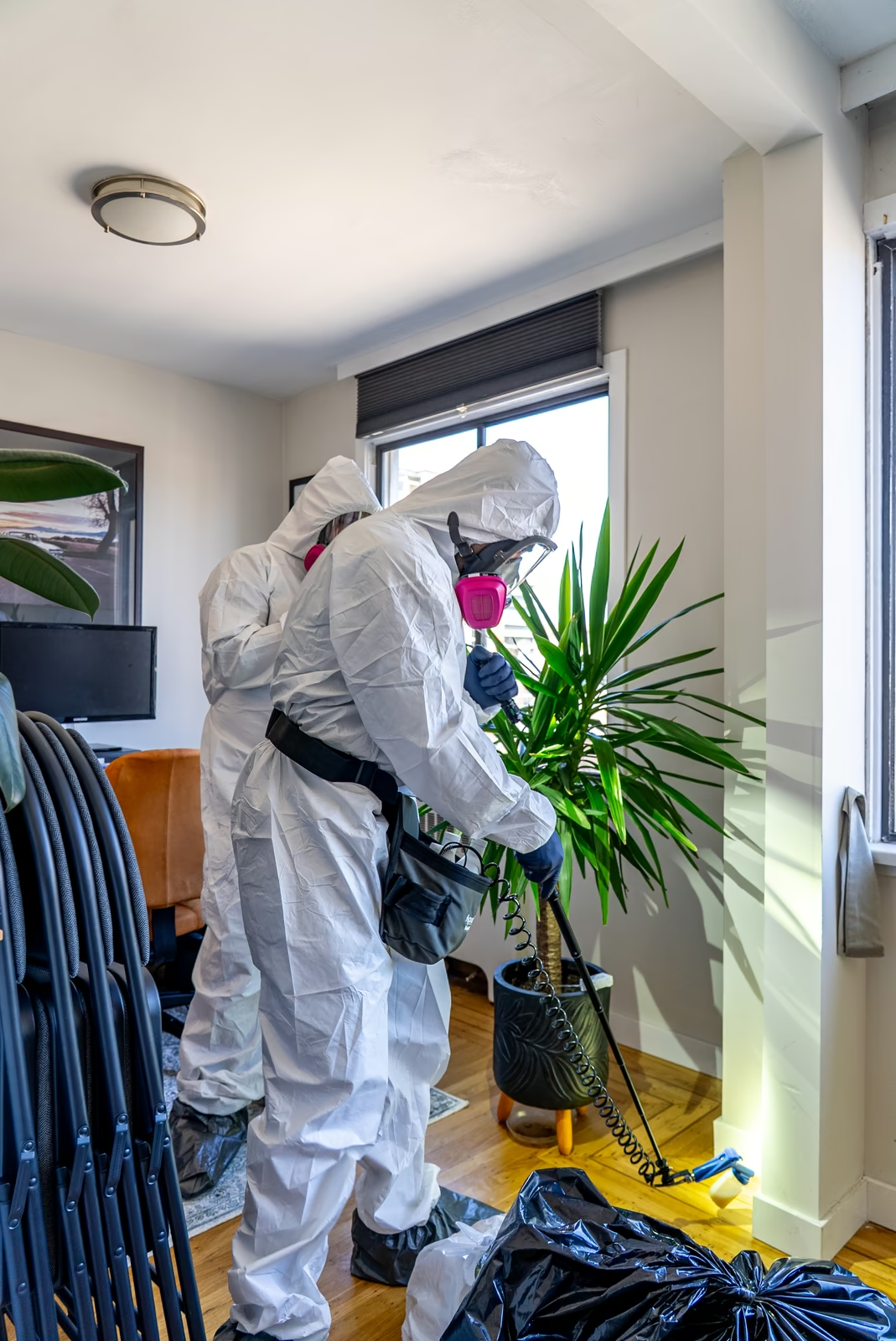
  • Two Phantom technicians in coveralls and respirators treating a living room for bed bugs with a wand sprayer

    Inside the suites

    Two Phantom technicians in coveralls and respirators treating a living room for bed bugs. In a building, the suites above, below and beside a reported one are checked when needed.

    Bed bug control

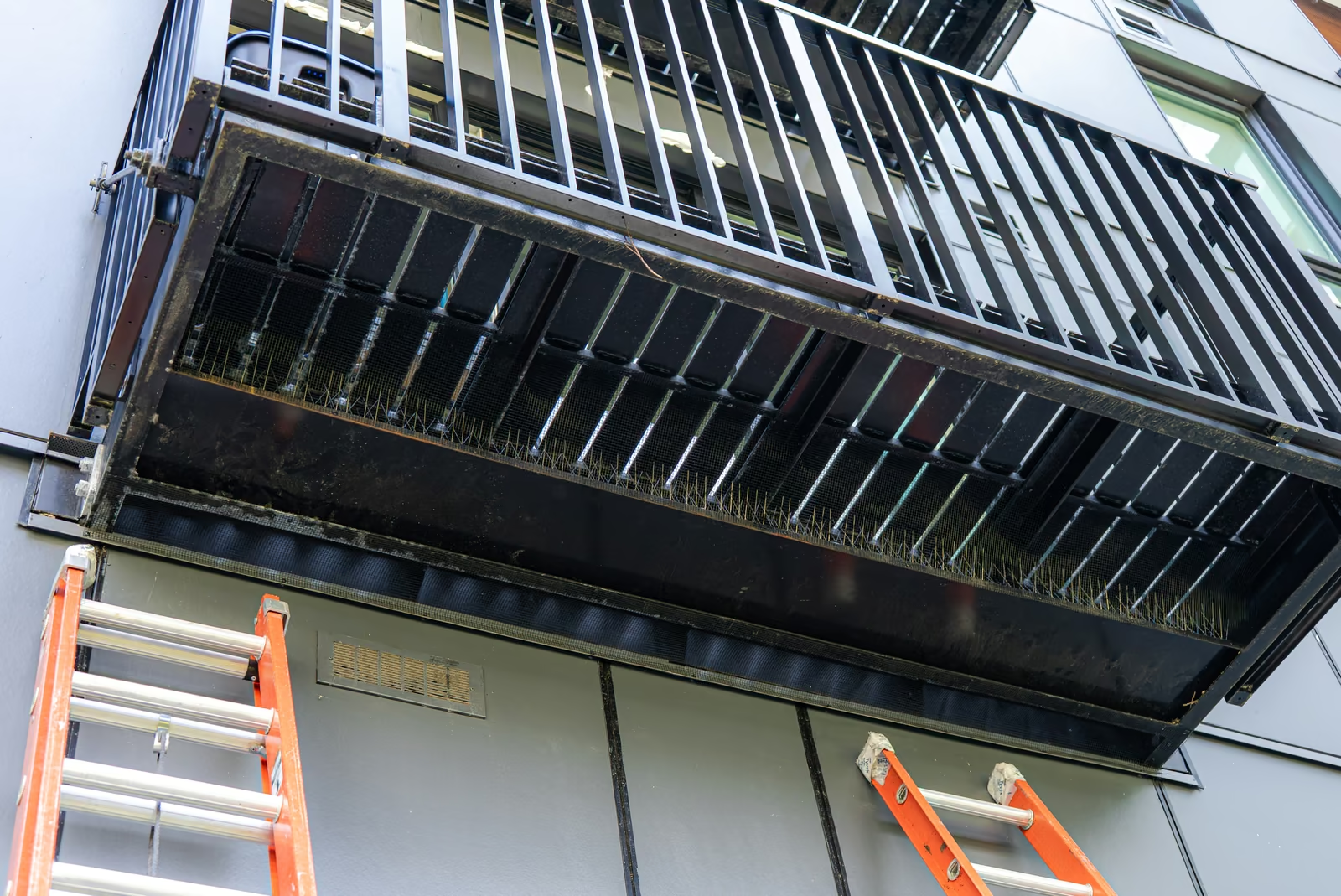
  • Bird spikes along the steel frame under an apartment balcony in North Vancouver, with orange ladder tops below

    Balconies

    Bird spikes along the steel frame under an apartment balcony in North Vancouver, fitted to keep birds from landing and nesting there.

    Bird control

  • Phantom technician in hooded rain gear walking across a gravel rooftop toward the parapet in West Vancouver

    The roof

    A Phantom technician in rain gear crossing a gravel rooftop in West Vancouver. For a building job, arrange keys or fobs for the garbage room, chute rooms, parkade, storage areas and roof hatch.

    Strata & apartment building jobs

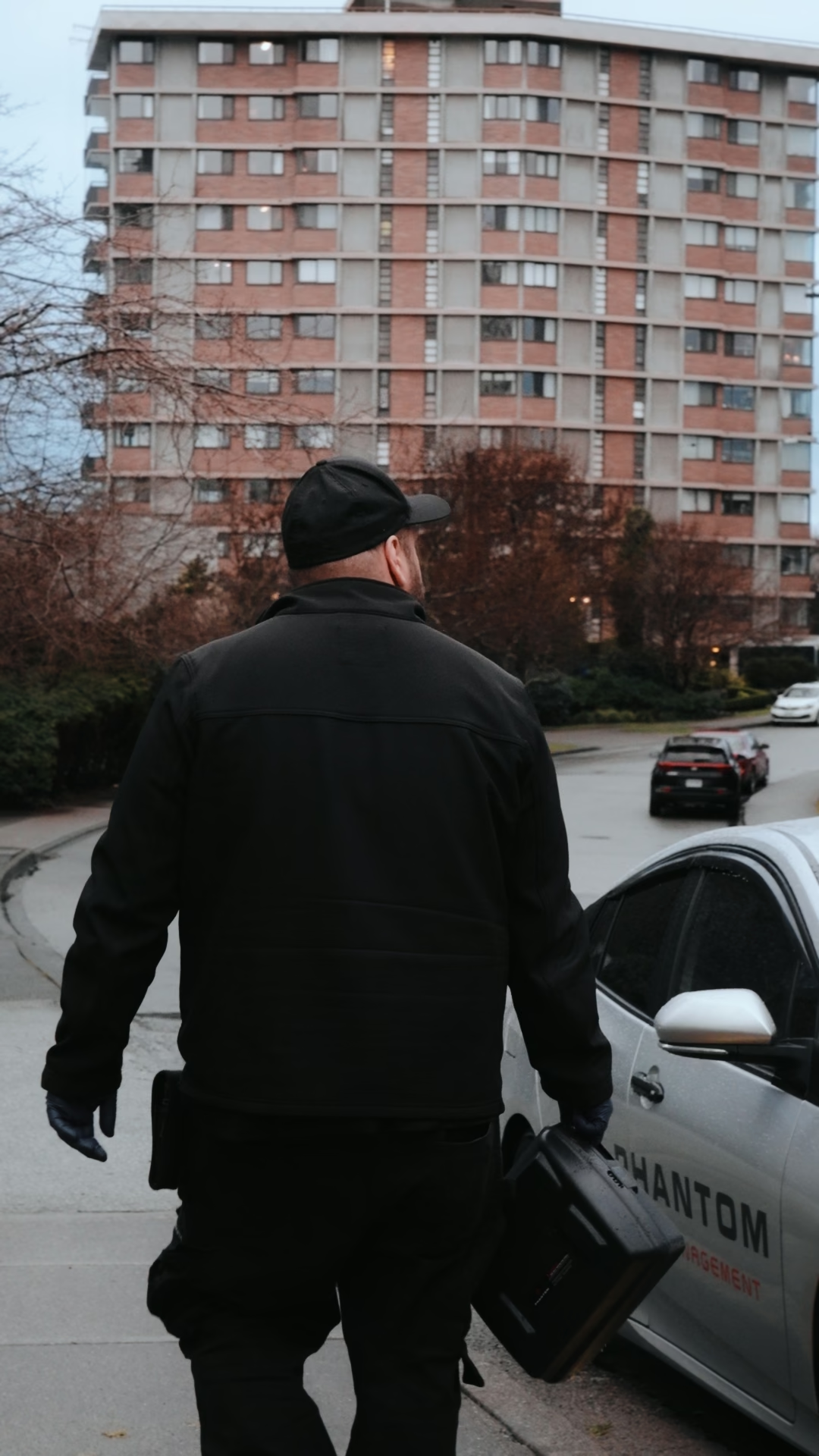
  • Phantom technician carrying a rodent bait station past a branded company car near a West Vancouver high-rise

    The grounds

    A Phantom technician carrying a rodent bait station toward a West Vancouver high-rise. Exterior bait stations are set up from $150 + GST and serviced visit by visit.
    Rodent control

Why Property Managers Choose Phantom Pest Control

You can check these facts before you book: Phantom publishes its prices and its preparation sheets, and its reviews are on Google. Comparing property management pest control services? Here is what to check when you choose a pest control company in Vancouver.

  • Licensed Holds a BC Pesticide Licence; fully licensed, insured and certified
  • Owner 15+ years of pest control experience serving British Columbia
  • K9 teams Phantom runs its own K9 teams for bed bug detection
  • Locations 29,000+ locations serviced (2019–2026)
  • Reports A written service report after every commercial visit
  • Prep sheets 13 preparation sheets for residents, free to download
Read our Google reviews

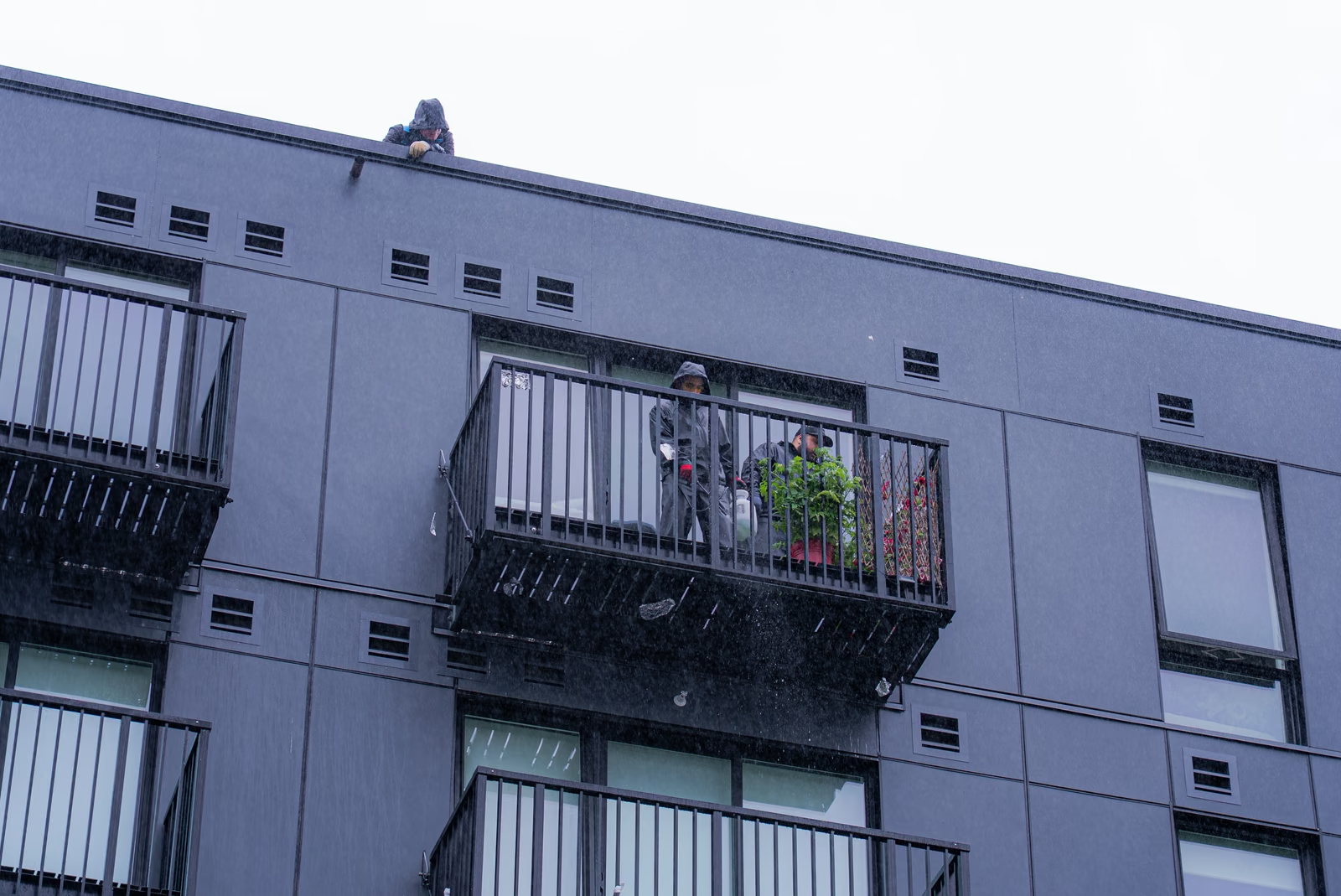
Phantom technicians in rain gear on an apartment balcony and at the roof edge of a North Vancouver building

Property Management Pest Control Across Vancouver & the Fraser Valley

Phantom works in 24 communities with a local service page, from Squamish to Abbotsford, and most city pages cover the local rules, such as the municipal bylaws. Not on the list? Tell us your city in the form, or call the office.

All service areas

Property Management Pest Control FAQs

Prefer to talk?

604-771-0404

Is property management responsible for pest control?

Usually, for the building. Under B.C.’s Residential Tenancy Act, a manager acting for the owner counts as the landlord, and landlords keep the building to the standards the law requires. The Residential Tenancy Branch says landlords are generally responsible for controlling insect infestations such as bed bugs, and that municipal Standards of Maintenance bylaws dictate whether the landlord handles rodents. Tenants keep the unit reasonably clean, ask for repairs in writing and repair damage they cause.

Can a tenant refuse pest control?

Not once proper notice is given: the Residential Tenancy Branch says access must be allowed, and the tenant doesn’t need to be home. Tenants may stay for the entry, and a landlord cannot force them to leave, so agree the stay-out time on the preparation sheet with each tenant first.

How often should a landlord do pest control?

B.C. sets no schedule. The Residential Tenancy Act lets a landlord inspect a unit monthly with written notice, and Vancouver Coastal Health advises building owners and managers to inspect suites regularly for bed bugs. For visits on a schedule, see our preventative pest control programs.

Do landlords have to treat bed bugs?

Generally, yes, and Fraser Health tells landlords they must hire a licensed pest control operator for their rental suites. Vancouver Coastal Health advises having a plan, or giving help, for tenants who can’t prepare their unit, and being ready for more than one treatment. Book the dog before any cleaning: the K9 sheet rules out household cleaners and disinfectants for 24 hours before the inspection.

Can rat poison be used in a building’s garbage room?

In most apartment buildings, not the strongest kind. Since January 21, 2023, B.C. allows second-generation anticoagulant rodenticides only at the essential sites listed in Schedule 6 of the IPM Regulation, and the list excludes residential and commercial waste collection areas. The province’s rodenticide page explains the restriction.

Do you work with companies that manage several properties?

Yes. Our K9 teams can screen entire floors, buildings or portfolios on a scheduled basis, and eight of Phantom’s 15 maintenance programs are for commercial and multi-unit properties. List the properties and what tenants have reported when you ask for an estimate.

What pest control records should a property manager keep?

Vancouver Coastal Health’s 2012 bed bug guide tells property management companies and owners to keep records of pest control service and pest complaints. The pest control licensee keeps its own records for 3 years, including its advice to the owner or manager on when people can go back in.

Get an Estimate for Your Properties

Tell us about the property, the pest and the suites involved, and the office will call you back. Estimates over the phone are free.

Free estimate request

Property - Step 1 of 4
What kind of property is it?

Prefer to talk?

604-771-0404

Office and Service Hours: Monday to Friday, 9 AM to 5 PM. Open 24/7 for pre-arranged commercial services.