On this page9 sections
- What Is Hantavirus?
- Hantavirus Around the World
- Symptoms and Progression of Hantavirus Pulmonary Syndrome
- Hantavirus Risk in Vancouver and British Columbia
- What NOT to Do If You Find Rodent Droppings
- Safe Cleanup Guidelines
- How Phantom Pest Control Handles Hantavirus Risk
- When to Call a Professional
- Rodent Control Across Vancouver and the Lower Mainland
Topic: Hantavirus — Global Awareness & Local Safety | Vancouver, BC
Published by Phantom Pest Control | Serving Vancouver, Lower Mainland & Fraser Valley | phantompestcontrol.com | (604) 771-0404
Hantavirus is one of those diseases that most people have heard of but few understand until they are faced with a rodent problem in their own home. It is a serious, potentially fatal illness found on multiple continents, and it does not discriminate between rural properties and urban neighborhoods. Whether you live in a city apartment, a suburban home, or a rural property, if rodents are present, the risk exists.
This guide covers what Hantavirus is, how it has affected populations globally, where it is found, who is at risk, and how to handle a rodent situation safely. For clients in Vancouver, the Lower Mainland, and Fraser Valley, we also explain exactly how Phantom Pest Control approaches every rodent job with Hantavirus safety as a non-negotiable priority.
What Is Hantavirus?
Hantavirus is a family of viruses carried by certain species of rodents. The virus does not make the rodents themselves visibly sick, but it is shed through their urine, droppings, saliva, and nesting materials. Humans become infected primarily through inhalation of airborne particles contaminated with the virus, most commonly when disturbing areas where infected rodents have been living or feeding.
There are two primary disease outcomes associated with Hantavirus in humans. In the Americas, the main concern is Hantavirus Pulmonary Syndrome (HPS), a severe respiratory illness that begins with flu-like symptoms and can rapidly progress to life-threatening lung failure. In Europe and Asia, the predominant illness is Hemorrhagic Fever with Renal Syndrome (HFRS), which primarily affects the kidneys and can range from mild to fatal depending on the viral strain involved.
Both forms of the disease are serious. There is no specific antiviral treatment and no approved vaccine available to the general public. Supportive medical care in a hospital setting is the primary treatment option. Early recognition and prevention are the only real defenses available.
Hantavirus Around the World
Hantavirus is not limited to any one country or region. It has been identified on every inhabited continent and continues to affect thousands of people globally each year. Understanding its global presence helps explain why awareness matters regardless of where you live.
North America
In North America, Hantavirus Pulmonary Syndrome is the primary concern. The disease was first formally identified in 1993 during an outbreak in the Four Corners region of the United States, where it caused a cluster of unexplained deaths that alarmed public health officials. The responsible virus was identified as the Sin Nombre virus, carried by deer mice.
Since that outbreak, HPS cases have been confirmed across the United States, Canada, and Mexico. In the United States alone, over 800 cases have been confirmed since 1993, with a case fatality rate of approximately 36 percent. Cases have been reported in nearly every US state west of the Mississippi River, with the highest concentrations in rural and semi-rural areas of the Southwest, Pacific Northwest, and Rocky Mountain regions.
In Canada, confirmed HPS cases have been documented in British Columbia, Alberta, Saskatchewan, and Manitoba. The deer mouse, the primary carrier in North America, is found coast to coast across Canada and is one of the most common small mammals in the country.
South America
South America has experienced some of the most significant Hantavirus outbreaks in the world. Argentina, Chile, Brazil, Paraguay, Uruguay, and Bolivia have all reported cases, with Argentina and Chile bearing the heaviest burden. Several distinct Hantavirus strains have been identified in South America, some of which have shown limited evidence of person-to-person transmission, which is not observed with North American strains.
Argentina has experienced repeated outbreaks over several decades, particularly in the Patagonia region. In 2019, a cluster of cases in Epuyen, Argentina made international news when evidence suggested person-to-person transmission had occurred within a local outbreak, marking a rare and concerning development in the disease’s behavior.
Chile has consistently reported cases concentrated in its southern regions, where rodent habitat overlaps heavily with agricultural and rural communities. The Andes Mountain corridor running through both countries is considered a high-risk zone for Hantavirus exposure.
Europe
In Europe, Hantavirus takes a different form. Hemorrhagic Fever with Renal Syndrome (HFRS) is the dominant illness, caused primarily by the Puumala virus carried by the bank vole, and the Hantaan and Seoul viruses carried by other rodent species. HFRS cases are reported annually across Scandinavia, Finland, Russia, Germany, France, Belgium, and the Balkans.
Finland and Sweden report some of the highest rates of HFRS in Europe, with periodic epidemic years linked to cyclical peaks in vole populations. Germany has also seen notable outbreaks, particularly in forested areas where bank voles are prevalent. While the European strains generally have lower fatality rates than those causing HPS in the Americas, severe cases do occur and hospitalizations are common.
The Seoul virus, which is associated with the common brown rat found in urban environments globally, has been identified in Europe as well, raising concerns about urban exposure pathways that differ from the more rural transmission patterns typical of other strains.
Asia
Asia has the longest documented history with Hantavirus. HFRS was first described in Asia during the Korean War in the 1950s, when thousands of United Nations soldiers became ill with a mysterious hemorrhagic fever near the Hantaan River in Korea. The responsible virus, Hantaan virus, was eventually isolated in 1978, and the broader family of viruses was named after that river.
China reports the highest number of HFRS cases in the world, with tens of thousands of cases occurring annually in some years. Korea, Russia’s Far East, and Japan also report cases regularly. The disease is considered endemic across much of East and Southeast Asia, where the striped field mouse and brown rat serve as the primary reservoirs.
The Seoul virus, unique among Hantaviruses in that it is carried by the common brown rat which has spread globally through human activity, has been detected in Asia, Europe, the Americas, and Africa, making it the most geographically distributed Hantavirus strain in the world.
Africa and Beyond
Hantavirus research in Africa is still developing, but several strains have been identified on the continent, associated with various rodent species native to African ecosystems. Reported human cases in Africa remain limited, though this is likely partly a result of underdiagnosis and limited surveillance infrastructure rather than a true absence of disease.
The global picture makes one thing clear: wherever rodents live alongside humans, Hantavirus is a potential concern. The specific virus, the rodent carrier, and the disease outcome may vary by region, but the fundamental risk pathway is the same everywhere — rodent waste plus human exposure equals potential infection.
Symptoms and Progression of Hantavirus Pulmonary Syndrome
Hantavirus Pulmonary Syndrome is the form of Hantavirus disease relevant to Canada and British Columbia. Recognizing the symptoms early is critical, as the disease can progress rapidly.
The incubation period is typically one to five weeks after exposure, though this can vary. The illness begins with an early phase that closely resembles influenza and is easy to dismiss as a common illness.
Early Symptoms (Days 1 to 5)
- Fever and chills
- Severe muscle aches, particularly in the thighs, hips, and back
- Fatigue and general weakness
- Headache
- Nausea, vomiting, or abdominal discomfort in some cases
Late Phase (Days 4 to 10)
The disease can shift suddenly and severely during this phase:
- Cough and shortness of breath
- Fluid accumulation in the lungs
- Rapid deterioration of respiratory function
- Low blood pressure
- In severe cases, respiratory failure requiring intensive care
If you or anyone in your household develops these symptoms and has recently been in an area with known or suspected rodent activity, seek emergency medical care immediately and inform the treating physician of the potential rodent exposure. Early intervention significantly improves outcomes.
Hantavirus Risk in Vancouver and British Columbia
Deer mice are found throughout British Columbia, including urban and suburban areas across Vancouver, the Lower Mainland, and the Fraser Valley. While confirmed HPS cases in BC are relatively rare, the risk is real and should not be underestimated. The rarity of confirmed cases is partly a reflection of how seriously the potential is taken by public health and pest control professionals — not evidence that the risk does not exist.
High-risk environments in the Vancouver region include:
- Crawl spaces and basements, particularly in older homes
- Attics and roof voids
- Garages and garden sheds
- Storage rooms and utility areas
- Vacant or long-unoccupied buildings
- Cabins and seasonal properties
- Construction sites with existing rodent activity
- Properties backing onto green space, parks, or forested areas
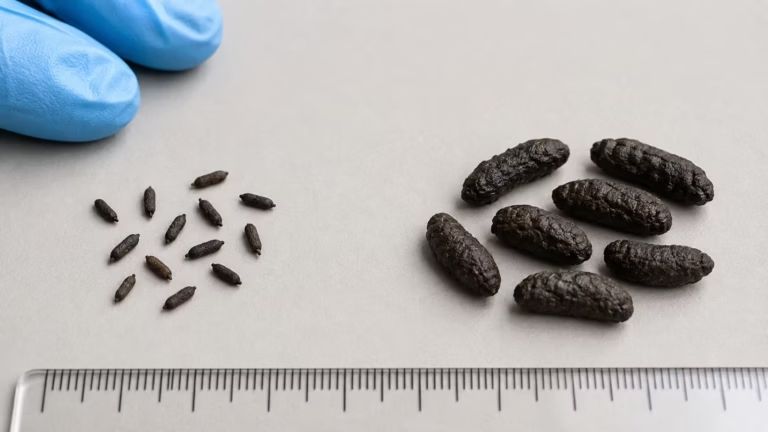
Any area where rodents have been active — evidenced by droppings, gnaw marks, nesting material, or tracks — should be treated as a potential Hantavirus risk until properly assessed and cleaned by someone following safe protocols.
What NOT to Do If You Find Rodent Droppings
Most people’s first instinct when finding rodent droppings is to sweep or vacuum them up immediately. This is one of the most dangerous things you can do. Dry sweeping and standard vacuuming aerosolize contaminated particles and launch them directly into the air where they can be inhaled.
Never do the following in areas with rodent activity:
- Dry sweep droppings or nesting material
- Use a standard household or shop vacuum
- Use compressed air or blowers to clear an area
- Shake or disturb nesting materials without proper protective equipment
- Enter a sealed or unventilated space without preparation
- Handle dead rodents with bare hands
If you have found signs of rodent activity in your home or property, stop, step back, and follow the safe cleanup procedure below before touching anything, or contact a professional to handle it.
Safe Cleanup Guidelines
If you are dealing with a minor, isolated situation and choose to handle it yourself, follow these steps carefully. For anything beyond a small, clearly contained area, professional remediation is strongly recommended.
Required Personal Protective Equipment
Minimum for minor situations:
- Fit-tested N95 respirator
- Disposable nitrile or latex gloves
- Safety glasses
For heavy infestations or enclosed spaces:
- P100 respirator
- Disposable coveralls
- Goggles or full face shield
- Disposable boot covers
Step-by-Step Cleanup Procedure
- Ventilate the space for at least 30 minutes before entering. Open all windows and doors where possible.
- Wet all contaminated surfaces thoroughly using an EPA-approved disinfectant or a freshly prepared bleach solution of one part bleach to nine parts water.
- Allow a minimum contact time of five to ten minutes before touching or removing anything.
- Remove droppings, nesting materials, and debris using paper towels or disposable tools only. Do not sweep dry.
- Double-bag all contaminated waste in heavy-duty garbage bags before disposal.
- Disinfect all gloves and tools after use.
- Wash hands thoroughly with soap and water after removing gloves.
Dead Rodent Handling
- Spray the rodent and the surrounding area with disinfectant and allow full contact time before handling.
- Use gloves to pick up the rodent. Never handle with bare hands.
- Place the rodent and all contaminated materials into double bags.
- Disinfect the surrounding area after removal.
- Dispose of waste according to local municipal regulations.
How Phantom Pest Control Handles Hantavirus Risk
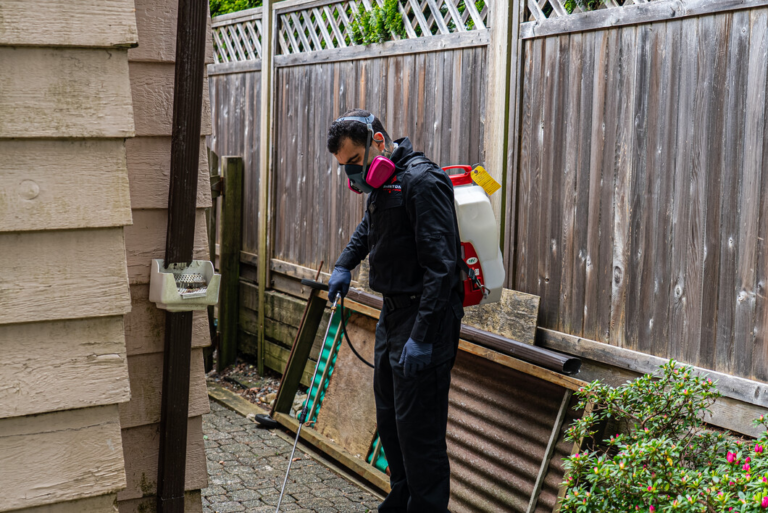
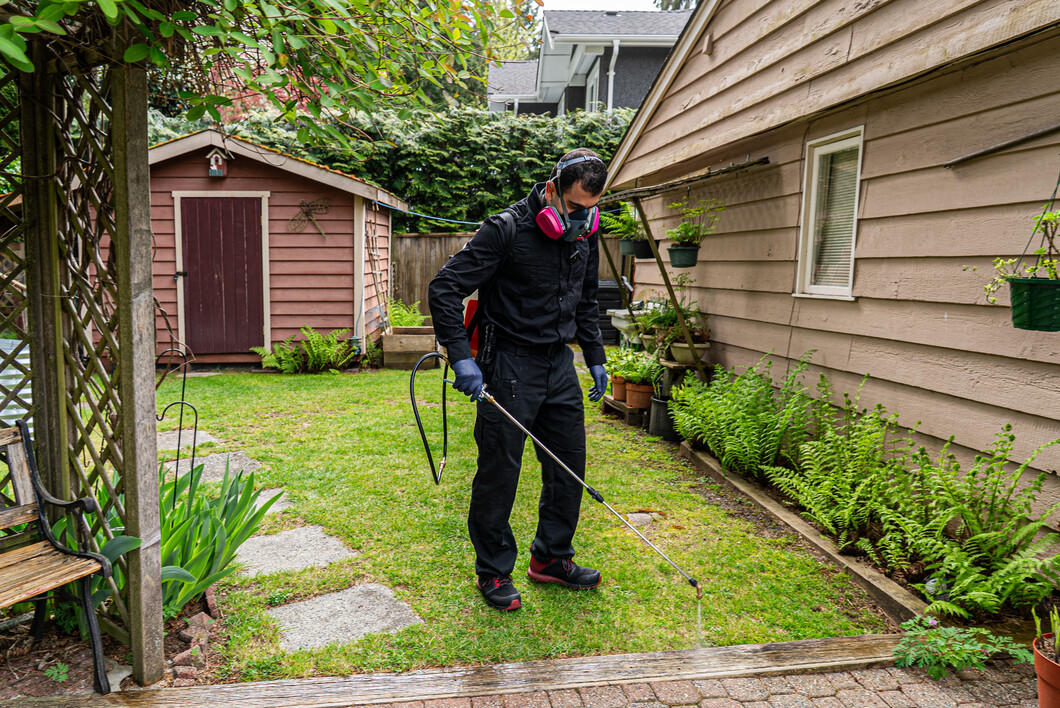
At Phantom Pest Control, every rodent job is treated as a potential Hantavirus situation from the moment we arrive. This is not excessive caution — it is standard professional practice and the only responsible approach to rodent work in British Columbia.
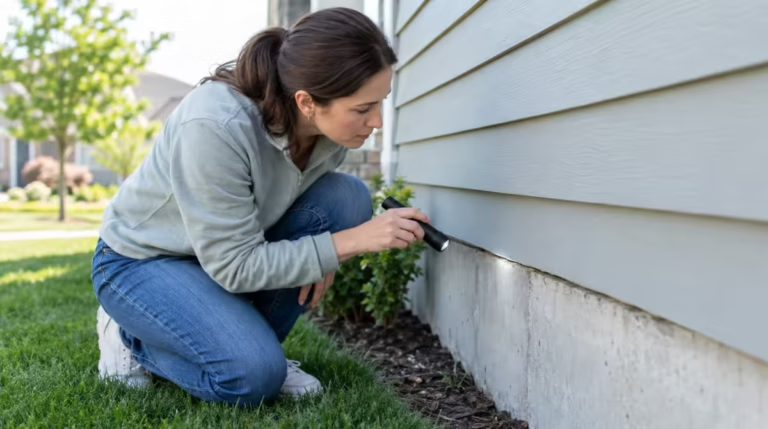
Inspection First. Before any treatment or cleanup begins, we conduct a thorough inspection to assess the level of activity, identify the species involved, locate entry points, and determine the full scope of contamination. We never rush this step because what we find during inspection determines everything that follows.
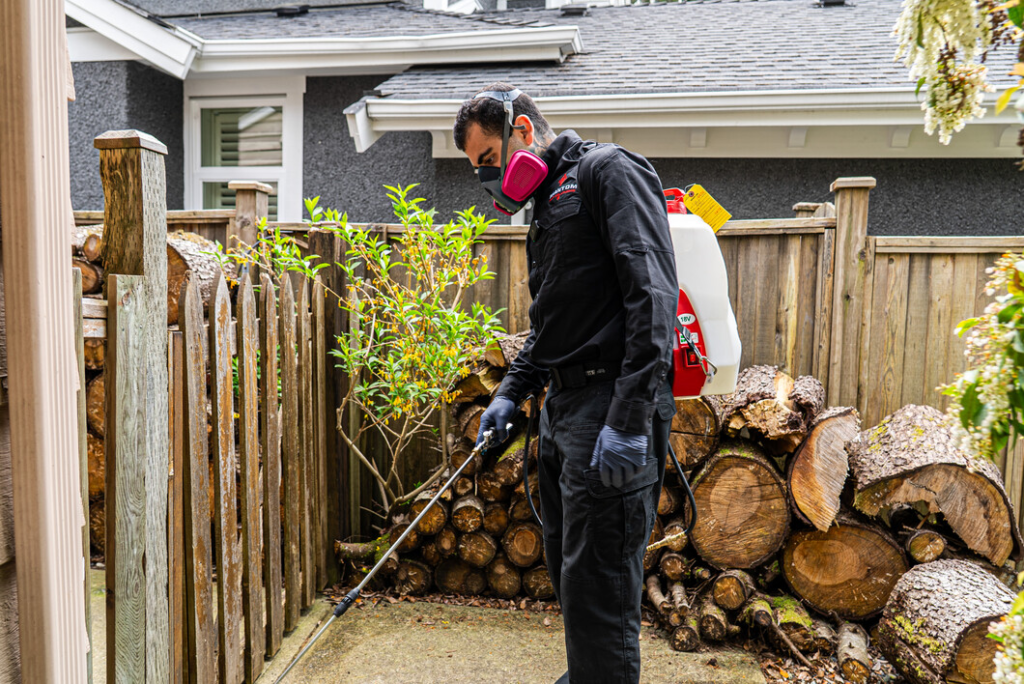
Full PPE on Every Rodent Job. Our technicians use appropriate respiratory protection, gloves, and protective gear on all rodent-related jobs regardless of the apparent severity. We do not make assumptions about contamination levels based on how a space looks.
Disinfect-First Protocol. Surfaces are always wetted with an approved disinfectant and given proper contact time before any material is removed or disturbed. We never dry sweep rodent-contaminated areas under any circumstances.
Safe Waste Removal. All contaminated waste is double-bagged and disposed of according to BC waste management regulations. Nothing is left behind.
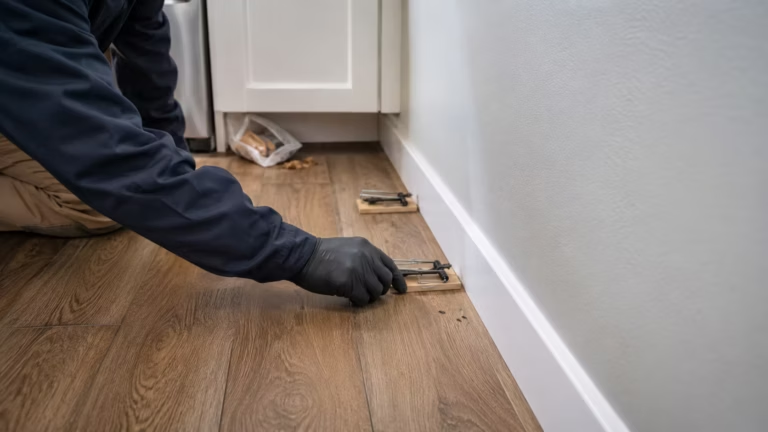
Exclusion and Prevention. Cleanup alone is not a complete solution. After treatment, Phantom identifies and seals the entry points that allowed rodents access in the first place. Without closing those access points, the problem returns. This exclusion work is what separates a complete rodent service from a temporary fix.
Clear Client Communication. We walk every client through what we found, what we did, and what to watch for going forward. If there is a Hantavirus concern at a property, we communicate that directly and clearly.
When to Call a Professional
There are situations where attempting to handle a rodent cleanup yourself is not worth the risk. Call a professional when:
- There are large volumes of droppings or significant nesting material present
- The affected area is an enclosed space such as a crawl space, attic, or wall void
- There is evidence of a long-term or heavy infestation
- The property is a commercial space, rental unit, strata building, or multi-family property
- You are unsure of the full extent of contamination
- The property has vulnerable occupants including elderly residents, young children, or immunocompromised individuals
- You do not have access to appropriate PPE
In any of these situations, the risk of improper handling far outweighs the cost of professional service. Hantavirus is not a risk worth taking shortcuts with.
Rodent Control Across Vancouver and the Lower Mainland
Phantom Pest Control provides professional rodent inspection, treatment, exclusion work, and prevention programs across Vancouver, North Vancouver, West Vancouver, Burnaby, Richmond, Surrey, Delta, Coquitlam, Port Moody, New Westminster, Langley, Fort Langley, Abbotsford, Maple Ridge, Pitt Meadows, Chilliwack, Squamish, and throughout the Fraser Valley and Sea to Sky Corridor.
Whether you are dealing with an active infestation, signs of past rodent activity, or want to rodent-proof your property before a problem develops, our team manages the full process from inspection through to permanent prevention.
Rodent problems in BC are not just a nuisance. They carry real health risks that need to be handled the right way. Professional rodent service is subject to a quote based on the size and condition of the affected area. If you have found rodent activity in or around your property, do not wait.
Call Phantom Pest Control at (604) 771-0404 or visit phantompestcontrol.com to get a quote and book your inspection. Pricing is based on the scope of work and will be discussed during your initial call.
Phantom Pest Control | phantompestcontrol.com | (604) 771-0404 | Vancouver, Lower Mainland & Fraser Valley