Carpenter Ant Control Program in Vancouver & Fraser Valley
Phantom Pest Control’s Carpenter Ant Control Program treats carpenter ants on scheduled visits for homes and businesses in Vancouver, BC and the Fraser Valley. Every visit searches for the nests, then treats outside around the foundation, doors, windows and eaves and treats the nests inside, and if carpenter ants come back between scheduled visits, the extra visit is free.
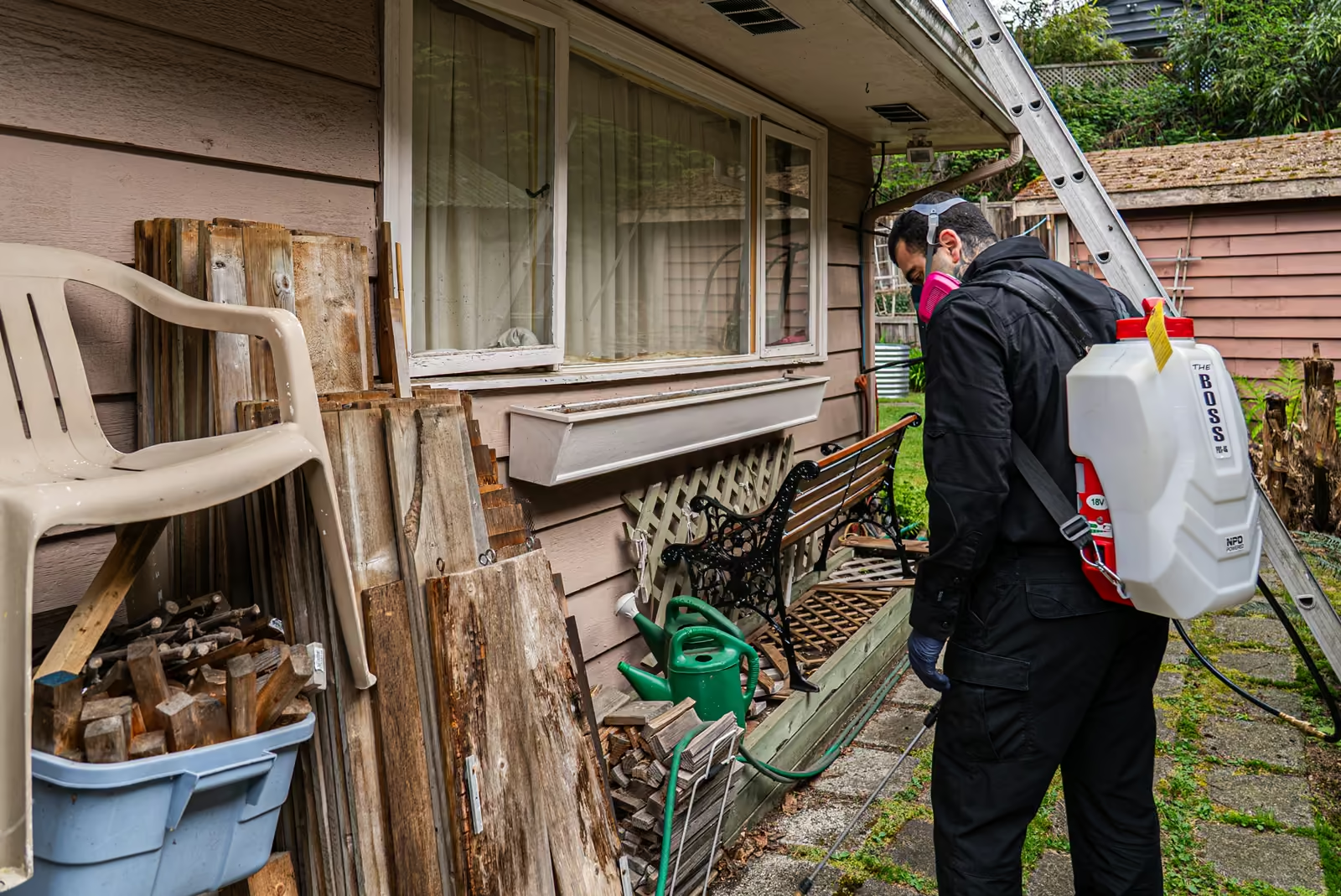
For
Homes and business buildings
Each visit
Between visits
Service area
What Is a Carpenter Ant Control Program?
A carpenter ant control program treats carpenter ants over a series of visits instead of one. Each visit looks for the nests, outside and inside, treats what it finds, and checks the places where nests were before.
Managing carpenter ants usually takes more than one method, the Province of B.C. says. It uses them as its worked example of integrated pest management, and the example ends with follow-up inspections where nests were found.
The program is offered to homes and businesses, and our regular maintenance page lists Phantom’s other scheduled programs.
B.C.’s pest guide says most main nests are outdoors in rotting wood, with satellite nests in nearby homes.
Health Canada says part of a colony sometimes sets up a smaller satellite colony in a nearby house, which some experts believe is the main way they invade.
Nests sit in moist, decaying wood: rotting stumps and trees, woodpiles, and parts of a house where the wood has begun to rot.
Nests also turn up in drier places, the Province says: walls, eaves, ceilings, attics and crawl spaces.
A fence joined to the house, overhead wires and branches touching it are among the entryways on the Province’s list.
Winged carpenter ants appear in B.C. as early as February and are most numerous in May.
What Each Nest Search Looks For
The nest search looks for the signs that lead to a nest, outside and in: ant trails, large ants indoors, sawdust, and moist or damaged wood. Each row links to the page that covers it in full.

The Province calls carpenter ants, at about 6–12 mm long, the most common large ant found indoors in late winter and early spring.
Swarms of winged ants trying to get outdoors, usually in spring, are a sign Health Canada lists.
Loose shavings or sawdust pushed out of the wood, in crawl spaces, attics or under porches, point to a nest nearby.
The Province lists attics and crawl spaces among the drier spots where nests are found.

Carpenter ants don’t eat wood; they tunnel into it, which in time damages it.

The Province tells them from termites by a narrow, wasp-like waist and antennae bent at the elbow.
Plumbing outlets, siding edges, crawl space vents, window casings and door frames are entryways on the Province’s list.
Add a photo of one to your estimate request and say where you saw it; the first nest search starts there.
When Carpenter Ants Are Active in B.C.
From March through October, the Province says to look for carpenter ants outdoors, and ants seen indoors in winter probably mean a nest inside the house. Each bar gives its months in words.
The bars follow B.C.’s Home & Garden Pest Management Guide, the Province’s integrated pest management page and Phantom’s ant page.
From March through October, look outside too; ants carrying food in mean a nest inside.
No set season
Any month the wood stays wet: the Province says carpenter ants seek out moist wood to lay their eggs.
Health Canada notes they are most active after sunset, so that is when trails show.
In any season, rustling sounds in the walls can mean a nest inside; the Province says to listen for them.
Where Carpenter Ants Nest and Get In
Carpenter ants nest in rotting wood in the yard and in damp or dry spots in the house, and reach the house along branches, fences, wires and gaps. Each nest search works from the yard to the rooms inside.
- AStumps and old logs
Most main nests are outdoors in rotting wood, and the stumps near the house are part of each outside treatment.
- BFirewood and landscape timbers
Wood stacked against the walls or edging a garden bed is part of every outside treatment.
- CBranches on the roof
B.C.’s guide says ants may come and go to their nests along branches and shrubs touching the house.
- DFences and overhead wires
A fence joined to the house and overhead wires are entryways on the Province’s list.
- EGutters and eaves
Clogged gutters keep wood damp, and the eaves are one of the drier spots where nests settle.
- FWindow casings and door frames
Entryways on the Province’s list, and part of the treatment around the doors and windows.
- GSiding edges and crawl space vents
The lower edge of the siding and the crawl space vents let ants in, and siding should stay off the soil.
- HWall voids
Nests turn up inside walls too, and B.C.’s guide says a nest inside the walls must be found and destroyed.
- IAttics and crawl spaces
Drier spots where nests settle; loose shavings or sawdust there point to a nest, the Province says.
What You Can Do, and What the Technician Does
Carpenter ant prevention starts with the wood and water around the house, and much of that is in your hands. The nests, the treatments and the follow-up visits are the technician’s part.
You can
B.C.’s Home & Garden Pest Management Guide says not to store firewood next to the house for more than a year, or on the ground; raised platforms away from the walls are better.
Prune branches and shrubs so they don’t touch the house, and remove rotted stumps, logs and landscape wood.
Repair wood damaged by moisture, ventilate damp areas, clean the gutters and keep wood siding off the soil.
Needs a technician
Following the trails back to a nest hidden in a wall, attic or crawl space.
In B.C., a company that applies pesticides for a fee needs a pesticide user service licence, and each product must be used as its label directs.
Outside around the foundation, doors, windows and eaves; inside, baits on the trails and dust or foam in a wall void where a nest is.
Scheduled visits repeat the nest search where nests were found, the follow-up the Province’s IPM example ends with.
How the Carpenter Ant Control Program Works
Each visit includes the nest search, the outside treatment, the inside nest treatment and a look at wet or damaged wood. If the ants come back between visits, there’s an extra visit.
The technician follows the trails and checks for sawdust and moist or damaged wood, outside and in, to find the main and satellite nests.
The foundation, door and window frames and eaves are treated, with the stumps, firewood and landscape timbers near the house.
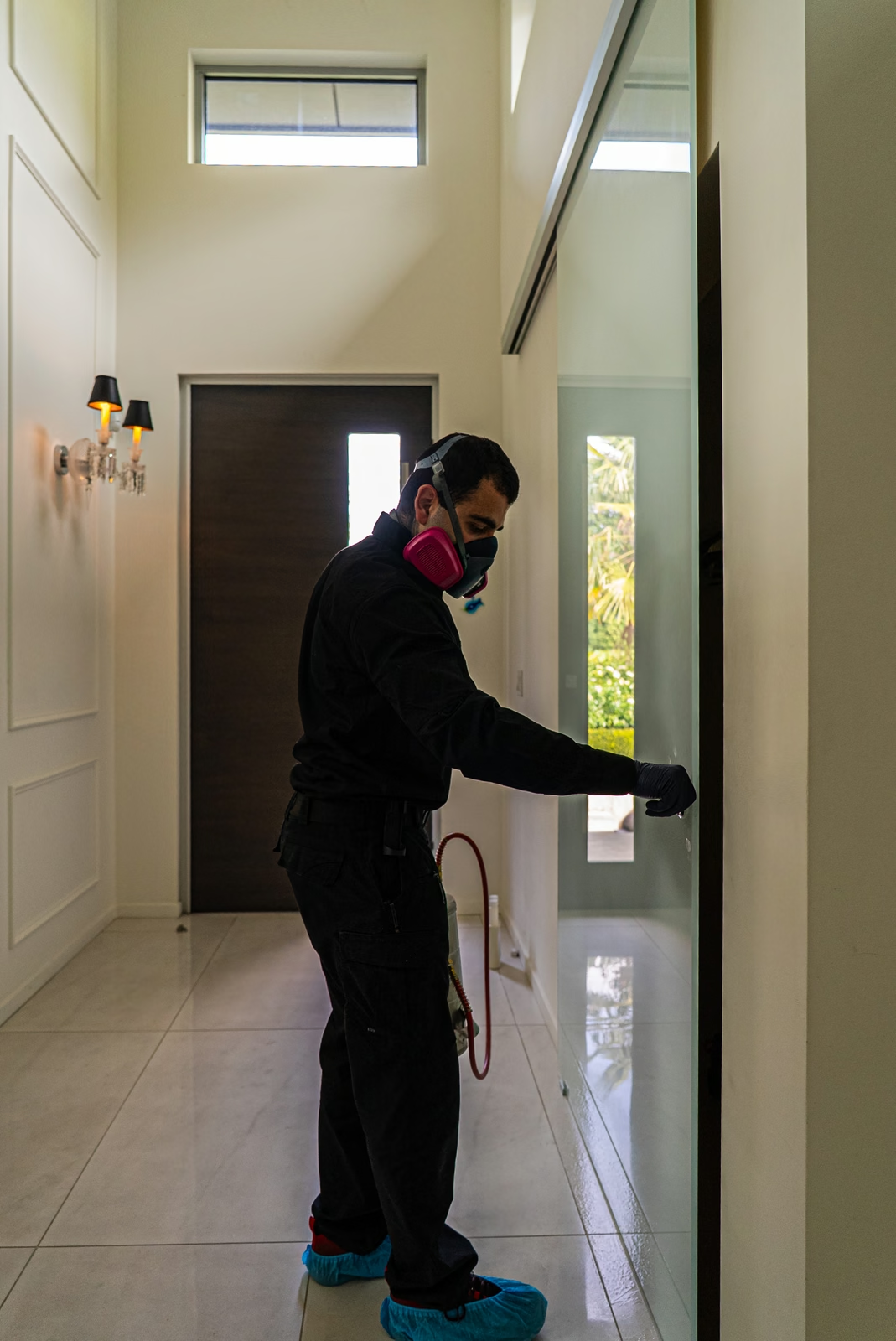
Baits go on the trails; where a nest sits in a wall, dust or foam goes into the void through small drill holes.
Moist or damaged wood keeps drawing ants, so the technician shows you what needs fixing.
If carpenter ants come back between scheduled visits, the extra visit is free.
Our regular maintenance page lists Phantom’s other scheduled programs, for other ants, rodents and more.
Before an Inside Treatment
Phantom’s ant treatment preparation sheet lists these six steps for an inside ant treatment; the full sheet is on our client forms page.
Take everything out of the lower cupboards and low storage in the kitchen, bathrooms and bedrooms.
Move furniture, plants and anything against a wall at least a foot away from it.
Lift shoes, boxes and bags off the closet floors.
Put toys, clothes and books up off the floor.
For an inside ant treatment, the preparation sheet asks everyone, pets included, to leave during the treatment and stay out for at least six hours after it’s done; children under two, expecting and nursing mothers, people with a respiratory ailment and pets are advised to stay out for at least 24 hours.
Unplug the aquarium’s air pump and lay a wet towel over the tank.
After a Visit: What to Expect
After an inside treatment, Phantom’s ant preparation sheet says to expect a significant knockdown within a week and a few stragglers for up to a month.
First week
Expect a significant knockdown in 4 to 7 days, the sheet says.
First month
Some ants may keep wandering in plain view for up to 3 to 4 weeks before they die.
Cleaning
Don’t vacuum, mop, sweep or clean within 6 inches of baseboards and treated surfaces for at least 4 weeks.
The residual
The sheet says its residual treatment keeps working for up to 3 months when those steps are followed.
Coming back in
Open the windows to air the rooms, put things back in the cupboards, keep food covered and take the garbage out daily.
Don’t wipe treated surfaces or put store-bought sprays or cleaners on them, and use non-adhesive shelf liners.
Note where and when you see ants between visits, especially after sunset, so the next nest search knows where to start.
Two Nests, Not One: Why Carpenter Ants Come Back
A carpenter ant problem usually has two homes. B.C.’s Home & Garden Pest Management Guide says about 80% of main nests are outdoors in rotting wood, with satellite nests in nearby homes. Satellite nests have no functioning queen and can’t reproduce, a Washington State University fact sheet adds, so the colony carries on from the parent nest. Spot-treating where ants are seen entering a building does not work, the guide says, so each visit treats the yard and the walls as well as the nest inside.
The Province names homes surrounded by forest as more likely to be infested.
A crawl space with a bare earth floor is on the Province’s list of higher-risk homes.
Rotting timbers in the foundation are the third risk the Province names.
B.C.’s guide says outside walls shouldn’t touch the soil, to keep moist areas from forming.
The Province’s integrated pest management page builds its whole example around carpenter ants, in six steps from prevention to evaluation. The last step is a follow-up inspection, ideally in warm weather at different times of day, looking for activity outdoors and where nests were found. Its list of places to look even includes woodpecker holes, beside moisture, sawdust and rustling in the walls. It also says to record what worked and what didn’t, and to review those records when planning prevention.
After treatment, B.C.’s carpenter ant page says, replace or repair damaged timbers and correct moisture problems so the ants don’t return. The technician points out the wet or damaged wood on every visit; the repairs are a job for you or your contractor. Health Canada adds two more: clear away decaying or infested wood from around buildings, and keep firewood out of them and away from their walls. Its list of ways in also includes heating ducts, air-conditioners, power or telephone cables, and wooden porches and sheds attached to a house.
Why Choose Phantom for This Program
Who does the work, how much experience stands behind it, and what every visit covers.
Experience
15+ years of pest control experience serving British Columbia
Credentials
Fully licensed, insured and certified
Team
60+ years of combined experience within our team
Every visit
Locations serviced
29,000+ locations serviced (2019–2026)
Office and Service Hours
EXCELLENT Based on 830 reviews
 Posted on Google

 Ashley WoodWe were having some problems with mice at our home so we contacted Phantom and Darcey came and resolved the issues quickly. Darcey was friendly, great with our dog and made sure we understood everything he was doing and what to expect. Happy to report no more mice! Thank you, Darcey!Posted on Google
 Michelle HerrExcellent pest control service! The team was professional, friendly, and knowledgeable. They arrived on time, explained the treatment process clearly, and made sure everything was taken care of. Their attention to detail and commitment to customer satisfaction were impressive. I really appreciate their prompt service and effective results. Highly recommend them to anyone looking for reliable and professional pest control services!Posted on Google
 Nasib AbdulMark was great and he did a great job and was very knowledgeable.Posted on Google
 HenryDarcey provided exceptional support in resolving our pest concerns. He was punctual, highly knowledgeable, and professional throughout the process. We have been trying to deal with these issues for quite some time without any luck but thankfully the matter is now resolved. We appreciate the dedication he demonstrated and will be sure to reach out should we require his services again.Posted on Google
 Jacqueline BruceI want to let you know that June did an amazing job on our house for the moths. He was really friendly, patient, professional and conscientious. I wasn't fully ready for the treatment when he arrived and he managed to move some clients so he could return later. He explained a lot about the treatment and the moths' habits which really helped with other areas that he wasn't even treating. He kindly helped me moved some things to barricade the area from pets. I would get Phantom back and highly recommend them.Posted on Google
 Fraser HannayDarcey was amazing at helping us deal with a wasp nest. Friendly, knowledgeable and on time! Thank you!Posted on Google
 JanetWe hired Phantom Pest Control to eliminate a wasp nest inside our house and the service was great. Information on the phone when I first called to book an appointment was clear and we got an appointment quickly. Juan, the specialist who arrived to do the job, fully explained the process, did the work, and explained what to watch in the outside chance additional work might be needed. We are happy with the job and were glad to have Juan as our technician.Posted on Google
 Jenny WuWe received exceptional service from Joy. She was both professional and knowledgeable, explaining the service thoroughly.Posted on Google
 Sean AbbottThey showed up on time, early actually. Mark was very professional and explained how the cockroaches work. He was personable and efficient, and hygienic with how he worked (wearing protective boot covers and gloves). I was impressed and would definely call again if needed.
Carpenter Ant Visits Across Vancouver & Fraser Valley
Carpenter ant visits reach homes and businesses across the Lower Mainland and the Fraser Valley. Pick your city for its local page.
Vancouver & North Shore
Burnaby & Tri-Cities
Richmond & Delta
Fraser Valley
Related One-Time Services
When you need a single visit instead of a program, these pages cover it.
One-time carpenter ant treatments inside and out, and treatments for other ants, with prices.
Termites in homes and buildings; the page names the dampwood termite as the one most often found here.
Powderpost beetles and other insects that tunnel into timber, floors and furniture.
Sealing the entry points and gaps pests use to get into a building.
Carpenter Ant Control Program FAQs
One-time treatments, ants that come back, drill holes, how many ants means a nest, B.C.’s pesticide rules, notices, businesses and strata, cost, other ants, and what to expect, one question at a time.
Prefer to talk?
How is the program different from a one-time carpenter ant treatment?
A one-time treatment is a single visit, and our professional ant control page lists its prices. The program suits a property where carpenter ants keep turning up: rather than one call, the technician returns on a schedule to search for the nests and treat them again.
What happens if carpenter ants come back between visits?
Tell us and we book an extra visit; an extra visit between scheduled ones is free. What helps is detail: where you saw them, when, and whether they were winged, since Health Canada notes winged ants trying to get outdoors in spring can point to a nest inside. A few stragglers in the first weeks after an inside treatment are expected.
Do you need to drill holes in my walls?
Only when a nest is inside a wall. The holes are small and made where the nest is, so the dust or foam can reach it; everywhere else inside, bait does the work. Our post on treating a carpenter ant nest explains why the nest itself is the target.
How many carpenter ants indoors means a nest?
More than 10–12 ants in the house in one evening is worth a check for a nest inside, by the Province’s rough line. For an established infestation, it says to call a pest control company. B.C.’s Home & Garden Pest Management Guide says major carpenter ant infestations are best left to a licensed pest control company with proper equipment. For a few ants, our guide on how to get rid of carpenter ants in your house covers what to try first.
Is a carpenter ant program allowed under B.C.’s pesticide rules?
Yes. Under the Integrated Pest Management Act, a company that applies pesticides for a fee needs a pesticide user service licence, and the Province says its 2016 landscape rules don’t cover pesticide use inside structures, or outdoors to control structural pests such as carpenter ants.
Municipal pesticide bylaws have limits too: under B.C. Reg. 144/2004, a municipality governed by the Community Charter can’t use one to restrict pesticide applications to buildings or inside them.
Does B.C. require notice before treating inside a home?
Yes, for an occupied home. B.C.’s Integrated Pest Management Regulation requires a treatment notice to the occupant, and to the owner or manager if different, at least 72 hours before a licensee uses a pesticide inside an occupied home. The period can be shortened only if everyone entitled to the notice agrees, and after the treatment the owner or manager gets written notice that it took place.
Is the program for businesses and strata buildings too?
Yes. Phantom offers the program to homes and businesses. At a property with two or more homes, B.C.’s IPM Regulation also requires a treatment notice at least 48 hours before treating common areas, which include outdoor areas within 5 m of a door or window. For buildings run by a strata council, our strata pest control page explains how building-wide work is arranged.
How much does the program cost?
No program price is published. Phantom’s ant page notes that prices depend on property size, the severity of the infestation and the treatment needed, and estimates over the phone are free. For a home, ask on that call whether an inspection comes first; the ant page lists the inspection fees. Businesses get a free site inspection and a customized quote.
Does the program cover other kinds of ants?
No, it’s for carpenter ants. Pavement, odorous house and pharaoh ants are covered separately: one-time treatments are on the ant page, and the regular maintenance page lists a separate program for them.
Will the program stop carpenter ants for good?
Not with certainty. Damp wood near a house can draw carpenter ants again: the Province notes they seek out moist wood to lay their eggs. What the program does is keep searching for and treating the nests, point out the wood and water that draw them, and come back between scheduled visits if they return.
Book Your First Carpenter Ant Visit
Tell us where and when you’ve seen carpenter ants, and the first visit starts with a nest search.
Estimates over the phone are free.