
To get rid of carpenter ants, confirm they really are carpenter ants, follow their trails to find where they are nesting, use a slow acting ant bait labelled for carpenter ants along those trails, and fix the moisture and damaged wood that drew them in. Killing the ants you can see with a spray rarely ends the problem, because the queen and most of the colony stay hidden in the nest, often with a larger parent nest outdoors.
Carpenter ants are common around Vancouver and the rest of coastal BC, where damp weather, older wood framing and treed lots give colonies plenty of places to settle. When activity keeps returning or the nest is somewhere you cannot reach, that is the point where ant control in Vancouver starts with an inspection to find the nest and the conditions supporting it.
On this page6 sections
How to Identify a Carpenter Ant Infestation
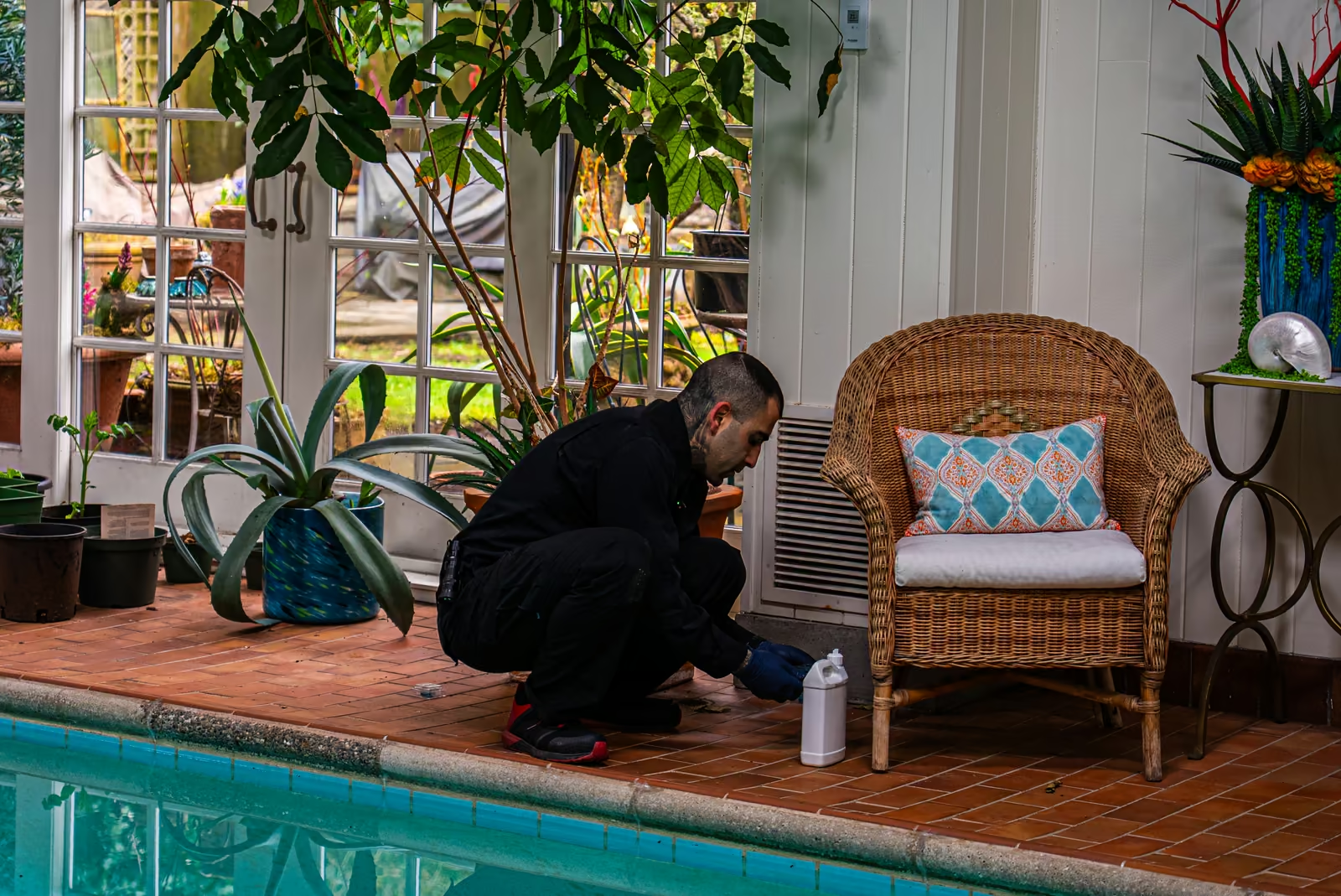
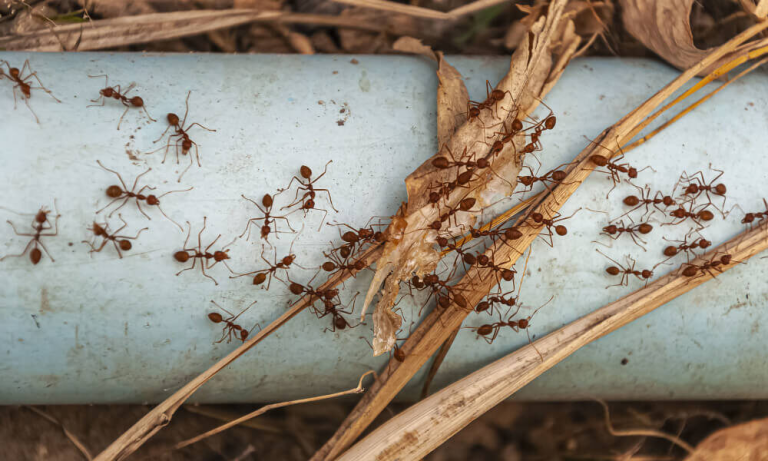
Carpenter ants are large ants that hollow out wood to make room for their nests. They do not eat wood the way termites do; they chew it away and push the shavings out. Health Canada describes workers ranging from about 6 to 25 mm, usually black or a mix of black and dark red, with a very narrow waist and bent antennae. Size and colour vary within a single colony, so a big black ant is not proof on its own, and a small one does not rule them out.
Carpenter Ants vs. Termites: Key Differences
The two are most often confused in spring, when winged reproductives of both appear. A close look at the body settles it:
- Waist: carpenter ants have a thin, pinched waist; termites have a thick waist with no narrowing.
- Antennae: carpenter ant antennae are bent like an elbow; termite antennae are straight and beaded.
- Wings: on winged carpenter ants the back pair is shorter than the front pair; termite wings are all about the same length.
- Damage: carpenter ant galleries are smooth and clean, with coarse, fibrous shavings pushed outside; termite galleries are packed with mud or droppings.
Discarded wings on a windowsill tell you reproductives were present, but not which insect they came from or whether a nest is inside. If you have winged ants and are not sure what they are, our article on flying ants in Vancouver covers how to sort them out.
Signs of Nesting Activity and Wood Damage
Ants that are only foraging and ants that are nesting in the house look the same. What separates them is a pattern of evidence:
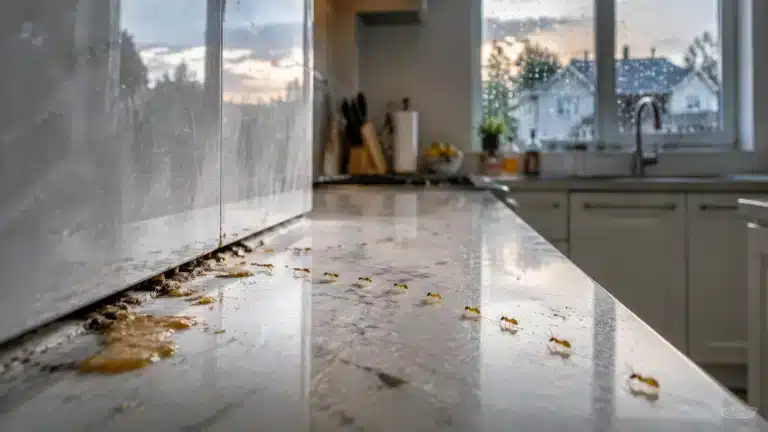
- Small piles of coarse, sawdust like shavings (often called frass) below baseboards, window frames or ceiling fixtures, sometimes mixed with insect parts.
- Workers seen indoors day after day, especially in the same room, rather than one or two wandering in.
- Ants indoors during the colder months, which points to a nest inside the heated part of the house.
- Many winged ants emerging indoors in late winter or spring.
- A faint dry rustling inside a wall or ceiling, easiest to hear at night.
Frass alone can be old, and one sighting is not enough to diagnose a nest. Several of these signs together, in the same area, are what to act on. Activity inside walls has its own warning signs, which we cover in our article on carpenter ants in your walls.
How to Find Carpenter Ant Nests
A carpenter ant colony often has more than one nest. The parent nest, where the queen lives, is usually in moist or decaying wood such as a stump, a rotting fence post or a leak damaged section of the house. Satellite nests full of workers and developing young can be set up in drier spots, including wall voids, hollow doors, insulation and sound framing. That is why ants can keep appearing indoors even when the wood inside looks dry, and why finding only one nest may not be enough.
Follow Ant Trails and Inspect Common Nesting Sites
Carpenter ants are most active after dark, so the best time to watch them is in the evening with a flashlight. Place a small dab of honey or a bit of tuna packed in water where you have seen workers, wait for them to find it, then follow the returning ants. Trails often run along baseboards, pipes, wires, fence rails and tree branches that touch the roof.
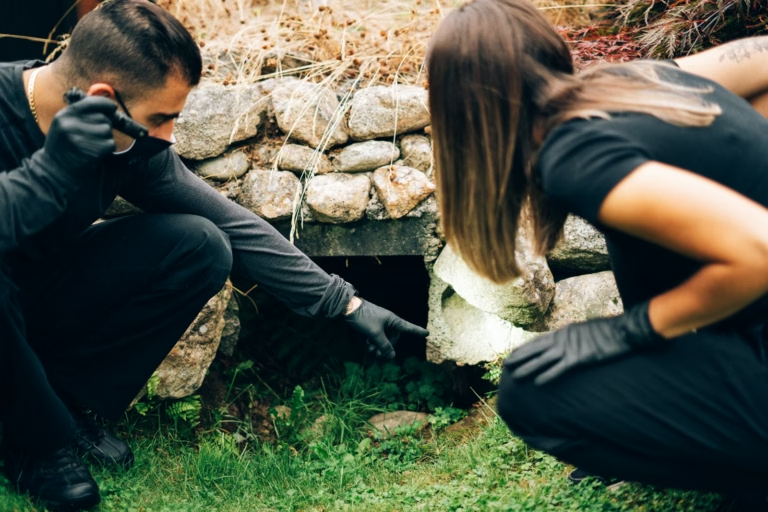
Inside, check places where wood stays damp: under sinks, around dishwashers and bathtubs, near skylights and window frames with old leaks, and in crawl spaces or attics with poor ventilation. Outside, look at stumps, woodpiles, garden timbers, decks, fence posts and trees with dead or hollow sections. Keep this to what you can see and reach safely. Do not open walls, drill into framing or poke around electrical boxes and wiring to chase a nest. If the trail disappears into the structure, note where, and leave the next step to someone who can assess it.
How to Eliminate Carpenter Ants
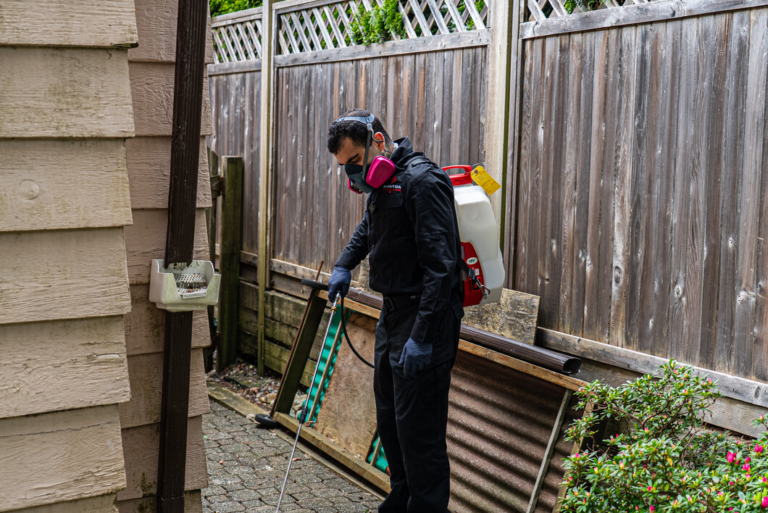
Effective control goes after the colony, not just the workers you see. Only a small share of the colony is out foraging at any time, so spraying those ants leaves the queen and the nest untouched. Baits and treatment of a located nest reach the colony itself, and both work best alongside moisture repairs and removal of the wood the ants are using.
Choose and Place Carpenter Ant Baits
Ant baits mix a food the ants want with a slow acting insecticide. Workers carry it back and share it, which is how it reaches the queen and the young. Choose a bait whose label lists carpenter ants and indoor use if that is where you will place it, and check that it is registered in Canada; registered products carry a PCP number on the label.
Place bait stations right beside active trails, where ants are already travelling, and only where children and pets cannot reach them. Carpenter ants are fussy, and what they feed on can change through the season, so check the bait within a day. If they ignore it, try a product with a different food base; if they are feeding, keep it supplied as the label directs. Expect this to take time: University of Minnesota Extension notes that baits can take weeks or even months to bring a colony under control.
Treat Located Nests and Remove Infested Wood
Health Canada’s guidance is that lasting control comes from finding and treating the nest itself, and that with a satellite colony the parent colony also needs to be found. Where a nest is in something you can safely reach and remove, such as an old stump, a woodpile or a loose garden timber, removing that wood takes the nest with it.
Nests inside walls, floors, roof framing or other hidden cavities are a different decision. Treating them usually means accessing a void and applying a product to the right spot, and removing infested wood can mean cutting into the structure. Both call for a proper assessment first. Do not remove structural wood or inject anything into hidden cavities without qualified help. Our article on how to treat a carpenter ant nest goes into what that assessment involves.
Avoid Treatment Mistakes and Follow Pesticide Labels
A few common mistakes make carpenter ants harder to get rid of:
- Spraying near bait. Insecticide sprays on or around bait stations stop ants from feeding, which undoes the bait.
- Spraying every ant you see. It reduces what you see for a day or two but leaves the colony intact.
- Mixing your own poison. Homemade borax or sugar mixtures are not registered products, and improvised mixtures are a real risk around children and pets.
- Using outdoor products indoors. A product labelled only for outdoor use stays outdoors.
Any pesticide you use should be registered in Canada and applied exactly as its label directs: where it may be used, how much, and what to keep away from it. Health Canada’s carpenter ant guidance covers identification, nesting and label requirements in more detail.
When to Call a Professional Exterminator
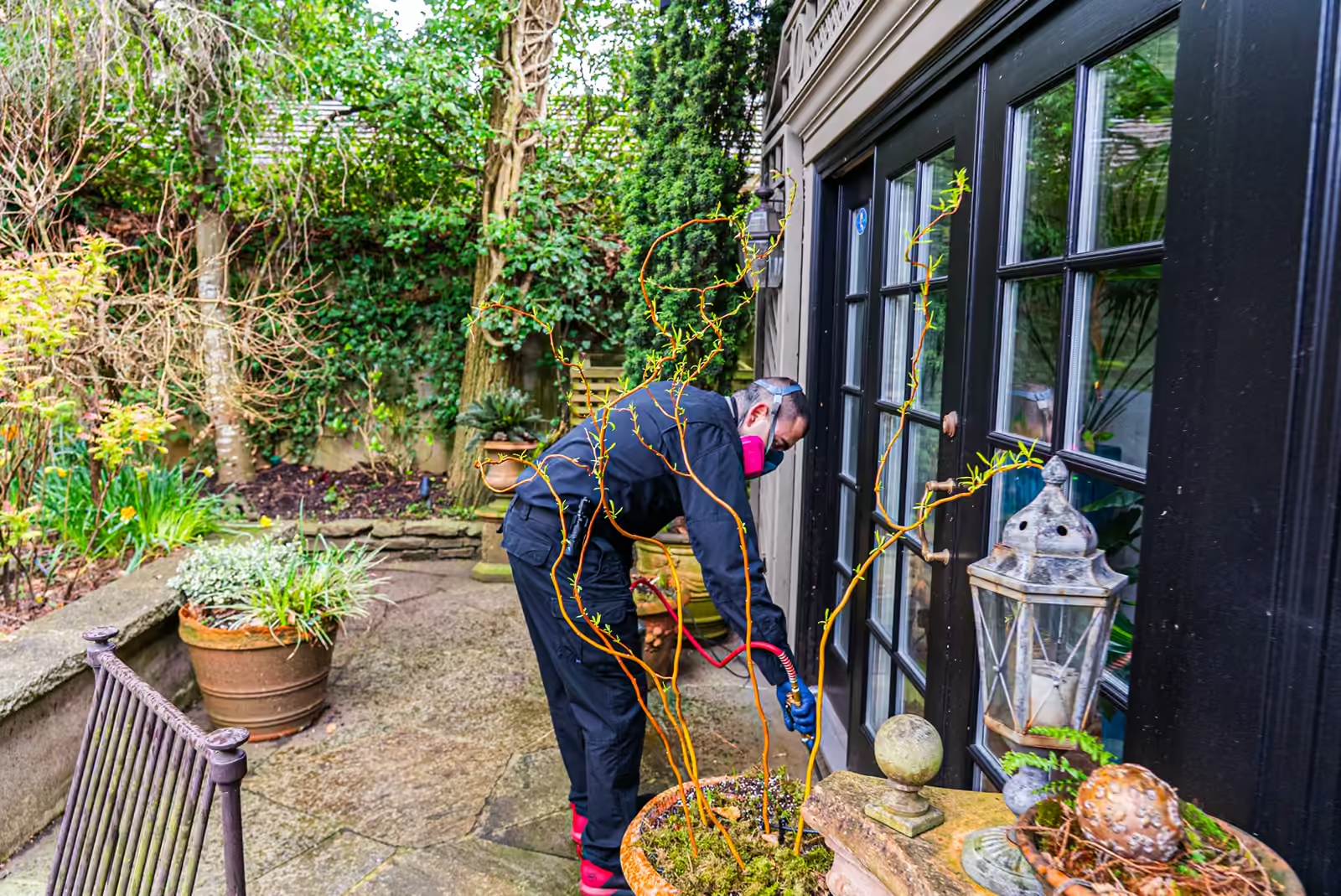
Many carpenter ant problems end up needing professional help, mainly because the nests are hidden. Consider calling a pest control professional when:
- Ants are still active after several weeks of properly placed bait.
- You see workers indoors through the winter or winged ants emerging inside.
- The trail leads into a wall, ceiling, roof or floor you cannot inspect.
- You find frass, soft or hollow sounding wood, or other signs of damage in framing.
- The nest is in a large tree close to the house.
Pest control deals with the ants. If wood has been weakened by decay or tunnelling, a contractor or builder should assess and repair it, and a plumber or roofer may be needed to stop the leak behind it. All three often matter in the same job.
How to Keep Carpenter Ants From Coming Back
Carpenter ants return when the conditions that attracted them are still there. Moisture, decaying wood and easy routes from outdoor nests to the house are the three things to work on, and none of them is solved by a treatment alone.
Fix Moisture Problems and Replace Damaged Wood
Repair plumbing leaks, failed window and skylight seals, and roof leaks. Keep gutters and downspouts clear and draining away from the foundation, and improve ventilation in attics and crawl spaces where condensation builds up. Wood that has softened from water or decay should be replaced, and wood should not sit directly against soil. In a wet climate like the Lower Mainland, these repairs do more to prevent carpenter ants than any product.
Seal Entry Points and Remove Outdoor Attractants
Seal gaps around utility lines, pipes, vents, windows and doors where ants travel inside. Trim tree branches and shrubs back so they do not touch the roof or siding. Store firewood off the ground and away from the house, and bring indoors only what you will burn soon. Remove old stumps and rotting garden wood near the house, and keep bark mulch shallow against the foundation. Indoors, store sweet foods and pet food in sealed containers and clean up crumbs, since foraging workers come in looking for food.
Conclusion
Getting rid of carpenter ants comes down to finding where they nest, treating the colony rather than the workers, and fixing the damp wood and access routes that brought them in. Bait and patience handle many cases, while hidden nests and damaged framing call for an inspection. If you are seeing carpenter ants around your home, Phantom Pest Control provides pest control in Vancouver and across the Lower Mainland, starting with finding out where the colony is and why it chose your property.Frequently Asked Questions
These are the questions homeowners ask most often once they suspect carpenter ants.
1. How Long Does It Take to Get Rid of Carpenter Ants?
It depends on where the nests are and how many there are. Baits can take weeks or longer to bring a colony under control, and a colony with satellite nests may need follow up. Treating a nest that has been located directly can work faster. Activity can also pick up again in spring if a nest was missed, so keep watching after it seems to stop.
2. Can You Get Rid of Carpenter Ants Naturally?
The natural steps that really work are the preventive ones: fixing moisture, removing decayed wood and stumps, trimming branches, sealing gaps and keeping food put away. They make a property far less attractive to carpenter ants. Home remedies such as vinegar, essential oils or cinnamon may move ants along a trail for a while, but there is no good evidence that they eliminate a colony or its nests.
3. Does Seeing One Carpenter Ant Mean You Have an Infestation?
Not necessarily. In spring and summer, workers from an outdoor colony often wander indoors looking for food, and a single winged queen may come inside after mating. Watch for patterns instead: ants every day in the same area, ants indoors in winter, piles of frass or many winged ants coming out indoors. Those point to a nest in the house.