Rodent Maintenance Program in Vancouver & Fraser Valley
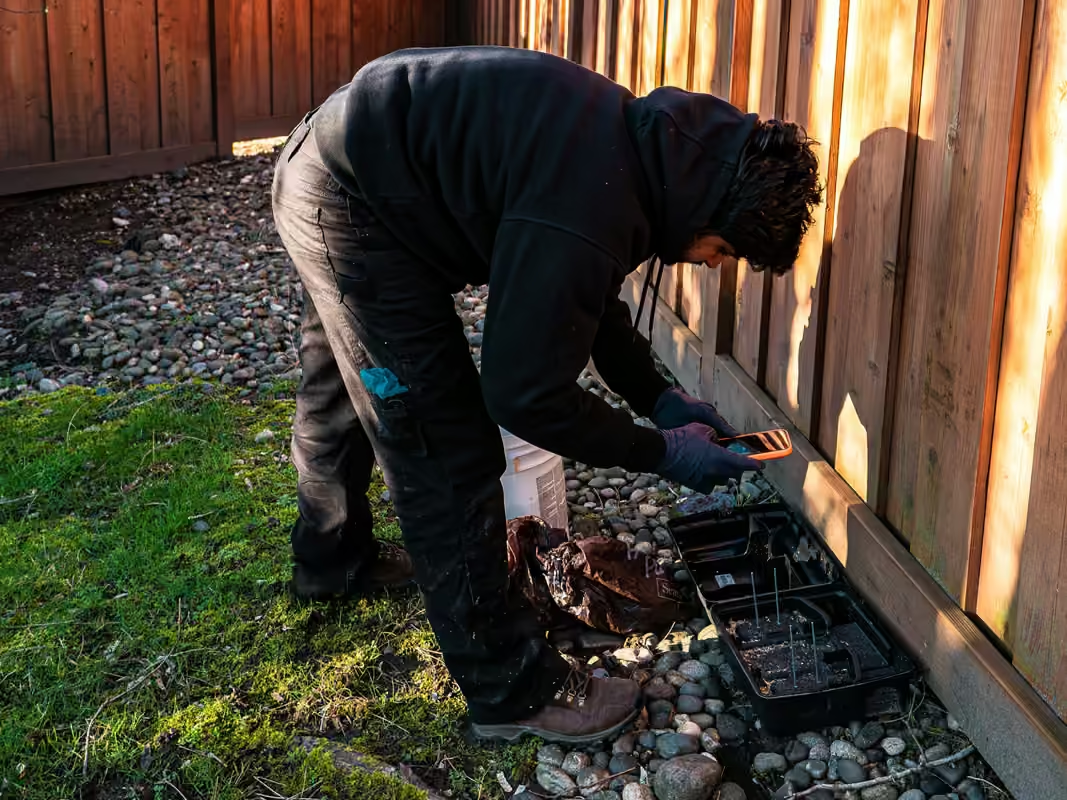
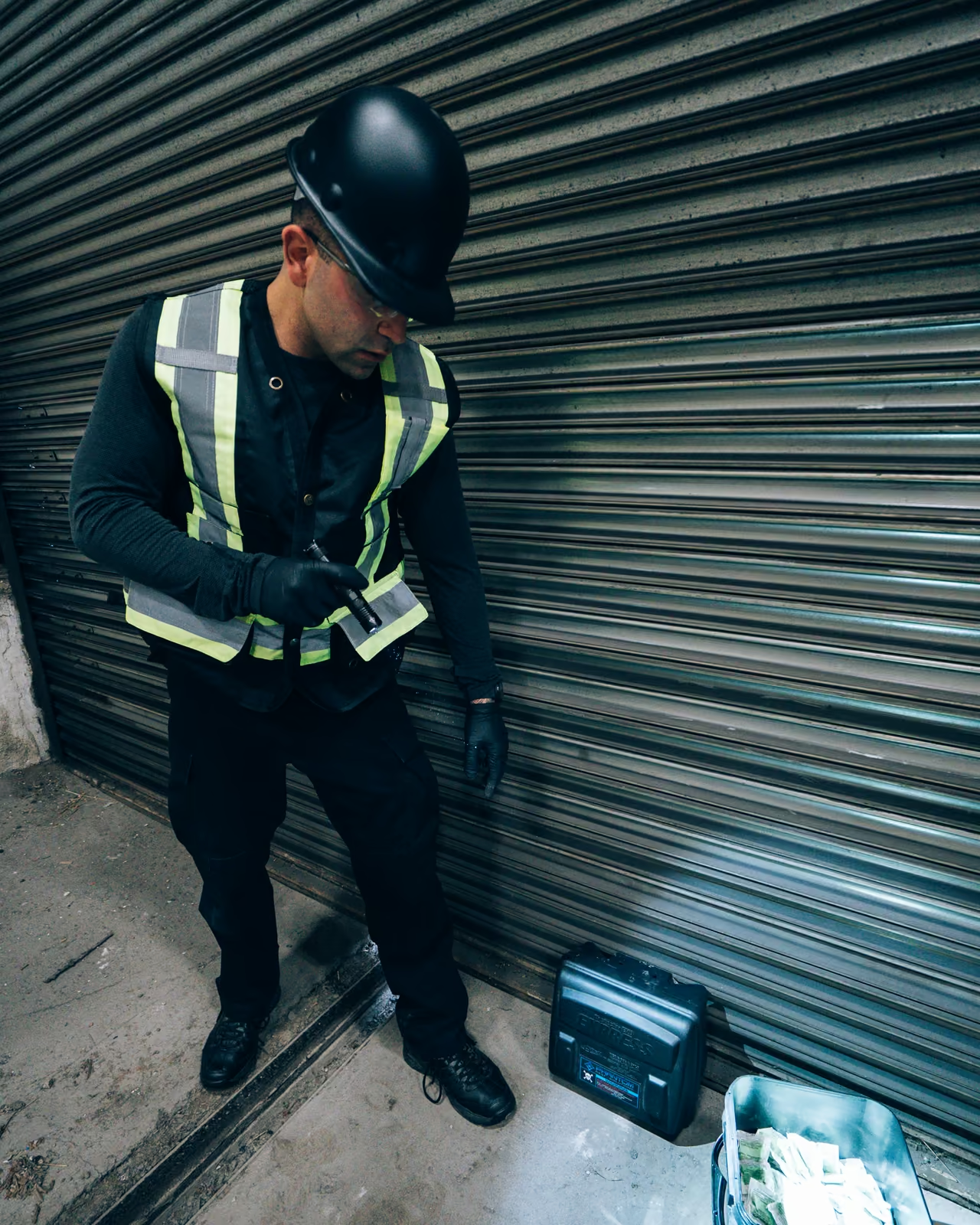
Phantom Pest Control’s rodent maintenance program is the scheduled service that keeps watch for rats and mice in Vancouver, BC and the Fraser Valley. Locked bait stations go around the outside, traps go inside wherever a visit finds activity, and visits come monthly, bi-monthly or quarterly, for homes and businesses.
Visits
Monthly, bi-monthly or quarterly
Businesses
Service area
Why Rats and Mice Come Back After a Treatment
Because the things that drew them in usually outlast the treatment. Food, shelter and small gaps are still there, and rats living close by can move back in. A maintenance program keeps checking those places on a schedule, so new activity shows up at a station or a trap first.
Research on Vancouver’s own rats shows why. Genetic testing of 605 rats found that relatives almost always share a city block: only 1% of related pairs were caught in different blocks. A review by the same research team adds that rat control limited to one property is likely to fail, because rats from around it move back in.
If rats or mice are inside now, start with rodent control: its three-visit program is for an active problem, and this program keeps watch afterwards. Our regular maintenance page lists the other scheduled programs, and openings too big to seal on a visit go to exclusion work.
Fallen fruit, pet food, bird seed and open garbage keep feeding rodents after a treatment ends.
Health Canada says mice squeeze through a crack the size of a dime, and rats through a quarter-sized hole.
Three-quarters of related Vancouver rats were caught within 33 m of each other in one genetic study.
Boxes in garages, attics and basements, and debris around the building, give them places to nest.
Trees, vines and lines that touch the roof give roof rats a route up to the eaves.
Rats and mice look for the shelter and warmth of buildings when the weather turns cold and wet.
The Rodents a Maintenance Program Watches For
B.C. has three introduced rodents that usually cause problems, plus a native mouse worth knowing. Each row says where a visit looks and links the page that covers it in full.

Ground-level burrowers along foundations, decks and debris piles, so stations sit on the routes they run beside walls and fences.
Agile climbers that nest high, in attics, rafters and trees, so visits check the roofline and the attic hatch.
They nest in hidden, enclosed spaces with shredded soft material, so traps go inside where a visit finds droppings.
In Canada only the deer mouse carries hantavirus, so droppings in sheds and cabins are soaked first, never swept.

Grey and red squirrels are rodents too; when they get into attics and roof voids, our wildlife page covers the work.

Phantom’s rodent sheet warns that devices left on site too long can draw moths and beetles, so they come out when a program ends.
A car left in a quiet garage or driveway gives them shelter and nesting material; our post covers what to check.
Note where and when you saw it, and add photos to your estimate request.
When to Watch for Rats and Mice in Metro Vancouver
Rodents don’t stop in any month, so the schedule runs through every season. The bars show when pressure rises and when B.C. suggests an inspection; the three rows below the chart don’t follow a season.
Each bar comes from the source named in its row: Phantom’s rodent page, Vancouver rat research or B.C.’s rodent guide.
Any month
Phantom’s rodent sheet notes house mice mature in 4–6 weeks and carry a litter for 19 days; indoors, the weather doesn’t slow them.
Underground lines such as sewers may give rats routes between blocks that the weather doesn’t close.
Bird seed, pet food and fallen fruit feed rodents in any month they’re left out.
Where the Stations and Traps Go Around a Building
Each visit follows the same route: the outside first, then the gaps, the roofline and the rooms where activity shows. The letters match the drawing.
- AFoundation walls
Locked stations along the walls where Norway rats run, kept within 15 m of the building.
- BFence lines
Stations fastened to a fence can sit farther out along it, up to 100 m.
- CPipes, vents & cables
Gaps up to the size of a toonie are sealed during the visit that finds them.
- DDoors & sweeps
Worn sweeps and gaps under doors are noted, and larger openings are quoted as exclusion work.
- EEaves & soffits
Where roof rats climb in from branches, vines and overhead wires.
- FAttic
Traps go in when a visit finds droppings, nesting or gnawing.
- GStorage & shelving
Boxes and clutter where mice nest, checked for droppings each visit.
- HKitchen & sinks
Behind appliances and under sinks, the spots Phantom’s rodent sheet asks clients to clean.
- ICrawl space
The damp, low spaces Norway rats prefer, checked for burrows and droppings.
What You Can Do About Rodents Between Visits, and What a Technician Handles
The program does the most when the property stops feeding and sheltering rodents. Most of that is yours to do; the devices, the bait and the sealing are ours.
You can
Keep lids on every bin, bring pet food in, pick up fallen fruit and use a spill-proof bird feeder.
Lift stored items off the floor and away from walls, and cut branches back at least 2 m from the eaves.
Note where and when you saw droppings or gnaw marks, and wet droppings with disinfectant before wiping them up instead of sweeping or vacuuming.
Needs a technician
Health Canada keeps commercial rodent baits for certified pest control operators, in locking, tamper-resistant stations.
When a visit finds activity in the attic, garage, storage or kitchen, traps go in where it is.
Small gaps are sealed on the visit, and bigger openings get a quote for exclusion work.
A numbered device map, and a written report after every visit for your files.
How the Rodent Maintenance Program Works
Five steps, from the first inspection to a schedule that changes with what each visit finds.
The first visit walks the outside, the roofline and the rooms with signs, and for businesses the site inspection is free.
Locked stations go in around the outside, and for a business each one gets a number on a device map.
We suggest a schedule after the inspection, monthly, bi-monthly or quarterly, and adjust it as visits go on.
Each visit opens and services every station, sets traps where there’s activity, and seals the small gaps it finds.
Businesses get a written report after every visit, and the plan shifts with the seasons and the findings.
Our regular maintenance page lists the other programs Phantom runs on a schedule.
Before the First Visit
Six things that let the first visit cover the whole property. Phantom’s Rodent Program sheet, on our client forms page, has the preparation steps.
For rats, the sheet asks for access to the attic opening and a cleared closet beside it.
Behind appliances, couches and chairs, inside closets and under sinks, so new droppings stand out.
Visits run Monday to Friday, 9 AM to 5 PM, so arrange the gate, the garage and the side yard.
What, where and when: droppings in the garage, noise in the ceiling, a burrow beside the deck.
Lay a coin beside any droppings for scale, then add the photos to your estimate request.
Our hantavirus post says to wet them first with disinfectant or a bleach solution, then wipe them up; never dry-sweep them or use a household vacuum.
After Each Visit: Living With the Program
What stays on the property between visits, and what you’ll see from Phantom.
Stations
Locked and fastened in place, checked and serviced on every visit.
Traps
Set inside only where a visit found activity, and moved as the activity moves.
Gaps
Toonie-size gaps closed as they’re found; bigger openings written into an exclusion quote.
Reports
For businesses, a written report and the device map after every visit.
The schedule
Reviewed as visits go on, and changed when the stations show more or less activity.
Each station is fastened and locked for a reason: please don’t open, move or stack things on it.
A note of what you saw, where and when lets the next visit start in the right place.
B.C.’s Rodent Bait Rules and Your Program
Since January 21, 2023, B.C. has limited second-generation anticoagulant rodenticides, which it calls highly toxic, to the essential service locations in Schedule 6 of the Integrated Pest Management Regulation. Second-generation rodenticides can’t be used in private homes in B.C., and preventative baiting with them is prohibited.
No second-generation baits; stations hold other baits, or traps.
Only at Schedule 6 sites such as hospitals and food plants, within the section 81 limits.
Locked, fastened and labelled, and serviced on each visit.
Phantom removes its stations and traps, as its rodent sheet sets out.
Where they are allowed, section 81 of the Integrated Pest Management Regulation needs rodents present or recent signs of them, practical alternatives tried first, and no more than 35 consecutive days and 120 days in a year at one site. Other rodent baits remain available, and on a Phantom program they stay in locked stations.
For any commercial rodent bait, Health Canada requires a locking, tamper-resistant station wherever children, pets, livestock or wildlife could reach it, and has users inspect stations regularly and replace damaged ones. Outdoors, the stations also have to stand up to snow, rain, extremes of temperature and humidity, and direct sunshine. B.C. adds a label on each bait container’s lid with the word “Poison”, a contact name and phone number, and the active ingredient. The province’s rodenticide page lists the essential services.
Why Choose Phantom for Rodent Maintenance
Who does the work, what you pay or receive in writing, and how the devices on your property are tracked.
Experience
15+ years of pest control experience serving British Columbia
Credentials
Fully licensed, insured and certified
Home prices
Setup and visit rates published on our rodent page
Businesses
Free site inspection, a device map and a report every visit
Preparation
EXCELLENT Based on 830 reviews
 Posted on Google

 Ashley WoodWe were having some problems with mice at our home so we contacted Phantom and Darcey came and resolved the issues quickly. Darcey was friendly, great with our dog and made sure we understood everything he was doing and what to expect. Happy to report no more mice! Thank you, Darcey!Posted on Google
 Michelle HerrExcellent pest control service! The team was professional, friendly, and knowledgeable. They arrived on time, explained the treatment process clearly, and made sure everything was taken care of. Their attention to detail and commitment to customer satisfaction were impressive. I really appreciate their prompt service and effective results. Highly recommend them to anyone looking for reliable and professional pest control services!Posted on Google
 Nasib AbdulMark was great and he did a great job and was very knowledgeable.Posted on Google
 HenryDarcey provided exceptional support in resolving our pest concerns. He was punctual, highly knowledgeable, and professional throughout the process. We have been trying to deal with these issues for quite some time without any luck but thankfully the matter is now resolved. We appreciate the dedication he demonstrated and will be sure to reach out should we require his services again.Posted on Google
 Jacqueline BruceI want to let you know that June did an amazing job on our house for the moths. He was really friendly, patient, professional and conscientious. I wasn't fully ready for the treatment when he arrived and he managed to move some clients so he could return later. He explained a lot about the treatment and the moths' habits which really helped with other areas that he wasn't even treating. He kindly helped me moved some things to barricade the area from pets. I would get Phantom back and highly recommend them.Posted on Google
 Fraser HannayDarcey was amazing at helping us deal with a wasp nest. Friendly, knowledgeable and on time! Thank you!Posted on Google
 JanetWe hired Phantom Pest Control to eliminate a wasp nest inside our house and the service was great. Information on the phone when I first called to book an appointment was clear and we got an appointment quickly. Juan, the specialist who arrived to do the job, fully explained the process, did the work, and explained what to watch in the outside chance additional work might be needed. We are happy with the job and were glad to have Juan as our technician.Posted on Google
 Jenny WuWe received exceptional service from Joy. She was both professional and knowledgeable, explaining the service thoroughly.Posted on Google
 Sean AbbottThey showed up on time, early actually. Mark was very professional and explained how the cockroaches work. He was personable and efficient, and hygienic with how he worked (wearing protective boot covers and gloves). I was impressed and would definely call again if needed.
Rodent Maintenance Across Vancouver & the Fraser Valley
The program runs at homes and businesses throughout the Lower Mainland and the Fraser Valley, Annacis Island included. Each place in the list links to its local page.
Vancouver & North Shore
Burnaby & Tri-Cities
Richmond & Delta
Fraser Valley
Related Rodent Services
Services that come before, alongside or after a maintenance program.
The three-visit program for rats and mice that are active now, with prices for houses and condos.
Exclusion work for openings bigger than a toonie: vents, soffits, foundations and crawl spaces.
The rodent inspection and declaration a city asks for before a house comes down.
Sector pages for restaurants, food plants, warehouses and more, each with its own rodent program.
Rodent Maintenance Program FAQs
Visit frequency, cost, the three-visit program, cancelling, wildlife and pets, your own bait, records, rats found inside, condos and townhouses, and squirrels, one question at a time.
Prefer to talk?
How often are rodent maintenance visits?
Monthly, bi-monthly or quarterly, depending on the property and what the inspection finds. Phantom’s Rodent Program sheet notes that many clients choose monthly, bi-monthly or quarterly maintenance, and we suggest a schedule after the inspection and adjust it as visits go on. For comparison, B.C.’s rodent guide asks property owners to inspect at least twice annually, ideally in spring and fall.
How much does a rodent maintenance program cost?
For a house or a condo, exterior baiting is a $150 + GST minimum setup, then $78.75–$95 + GST per visit, with 30 days’ cancellation notice. Our rodent page notes that prices are subject to change based on property size and the treatment needed, and that its standard pricing applies to residential properties in the Greater Vancouver / Lower Mainland area.
For businesses the site inspection is free, and a custom quote follows it, because the number of stations and the visit schedule depend on the building.
Do I need the three-visit rodent control program first?
Only if rats or mice are active inside now. The three-visit program on our rodent control page is built for an active problem: the program’s three visits are completed within 90 days of the first, and a severe infestation can need more. A maintenance program is for afterwards, or for a property that wants stations and checks in place before a problem starts.
Can I cancel the program?
Yes, with 30 days’ notice, and the final visit is chargeable, as the price table on our rodent page sets out for exterior baiting. On that last visit Phantom takes out its stations and traps; its Rodent Program sheet says devices come off the property when a program ends, because devices left behind can draw insects.
Do rat baits harm owls, pets and other wildlife?
They can, which is why B.C. narrowed the strongest ones. The province brought in its limits on second-generation rodenticides to reduce the risk of wildlife poisoning, and says they can harm people, pets and wildlife directly or when an animal eats a poisoned rodent, a risk to wildlife that is higher than with first-generation baits, because the active ingredients stay in animal tissue for a long time.
On this program, bait goes in locked stations around the outside, and traps go inside where a visit finds activity.
Can I put out my own bait stations?
Not with commercial bait. Health Canada allows commercial class rodenticides only for certified pest control operators, farmers and approved government programs, and B.C. no longer lets anyone outside the essential services use second-generation baits. Snap traps are yours to set, and our post on keeping mice out of your home covers the sealing and clean-up you can do.
What records does a business get?
A numbered device map and a written report after every visit. For food businesses those papers matter: B.C.’s Food Premises Regulation puts the pest duty on the operator, and Vancouver Coastal Health asks operators to keep pest control reports on-site for a minimum of 3 months so the Environmental Health Officer can review them.
What happens if a visit finds rats inside?
Traps go in where the activity is, the visit looks for the way in, and a gap up to toonie size is sealed on the spot. A larger opening is quoted as exclusion work. If the activity is a full infestation rather than a few signs, the three-visit program on our rodent page is the better fit, and maintenance can pick up again after it.
Does the program work for condos and townhouses?
Yes. The exterior baiting rates on our rodent page are the same for a condo, apartment or townhouse as for a house. For a whole building, our strata and apartment buildings page covers rodent programs quoted for the building, set up with its council, manager or owner.
Does the program cover squirrels or raccoons?
No. The stations and traps on this program are for rats and mice. Grey and red squirrels that get into attics and roof voids, and raccoons, are wildlife work, and our wildlife control page covers removal and the repairs that keep them out. Openings they leave behind can also be quoted as exclusion work.
Book an Inspection
Tell us about the property and what you’ve seen, and we’ll book the inspection that sets up the stations and the schedule.
The schedule is agreed after the first visit, and businesses get a custom quote for the site.