Silverfish Control in Vancouver, BC
Phantom Pest Control provides silverfish control and extermination in Vancouver, BC and across the Lower Mainland and Fraser Valley, for houses, condos, rental suites and businesses. Our certified technicians look for the damp spots and hiding places that keep silverfish going, treat them with a residual insecticide along baseboards, cabinets and closets, and may recommend moisture fixes that help keep them away.
- Fully licensed, insured and certified
- Read our Google reviews
- Treatment $325–$425 + GST For a house; $295–$395 + GST for a condo, apartment or townhouse
- Inspection From $125 + GST $150 + GST for a house; +$50 for an attic or crawl space, waived if you book the treatment the same day
- Stay out 6–8 hours After the residual treatment; longer for some people and pets, as the silverfish preparation sheet explains
- Area 24 communities From Squamish to Abbotsford
How to Tell If It’s a Silverfish
Health Canada describes the silverfish as a wingless, flat insect just over 1 cm long, with shiny silver scales, two long antennae and three long tail bristles on a tapered, carrot-shaped body. It runs fast at night with a wiggle like a swimming fish. Firebrats share the shape but are mottled grey or brown.
Common silverfish Lepisma saccharina
Shiny silver or pearl grey, about 13 mm long and sometimes up to 19 mm, according to UC IPM. It favours damp spots: bathrooms, laundry rooms, sink cabinets and basement storage.
Long-tailed silverfish Ctenolepisma longicaudatum
Grey-brown and speckled, less shiny, with all three tails as long as its body. Norway’s public health institute notes it copes with drier rooms than the common silverfish. It has been reported in B.C.
Firebrat Thermobia domestica
Grey or brown with dark, mottled markings and no silver sheen. It takes the warm spots near furnaces, ovens and water heaters, and attics in summer. Firebrat vs silverfish: the differences
Illustrations, drawn to one scale. Young silverfish look like small adults, and the smallest have no scales yet.
Insects People Mistake for Silverfish
Booklouse
About 1 mm long, pale and soft, with very long, thread-like antennae. The Canadian Conservation Institute notes mould is often cited as their main food, so booklice point to damp paper. Silverfish or booklice in your books
House centipede
Fifteen pairs of long legs on an adult 2.5–5 cm long, and no silverfish-style tail. It eats silverfish. Silverfish vs house centipede
Bed bug
Flat, broad and oval, about the size of an apple seed, with a short, broad head. Silverfish or bed bugs near the bed
Earwig
Pincers at the rear instead of three thin filaments, on a body 1.5–2 cm long. Phantom treats earwigs as part of crawling insect control.
One Silverfish vs an Infestation
One silverfish in the tub has usually just fallen in and can’t climb out. Silverfish on several nights, ragged or grazed holes in paper, or stains on books, fabric or wallpaper point to a population living in the house. Health Canada notes populations grow slowly, so heavy damage means they’ve been there a long time.
Points to an infestation
- Silverfish on several nights, in more than one room
- Ragged holes or grazed, thinned patches in paper, book bindings or wallpaper
- Stains on books, fabric or wallpaper near the damage
- Silvery scales left around damaged items
- Silverfish caught on sticky traps in two or more rooms
Not proof on its own
- One silverfish in the tub or sink: it fell in and couldn’t climb the smooth sides
- Old holes in stored paper with no live insects nearby
- Discoloured paper alone: age and water marks discolour paper too
- One sighting after a move or a delivery of boxes, which silverfish can arrive in
You can add a note and a photo of what you found to your estimate request, and read the signs of a silverfish infestation.
Where Silverfish Hide in a Vancouver Home
Silverfish favour damp, humid spots: around sinks, tubs, floor drains and plumbing, in basements, crawl spaces and wall voids, and in stored paper and boxes. Health Canada notes they follow pipelines from the basement to rooms on the lower floors. Firebrats prefer the warm spots by furnaces and water heaters.
- A
Bathroom tub and vanity
The B.C. Home and Garden Pest Management Guide notes silverfish are often found by sinks, floor drains, tubs and showers. Check the tub edge, the toilet base and under the vanity, where condensation and small leaks keep things damp. Silverfish in the bathroom
- B
Kitchen sink cabinet
Under-sink cabinets hold damp, cardboard and crumbs. The preparation sheet asks you to empty the lower cabinets, so the treatment can reach their edges.
- C
Laundry and water heater
A washer adds humidity, and the warm space beside a water heater or furnace is where firebrats gather. Getting rid of firebrats
- D
Basement storage
Silverfish arrive in cardboard cartons, old books and papers, and stored boxes give them food and cover. Sealed plastic bins take that away.
- E
Bookshelves and papers
Silverfish graze paper, glue and book bindings, leaving thinned patches and ragged holes; the Canadian Conservation Institute notes they prefer starch-pasted paper. Protecting books from silverfish
- F
Bedroom closet
Closet shelves and the spaces behind baseboards and door frames are among their hiding places. Silverfish in the bedroom
- G
Attic
Attics are among their hiding places too, and firebrats move into hot attics in summer. Checking an attic is an add-on to the inspection; see the price list below.
- H
Crawl space
Subfloors and crawl spaces are among their hiding places too. Checking a crawl space is an add-on to the inspection, as the price list below shows.
How Our Silverfish Treatment Process Works
A silverfish treatment visit starts with a look at where you’ve seen them and the damp places nearby, then a residual insecticide along baseboards, in cabinets and in closets, where silverfish travel and hide. You prepare the rooms beforehand from the preparation sheet, and Phantom schedules a follow-up treatment only if activity continues.
Inspection
A technician checks the rooms where you’ve seen silverfish, then the damp, undisturbed places nearby: sink cabinets, tub edges, baseboards, closets and storage.
Residual treatment
The technician applies a residual insecticide along baseboards, in cabinets and in closets, where silverfish travel and hide.
Moisture and storage fixes
The visit may include recommendations on what keeps silverfish coming back, such as damp spots, airflow, cardboard storage and gaps. Larger openings can be sealed as exclusion work.
Follow-up if needed
Some activity right after the treatment is expected. If silverfish are still active later, Phantom schedules a follow-up treatment based on what it finds.
Silverfish treatment Silverfish preparation and aftercare sheet
- Stay out The silverfish preparation sheet asks everyone to stay out for at least 6 to 8 hours after the residual treatment.
- Some people and pets Infants under 2, expectant or nursing mothers, people with respiratory conditions or sensitivities, pets, reptiles and birds stay out for 24 hours after the residual treatment, per the preparation sheet.
- Baseboards The sheet says not to vacuum, mop or clean within 6 inches of treated baseboards for at least 4 weeks, and not to use store-bought sprays or cleaners on treated areas.
- Residual Some activity right after the treatment is expected, as the residual disrupts their natural habitat, the sheet says; it keeps working for up to 3 months.
Your booked service’s preparation sheet lists the exact times for your treatment.
How to Prepare for Silverfish Treatment
Get the rooms ready before the technician arrives: empty the lower kitchen and bathroom cabinets and the space under the sinks, move furniture and plants 12 inches from the walls, and clear closet floors. Then plan to stay out for at least 6–8 hours after the residual treatment, as the silverfish preparation sheet asks.
Before the treatment
- Empty the lower kitchen and bathroom cabinets and drawers, and the space under the sinks
- Move furniture and plants 12 inches away from the walls
- Clear closet floors and pick up loose items
- Turn off aquarium pumps and cover the tank with a damp towel
After the treatment
- Stay out for at least 6–8 hours after the residual treatment, or 24 hours for infants under 2, expectant or nursing mothers, people with respiratory conditions or sensitivities, pets, reptiles and birds, as the preparation sheet asks
- Ventilate for 15–30 minutes when you return, and keep food sealed
- Don’t vacuum, mop or clean within 6 inches of treated baseboards for at least 4 weeks
- Don’t use store-bought pesticides or cleaners on treated areas, or adhesive shelf liners
- Expect some activity at first, as the residual disrupts their habitat; it keeps working for up to 3 months
Silverfish Treatment Cost in Vancouver
Silverfish treatment costs $325–$425 + GST for a house and $295–$395 + GST for a condo, apartment or townhouse. Inspections are priced separately, $150 + GST for a house or $125 + GST for a condo; ask on the estimate call whether your job needs one. Estimates over the phone are free.
Silverfish treatment
- House $325–$425 + GST
- Condo, apartment or townhouse $295–$395 + GST
- Attic fogging, added to the treatment $195–$250 + GST
Estimate and inspection
- Estimate over the phone Free
- Inspection, house $150 + GST
- Inspection, condo, apartment or townhouse $125 + GST
- Attic or crawl space, added to the inspection +$50 Waived if you book the service the same day.
Businesses
Savings
- Two or more services together 15% off
- Seniors 5% off
- Referrals, for both you and the new client $25 off
Prices are in CAD and exclude GST. These are standard prices for homes in Greater Vancouver and the Lower Mainland, and they can change with the size of the property, how severe the infestation is and the treatment it needs.
One Silverfish Treatment or a Seasonal Program
A one-time treatment suits silverfish you’re seeing now. If silverfish and other crawling insects keep coming back, a scheduled program checks for them at each visit.
Silverfish treatment
- When it fits Silverfish active in your home now.
- Visits One treatment, with a follow-up scheduled if activity continues.
- Price $325–$425 + GST for a house; $295–$395 + GST for a condo, apartment or townhouse.
- When it fits Silverfish or other crawling insects that keep coming back.
- Visits Our crawling insect seasonal maintenance program checks for silverfish on every visit, inside and out.
- Price $250–$450 + GST per visit for a house; other properties are quoted after an inspection.
Strata and rental buildings
- When it fits Silverfish turning up in several suites of one building.
- Notice B.C.’s Integrated Pest Management Regulation asks for a treatment notice to the resident and the owner or manager at least 72 hours before pesticide use in an occupied suite.
- Program The multi-unit pest control program schedules visits across the building.
How to Prevent Silverfish in a Damp Home
Silverfish favour damp air, 75 to 95% relative humidity according to Health Canada, so lasting prevention means drying the house out: fix leaks and sweating pipes, vent bathrooms, run a dehumidifier in damp rooms, and keep paper and cardboard off basement floors.
What helps at home
- Fix leaking taps and pipes, and insulate pipes that sweat
- Run the bathroom fan during and after showers
- Use a dehumidifier in a damp basement, laundry room or closet
- Store papers, books and fabrics in dry, airtight containers, not cardboard
- Clear out old newspapers, magazines and boxes you don’t need
- Keep cereal, flour and pet food in tight-lidded containers
- Seal gaps around pipes and along baseboards
- Vacuum often, except near treated baseboards for at least 4 weeks after a treatment
DIY or a Silverfish Exterminator: What Each Can Do
Sticky traps or a taped jar
What it does Show what you have and where; the B.C. Home and Garden Pest Management Guide notes sticky traps beside baseboards often give good control.
Where it falls short They don’t fix the damp that keeps bringing silverfish back.
Store-bought dusts and sprays
What it does Work where the product reaches them.
Where it falls short Use only a product whose label names silverfish and carries a PCP number, as Health Canada advises. Boric acid dust for homes was cancelled in Canada in 2019.
Drying and decluttering
What it does Takes away the damp and cover silverfish need; UC IPM notes light infestations don’t need insecticide.
Where it falls short Slow on its own once silverfish have spread into walls and several rooms.
Professional treatment
What it does Puts a residual along the routes and hiding places a technician finds.
Where it falls short Works best with the moisture fixes: UC IPM notes treatment fails while the damp stays.
For step-by-step methods you can try first, read how to get rid of silverfish yourself.
Why Choose Phantom for Silverfish Control
Phantom Pest Control publishes its silverfish prices and its preparation sheet, and is fully licensed, insured and certified. The company has served homes and businesses across the Lower Mainland and Fraser Valley since 2019.
- Our owner 15+ years of pest control experience serving British Columbia
- Since 2019 29,000+ locations serviced from 2019 to 2026
- Credentials Fully licensed, insured and certified Licensed under B.C.’s pest control regulations
- Area 24 communities From Squamish to Abbotsford
In the kitchen
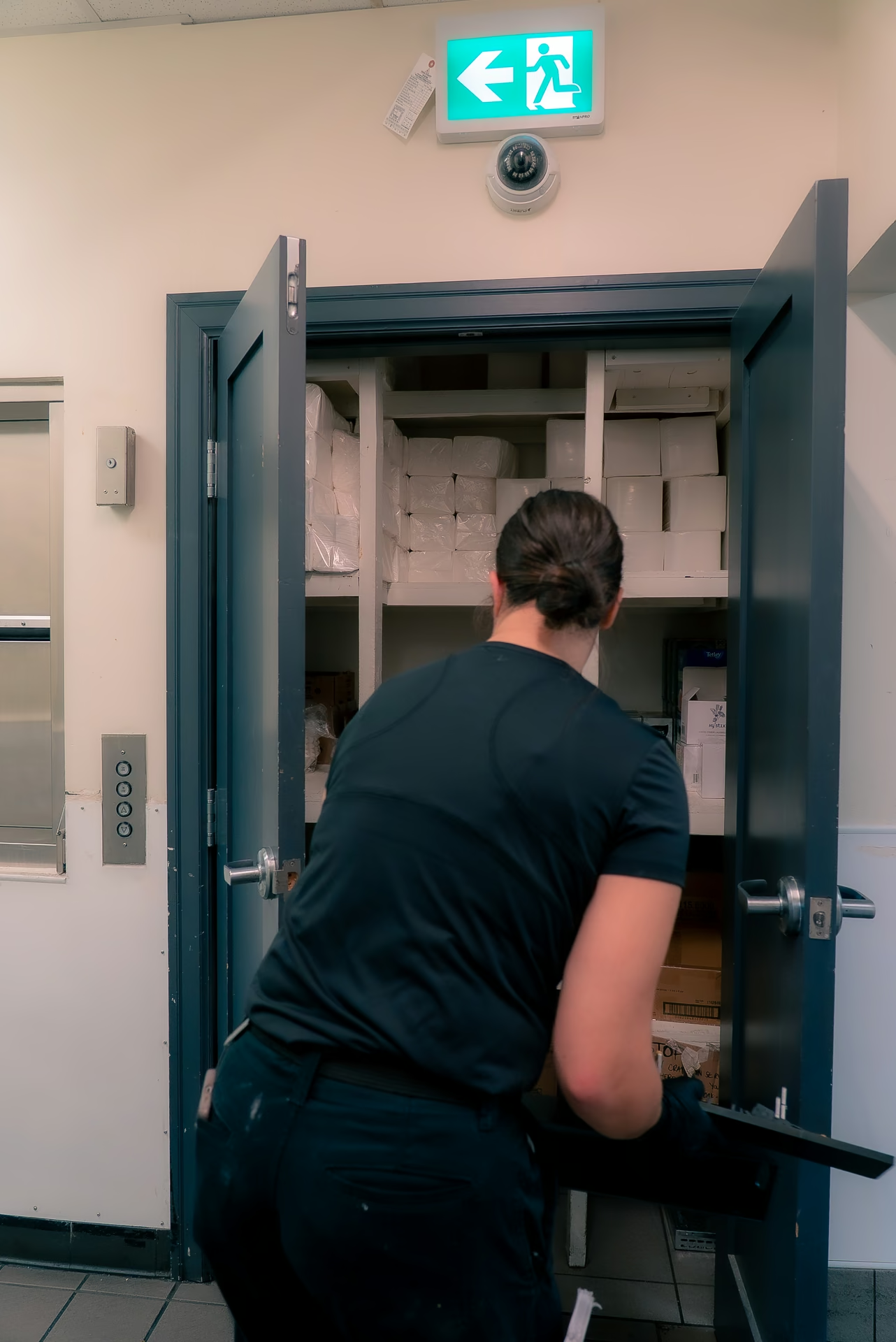
Sink cabinets are emptied first, so their edges and corners can be checked and treated.
Along floor edges
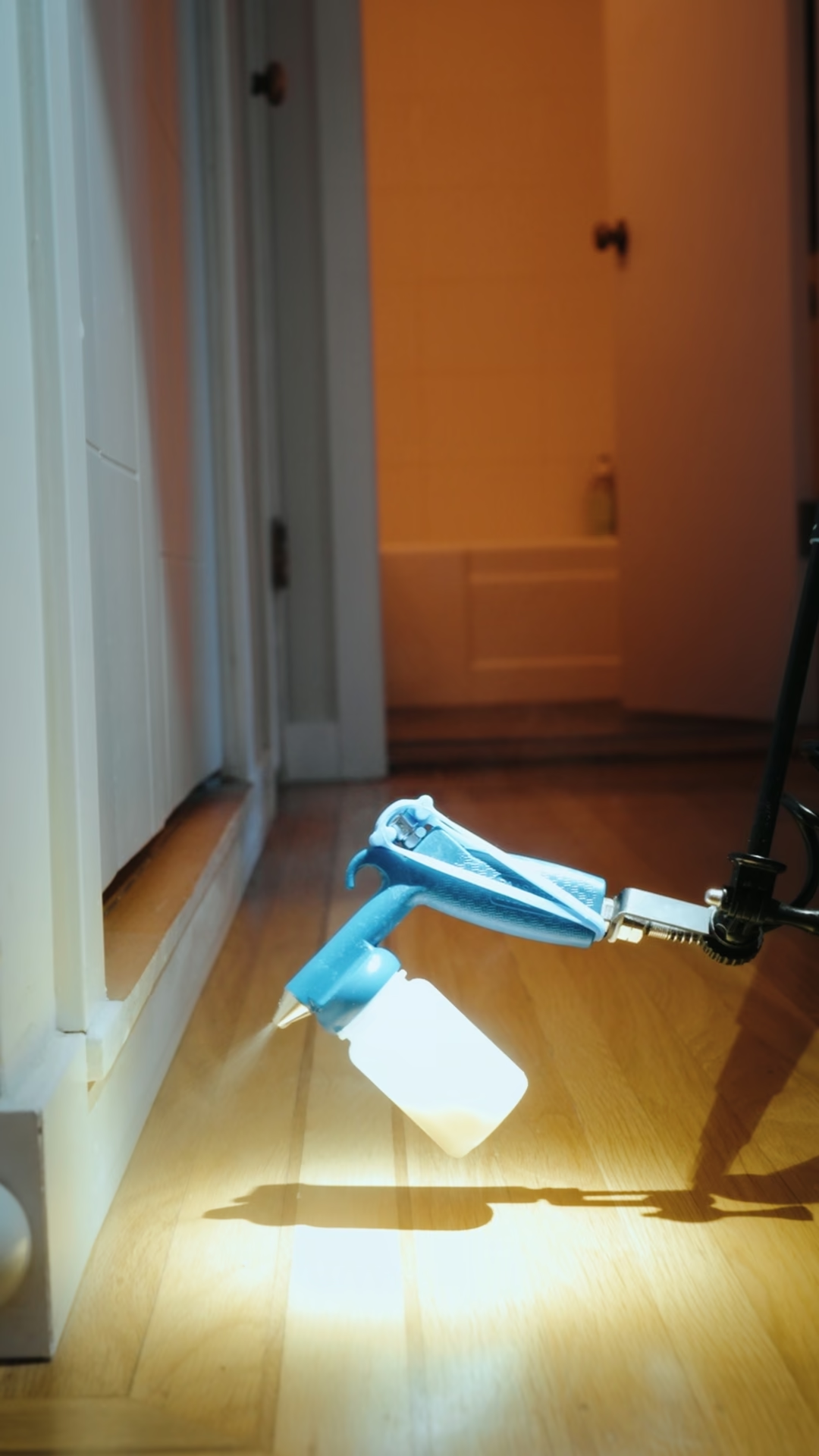
Treatment follows the baseboards and floor edges that silverfish use at night.
In the attic
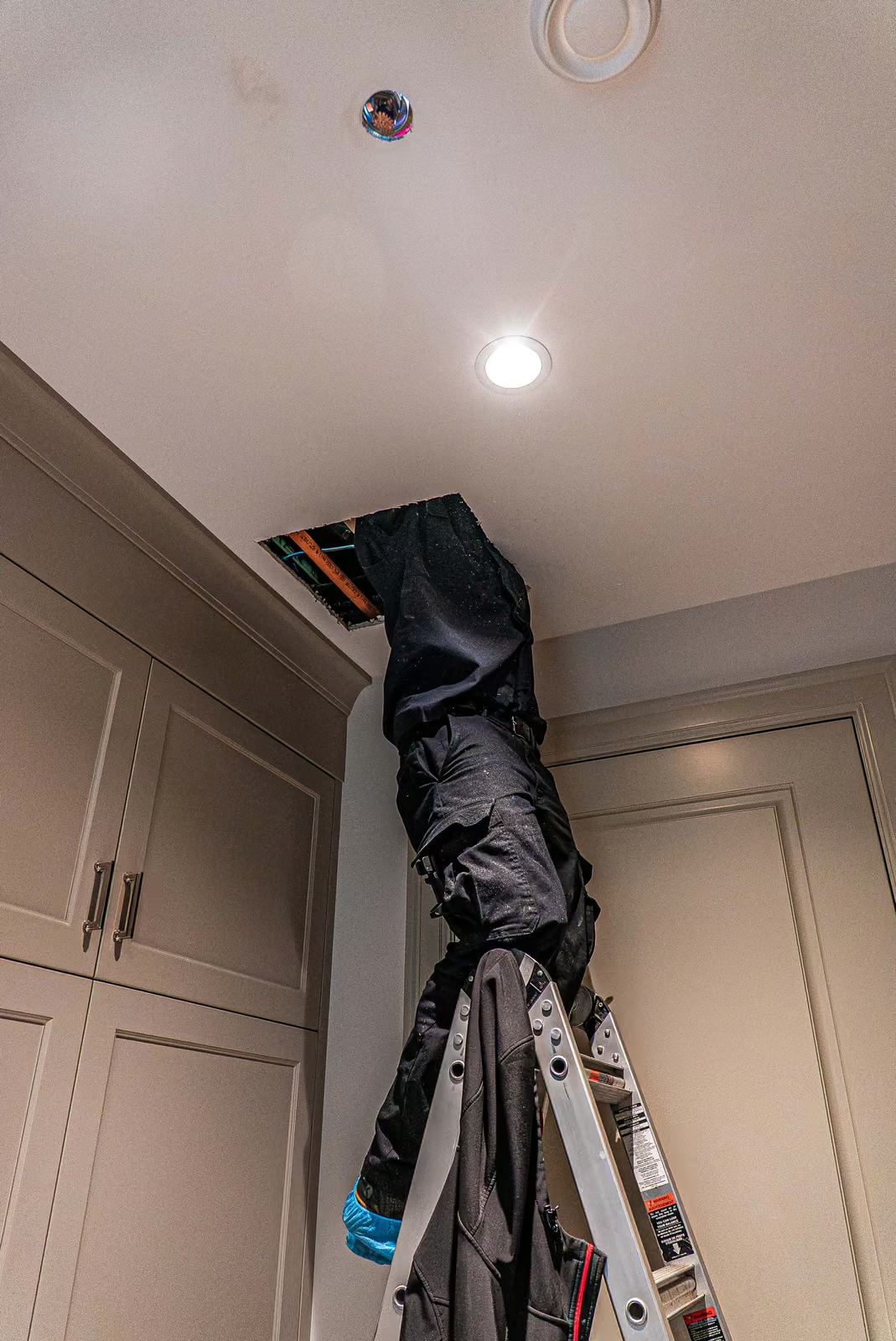
When activity points upward, the technician checks the attic through its hatch.
Cracks and gaps
Cracks at the base of walls are noted, and larger openings can be sealed as exclusion work.
Where We Treat Silverfish in Vancouver & the Fraser Valley
Phantom treats silverfish in 24 communities with a local service page, from Squamish to Abbotsford. Not on the list? Tell us your city in the form, or call the office.
Vancouver, the North Shore and Squamish
Burnaby, the Tri-Cities and Ridge Meadows
Richmond and Delta
Surrey, Langley and Abbotsford
Silverfish Control FAQs
Prefer to talk?
604-771-0404Do silverfish bite or make you sick?
No. Health Canada calls silverfish and firebrats harmless to people, and Virginia Cooperative Extension notes they don’t bite, sting or spread disease. Their jaws are weak, so they scrape the surface of paper rather than bite into it. The harm is to belongings: they can stain fabric, paper, books and wallpaper, and heavy damage takes a large infestation over a long time. Health Canada on silverfish and firebrats
Can silverfish damage clothes?
Yes. Silverfish can damage clothes, slowly. Ohio State University Extension lists cotton, linen and rayon among their food, and the B.C. Home and Garden Pest Management Guide adds starched fabrics. They scrape fabric layer by layer until it thins like tissue and tears into ragged holes, the Connecticut Agricultural Experiment Station notes. Damage builds over a long time, so check clothes left for months in damp closets or cardboard boxes first.
How fast do silverfish multiply?
Slowly. A large silverfish infestation has usually been building for a long time. UC IPM gives clutches of about 50 eggs that hatch in 19–32 days, and silverfish keep moulting all their lives, through 45–60 stages, living about 3 years. In a cold room below 10 °C, one can take up to 500 days to grow up.
Why am I still seeing silverfish after treatment?
Some silverfish activity after a treatment is normal for a while. Health Canada notes that treatments take 10–14 days to work, because silverfish hidden in wall voids have to come out and cross the product. UC IPM adds that they travel far for food, so the source can be hard to pinpoint. If sightings carry on past those first weeks, call or text the office so a follow-up can be planned.
Do silverfish mean I have mould?
Not necessarily. Silverfish point to damp, and the Canadian Conservation Institute notes that the same damp that lets mould grow suits silverfish and booklice. Some fungi are part of a silverfish’s diet, but a sighting doesn’t prove there is mould. Booklice, whose main food is often cited as mould, are the stronger sign. If you see mould or a water stain, fix the moisture first.
Why does a new home have silverfish?
New buildings can draw silverfish while the walls are still damp from plaster and green lumber, Health Canada notes, and silverfish also arrive in cardboard cartons, old books and furniture. Once the walls have dried and the moving boxes are gone, sightings that keep coming point to damp elsewhere, such as a leak or a bathroom without a working fan.
I rent or live in a strata building. Who arranges treatment?
Tell your landlord, property manager or strata council first. Silverfish travel far for food, so UC IPM notes the source can be hard to pinpoint, and in a building it may not be in your suite at all. Inspections arranged across several suites at once get around that, and Phantom’s multi-unit pest control program schedules them for the whole building.
How to Book a Silverfish Treatment
Tell us where you’re seeing silverfish and how often, and the office will call you back. You can add a photo of the insect to the request. Estimates over the phone are free.
Free estimate request
Prefer to talk?
604-771-0404Office and Service Hours: Monday to Friday, 9 AM to 5 PM.