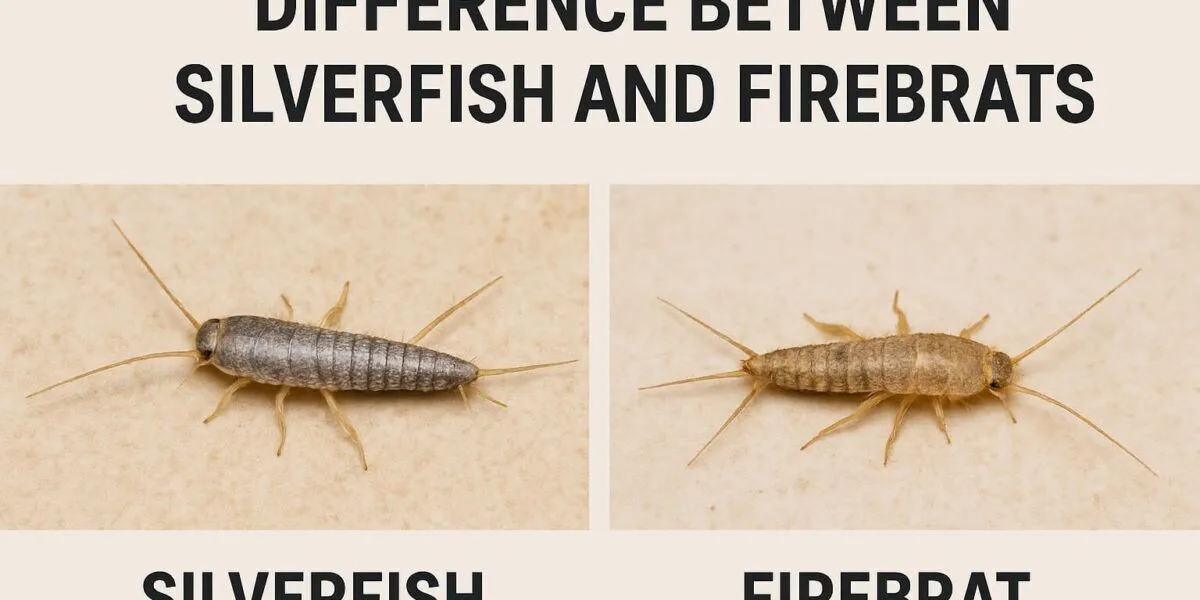
The main difference between silverfish and firebrats is their colouring and preferred temperature. Common silverfish look shiny silver or pearl grey, while firebrats have mottled grey-brown bodies with darker markings. Silverfish often appear in damp bathrooms or basements; firebrats favour hotter locations around heating equipment.
Both are fast, wingless insects with long antennae and three tail-like filaments. If one darts across your floor, check its markings and where you found it before deciding how to respond.
On this page7 sections
Silverfish vs Firebrat: Comparison Table
| Feature | Common silverfish | Firebrat |
|---|---|---|
| Scientific name | Lepisma saccharina | Thermobia domestica |
| Appearance | Shiny silver or pearl grey | Mottled grey or brown with dark markings |
| Body shape | Slender, tapering towards the tail | Similar tapering shape; often looks bristlier |
| Adult body length | About 13 mm; sometimes up to 19 mm | About 13 mm |
| Typical hiding places | Bathrooms, basements, laundry rooms and storage areas | Near ovens, furnaces, boilers and hot pipes |
| Temperature preference | Less heated areas than firebrats | Very warm areas, often above 30°C |
| Shared traits | No wings; two long antennae; three tail filaments; mostly active at night | |
| Main concern | Damage to paper, bindings, certain fabrics and stored food | |
This comparison focuses on the common silverfish. Other silverfish species can have darker or patterned bodies, so colour alone does not confirm identification.
How to Identify Firebrat vs Silverfish: Photos and Appearance
Look for the combination of body colour, a tapered outline and three tail filaments. Both insects are broader near the head and narrower at the rear. Their similar size means length is a weak way to tell them apart.
In a clear close-up, a common silverfish usually has a more uniform metallic appearance. A firebrat typically shows a patchwork of darker markings and a bristlier outline. Small juveniles can be pale and less distinctive.
For a useful identification photo, capture the insect from above in good light and include a ruler beside it. Keep its antennae and tail visible. If practical, retain a specimen in a closed container and note the room and exact location where you found it.
Where Do Silverfish and Firebrats Hide?
Silverfish commonly shelter in damp, secluded spaces; firebrats are especially associated with heat sources. Both hide during the day and may travel at night, so the spot where you see one is not necessarily its main hiding place.
- Silverfish: inspect beneath sinks, behind bathroom baseboards, in laundry rooms, basement storage and undisturbed paper or cardboard.
- Firebrats: inspect accessible gaps around furnaces, boilers, ovens, hot-water pipes and warm attic spaces without opening equipment.
Temperature is a clue, not a diagnosis. Firebrats can occur in warm, humid spaces and tolerate drier conditions than common silverfish. Their presence alone does not prove a plumbing leak.
An insect trapped in a sink or bathtub may have fallen in and been unable to climb the smooth sides. That does not mean it emerged through the drain.
Are Silverfish and Firebrats Harmful, and What Do They Damage?
Neither insect bites or stings people, and neither is known to transmit disease. Their main impact is feeding damage and contamination of stored materials.
They may feed on book bindings, wallpaper paste, paper, cardboard, flour, cereals and certain fabrics. Look for scraped paper surfaces, irregular holes, damaged bindings or fine debris around affected items. These signs can have other causes, so identify the insect before attributing damage to it.
A single sighting does not mean your belongings face extensive damage. Significant losses are more associated with large populations that remain active for a long time. Check nearby stored items if sightings keep recurring.
How to Prevent and Control Silverfish and Firebrats
Start with inspection, moisture management, cleaning and monitoring. An occasional insect may not require pesticide treatment.
- Record activity. Note where and when you see insects. Place sticky monitoring traps along nearby wall edges, out of reach of children and pets, and track catches by location.
- Address dampness. Repair leaks, improve ventilation and use a dehumidifier where appropriate. For firebrats, also investigate sheltered areas around heat sources; drying a bathroom alone may miss the problem.
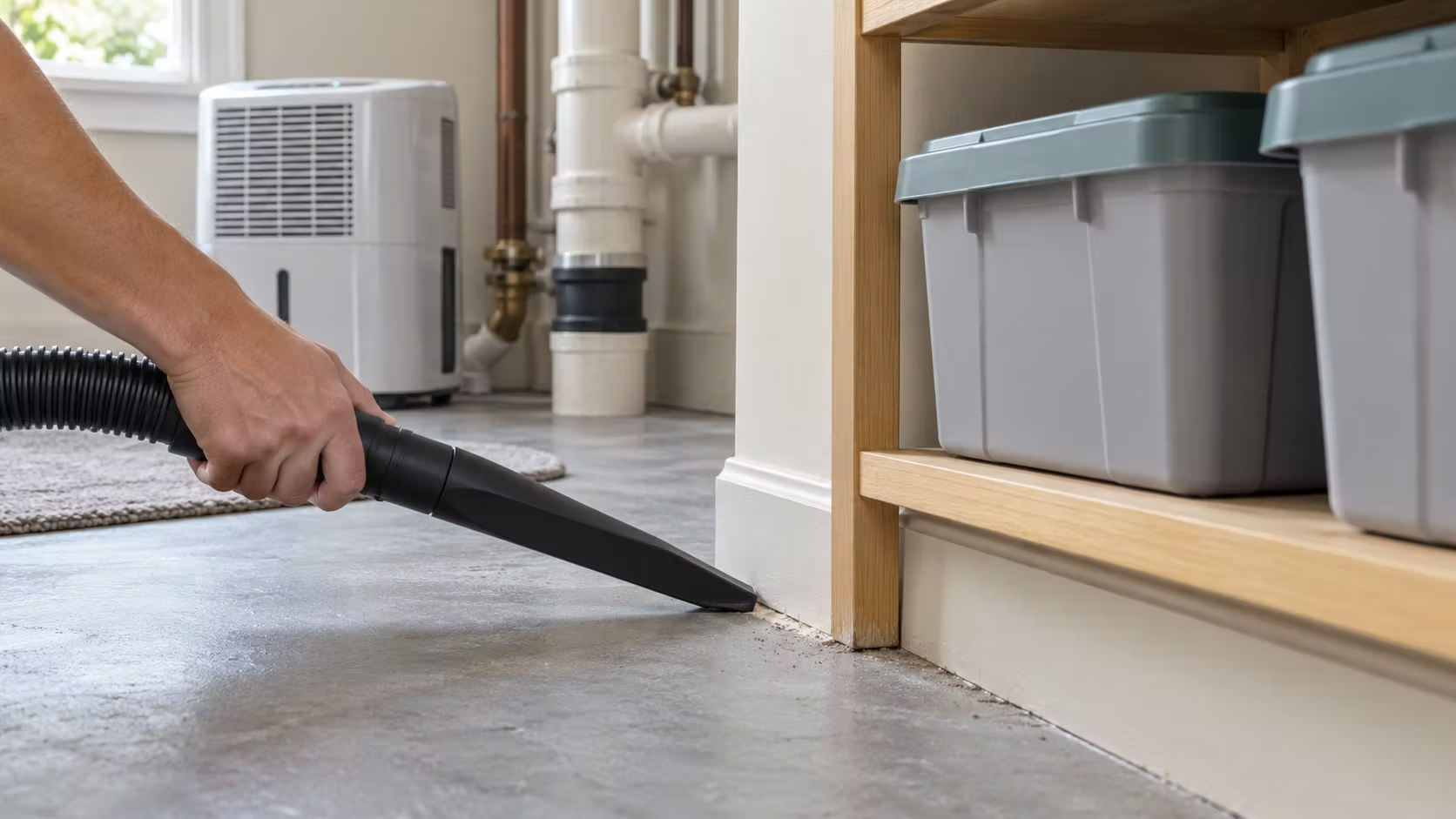
- Reduce food and shelter. Vacuum dust and debris along edges. Remove unnecessary cardboard and paper stacks, and keep dry foods in tightly sealed containers.
- Seal accessible gaps. Close cracks around baseboards and pipe penetrations. Leave appliance ventilation openings clear.
- Review the pattern. Recurring catches, activity in several rooms or continuing damage warrant a closer inspection.
For a more detailed prevention routine, read our guide to getting rid of silverfish. If activity continues, our silverfish control service in Vancouver covers inspection, targeted treatment and prevention recommendations.
In condos or rental buildings, report recurring activity to the building manager. Our property management pest control services support coordinated assessments and monitoring.
If using a pesticide, choose a product labelled for the pest and intended location, and follow its directions. Keep treatments away from food and heed restrictions around heat sources. Avoid relying on repeated surface spraying while leaving hiding places and favourable conditions untreated.
Conclusion
For silverfish vs firebrat identification, start with markings and temperature clues: shiny silver suggests common silverfish, while a mottled insect near a heat source may be a firebrat. Confirm with a clear photo or specimen, then address the conditions supporting activity.
If sightings continue in your Vancouver or Lower Mainland property, contact Phantom Pest Control with a photo and the location where you found the insect to discuss the next step.
Frequently Asked Questions
1. Can Silverfish and Firebrats Live in the Same House?
Yes. A house can provide both damp storage areas suitable for silverfish and hotter spaces suitable for firebrats. Finding one species does not establish that the other is present; identify each specimen separately.
2. Can Silverfish or Firebrats Fly?
No. Neither has wings. They move by running, often quickly into cracks or beneath objects when disturbed. A winged insect is a different pest.
3. Does Finding One Mean an Infestation?
No. One sighting does not establish a large population. Repeated sightings, multiple trap catches or continuing damage provide stronger reasons to investigate. Start by inspecting and monitoring the area.