The main signs of silverfish infestation are repeated sightings of live silverfish at night, tiny dark droppings, shed skins and loose silvery scales, irregular holes or scraped patches on paper and fabric, and yellowish or brownish stains near those areas. One clue on its own proves very little. Live insects turning up again and again in the same damp spot are the strongest evidence that activity is ongoing. Old damage, a faint stain or a single sighting is a reason to look closer, not proof of an infestation.
This guide explains what each sign looks like, where to check and how to confirm whether silverfish are still active. If you have already confirmed ongoing activity, our silverfish control Vancouver service starts with an inspection to find the moisture and hiding places behind it.
On this page7 sections
What Does a Silverfish Look Like?
Identifying Features: Silvery Scales, Long Antennae and Three Tail Filaments
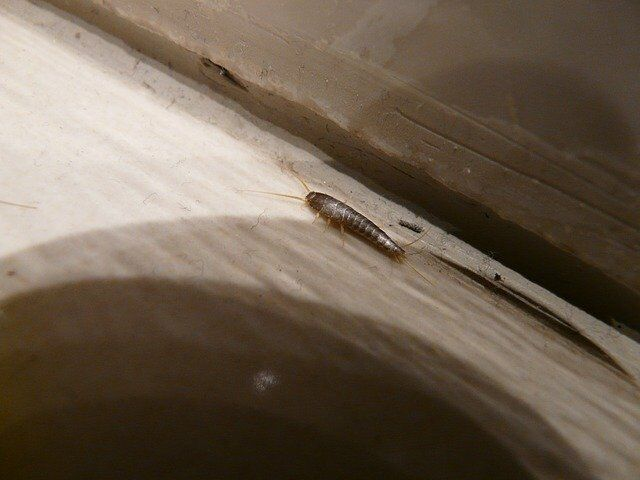
Adult silverfish are wingless, flattened insects usually a little over 1 cm long, and occasionally closer to 2 cm. The body is widest near the head and tapers toward the rear, a shape often compared to a carrot. Three features settle most identifications: a coat of shiny silver or pearl grey scales, two long antennae at the front, and three long, thin filaments at the tail.
They move quickly with a wriggling motion that looks a little like a swimming fish, and they tend to run for cover when a light comes on. Young silverfish look like small, pale versions of the adults. The very smallest have not yet developed scales.
Silverfish vs. Firebrats and Other Household Insects
Firebrats share the same body shape, long antennae and three tail filaments, but they are mottled grey or brown rather than silvery. They also favour different conditions. Silverfish generally prefer damp areas at ordinary room temperatures, while firebrats look for much warmer spots near furnaces, water heaters, ovens and hot pipes. Where you find the insect is a useful clue rather than a firm test, because both can turn up elsewhere. Our comparison of firebrat vs silverfish covers the differences in more detail.
House centipedes are sometimes mistaken for silverfish, but they have many long legs running the length of the body. Earwigs carry a pair of pincers at the rear, and young cockroaches have short tail parts instead of three long filaments. If you can catch one insect and look at it closely, those features usually settle the question.
Five Common Signs of Silverfish Infestation
Each sign below comes with a limit, because droppings, shed skins, damage and stains are small, easy to confuse with other things, and can be years old.
Repeated Sightings of Live Silverfish at Night
Silverfish hide during the day and come out to feed at night. You are most likely to see one when you switch on a bathroom or basement light late in the evening, or when you move boxes and papers that have not been touched for a while. They also get stuck in sinks and tubs, where the smooth sides make climbing out difficult.
Live insects are the most direct evidence you can find. Sightings that repeat over days or weeks in the same area point to activity that is ongoing nearby. The limit is that one sighting can be a single insect that arrived in a box of books or with stored belongings, and a quiet day proves nothing because they are rarely out in daylight.
Tiny Brown or Dark Droppings
Silverfish droppings are very small specks, light to dark brown, that are easy to overlook. Look on shelves, inside drawers, along the edges of stored boxes, between book pages and on paper close to feeding damage.
This is one of the hardest signs to read. Specks this small look a lot like dust, soil, other insect droppings or spots of mould. On their own they do not confirm silverfish. They carry more weight when they sit right beside fresh damage or loose silvery scales.
Shed Skins and Loose Scales
Most insects stop moulting once they reach adult size. Silverfish keep moulting throughout their lives, so they leave behind thin cast skins in the places they shelter. They also lose their delicate scales, which can look like fine glittering dust on a shelf or the floor of a box.
Check hiding spots and the area around damaged items, such as the backs of shelves, the insides of boxes and along baseboards. Shed skins are fragile, easy to vacuum up without noticing, and easy to confuse with debris from other insects. Scales found next to damaged paper or fabric are a better clue than a skin found alone.
Irregular Holes, Ragged Edges and Scraped Surfaces on Belongings
Silverfish have weak mouthparts. Instead of chewing cleanly through material, they scrape at it. On paper and fabric, feeding often starts in one area and spreads as small, unconnected holes with ragged edges. You may also see thin patches where the surface has been grazed away.
They go for materials containing starch, sugar, glue or paste: book bindings, wallpaper, cardboard, envelopes and fabrics such as cotton, linen, silk and starched clothing. Damage tells you something fed there at some point. It does not tell you when. Clothes moths, carpet beetles and ordinary wear can leave similar marks, and heavy damage usually takes a large population over a long period, so a few holes in an old box may be historical.
Yellowish Stains on Paper and Fabrics
Silverfish can stain paper, books, fabric and wallpaper. Discoloured patches, which can look yellowish or brownish, sometimes appear around feeding areas, partly from droppings and partly from fungi associated with the damage.
Yellowing has many other causes, though. Age, sunlight, water marks, breaking down glue and mould all discolour paper and fabric. Treat a yellowish stain as a reason to look for live insects, droppings or scales nearby, never as proof of silverfish by itself.
Where to Look for Silverfish Activity
Silverfish need moisture and shelter, and they feed on starchy materials. Check the places where those three overlap. A flashlight and a late evening check make the job easier.
Bathrooms, Kitchens, Basements and Plumbing Gaps
- Under bathroom and kitchen sinks, especially where pipes enter the wall
- Around tubs, shower stalls and toilets
- Laundry and utility rooms
- Basements and storage rooms with damp walls or condensation
- Gaps behind baseboards and around window and door frames
- Pipes that sweat and anywhere with a slow leak
Silverfish can move along pipes, so sightings around plumbing are worth tracing back to a moisture source. Our guide to silverfish in bathroom spaces explains why they gather there. If you think you are seeing firebrats, check near the furnace, water heater and warm pipes as well.
Bookshelves, Closets, Cardboard Boxes and Stored Papers
- Bookcases, particularly older books with glued bindings
- Closet shelves and stored clothing, especially starched items
- Cardboard boxes in basements, garages and storage lockers
- Piles of newspapers, magazines, files and mail
- Wallpaper seams where paste is exposed
- Pantry shelves holding flour, cereal and other dry foods
Stored boxes deserve extra attention. Silverfish and their eggs can come into a home inside cardboard cartons, old books and papers, and once inside, a quiet, undisturbed box gives them shelter and food in one place.
How to Confirm an Active Infestation
The goal is to work out whether silverfish are there now, and roughly where. Two kinds of evidence answer that: live insects you catch or record over time, and fresh signs that keep appearing after you clean.
Does Seeing One Silverfish Mean You Have an Infestation?
Not necessarily. A single silverfish may have arrived with a box, a used book or a piece of furniture. There is no set number of sightings that separates a stray insect from an infestation, so be wary of any source that gives one.
What changes the picture is a pattern. Several sightings over a few weeks in the same room or along the same pipe run suggest a population living nearby. So do live insects in more than one area, or fresh droppings, scales or damage close to where you saw them. If you see one, note the date, time and spot, check the surrounding area with a flashlight, and set a trap there.
Use Sticky Traps and Track Sightings to Locate Activity
Monitoring shows you where activity is concentrated and whether it continues.
- Place sticky traps, such as those sold for cockroaches, along walls, in corners and under sinks where you have seen insects or signs. Silverfish tend to travel along edges.
- Try a small, clean glass jar with masking tape wrapped around the outside, a method Health Canada describes. Silverfish climb the tape, drop in and cannot climb the smooth glass to get out.
- Check traps every few days and record what you find, where and when.
- Keep a short log of any sightings, including the room and the time.
Traps that keep catching silverfish in one area point to a nearby hiding spot and usually a moisture source. Traps that stay empty, together with no new sightings, suggest activity is low in that spot, though not necessarily gone. How long it takes to get a clear picture depends on the home, the season and how many insects are present.
Distinguish Fresh Activity from Old Damage and Unrelated Stains
A simple test is to clean, record and watch.
- Vacuum or wipe the area so old droppings, scales and debris are gone.
- Photograph any existing damage or stains so you have a record to compare against.
- Recheck over the following weeks. New specks, scales or skins on a cleaned surface point to current activity. Damage or stains that never change are more likely to be old.
Keep other explanations in mind. Yellowing on old paper, water marks, mould and damage from other insects can all look like silverfish signs. When the evidence is unclear, a trapped insect is the most reliable way to confirm what you are dealing with.
What to Do After Finding Silverfish
Confirming activity is the first step. What comes next should focus on the conditions that let silverfish settle in.
Address Moisture, Remove Food Sources and Protect Stored Belongings
- Fix leaking pipes and taps, and insulate pipes that sweat.
- Run bathroom fans during and after showers, and use a dehumidifier in damp basements and storage areas.
- Vacuum regularly, including shelves, closets and the space under sinks.
- Move books, papers and clothing out of cardboard and into sealed plastic containers.
These steps reduce the conditions silverfish depend on. For a fuller walkthrough of removal and prevention options, see our guide on how to get rid of silverfish.
When Persistent Sightings or Damage Warrant Professional Inspection
An inspection is worth considering when:
- sightings continue after you have dealt with obvious moisture problems
- traps keep catching silverfish in several rooms
- you keep finding fresh damage to books, documents, clothing or other belongings you care about
- you live in an apartment or condo and suspect activity is moving through shared walls or plumbing
- you cannot work out where the insects are coming from
A good inspection focuses on where they shelter and what keeps the area damp, so that any treatment is matched to the source rather than applied everywhere.
Frequently Asked Questions
Can You See Silverfish Eggs with the Naked Eye?
Only just. Health Canada describes silverfish eggs as whitish, oval and about 0.8 mm long. Females lay them in cracks and crevices, on cloth, or buried in food or dust, so they are rarely found. Most homeowners confirm silverfish through live insects and traps rather than eggs.
Do Silverfish Mean Your Home Is Dirty?
No. Silverfish are drawn mainly by moisture and shelter. Clean homes get them too, especially where there are damp bathrooms, basements or plumbing leaks, and they can arrive in boxes, old books or used furniture. Regular vacuuming still helps, because dust, crumbs and debris are part of what they eat.
Does Finding Silverfish Mean You Have Mould?
Not on its own. Silverfish point to moisture, and the same damp conditions can also support mould, so it is worth checking. Some fungi are part of their diet. Seeing silverfish does not prove mould is present, though, and finding none does not rule it out. If you can see or smell mould, deal with the moisture behind it.
Can Silverfish Bite or Spread Disease?
University extension sources state that silverfish are not linked to the spread of disease, and their weak mouthparts are made for scraping surfaces rather than biting. Health Canada describes them as harmless to people. The practical concern is damage to books, papers, clothing and stored items. If you have a health concern such as an allergy, speak with a health professional.
Conclusion
The signs of silverfish infestation are easiest to read together. Repeated night sightings and insects caught in traps tell you activity is current. Start by tracking where the insects appear, then deal with the moisture that keeps them there.
If sightings continue or you would like a second opinion, Phantom Pest Control can inspect your home and recommend next steps. Call 604 771 0404.