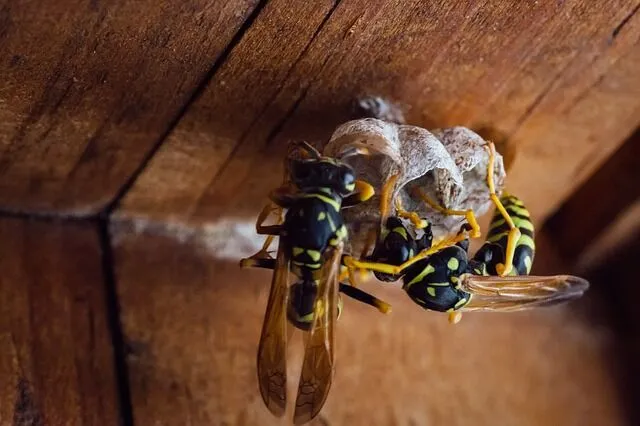
Getting rid of wasp nests safely starts with a decision, not a spray can. A small, exposed nest well away from doors and paths can often be left alone until the colony dies off. A nest near where people walk, sit or play usually needs treatment. Anything high up, hidden in a wall, roof or the ground, or close to someone with a sting allergy is a job for a professional.
This guide covers how to tell whether a nest is active, when to act and when to wait, and the mistakes that often lead to stings. If you would rather hand the job over, our wasp control Vancouver page explains how we handle nests around homes.
On this page6 sections
How to Identify an Active Wasp Nest
An active nest has wasps flying in and out of one entrance in a steady line. Watch from a safe distance for a few minutes on a warm, dry afternoon, when traffic is usually highest.
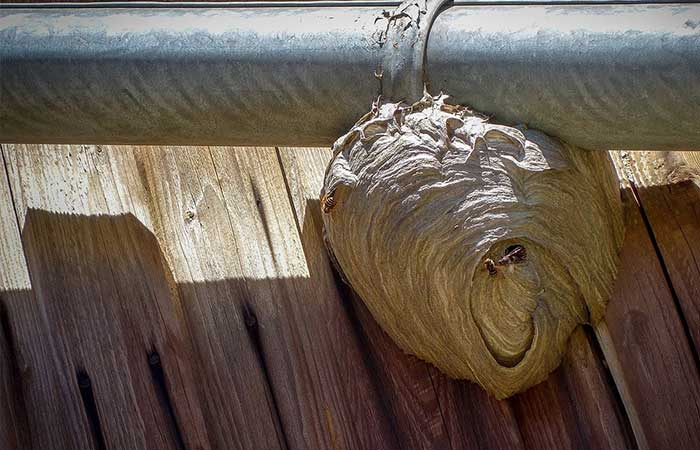
- Exposed paper nests hang under eaves, deck railings, fences and branches. They are grey and papery. Some are open combs with visible cells, others are round with a single opening near the bottom.
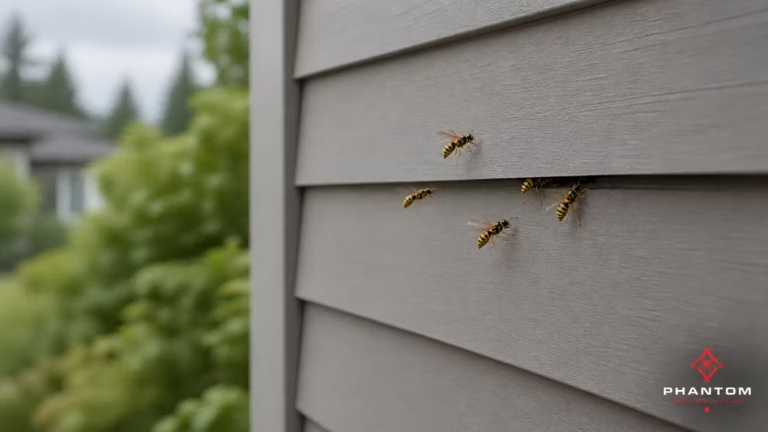
- Concealed nests sit inside wall voids, attics, roof spaces, sheds and gaps behind siding. You usually see only wasps entering a crack or hole, not the nest itself.
- Ground nests often use old rodent burrows. You may notice wasps going in and out of a small hole in the lawn or a garden bed.
A short check that shows no wasps does not prove a nest is empty. Activity drops in cool, wet weather, early in the morning and at dusk, and a nest built inside a wall can hold far more wasps than the entrance suggests. Watch more than once, at different times of day, before deciding a nest is inactive.

Should You Remove a Wasp Nest or Leave It Alone?
Leaving a nest alone is often reasonable. Wasps help control other insects, and most common nests last only one season. Many paper wasp nests stay fairly small, and a nest in a quiet corner of the yard may never cause a problem.
Leaving it can make sense when:
- the nest is small and exposed, away from doors, windows, paths, decks and play areas
- nobody in the household has a known sting allergy
- it is late in the season and the colony will soon decline
Act sooner when:
- the nest is over a doorway, beside a window, in a play area or near where people eat
- wasps are getting inside the home
- the nest is growing quickly, or there is more than one
- anyone nearby has had a serious reaction to a sting
How to Get Rid of a Wasp Nest
The right approach depends on where the nest is, how large and active it is, and who is at risk if something goes wrong.
DIY Treatment: When Is It Appropriate?
DIY treatment is only worth considering for a small nest that is exposed, easy to reach from the ground, and away from anyone with a sting allergy. Even then, there is a real chance of being stung.
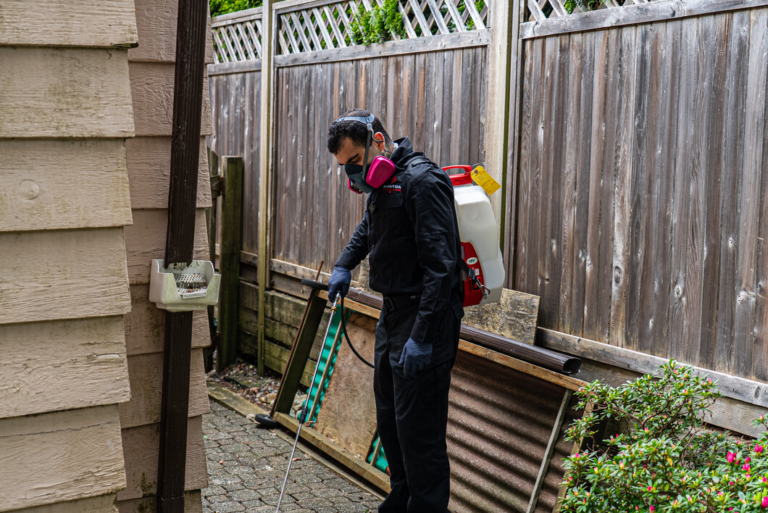
If you decide to go ahead, use only a product registered in Canada and labelled for wasp nests, and follow the label exactly. The label is the legal guide to how, where and when a product can be used, including the protective equipment it calls for. Never make your own mixtures or use a product in a way the label does not allow.
Wasps are most likely to be inside the nest at night, but they can still sting after dark. Cover your skin, protect your eyes and keep a clear route to walk away. The University of California integrated pest management guide also notes that treatment may not reach every wasp, especially in ground nests that extend well beyond the entrance.
If you are unsure, read our article on the risks of removing a wasp nest yourself.
When to Hire a Pest Control Professional
Professional help is the safer choice when:
- the nest is above head height or needs a ladder to reach
- the nest is hidden inside a wall, attic, roof, soffit or behind siding
- the nest is in the ground in a lawn or garden that people use
- the nest is large or wasps are very active around it
- someone in the household is allergic to stings or has reacted badly before
- earlier attempts did not work and wasps are still coming and going
Concealed nests are the hardest to judge, because the visible entrance says little about the size of the colony inside. Our guide to a wasp nest under siding covers that situation in more detail, and our article on when a wasp infestation requires professional pest control explains the warning signs to watch for.

When to Remove the Nest After Treatment
A quieter nest is not necessarily a safe one. Some wasps may be away from the nest during treatment and return later, and others can still be alive and agitated the following day. Do not touch, knock down or break open a treated nest until you have watched it over several days and seen no activity at all.
Once a nest is clearly inactive, an exposed nest can be removed. A nest inside a wall or roof space is often left where it is once the colony is gone, because opening the structure can cause more damage than the old nest itself. A professional can advise on whether removal is needed.
Wasp Nest Removal Mistakes to Avoid
- Burning the nest. Paper nests catch fire easily, and flames can spread to siding, eaves, decks and plants.
- Flooding the nest. Pouring water on a nest or into a ground hole agitates the colony and rarely reaches every wasp. Water directed into walls or under siding can also damage the building.
- Hitting or knocking the nest down. Striking an active nest provokes a defensive response, and many wasps can sting at once.
- Blocking the entrance of an active nest. Sealing a hole in a wall or siding while the colony is still active can lead wasps to find another way out, which may be into the home. Wait until activity has stopped before closing any opening.
- Working from a ladder. A sudden sting or a cloud of wasps can cause a fall. A fall can cause serious injury.
How to Prevent Wasps from Nesting Again
Most wasp colonies last a single season. A queen that survived the winter starts a fresh nest each spring, and old nests are not reused. In mild winters, some yellowjacket colonies can carry on longer. That means an old, empty nest is not a threat in itself, but the conditions that attracted the last queen can attract the next one nearby.
- Check eaves, sheds, fences, deck railings and play structures for small starter nests in spring, when they are easiest to deal with.
- Seal gaps and cracks in siding, soffits and around vents and pipes once you are sure no colony is using them.
- Keep garbage and compost bins tightly covered, and clean up spilled food, pet food and fallen fruit.
- Keep screens on windows and doors in good repair.
- Fill or level old rodent burrows in the yard, which can be used as ground nest sites.
Conclusion
Getting rid of wasp nests comes down to location and risk. Leave small, out of the way nests alone where you safely can, treat only what you can reach from the ground with a properly labelled product, and leave hidden, high or large nests to a professional.
If a nest is in a difficult spot or you would rather not take the risk, Phantom Pest Control can inspect it and recommend next steps. FAQs
How Much Does Wasp Nest Removal Cost?
Cost depends on the nest. The main factors are where the nest is, how easy it is to reach, whether it is exposed or hidden inside the structure, how large and active it is, and whether more than one nest is involved. For an accurate figure, call us and describe where the nest is and what you are seeing.
Do Wasps Return to the Same Nest?
Generally, no. Common social wasps such as yellowjackets and paper wasps build a new nest each year, and an old nest is not reused. New queens can still choose a nearby spot, especially if the same shelter, food and entry gaps are available, so prevention is worth the effort.
Will a Wasp Nest Die Off on Its Own?
Usually, yes. Workers die off as the weather turns cold, and only mated queens survive the winter, away from the old nest. In a mild winter, some yellowjacket colonies can carry on longer. Until then the colony can keep growing, and late summer and early fall is often when wasps are most noticeable around food. If a nest is causing problems now, waiting may not be practical.