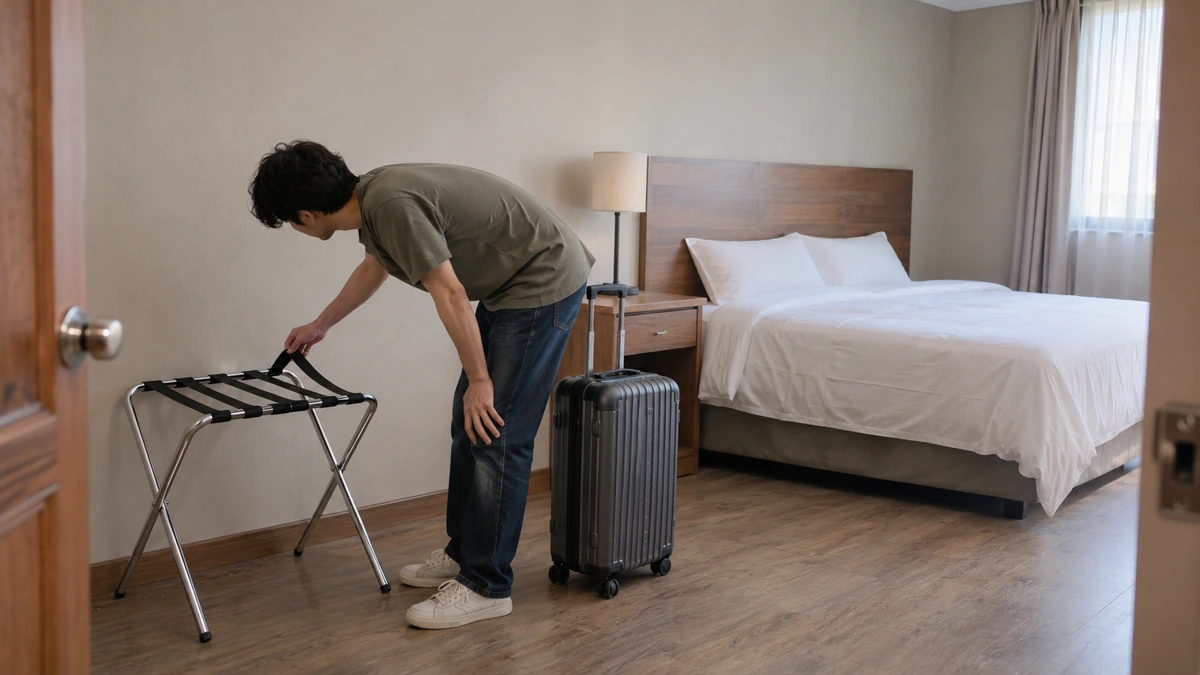
To check a hotel room for bed bugs, keep your suitcase closed and off the bed, ideally on a hard floor such as bathroom tile, then use your phone flashlight to look along the mattress seams, the box spring or bed base, the headboard and bed frame, and the luggage rack before you unpack. You’re looking for physical evidence: live insects, tiny pale eggs, shed skins and small dark spots. A careful look lowers the odds of a surprise, but it can’t certify a room as clear, because bed bugs hide in cracks and seams that a guest has no way to reach.
If a trip has already left you worried about your own home, our page on bed bug control explains how inspection and treatment work for homes across the Lower Mainland.
On this page7 sections
Before you unpack
The aim of the first few minutes is to keep your belongings in one contained spot while you look. If you do find something, nothing has been spread across drawers, chairs and the bed yet.
- Leave your suitcase closed on a hard, bare surface away from the bed and upholstered furniture. Health Canada’s travel guidance suggests a hard floor such as bathroom tile, and Texas A&M AgriLife Extension also mentions the bathtub, whose smooth sides are hard for bed bugs to climb. Treat this as a holding spot that lowers risk, not a guaranteed safe zone.
- Switch on your phone flashlight. Room lighting rarely reaches into seams, and a beam held at a low angle makes small spots and pale skins easier to pick out.
- Check the luggage rack before using it, especially where the straps wrap around the bars. Entomologists at North Carolina State University note these stands aren’t bed bug proof, but a rack that passes inspection keeps your bag off soft surfaces for the rest of the stay. If it stands on its own, pull it a little away from the wall and bed.
- Work through the bed and nearby furniture using the checklist below, then decide whether to open the suitcase.
This is a guest’s check: lifting bedding, looking into seams and shining a light into gaps you can see. A professional inspection goes further, into furniture voids, wall junctions and fixtures. Don’t dismantle furniture, shift heavy pieces or open electrical fittings. That work belongs to the hotel and its pest control provider.
Signs of bed bugs
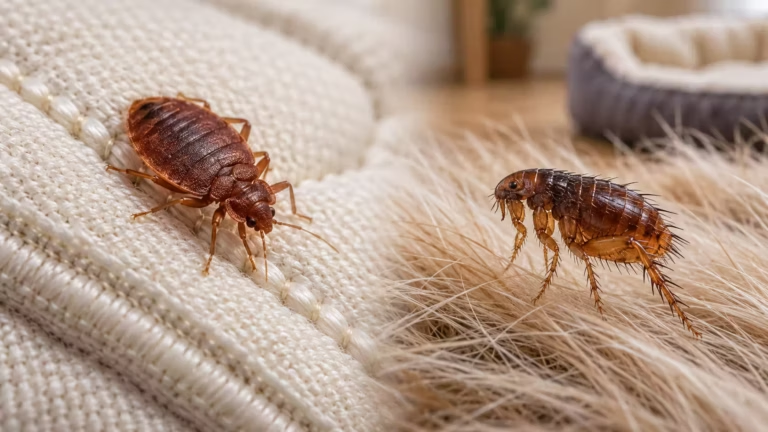
The evidence worth acting on is physical, and it usually turns up where people sleep. Health Canada describes adult bed bugs as flat, oval, wingless insects up to about 10 mm long, brown before feeding and redder afterwards, roughly the size of an apple seed. Nymphs, the young stage, start at about 1.5 mm and are paler. Eggs are white, about 1 mm long and very hard to see on most surfaces.
The rest is what bed bugs leave behind. Shed skins are pale, yellowish husks left as nymphs grow. Fecal spots are small dark dots, about the size of a printed period, which the U.S. Environmental Protection Agency says can bleed into fabric like ink from a marker. Rusty or reddish smears can come from a bed bug crushed after feeding.
Not every finding carries the same weight, as this comparison shows.
| What you find | How much it tells you | Sensible next step |
|---|---|---|
| A live insect that matches the description | Strong, if the identification is right | Photograph it, stop unpacking and tell the front desk |
| Shed skins or eggs in seams | Strong, especially with spotting nearby | Photograph, report and keep luggage contained |
| Clusters of small dark spots along seams or joints | Moderate, since other things leave spots too | Look nearby for skins or insects, then report |
| One rusty stain on a sheet | Weak, with many ordinary causes | Keep checking; on its own it settles nothing |
| Itchy marks on your skin, or a musty smell | Weak, and can’t identify the insect or where you met it | Inspect the bed and rely on what you can see |
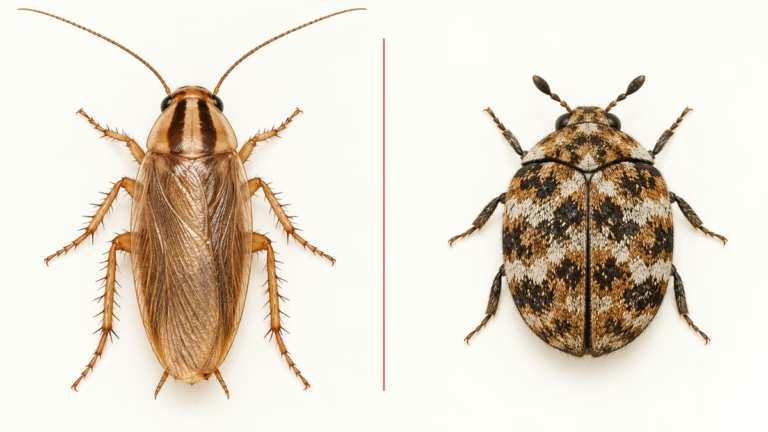
Lookalikes are common. The North Carolina State entomologists point out that spotting doesn’t necessarily mean bed bug droppings, or a current problem, and small beetles and their larvae are often mistaken for bed bugs; our comparison of bed bugs vs carpet beetles covers one frequent mix up. The EPA calls bites a poor indicator, because they can resemble other insect bites, rashes or hives, and some people don’t react at all. Marks also can’t tell you where an exposure happened. For the fuller list of signs of bed bugs in a home, see our separate guide.
Hotel room inspection checklist
When you check a hotel room for bed bugs, work from the bed outward. Texas A&M AgriLife Extension describes bed bugs as typically living within about 1.5 metres (5 feet) of where people sleep, spreading farther as numbers grow. No particular number of minutes makes a check complete; a slow look at the right places is worth more than a quick sweep of the whole room.
Mattress seams and box spring
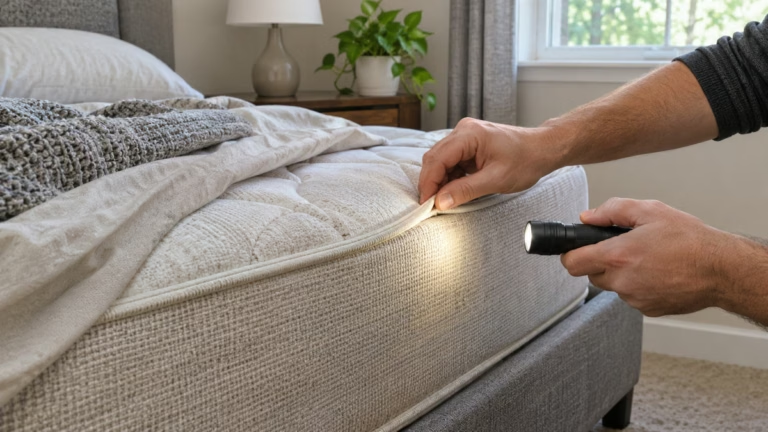
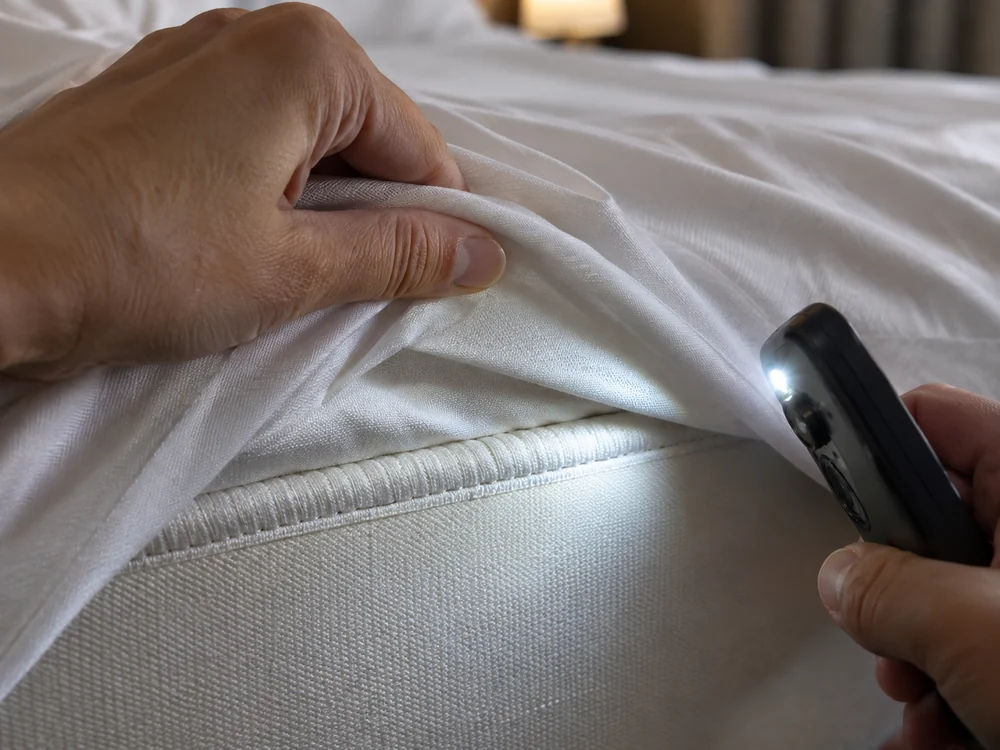
Begin at the head of the bed. Pull the sheets and any mattress protector back one corner at a time, just far enough to expose the top seam and the piping, the rolled fabric edge that runs around the mattress. Fold the bedding back onto the bed rather than dropping it on the floor.
- Run your light slowly along the seams and piping, then into folds, tufts and corners.
- Check the fabric label or tag, where a flat insect can tuck in.
- If a corner lifts easily, raise it slightly to see the underside edge and the top of the box spring.
- Look along the box spring’s seams and corners, and along the bed legs.
The box spring or bed base is separate from the mattress, and hotel beds vary. Some sit on a fabric covered box spring, others on a solid platform or drawer base, often hidden by a bed skirt. Check what you can see. If the mattress is heavy or fixed in place, leave it, and never tear a cover, unzip an encasement or open a sealed underside.
Bed frame and headboard
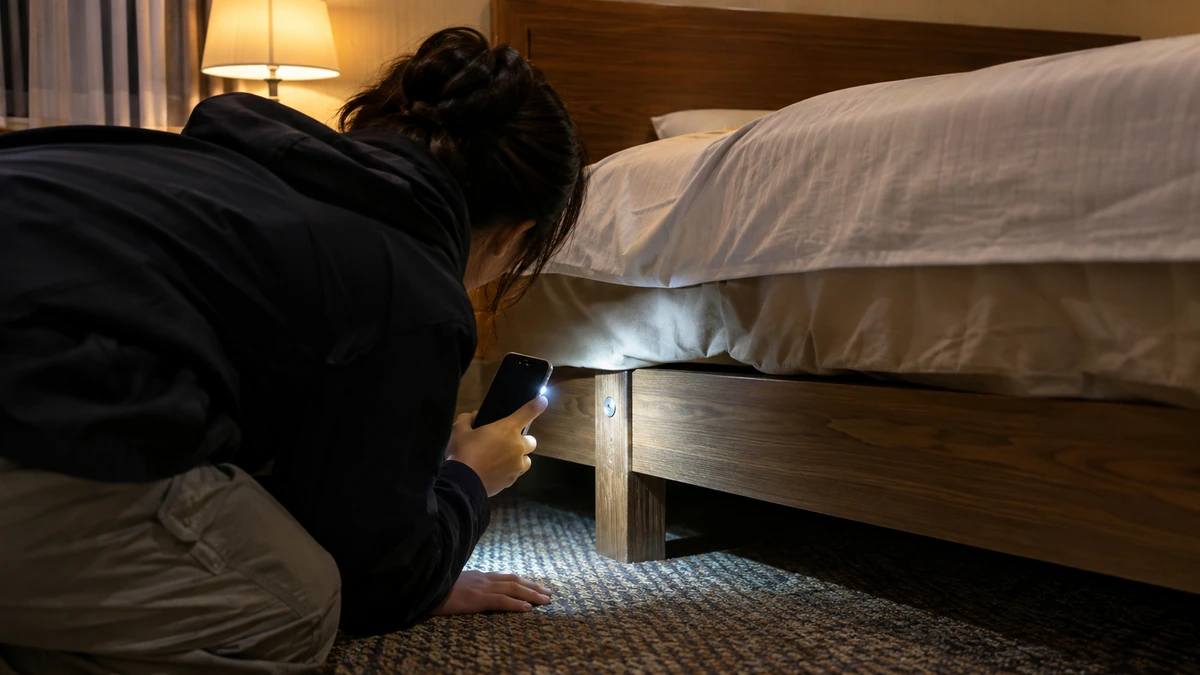
The EPA lists cracks in the bed frame and headboard among the usual hiding places. Shine your light along joints where frame pieces meet, into screw recesses, and along any visible gap between the headboard and the wall.
Many hotel headboards are bolted to the wall or built in, which leaves areas behind them you simply can’t see. That’s one reason a clean look isn’t the same as a clean result. Don’t detach a headboard, pull a frame apart or disturb wall mounted lights.
Nearby furniture and luggage rack
After the bed, check the pieces closest to it. A desk across the room is a much less likely spot than these:
- Upholstered chairs or a sofa near the bed: seams, piping and the crease where cushions meet the frame.
- Bedside tables: drawer joints and corners, and under items such as a lamp base.
- Luggage rack: the strap ends where they wrap around the bars, and the frame joints.
- Closet: cracks and corners where you’d put bags or shoes.
Pulling apart every surface adds little and risks damage. If these spots look clear, you’ve done a sensible guest check.
What to do if you find bed bugs
A finding is a reason to stop and report, not to start treating the room yourself. A suspected sign isn’t a confirmed identification, and the hotel or its pest control provider is in the best position to confirm it.
- Stop unpacking. Leave the suitcase closed and keep your other belongings together.
- Photograph the insect or evidence, close and in focus, with a coin beside it for scale if you can. Avoid crushing a loose insect across the bedding.
- Tell the front desk or manager, show them the photo and ask how they handle bed bug reports.
- Keep exposed and unexposed items apart where practical. Anything that touched the bed stays away from your closed bag; a large sealable plastic bag helps. Worn clothing counts too: the answer to can bed bugs live in clothes is yes, so bag anything that sat on or near the bed.
- Ask about another room or other accommodation, and how the hotel will check the room you’re leaving.
A room change needs care. Health Canada advises that a new room should not be next to the one with possible activity, and extension entomologists note bed bugs can spread between rooms as an infestation grows. Another room isn’t automatically a clear room, so repeat your inspection before unpacking there. Alberta’s provincial health guidance notes the hotel may want to look over your belongings before you move. Refunds and compensation depend on each hotel’s own policies.
Skip sprays, foggers, rubbing alcohol and improvised heat such as hair dryers. None of them reliably reaches insects hidden in seams, and alcohol and heat sources add a fire risk.
Preventing bed bugs from coming home
Most trips need only routine habits. Extra steps make sense when you found evidence, moved rooms because of it, or later learned a room you used had activity. Treating everything you own after every hotel stay isn’t necessary.
During any stay, keep luggage on the checked rack or a hard surface, keep clothing in the suitcase or sealed bags rather than drawers, and leave shoes in the open instead of under the bed. After an uneventful trip, unpack in one spot on a hard floor away from bedrooms and sofas, check seams, pockets and zippers, put clothes straight into the laundry and store the empty case away from where people sleep.
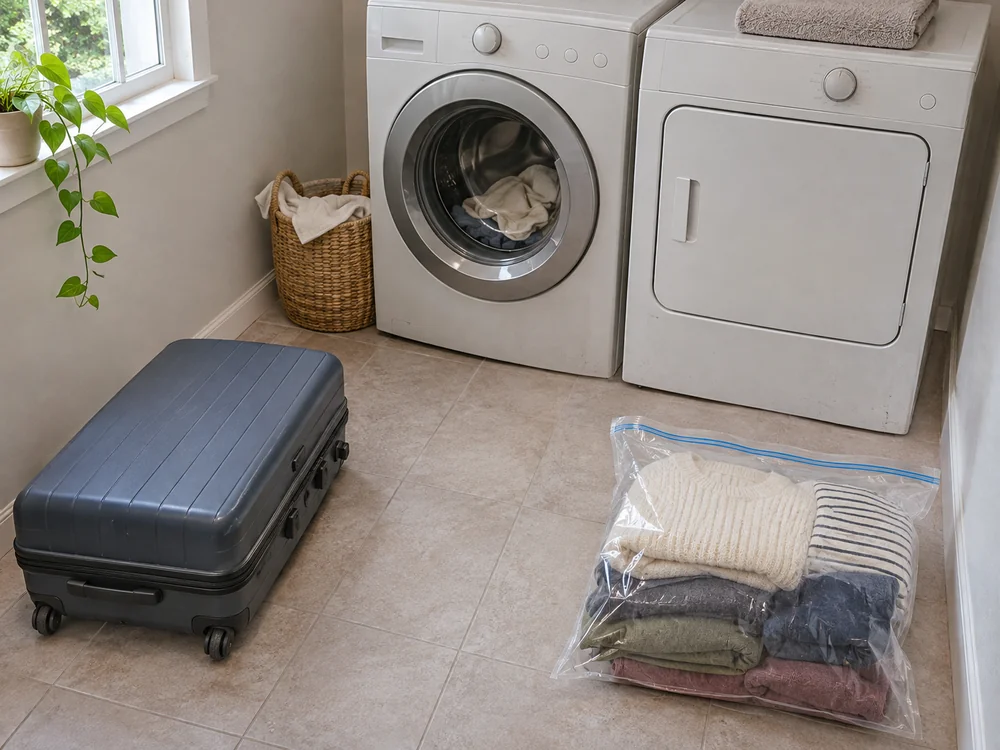
After a suspected exposure, be more deliberate. Keep the suitcase closed and out of living areas, for example in a garage or laundry room with a hard floor, and move clothing from it into sealed plastic bags, then from the bags into the machine. Health Canada recommends washing clothing and fabric items in hot water and putting items that can’t be washed in the dryer on the highest heat for 30 minutes. HealthLinkBC gives similar advice, with 30 minutes or more for small items that can’t go in the wash. Use the hottest setting each fabric label allows: wool, delicates and some synthetics may not tolerate high heat, and a packed or damp load takes longer to heat through, so dry smaller loads and extend the time when needed.
Don’t rely on washing alone, since the guidance pairs it with a hot dryer. A few hours of sun or a week in the car won’t reliably deal with bed bugs either; Health Canada says they can survive several weeks to a year and a half without feeding.
Shoes, electronics, books and toiletry bags have no single fix. Inspect them in good light, wipe or vacuum smooth surfaces and keep anything you can’t check sealed in a bag until you get advice. Garments that can’t be washed or dried may need dry cleaning. Vacuum the suitcase, then seal the vacuum bag or dust cup contents in a garbage bag and throw it out right away.
If you notice signs at home after a trip, identification comes next. Health Canada notes bites can take up to 14 days to appear and some people never react, so look for physical evidence rather than waiting on marks. Phantom offers K9 bed bug detection for homes and managed properties in Vancouver and the Lower Mainland, and its bed bug service starts with detection before any treatment is planned.
Conclusion: Check before settling in
Inspect before you unpack, act on evidence you can see and photograph, and accept that a quiet room isn’t proof of a clear one. That keeps your response in proportion: no panic over one stain, and no shrugging off a live insect. If you’re home in Metro Vancouver, the Lower Mainland or the Fraser Valley and something from a trip has you uneasy, Phantom Pest Control can inspect your home and identify what’s there before anything is treated.
Frequently asked questions
1. Can clean hotels have bed bugs?
Yes. Bed bugs feed on blood, not dirt, and guests can carry them in on luggage and clothing in ways management can’t fully prevent. A spotless room tells you about the housekeeping, not about bed bugs, and the room rate works the same way.
2. Can you spot bed bugs during the day?
Often, yes. Bed bugs are mostly active at night and spend the day hidden in seams and cracks, so you’re unlikely to see them walking around, but a daytime check can still find hiding insects, eggs, shed skins and spotting. You don’t need to catch them moving for an inspection to be worthwhile.
3. Does finding no signs mean the room is clear?
No. A guest’s check covers only what can be seen safely, eggs are hard to spot, and a small infestation can sit behind a headboard or inside furniture. A clean result lowers the odds, so keep your bag contained and check it again when you get home.