
Mice get into an attic by climbing the outside of the house to a gap along the roofline, or by travelling up through the walls after getting in near the ground. In almost every case the opening was already there. A house mouse can fit through a gap about the width of a pencil, roughly 6 mm, and most houses have a few of those near the roof. So when someone asks how do mice get into attic spaces, the honest answer is that they find an existing hole and use it. If you are already hearing scratching overhead, our page on rodent control in Vancouver explains how we find and close those gaps.
On this page7 sections
Common Attic Entry Points
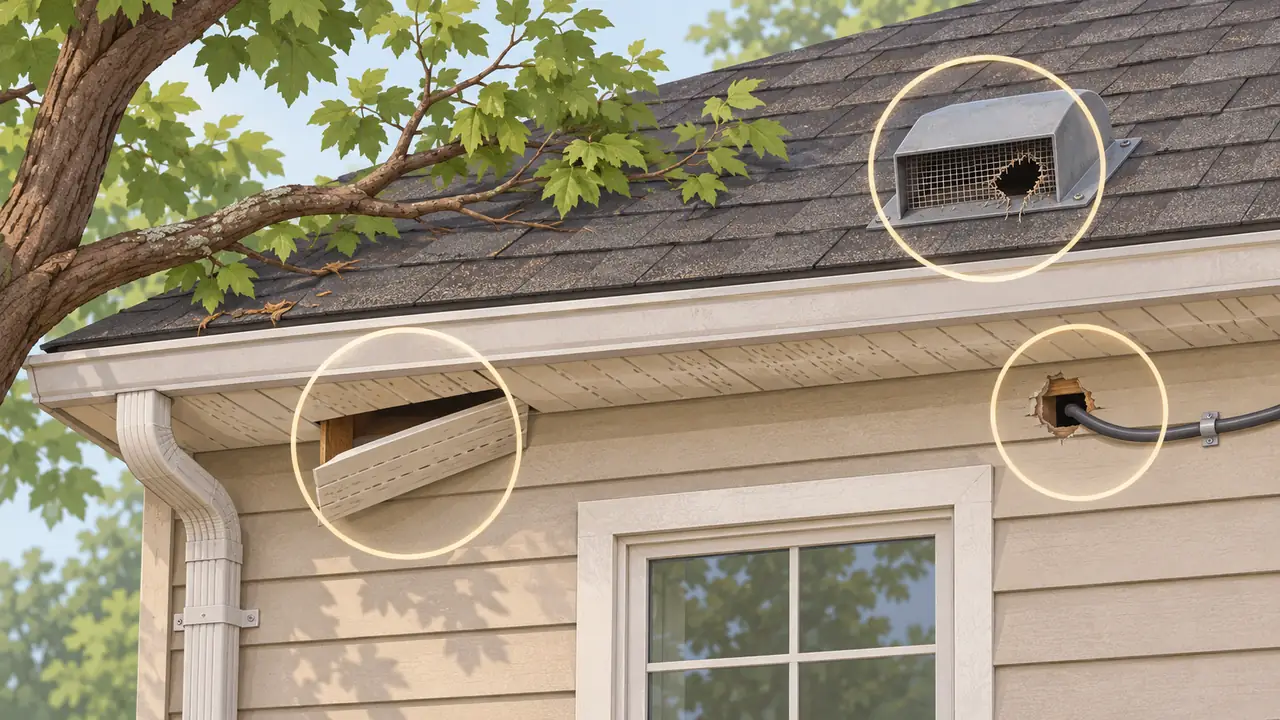
Mice that reach the attic come in at one of three places: the roofline, an opening built into the house for air or utilities, or a low gap that connects to the wall cavities. Mice climb stucco, brick and wood siding with ease, and they use downspouts, overhanging branches and cables as ladders. Height alone does not protect an attic.
Roofline Gaps and Damaged Soffits
The soffit is the panel on the underside of the roof overhang, and it is where we find attic entry points most often. Panels shift and pull away from the wall, boards shrink, and the joint where the soffit meets the fascia opens up over time. Look closely where a lower roof, such as a garage or an addition, meets the main house. These joints leave a small void behind the trim that is hard to see from the ground but easy for a mouse to reach from the lower roof.
Wet weather adds to the problem. Gutters that overflow keep the fascia board damp, and after a few Vancouver winters that wood can soften. Mice will chew a soft edge until it becomes a usable hole.
Unscreened Vents and Utility Openings
Attics need ventilation, so roof vents, gable vents and soffit vents are openings by design. When the screen behind a vent tears, rusts or was never installed, the vent becomes a door. Thin insect screen is not much of a barrier either; a mouse can chew through it.
Utility openings work the same way. Every plumbing stack, exhaust duct and flue that passes through the roof sits in a hole cut slightly larger than the pipe, and once the flashing or sealant cracks, that leftover space is often big enough. Phone, cable and power lines that enter near the eaves are a common route too. The installer drills a hole wider than the wire, and a mouse can climb along that same wire to reach it.
Ground Level Openings Leading Through Walls
Not every attic mouse comes in at the roof. Many enter low, through a foundation crack, a crawl space vent, a gap under the garage door or the space around a gas line or dryer vent. From there they climb inside the wall cavities and along pipes and wiring until they reach the attic. This is why an attic problem can start at ground level, and why sealing the roofline alone sometimes fails. Our guide on how to prevent mice from entering your home covers these lower entry points in detail.
Why Mice Nest in Attics
An attic gives a mouse shelter, warmth and very little disturbance. Insulation is ready made nesting material, stored boxes and old fabric add more, and most people go into their attic only a few times a year. A nest can grow for weeks before anyone notices the sound.
Activity usually rises in the fall. As nights turn cold and wet, mice look for a dry spot close to food, and warm air rising through the house makes the attic one of the most comfortable places to be. Our article on rodents in winter explains this seasonal pattern.
Finding Active Mouse Entry Points
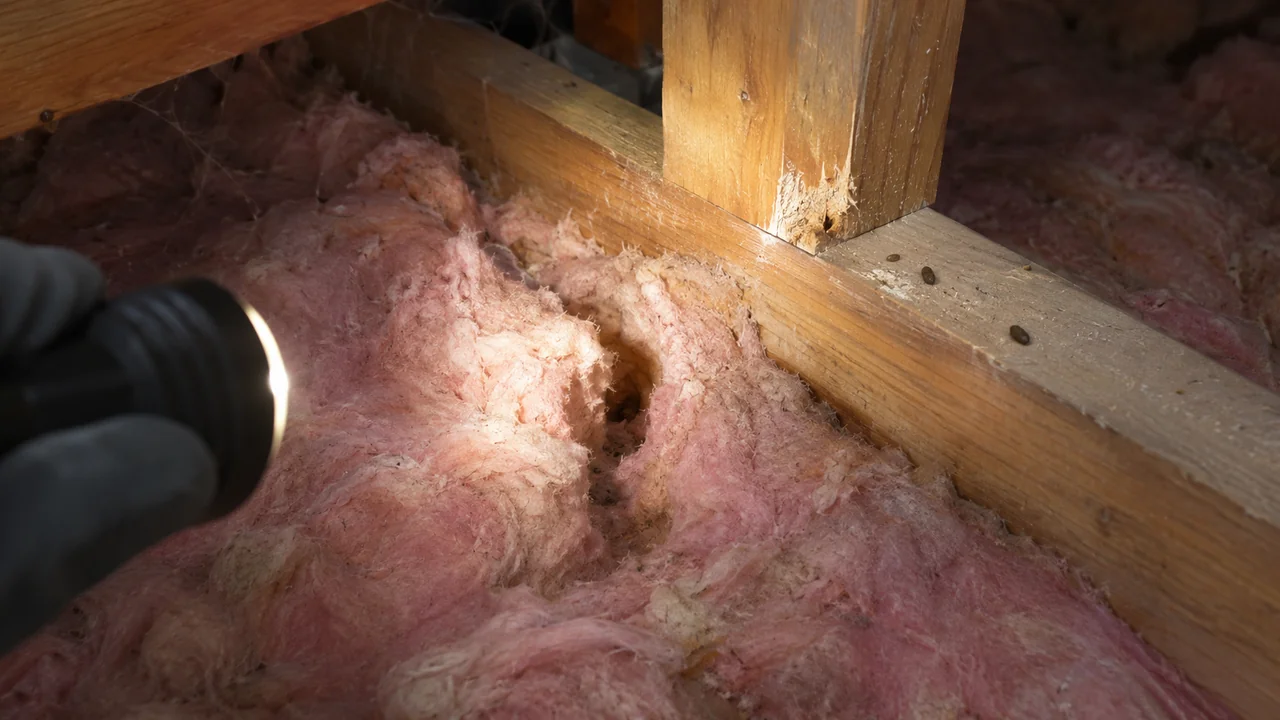
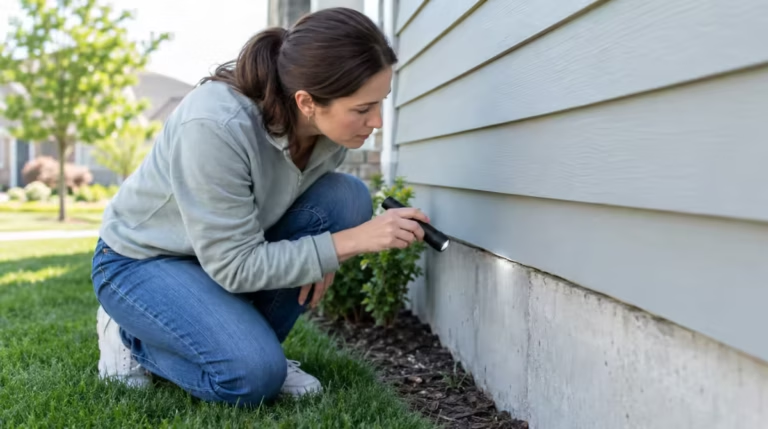
Before you seal anything, find out which openings mice are using right now. Start inside the attic with a good flashlight, then check the outside of the house and match what you find in both places.
Inside, look for droppings along joists and near the edges of the roof, tunnels or flattened paths in the insulation, gnaw marks on wood or cardboard, and dark rub marks where mice run the same route every night. Small, dark droppings about 6 mm long point to mice; larger ones may mean rats, and our guide to mouse vs rat droppings helps you tell them apart.
Outside, walk the full perimeter and look up. Check soffit joints, vent screens, the roof joints of additions and dormers, and every place a pipe or cable enters the wall. Signs of use include greasy smudges around a gap, fresh chew marks and droppings below the opening. If you have found a likely hole but are not sure it is active, loosely stuff it with a piece of paper or tissue and check it after a night or two. Paper that has been pushed aside or chewed means the gap is in use.
Preventing Mice From Returning
Keeping mice out of the attic depends on doing two things in the right order: deal with the mice that are already inside, then close the gaps they used with materials they cannot chew. Sealing first can trap mice in the attic or the walls, where they will chew a new way out or die somewhere you cannot reach. Removing them without sealing just leaves the door open for the next group.
Sealing Gaps With Rodent Resistant Materials
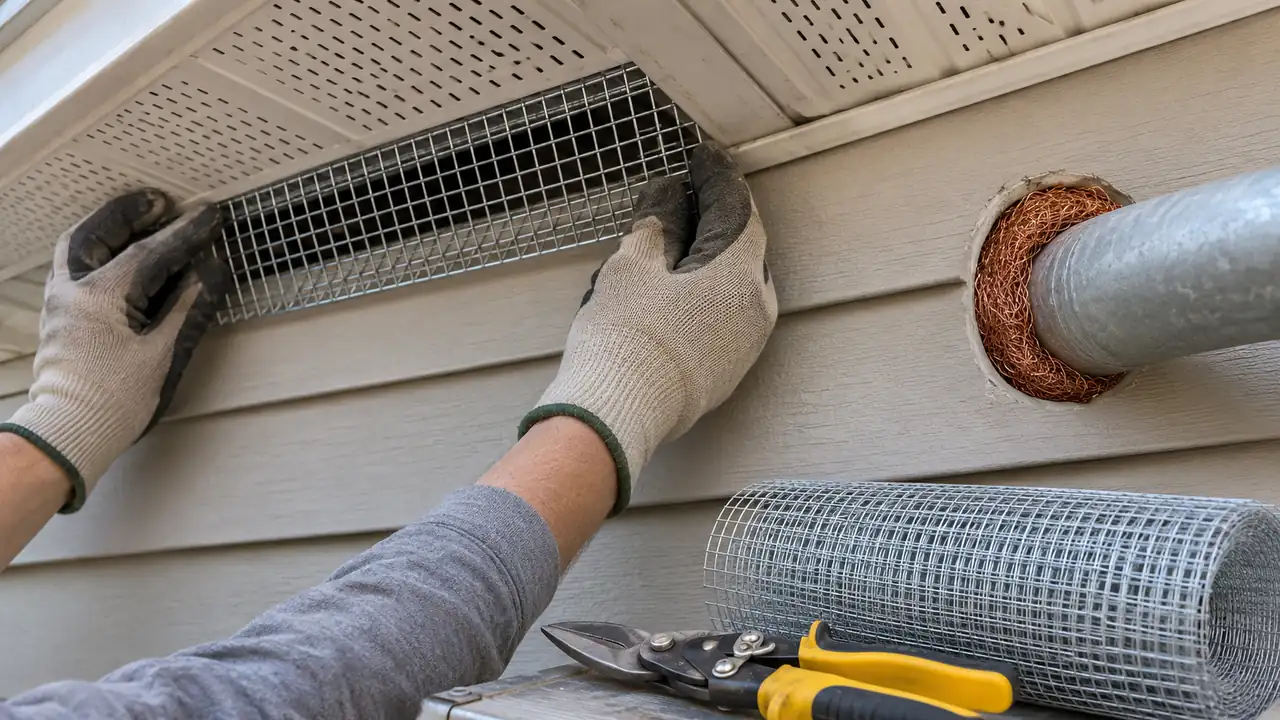
Expanding foam, caulk and plastic screening on their own will not stop a determined mouse. Galvanized hardware cloth or metal mesh is the usual choice behind vents and over soffit gaps. For holes around pipes and cables, pack copper or stainless steel mesh firmly into the gap, then finish with sealant over the top. Steel wool works for a while but rusts in a damp climate like ours, so it is not a good long term fix.
Take away the routes up as well. Trim branches so they do not touch or hang over the roof, move woodpiles and bins away from the walls, and keep gutters clear so the fascia stays dry. Larger structural openings, damaged soffits and roof joints are usually a job for professional exclusion work.
Removing Mice Already Inside
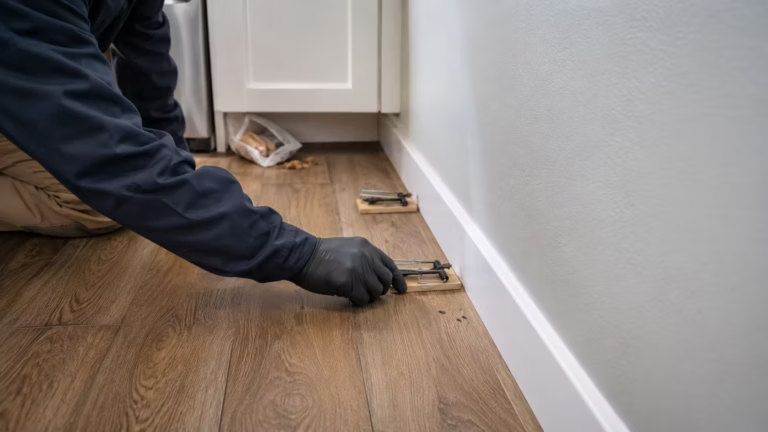
Snap traps placed along the runways you found, against the joists and near entry points, are the usual way to remove a small number of mice. Bait them with a little peanut butter and check them daily. Avoid leaving poison bait in the attic, because a poisoned mouse often dies inside a wall or ceiling where the smell lingers and the body is hard to reach.
Clean up droppings and nesting material carefully. Public health guidance in Canada advises against sweeping or vacuuming rodent droppings, because it puts particles into the air. Air the space out, wear gloves, spray the droppings with disinfectant and let them soak before wiping them up, as described in the Public Health Agency of Canada’s cleanup guidance. Heavily soiled insulation is a bigger job and is better handled by a professional.
When to Call a Pest Professional
Call a professional when the activity keeps coming back, when you cannot find the entry point, or when the work means climbing onto the roof. Other good reasons are droppings spread across a large area of insulation, signs of mice in more than one part of the house, or chewing near wiring.
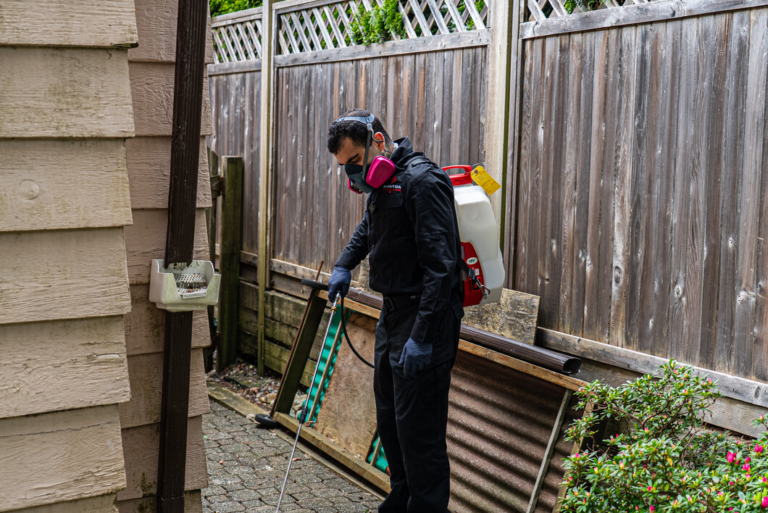
When we inspect an attic, we start by finding out how the mice got in. A technician checks the attic, the roofline and the outside walls, identifies the routes in use, and then recommends treatment and sealing based on what that specific house needs. Inspect, identify, treat, prevent. Our attic and basement pest control service is built around that order. To book an inspection, call 604 771 0404 or request an estimate.
Keeping Your Attic Mouse Free
An attic stays mouse free when the roofline is checked regularly, not only after you hear scratching. Walk around the house every fall before the weather turns, look at soffits, vents and pipe openings, and fix small gaps while they are still small. Trimmed trees and clear gutters do quiet work all year. For homes that see mice most winters, a pest proofing program or a rodent maintenance program puts those checks on a schedule.
Knowing how do mice get into attic spaces in the first place is what makes the fix stick. That is why every rodent job at Phantom Pest Control starts with finding the way in, for homes across Vancouver, the Lower Mainland and the Fraser Valley.
Frequently Asked Questions
1. Can mice live in an attic without food?
Mice can nest in an attic with no food in it, but they cannot live there without food nearby. They leave the nest at night to feed in the kitchen, the pantry or outside, then return through the walls.
2. Will attic mice leave in summer?
Usually not. Once mice have a nest and a reliable food source, they tend to stay through the warmer months and keep breeding, so activity rarely clears up on its own.
3. Can mice travel from the attic into bedrooms?
Yes. Wall cavities connect the attic to every floor, and mice can come out through gaps around pipes, light fixtures, baseboards and heating vents.
4. How small a hole can a mouse get through?
A house mouse can squeeze through a gap of about 6 mm, roughly the width of a pencil. If a pencil fits into the gap, treat it as a possible entry point.
5. Can mice chew through a roof to get into the attic?
Mice rarely chew through solid roofing. They use openings that already exist, such as vents, gaps around pipes, loose soffits and soft, rotting fascia boards.