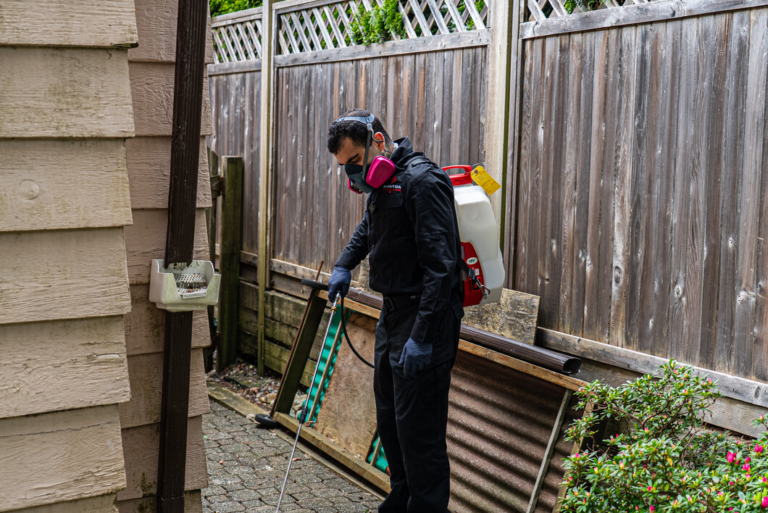
To protect furniture in storage from mice, start with the space, not the furniture. Before you move anything in, find and close the gaps at the door, walls and pipes. Then clean each piece, let it dry, cover it with breathable fabric, raise it off the floor and leave enough room to check around it. Mice get into storage through openings that are already there, so a sound unit does more than any wrap or repellent. If mice have already turned up in a garage, basement or storage room at your home, Phantom’s rodent control in Vancouver starts with an inspection to find out how they got in.
On this page8 sections
- Check the Storage Space Before You Move In
- Clean Furniture Before It Goes Into Storage
- How to Cover and Position Stored Furniture
- How to Check Stored Furniture for Signs of Mice
- What to Do If You Find Mice in Storage
- Furniture Storage Checklist
- Keeping Stored Furniture Free of Mice
- Frequently Asked Questions
Check the Storage Space Before You Move In
An empty unit is the easiest one to inspect. Once sofas and boxes are stacked against the walls, you can’t see the corners or the floor line, and a small gap can go unnoticed for months. Spend ten minutes looking before move in day.
Door Gaps and Other Entry Points
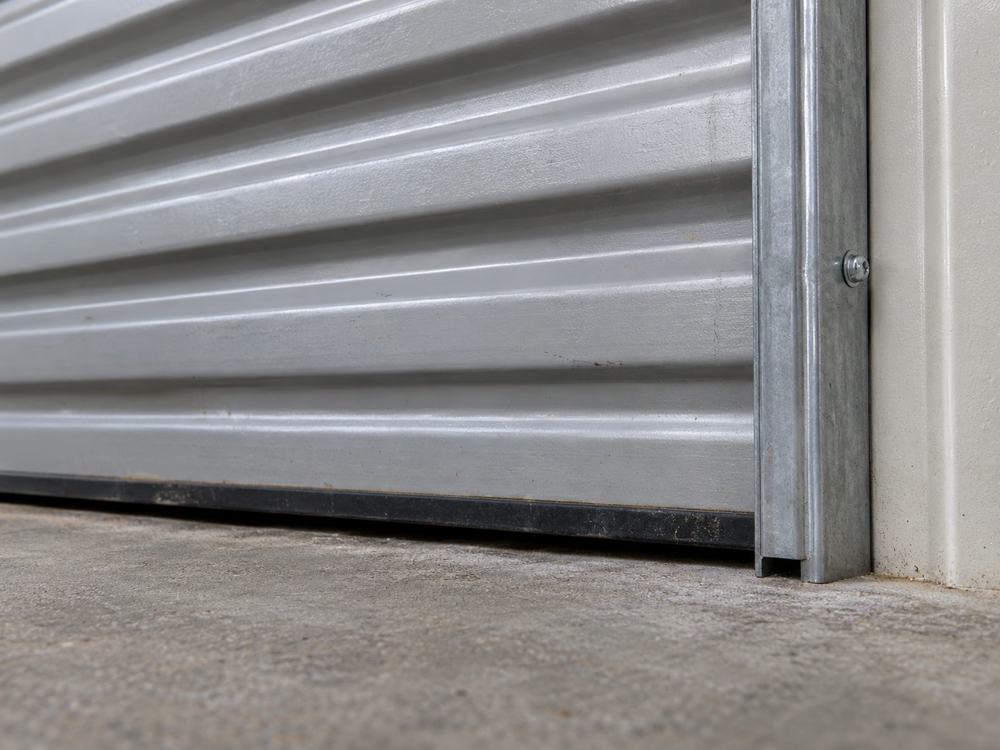
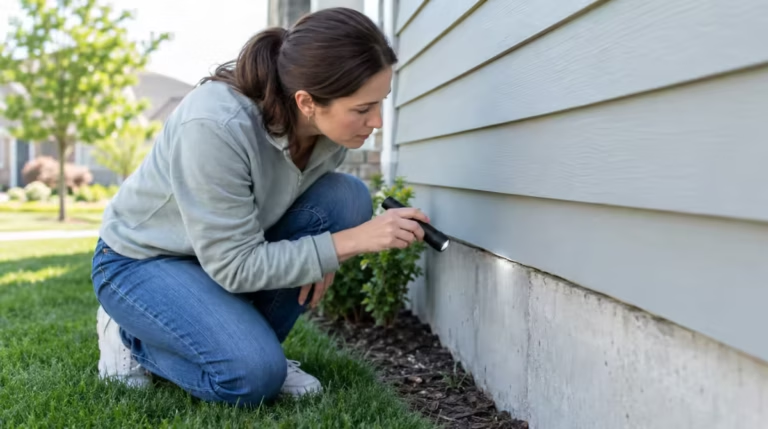
Close the door from the outside and shine a flashlight along the threshold, paying close attention to the bottom corners where the door meets its frame or track. A worn door sweep, a damaged bottom seal or daylight under a closed exterior door are all ways in. Inside, scan the joint where the walls meet the floor and look at any openings around pipes and cables. HealthLink BC advises sealing openings larger than 6 mm, so flag small gaps as well as obvious ones.
In a rented unit, photograph each gap, note where it is and ask the manager who will repair it. If the unit suits you otherwise, ask for the repair before you move in, or view a different unit. In your own garage or basement, fit a door sweep or bottom seal made for that door and have damaged tracks or gaps around utilities closed with materials that suit the opening. Professional exclusion work covers this kind of sealing when the gaps are hard to reach or keep coming back. Our guide on how to prevent mice from entering your home lists more places to check.
Questions to Ask a Storage Facility
A rental facility controls the building, so its pest routine affects your unit. Ask what staff inspect in empty units and shared areas, who receives rodent reports and who arranges repairs to doors or walls. Find out whether staff need your permission to enter an occupied unit for an inspection, and if you’re allowed to set traps or bring in your own pest professional. Ask how they handle reports from neighbouring units too, since a damaged seal or shared opening can sit outside your space.
Read the storage agreement before you pack. Many facilities restrict food and other perishables, so check the rules for pet food, birdseed and scented items before they go in a box.
Clean Furniture Before It Goes Into Storage
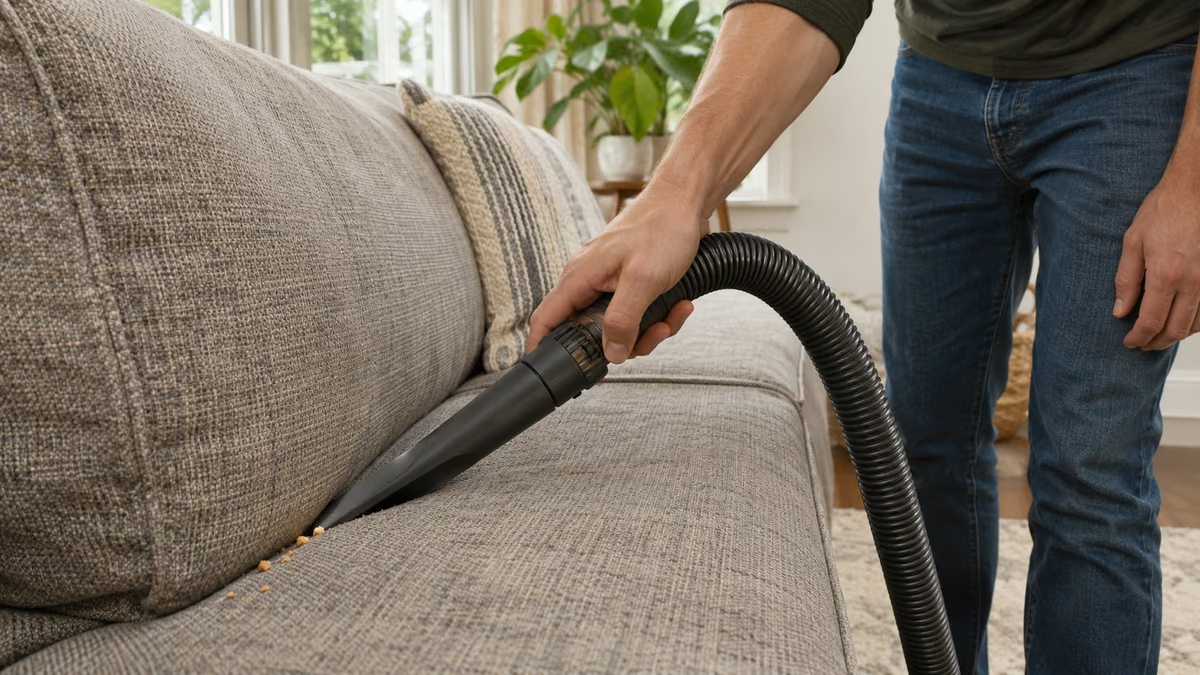
Crumbs and food residue give mice a reason to stay, so clean every piece before it leaves the house. Lift removable cushions and look along the upholstery seams, under the seat and around the edges of the frame underneath. Empty sideboard drawers and check the joints and ledges of bed frames, where crumbs tend to collect. Vacuum upholstery that can take it, wipe hard surfaces as the manufacturer directs and follow the care label on any removable fabric cover. Let seams, cushion covers and legs dry completely before packing.
This applies to furniture with no sign of mice. If you see possible droppings, nesting material or gnawed fabric with loose stuffing nearby, stop. Leave the piece where it is and don’t shake cushions or pull back fabric to see how far the damage goes. Follow the cleanup steps further down before you handle anything that may be contaminated.
How to Cover and Position Stored Furniture
Covers protect furniture from dust and scuffs, and good placement lets you spot trouble early. Neither one keeps mice out on its own. What they do is keep your furniture in good condition and make every later check quick.
Covers for Sofas and Mattresses
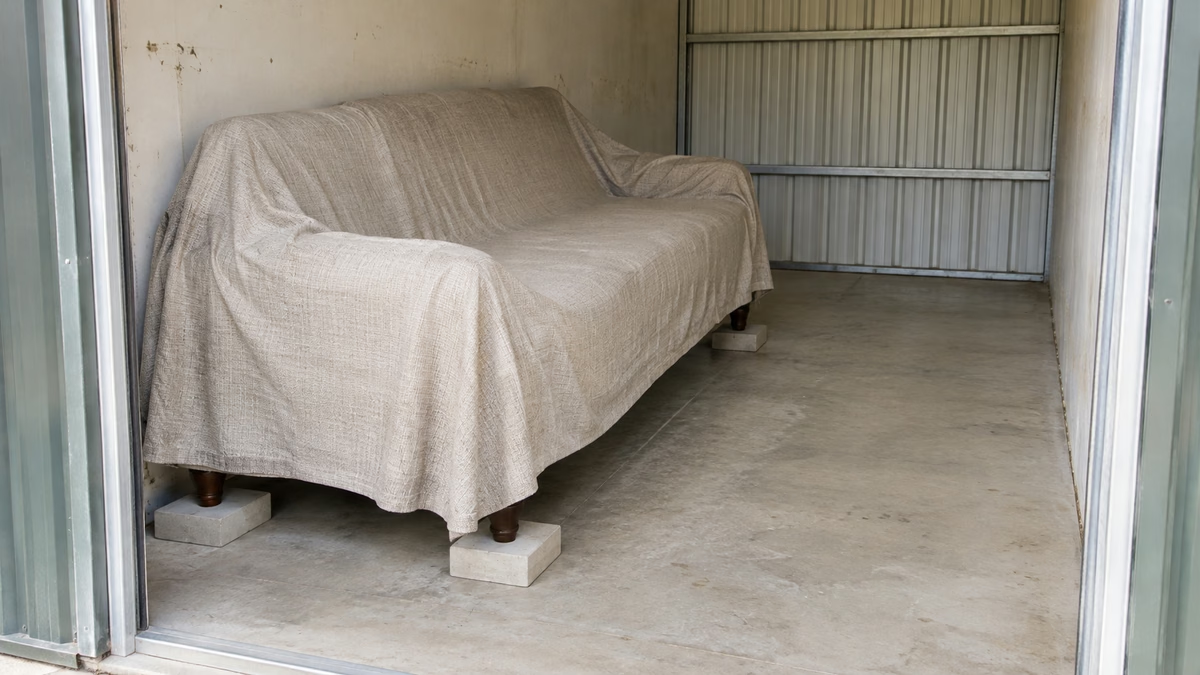
For a dry sofa in a dry room, a clean fabric furniture cover or moving blanket keeps off dust and prevents scuffs. Fabric lets air move, which matters if humidity rises while the piece is in storage. Tight plastic can trap moisture against upholstery, especially if the piece went in damp. Check the care instructions before using a fitted mattress bag, and follow the manufacturer’s directions on how to stand and support the mattress. If the room has active leaks or damp patches, fix the moisture problem or choose a drier space before storing anything upholstered there.
Face the opening or fastening of each cover toward the aisle so you can see the outer seams and lower edge. Keep extra fabric off the floor so the area around the feet stays visible. Plastic wrap is fine for protecting a piece during the move, but mice can chew through it or slip in at a loose fold.
Raise Furniture and Leave an Aisle
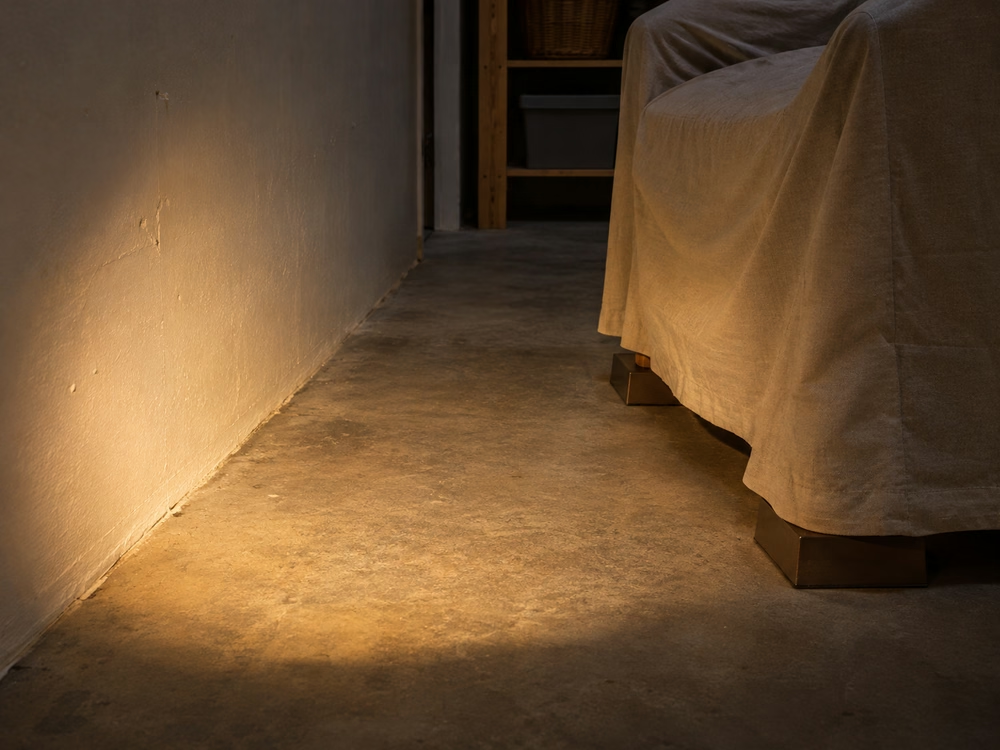
A level pallet or furniture risers rated for the weight keep furniture off the floor and give you a view underneath. Check that the support suits the piece’s footprint and that every foot or load point sits securely. Raising furniture won’t stop a determined mouse, since mice climb rough surfaces, wooden pallets included. The real benefit is that you can see what’s happening below.
Leave a clear route from the door to the side or back of the largest piece, wide enough to aim a flashlight along the wall and underneath. In a narrow unit, for example, run the sofa along one wall with space behind it and stack boxes on the other side of the aisle. Before you leave, walk that route and make sure you can see the wall and floor joint, the door corners and the bottom edge of each cover without moving anything heavy.
How to Check Stored Furniture for Signs of Mice
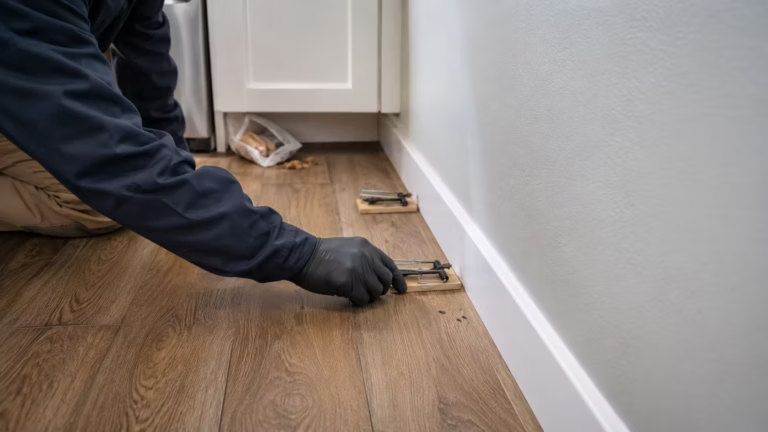
Look over the unit soon after move in and again every time you visit. Start at the threshold and follow the walls. Look under the furniture you can reach, around the edges of covers and near any box or bed frame close to a wall.
The signs to watch for are small pellet shaped droppings, fresh gnaw marks and little piles of shredded paper, fabric or stuffing. A smell like ammonia can be a clue, but other things cause it too, such as a spilled cleaning product. If you notice it, look from the aisle for physical signs before touching anything. Note where and when you saw anything unusual and take photos from where you’re standing. Our guide to mouse vs rat droppings shows what to look for.
What to Do If You Find Mice in Storage
Keep affected furniture out of your living space until you know what was contaminated, and leave the area as it is for now. Don’t sweep or vacuum droppings, urine or nesting material, because that can lift contaminated particles into the air. In a rental facility, report what you found to the manager before you clean up or carry anything through shared areas.
How to Clean Up Mouse Droppings Safely
These steps follow HealthLink BC’s rodent cleanup guidance and suit a small area you can reach easily. If the space can’t be aired out or the mess is widespread, arrange professional cleanup instead.
- Air out the space and put on protection. Open doors or windows and let an enclosed area ventilate for 30 minutes before you start. HealthLink BC advises rubber gloves, goggles and a filter mask that fits well. If you’re unsure which mask to use, ask your local public health unit.
- Wet the material before you pick it up. On a hard surface, gently pour household disinfectant over the droppings and the area around them rather than spraying it. Follow the product label, including how long the surface needs to stay wet.
- Pick up and bag the waste. Lift the wet material with paper towels, put it in a plastic bag, then seal it inside a second bag and dispose of it according to local bylaws. Clean and disinfect the surface as the label directs.
- Wash up. Wash your rubber gloves with disinfectant or soap and water before taking them off, then wash your hands with soap and water.
Upholstered Furniture Needs a Different Decision
A wipeable bed frame and a sofa with droppings in a stitched seam are two different problems. The steps above work on surfaces you can reach and wet. In a sofa or mattress, urine or nesting material can sit inside a seam, under the lining or deep in the padding. Keep the piece out of use and ask a qualified restoration or cleanup professional for advice before you move it. Ask whether the affected areas can be reached and treated in a way that suits the material. A removable cover may make the fabric easier to deal with, while a nest behind a stapled lining or inside a mattress calls for a closer assessment.
When to Call a Pest Professional
Get a pest inspection if droppings come back after cleanup, signs show up in several places, or the likely route leads into a wall cavity or another space you can’t see into. In a rental, report the first signs to the manager and ask who will check the building and arrange repairs. A pest professional can find the entry points and recommend monitoring. If you think the inside of an upholstered piece is contaminated, ask about that separately so you can decide whether to move it, have it cleaned or dispose of it.
Furniture Storage Checklist
Most of the work happens before the door closes on move in day. Use this list at each stage.
- Before move in, check the threshold, corners and pipe openings, photograph any concerns, confirm who will fix them, and clean and dry every piece.
- While arranging the unit, fit covers to dry furniture, check that supports sit level and leave an aisle with a clear view of the floor and walls.
- On every later visit, check the threshold, cover edges and the floor under furniture, and report new signs before moving anything affected.
Keeping Stored Furniture Free of Mice
Move in once the space is dry and the visible gaps are repaired, and keep checking each time you visit. If you do find signs of mice, have the space assessed before bringing affected furniture home. For inspection and pest control across Vancouver, the Lower Mainland and the Fraser Valley, contact Phantom Pest Control.
Frequently Asked Questions
1. Can mice chew through plastic furniture wrap?
Yes. Mice can gnaw through plastic, and thin wrap is easy to get past at a tear or loose fold. Use it to protect furniture during the move, and rely on closed entry points and regular checks during storage.
2. Does peppermint oil keep mice away from stored furniture?
Don’t count on it. Any scent fades as the oil evaporates, and it does nothing about the gap a mouse uses to get in, so sealing openings is the better use of your effort.
3. Does climate controlled storage keep mice out?
No. Climate control manages temperature and sometimes humidity, not access. To judge whether mice can get in, look at the door seals and other openings and ask how the facility monitors the building.
4. Are plastic bins better than cardboard boxes in storage?
Sealed plastic bins with tight lids are harder for mice to get into than cardboard, which they can chew and shred for nesting. Plastic still isn’t mouse proof, so keep checking around your bins.
5. How often should I check a storage unit for mice?
Check soon after move in and every time you visit. A quick walk along the walls and under raised furniture is enough to catch early signs.