Pest Proofing Program in Vancouver & Fraser Valley
Phantom Pest Control’s Exclusion & Proofing Program maintains the seals on homes and businesses in Vancouver, BC and the Fraser Valley after the first exclusion job. We come back on a schedule set for the property, re-check every entry point, fix worn sweeps, cracked sealant and torn mesh, and send a written report with photos after each visit.
Visits
On a schedule set for your property
Service area
Why Sealed Gaps Open Up Again
Because the things that close a gap wear out, and buildings keep changing. Door sweeps wear down, sealant cracks, mesh tears, and a new pipe, cable or vent cut through a wall can leave a fresh opening. A program re-checks those places on a schedule, so each visit looks for gaps that have reopened and fixes the small ones on the spot.
BC Housing’s guide to sealants says they deteriorate over time and typically last between two and fifty years, depending on the product, the weather it faces and how much the building moves, and that a regular inspection and maintenance plan will detect that kind of failure before it becomes a costly repair. Health Canada warns that even the small gaps left by worn thresholds under doors let mice in. Exposure to weather is one of the things BC Housing says decides a sealant’s life, and Vancouver has plenty: the airport averages about 1,160 mm of precipitation a year in Environment Canada’s 1991–2020 normals, and about 842 mm of it, nearly three-quarters, falls from October to March. Environment Canada’s normals put Abbotsford, in the Fraser Valley, higher again, at about 1,505 mm a year.
If the building hasn’t been sealed yet, the first step is exclusion work: the inspection and the sealing, quoted for the property, and the program carries on from there. Our regular maintenance page lists Phantom’s other scheduled programs.
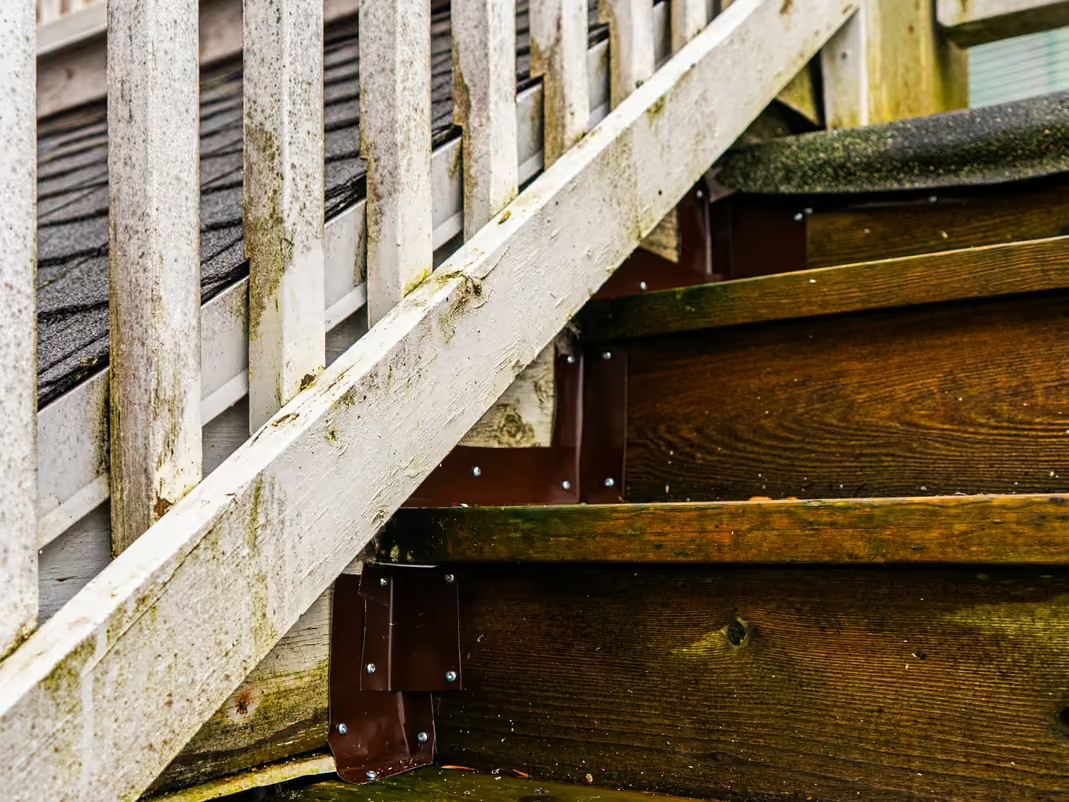
Most of Vancouver’s rain falls from October to March, and moss tends to hold that moisture on roofs.
Daily use wears a sweep down, and a worn threshold can leave a gap mice use.
Materials swell when wet and shrink as they dry, and the sealant’s bond to them can fail.
A torn vent screen or a gnawed patch of mesh reopens a gap that was closed.
Each new line, vent or meter cut through a wall opens a gap until someone seals around it.
Steel wool can rust over time, and foam, rubber or wood stuffed into a hole can be chewed through.
What a Sealed Building Keeps Out
Much of what a re-check closes is sized for rats and mice, but the same openings can let wildlife, birds and insects in. Each row says where they get in and links the page that covers them in full.

Under doors and around pipes and cables, wherever a worn sweep or a missing seal leaves a slot.
Low on the building: foundation cracks, crawl-space vents and lines that enter below grade.
High on the building: soffits, roof vents and the joints where a lower roof meets a wall.

They gnaw at soffits and roof vents to reach attics and roof voids, so the roofline is checked each visit.
Our wildlife page lists attics, crawl spaces, roof voids and the spaces under decks and porches among the places wildlife nests.

Birds nest in dryer vents, roof vents and wall openings without screens; netting and spikes are a separate service.

Gaps around pipes and under doors let insects in as well as rodents; their treatment has its own page.
Note where you saw droppings, gnaw marks or a new hole, and add photos to your estimate request.
When to Re-check Seals in Metro Vancouver
Gaps can open in any season, but some months put more pressure on them. The bars show when, each from the source named in its row; the three rows under the chart don’t follow a season.
Bars come from B.C.’s rodent guide, Phantom’s wildlife and rodent pages, and Environment Canada’s climate normals for the Vancouver airport.
Spring is when wildlife raise young in attics and crawl spaces, so nothing gets closed with animals inside.
Most of the year’s rain falls October to March, the colder, wet season when rodents look for shelter inside.
Any month
A door that opens all day wears its sweep and threshold in any season.
A renovation or a new pipe, cable or vent can open a gap the day it goes in.
With steady food and shelter indoors, house mice can breed year-round, the University of California’s IPM program says.
Where a Re-check Visit Looks on a Building
Each visit follows the building from the ground up: the foundation, the doors, the lines and vents through the walls, then the roofline. The letters match the drawing.
- AFoundation cracks
Cracks and gaps along the foundation, checked for new or reopened openings; larger ones are quoted.
- BCrawl-space vents
Vents stay open for air, so it is their screens that get checked for tears.
- CDoor sweeps
Sweeps worn down by use, replaced when light shows under the door; thresholds checked for wear.
- DDoor frames
Weather stripping along the frame, and the corners where frame and door meet.
- EPipes, cables & meters
Gaps around the lines through the wall, new ones included.
- FDryer & exhaust vents
Vent hoods, their flaps and the screens behind them.
- GSoffits & eaves
Soffit vents and seams along the eaves, where climbers get in.
- HRoof vents
Vent covers and their screens, checked for chewing and damage.
- IRoof-to-wall joints
The joint where a lower roof meets a wall, and the flashing over it.
What You Can Check Between Visits, and What a Technician Handles
You see the building far more often than a technician does, so a few checks of your own can catch a new gap sooner. The sealing and the ladder work are ours.
You can
On a bright day, check exterior doors from inside with the room lights off: daylight at the bottom means the sweep has worn.
Keep branches at least 2 metres back from the eaves and roof, and stored items away from the walls.
A new hole, gnaw marks or droppings: photograph them and send them before the next visit.
Needs a technician
Worn door sweeps and cracked sealant around pipes and cables, fixed on the visit.
Torn screens behind dryer, exhaust and roof vents, repaired or replaced on the visit.
Soffits, roof vents and the joints where roofs meet walls, out of reach from the ground.
Anything too big to repair on the visit is quoted as exclusion work before it’s done.
How the Exclusion & Proofing Program Works
Five steps, from the first inspection to a schedule of re-checks.
The first visit follows the building from the foundation to the roofline and notes the gaps, cracks and worn seals it finds.
The openings are closed as exclusion work, quoted for the property before the work starts.
We set a re-check schedule for the property itself, rather than a fixed number of visits.
Each visit re-checks every entry point and fixes worn sweeps, cracked sealant and torn mesh or vent screens.
A written report with photos follows every visit, and any larger new opening is quoted as exclusion work.
The regular maintenance page has the rest of the scheduled programs, from rodents to birds.
Before the First Inspection
Six things that help the first visit see the whole building. Phantom’s preparation sheets for other services are on our client forms page.
Move stored items, firewood and bins back from the foundation so the cracks and vents along it can be seen.
Unlock side yards, gates and sheds so the visit can walk the whole outside.
Visits run Monday to Friday, 9 AM to 5 PM, so arrange keys or someone on site.
What was sealed before, when and by whom, so the inspection knows what to look at twice.
Droppings, gnaw marks, scratching in a wall or a new hole: what, where and when.
Photos of a gap or damage, sent with your estimate request, show the technician where to start.
After Each Visit: The Report and the Repairs
What you receive after each re-check, and what happens next.
The report
Written, with photos, after every visit.
Small repairs
Worn sweeps, cracked sealant and torn mesh or vent screens, fixed during the visit.
Larger openings
Written into a quote as exclusion work, for you to approve.
The schedule
Set for your property rather than a fixed count of visits.
Between visits
Call or text 604-771-0404 about a new hole or fresh gnaw marks.
Vancouver Coastal Health asks food premises to keep pest control reports on-site for a minimum of 3 months so they can be reviewed by your EHO.
A renovation, a new vent or a new line through a wall: mention it before the next visit.
B.C.’s Rule on Keeping Pests Out of Food Premises
B.C.’s Food Premises Regulation puts it in one sentence: the operator must keep food premises free of pests, free of the conditions that let them breed, and protected against the entrance of pests. Vancouver Coastal Health’s guide for operators adds that openings ¼ inch in diameter or bigger will allow the entry of rodents.
Protected against the entrance of pests, under section 26.
Reports kept on-site, where the Environmental Health Officer can read them.
Dock doors and their seals maintained against pests on SQF sites.
The same gaps let the same pests in, and each visit ends with a written report with photos.
Section 26 of the Food Premises Regulation asks for premises that are protected against the entrance of pests, not premises that were sealed once. A sweep that wears or a screen that tears opens the building again, which is why the program re-checks on a schedule and leaves a written report with photos after each visit.
Sites certified to the SQF Storage and Distribution code carry a similar duty for their doors: external doors in food handling areas, overhead dock doors included, must be designed and maintained to prevent pest ingress, and adequate sealing around trucks in docking areas is one of the ways the code accepts. Food businesses licensed under the federal Safe Food for Canadians Regulations have a version too: under section 57, the interior of a facility where food is stored must be maintained so that the entry of insects, rodents and other vermin is prevented.
Why Choose Phantom to Keep a Building Sealed
Who does the work, what each visit includes, and what you receive in writing.
Experience
15+ years of pest control experience serving British Columbia
Credentials
Fully licensed, insured and certified
Each visit
Every entry point re-checked, small repairs on the spot
Larger openings
Reports
Every visit written up, with photos
EXCELLENT Based on 830 reviews
 Posted on Google

 Ashley WoodWe were having some problems with mice at our home so we contacted Phantom and Darcey came and resolved the issues quickly. Darcey was friendly, great with our dog and made sure we understood everything he was doing and what to expect. Happy to report no more mice! Thank you, Darcey!Posted on Google
 Michelle HerrExcellent pest control service! The team was professional, friendly, and knowledgeable. They arrived on time, explained the treatment process clearly, and made sure everything was taken care of. Their attention to detail and commitment to customer satisfaction were impressive. I really appreciate their prompt service and effective results. Highly recommend them to anyone looking for reliable and professional pest control services!Posted on Google
 Nasib AbdulMark was great and he did a great job and was very knowledgeable.Posted on Google
 HenryDarcey provided exceptional support in resolving our pest concerns. He was punctual, highly knowledgeable, and professional throughout the process. We have been trying to deal with these issues for quite some time without any luck but thankfully the matter is now resolved. We appreciate the dedication he demonstrated and will be sure to reach out should we require his services again.Posted on Google
 Jacqueline BruceI want to let you know that June did an amazing job on our house for the moths. He was really friendly, patient, professional and conscientious. I wasn't fully ready for the treatment when he arrived and he managed to move some clients so he could return later. He explained a lot about the treatment and the moths' habits which really helped with other areas that he wasn't even treating. He kindly helped me moved some things to barricade the area from pets. I would get Phantom back and highly recommend them.Posted on Google
 Fraser HannayDarcey was amazing at helping us deal with a wasp nest. Friendly, knowledgeable and on time! Thank you!Posted on Google
 JanetWe hired Phantom Pest Control to eliminate a wasp nest inside our house and the service was great. Information on the phone when I first called to book an appointment was clear and we got an appointment quickly. Juan, the specialist who arrived to do the job, fully explained the process, did the work, and explained what to watch in the outside chance additional work might be needed. We are happy with the job and were glad to have Juan as our technician.Posted on Google
 Jenny WuWe received exceptional service from Joy. She was both professional and knowledgeable, explaining the service thoroughly.Posted on Google
 Sean AbbottThey showed up on time, early actually. Mark was very professional and explained how the cockroaches work. He was personable and efficient, and hygienic with how he worked (wearing protective boot covers and gloves). I was impressed and would definely call again if needed.
The Exclusion & Proofing Program Across Vancouver & the Fraser Valley
We run the program for homes and businesses in the communities below, from Squamish to Abbotsford, and on Annacis Island. Each name links to its local page.
Vancouver & North Shore
Burnaby & Tri-Cities
Richmond & Delta
Fraser Valley
Related Services
Services that come before the program, or alongside it.
The one-time exclusion work the program starts with: the inspection, the quote and the sealing.
The three-visit program for rats and mice living inside now; it seals gaps up to the size of a toonie.
Removal of raccoons, squirrels and other wildlife, done before their way in is closed.
Netting and spikes for birds on ledges and roofs, a separate service from sealing.
Exclusion & Proofing Program FAQs
Exclusion work vs the program, how often, cost, homes and businesses, gap sizes, doing it yourself, foam and sealant, animals inside, traps and bait, and door sweeps, one question at a time.
Prefer to talk?
How is this program different from exclusion work?
Exclusion work is a single job: the building’s gaps are inspected, quoted and sealed once. The program adds what comes after, with return visits that look for wear and new openings and fix the small ones. B.C.’s rodent guide says older buildings, outbuildings, sheds or other structures that are vacant for a long period should be checked frequently. If one round of sealing is all a building needs, exclusion work on its own covers it.
How often does the program come back?
As often as the building needs. The schedule is set for each property, so there’s no fixed number of visits to publish. As an outside benchmark, B.C.’s rodent guide tells property owners to complete inspections at least twice annually, ideally in the spring and fall, to line up with the seasons when rodent problems rise.
How much does the program cost?
There’s no set price, because the schedule and the repairs depend on the building. You get a free estimate first and a quote for the property after it, and any larger opening a later visit finds is quoted on its own before any work is done. Ask on the estimate call whether the first inspection has a fee for your property.
Is the program for homes or businesses?
Both. A house gets the same re-checks as a shop, a restaurant or a warehouse: the foundation, the doors, the lines and vents through the walls, and the roofline. For a food business the written report has a second use, as a record the health inspector can read; B.C.’s Food Premises Regulation puts the duty to keep pests out on the operator.
How small a gap can a mouse or rat use?
A crack the size of a dime for a mouse, and a quarter-sized hole for a rat: Health Canada says mice can squeeze through cracks as small as a dime, while rats can enter through a quarter-sized hole. The University of California’s IPM program puts numbers on it for house mice, which can squeeze under gaps ¼ inch tall and through openings 3/8 inch wide, and B.C.’s rodent guide says to seal all openings that are bigger than 6 mm (¼ in).
Can I seal small gaps myself?
Some, yes. B.C.’s rodent guide says a mixture of steel wool and caulking may be used for smaller holes, and the Public Health Agency of Canada says to seal holes with wire screening, steel wool, metal flashing or cement. Our post on keeping mice out of your home walks through the common spots. Soffits, roof vents and anything you can’t reach from the ground are better left for a visit.
Can mice chew through spray foam or sealant?
Foam, yes: on its own it doesn’t stop them. The University of California’s IPM program lists plastic screening, rubber, vinyl, insulating (expanding) foam and wood among the gnawable materials that are ineffective for plugging holes used by house mice, and notes that steel wool makes a good temporary plug but may rust over time, one reason a temporary fix needs re-checking. B.C.’s rodent guide calls for heavy gauge screening, 5 mm hardware cloth or metal mesh, ideally woven and galvanized so the edges can’t be gnawed.
Will you seal an opening with wildlife inside?
Not with wildlife inside. Our wildlife control page sets out the order for raccoons, squirrels and other wildlife: removal first, then the exclusion work, and B.C.’s rodent guide says to avoid locking animals inside when a building is sealed. Birds have their own rule: section 34 of B.C.’s Wildlife Act protects the nests of most birds while they are occupied by a bird or its egg.
Does the program include traps or bait?
No, this program finds and closes the ways in, and traps and bait are separate services. B.C.’s rodent guide explains why both matter: trapping or baiting alone will not work in the long term, so the building is rodent-proofed first and any rodents left inside are trapped after. Rats or mice living inside now need rodent control, and Phantom’s scheduled bait-station service is a separate program on our regular maintenance page.
When does a door sweep need replacing?
When it no longer closes the gap: light showing under a closed door is the easy sign. Health Canada notes that even the small gaps created by worn thresholds under doors let mice in, and B.C.’s rodent guide suggests industrial door sweeps designed for exclusion, not just weather stripping. For food premises, Vancouver Coastal Health asks for a tight seal around the door using weather stripping and a door sweep together. A worn sweep is one of the repairs a re-check visit makes on the spot.
Start With an Estimate
Tell us about the building and any gaps or signs you’ve seen, and we’ll follow up with the estimate and the next step.
The estimate is free, and the quote for your property follows it.