
If you spot what looks like a silverfish near the bed, shine a flashlight at the exact spot where it disappeared, then follow the nearest floor edge. A silverfish tapers to three thin tail filaments, while a bed bug has a flatter, oval outline. If the insect reappears, note the date, time and exact location, and take a clear photo if you can.
Use the steps below to check the room tonight. For treatment enquiries in Vancouver, see Phantom’s Vancouver silverfish control service.
On this page6 sections
Where Silverfish Hide in Bedrooms
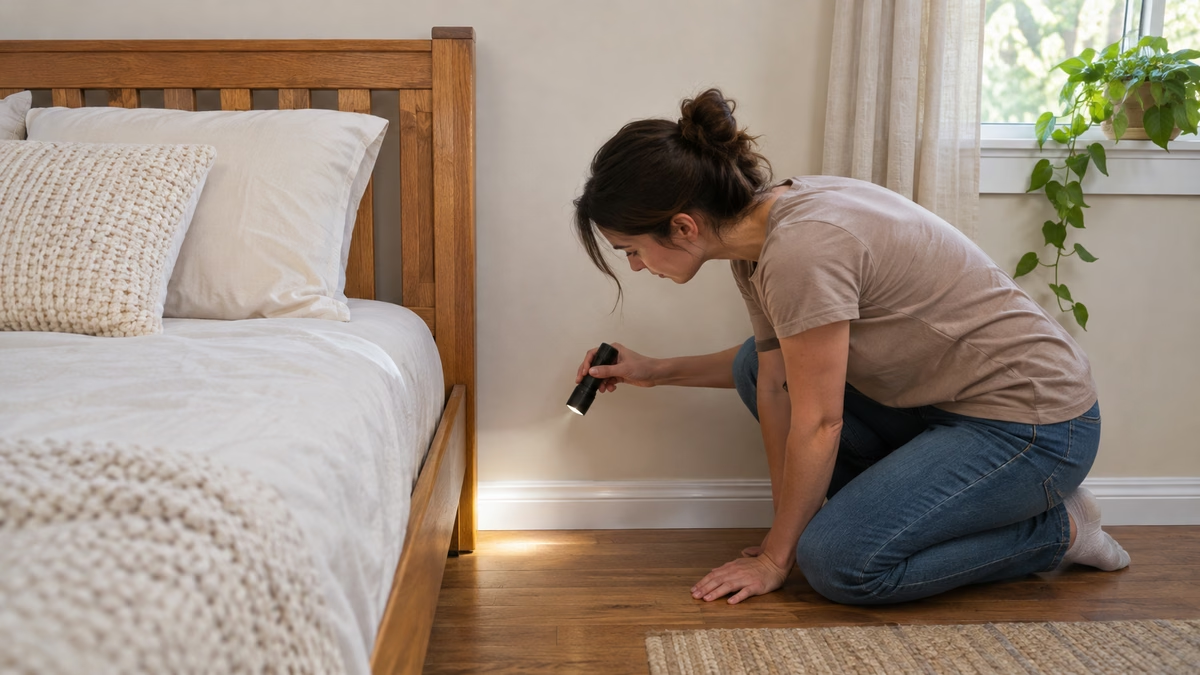
Start where you saw the insect. Silverfish usually stay out of sight during the day and come out at night to look for food and water. If one ran beneath a nightstand or into the closet, check that edge first. A sighting gives you a starting point for the search. The insect may have crossed the room from another hiding place.
Bed Frames and Headboards

Get low enough to aim your flashlight along the baseboard beside the bed. Check the floor edge, the visible joints where the side rails meet the headboard, and any headboard gaps you can see from either side. If you saw the insect on bedding, look along the nearest mattress seam, then work down to the frame and floor below that spot.
Keep the first pass to places you can see and reach. You can slide out a light bedside bin to check the edge behind it. Leave a fixed headboard or heavy bed in place. If the insect vanished behind a part of the frame you can’t reach, note that spot and use the closest accessible floor edge for monitoring.
Closets and Under-Bed Storage
If the sighting was in the bedroom closet, begin at the nearest corner and sweep the light along the floor where it meets the wall. Check behind shoes and look at the underside, folds and seams of any cardboard boxes near the sighting. If the insect appeared under the bed, slide out the nearest container and inspect the floor beneath it and the strip between it and the wall.
Look for damp cardboard, a damp wall or condensation on a cold surface nearby. If you notice moisture, make a note of where it occurs so you can check whether it returns. If the area looks dry, you can still monitor the edge where you saw the insect. Long-tailed silverfish tolerate drier rooms better than common silverfish do.
Silverfish vs. Bed Bugs
Look at the outline of the insect and what extends from its rear. An adult common silverfish is usually silvery grey, with long antennae and a body that narrows towards the tail. Adult bed bugs have a broad, flattened oval body and are typically brown before feeding. Colour can be hard to judge in dim light, so use it alongside body shape.
| What you can see | What to check next |
|---|---|
| Long, tapered body with three tail filaments | Check the nearest floor edge or storage gap for silverfish activity. |
| Broad, flat oval body with no long tail filaments | Check mattress piping and seams, then accessible headboard and frame joints for insects, shed skins or dark spotting. |
Several insects can turn up near a bed, and skin marks alone can’t identify which insect, if any, was involved. Photograph the insect from above if possible, with the head and tail in focus. If you can catch it intact, keep it in a small, securely closed container for identification. For a fuller check of the sleeping area, use Phantom’s guide to the nine signs of bed bugs.
What to Do After a Bedroom Sighting
After a single sighting, check the nearest hiding places and record what you saw. If you want to see whether the same edge is active again, put a sticky monitor there. If sightings or catches repeat, track them by exact spot so you can decide where to look more closely.
Trap Placement Around the Bed
The University of California’s Statewide Integrated Pest Management Program recommends sticky traps in corners and along edges where silverfish are likely to travel. See its guide to identifying and monitoring silverfish.
Use a sticky insect monitor suitable for crawling insects. Try the baseboard behind the headboard if you can reach it, or the nearest exposed section if you can’t. For a closet sighting, try the inside floor edge near the corner or box where you saw movement. Follow the product directions for folding, orientation and checking. If the monitor is a folded tunnel, keep it flat and its entrances clear of bins, rugs and hanging bedding. Choose a spot children and pets can’t reach and where you can still check it.
Monitoring Repeated Sightings
Write down the placement date and give each location a name you’ll recognise, such as “baseboard left of headboard” or “back corner of closet.” At each check, record the date and the number of suspected silverfish, including zero catches. Note if you move or replace a monitor. If you’re unsure what it caught, take a close photo before discarding it.
If catches keep turning up at the closet edge, start your next inspection with the wall, floor and containers around that monitor. A catch shows where an insect passed. It can’t pinpoint a hiding place or tell you how many insects are in the room. An empty monitor can miss insects using a different route. For evidence beyond the bedroom, see Phantom’s guide to signs of a silverfish infestation.
Preventing Silverfish in Bedroom Storage

Airflow in Damp Closets
Check the back wall, floor corners and the area behind bins for recurring dampness, droplets or a musty smell. If the closet backs onto an exterior wall, look behind items pressed against that wall. Space out crowded bins and hanging clothes, leave the closet door ajar when practical, and keep heating vents clear so air can circulate.
If dampness returns, record where and when it happens. Renters can send those details and a photo to the landlord or property manager and ask them to check the source. Move linens to a dry storage spot while the damp area is being addressed.
Sealed Storage for Spare Linens
Put clean, fully dry sheets and spare blankets in a container with a tightly fitting lid. Check thick folds and corners for dampness before packing, then seat the lid all the way around. A clear bin makes it easy to check the contents. If you’re replacing a cardboard box, wipe the shelf or floor beneath it and leave room around the new bin so you can see and clean the edges.
Use a dry shelf or another dry location if moisture keeps returning to the closet floor. A closed bin helps keep insects out of the linens. The surrounding wall or floor still needs attention if it stays damp.
Conclusion
Consider an inspection if monitors keep catching silverfish along the same edge, if activity continues after you address dampness and tidy storage, or if the insect’s identity is still uncertain. In Metro Vancouver, choose “Get Started” at Phantom Pest Control to ask about an inspection. Include the exact sighting or catch locations and mention any photos you have.
Bedroom Silverfish FAQs
1. Can Silverfish Live Inside a Mattress?
A dry mattress is an unlikely place for silverfish to live. Finding one on a sheet or near the bed frame only tells you where it was when you saw it. Check the visible seams, accessible frame joints and the floor edge below. If you keep finding insects at the same seam, take a photo or save a specimen for identification before drawing conclusions about where they’re coming from.
2. Do Silverfish Bite While You Sleep?
No. Silverfish do not bite people. If you notice marks on your skin and also see an insect near the bed, identify the insect from a clear photo or specimen. Skin marks alone can’t establish what caused them.
3. Do You Need to Wash Bedding After Finding Silverfish?
No, one confirmed silverfish sighting doesn’t call for washing or discarding bedding. If you found it on a sheet, check the fabric and nearby folds. Wash visibly soiled bedding according to its care label and photograph any unexplained damage before cleaning. If you find physical signs of another pest, get the evidence identified so you can follow the appropriate handling advice.