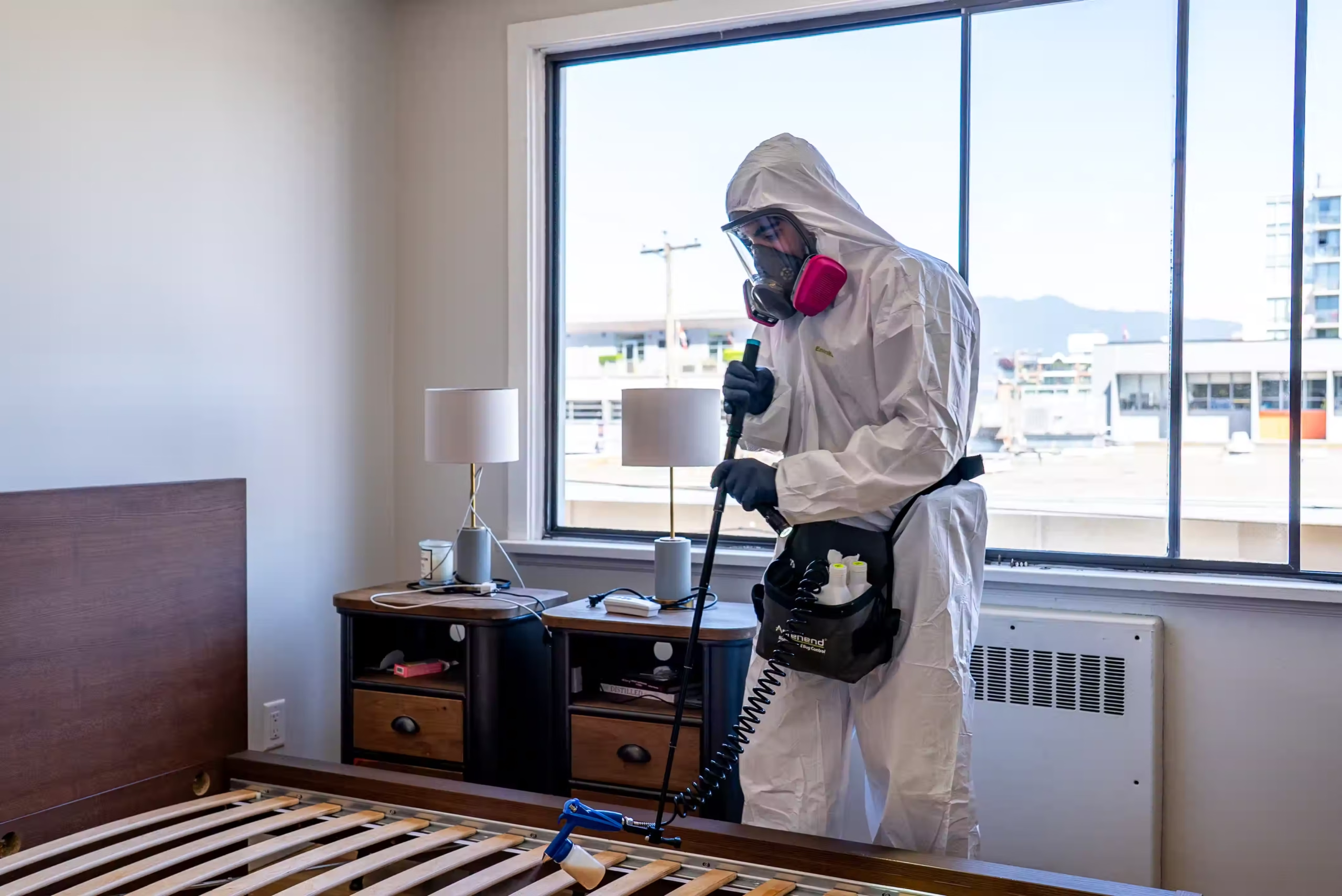
Silverfish in books can damage paper surfaces, page edges and some binding materials. If you find insects or suspicious damage, confirm the pest, separate affected items, clean carefully and investigate the surrounding shelving and room. A damaged book does not establish an active infestation, and most affected books do not automatically need replacing.
Gentle cleaning removes accessible debris and insects; controlled freezing can treat suitable books. Neither necessarily eliminates pests hiding elsewhere, and pesticides should stay off pages and bindings. Where activity continues around the home, silverfish control in Vancouver addresses the property infestation alongside practical prevention.
On this page7 sections
Signs of Silverfish in Books
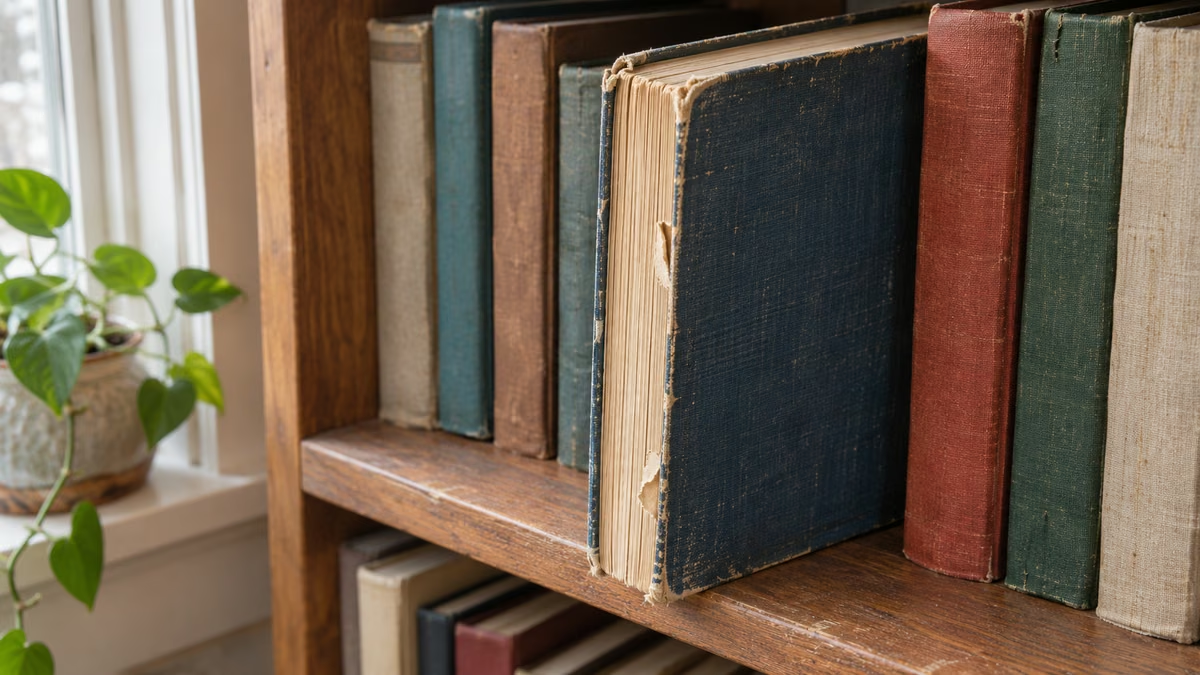
Examine the outside of the book and its storage area before opening it. Use good light, support the binding and avoid pulling apart damaged pages. The most useful distinction is between marks left sometime in the past and evidence that insects are present now.
Paper and Binding Damage
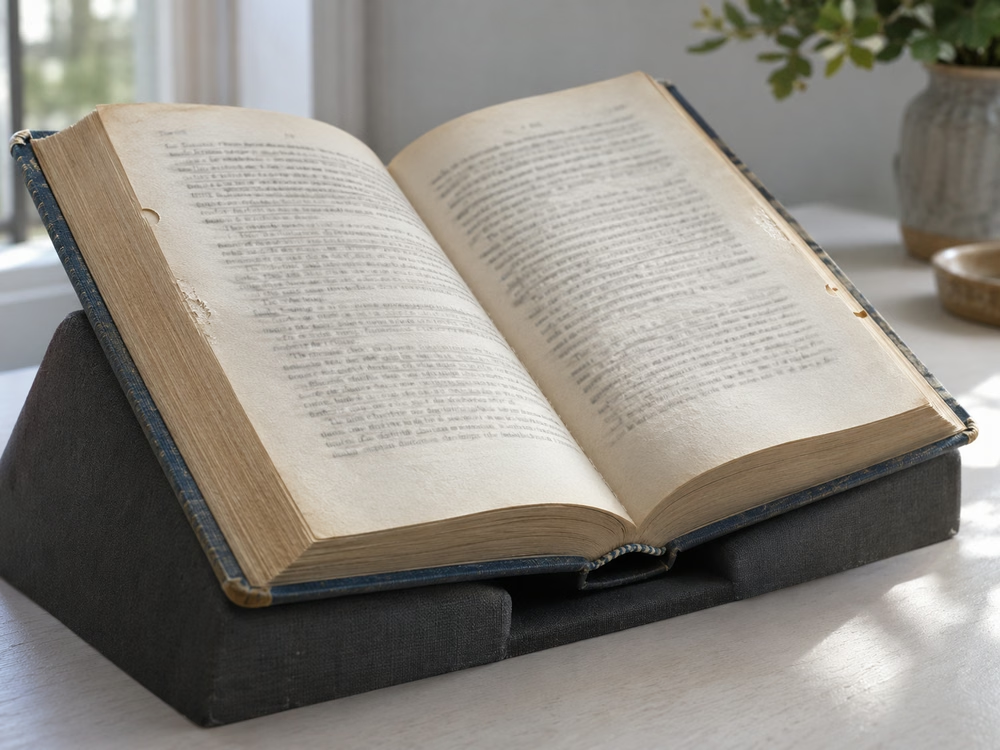
Silverfish feed by scraping or grazing surfaces. Possible signs include irregular thinned patches on paper, notched page edges and, with heavier feeding, irregular holes. Some bindings develop scraped areas or ragged edges. Starch-containing paper sizing and bookcloth can be affected.
These patterns are suggestive, not diagnostic. Other insects, handling, water and deteriorating materials can also damage books. Yellowing or a stain alone is particularly weak evidence. Do not peel back a spine or dismantle a binding to investigate.
Look for live insects, shed skins, loose scales and small dark specks around the shelf, book covers and storage cartons. Photograph existing damage before cleaning so you can compare it later. Repeated sightings or newly appearing debris strengthen the case for current activity; old holes alone do not. The wider signs of silverfish infestation can help you assess activity beyond the collection.
Silverfish vs Booklice
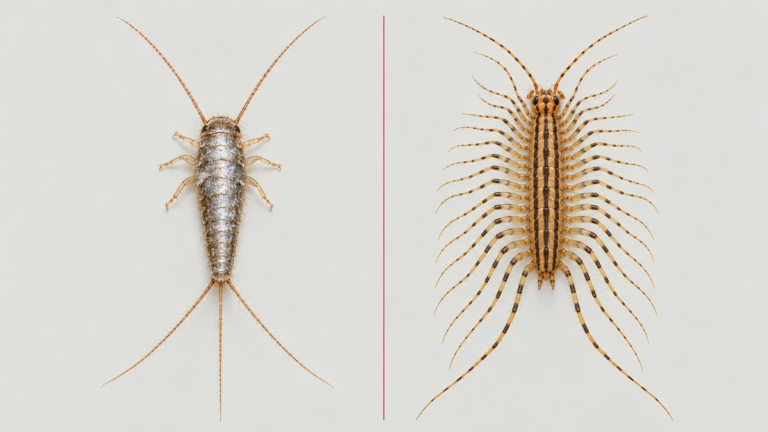
Booklice are tiny insects associated with damp materials and microscopic mould. They are usually a nuisance in homes and rarely cause substantial damage. Silverfish are larger, with a distinctly tapered body. Use the insect’s appearance as well as its location.
| Clue | Silverfish | Booklice |
|---|---|---|
| Appearance | Wingless, flattened and tapered, with long antennae and three tail filaments; common silverfish have silvery scales. | Much smaller, soft-bodied, often pale, grey or brown; indoor booklice are typically wingless and lack three long tail filaments. |
| Movement | Darts for cover with a wriggling motion. | May scurry across a page; speed alone is not a reliable distinction. |
| Likely surroundings | Dark shelf gaps, cartons, baseboards and other concealed spaces; moisture often contributes. | Damp books, paper or cardboard where fungi can supply food. |
“Bookworm” is a loose label, often used for book-damaging beetle larvae, rather than a reliable identification. If the insect is unclear, retain a trapped specimen or take a sharp photograph for identification instead of choosing treatment from paper damage alone.
Why Silverfish Are Attracted to Books
Books can supply both food and shelter. Silverfish consume paper products and materials containing starch, glue or paste, as well as household debris and other foods. Some older binding adhesives, paper sizing and cloth treatments are appealing; paper types and modern adhesives are not all equally attractive.
The spaces behind books, beneath shelves and inside corrugated cartons also provide protected hiding places. Insects may shelter around the bookcase and visit accessible materials without living inside every damaged volume. A book with feeding marks is therefore a reason to inspect the storage area, not assume the entire collection is occupied.
Moisture deserves attention, including leaks, condensation and poorly ventilated storage. However, a sighting does not prove the home is dirty or establish one particular cause. Conditions vary between rooms and concealed spaces. If you also find silverfish in bathroom cupboards or near plumbing, investigate those areas rather than concentrating solely on the bookshelf.
How to Get Rid of Silverfish in Books
Work on two connected problems: protecting suspect items and reducing activity around them. Start with containment, then clean accessible surfaces and assess whether individual books need treatment. Returning a treated volume to an active shelf can expose it again.
Isolating Infested Books
Contain suspect dry books before carrying them through the home. Use a clear, securely closed polyethylene bag or clean lidded container large enough to avoid crushing corners. Keep them apart from unaffected books and label where they came from. Containment limits movement; it does not kill insects already inside.
Inspect neighbouring volumes, bookends, shelf joints and packing materials. Separate adjacent suspect items too, but do not mix the whole collection into one box. Check cardboard folds and the space behind the shelving without scattering debris onto clean books.
This is temporary isolation, not permission to seal damp books away indefinitely. If pages feel damp, or you see mould, keep the items apart and obtain preservation advice promptly. A closed container can retain moisture and worsen the condition of vulnerable material. Avoid carrying uncovered mouldy books through occupied rooms or brushing them with routine dusting tools.
Cleaning Books and Shelves
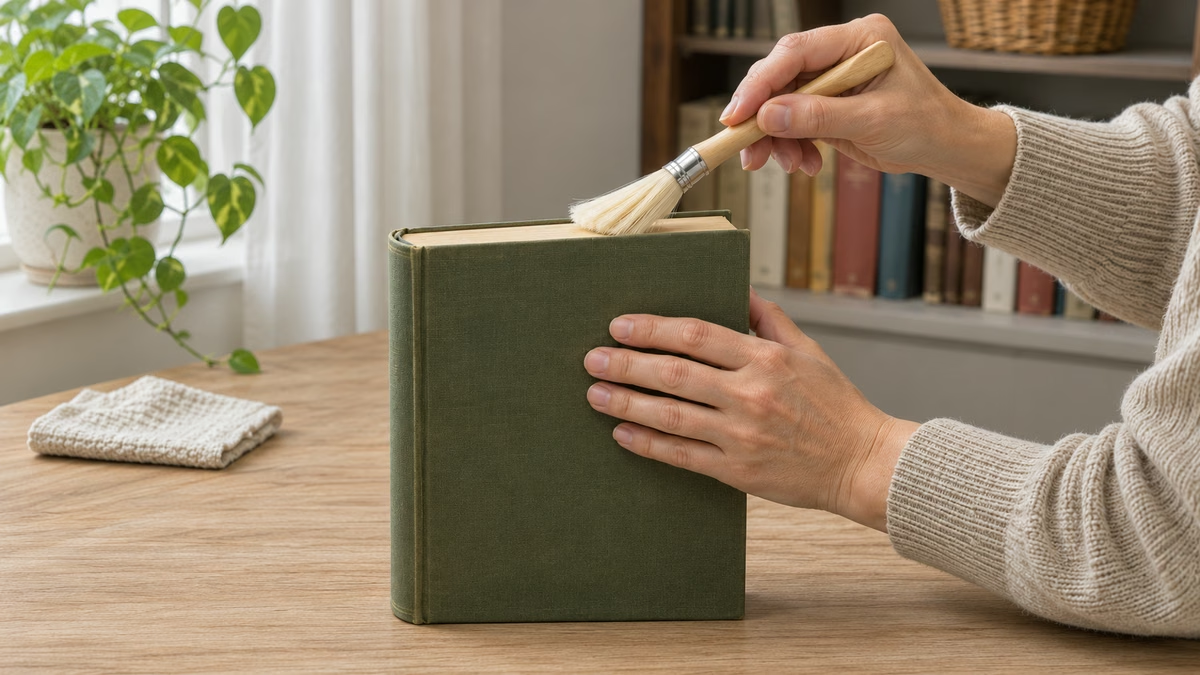
For sound, dry books, use clean, dry hands and a clear work surface. Support the book, keep it closed and gently brush the top edge away from the spine with a soft natural-bristle brush. This helps avoid pushing debris into the binding. Do not scrub, shake books vigorously or force them flat.
A vacuum with adjustable low suction and a small soft brush attachment can remove dust from stable books. A HEPA-filtered unit helps capture fine debris. Keep suction gentle and stop if fibres, flakes or loose fragments move. A household vacuum with strong, uncontrollable suction is unsuitable for fragile pages or bindings.
Clean empty shelves separately. Vacuum accessible joints, nearby cracks, baseboards and the floor beneath the bookcase. If a shelf needs damp cleaning, move books well away and allow the surface to dry completely before returning them. Keep cleaning liquids, chemical residues and moisture off books.
Contain collected debris and dispose of it outside the living area; empty or maintain the vacuum according to its instructions. Cleaning removes some accessible insects, eggs and food, but cannot establish that hidden activity has ended.
Do not treat books with essential oils, mothballs, insecticide dust or liquid sprays, or put them in an oven or microwave. For mould, powdery leather, flaking surfaces, fragile bindings or valuable material, stop and consult a book or paper conservator. Cleaning can otherwise remove parts of the book along with the dirt.
Freezing Infested Books
Sound, dry, ordinary paperbacks and hardcovers may be candidates for controlled freezing. Valuable, fragile or unusual books need conservation advice first, especially items containing parchment, photographs, painted decoration, inlays or mixed materials. Being a book does not make every component suitable for the same treatment.
The Library of Congress directs readers to specialist freezing guidance. The MuseumPests low-temperature treatment guidance includes a domestic-freezer procedure using −20°C for 14 days. Its packaging and warming precautions are part of that procedure:
- Start with a dry book at room temperature. Wrap it in tissue paper and seal it in a strong polyethylene bag that will remain intact in the cold.
- Verify freezer performance with a separate thermometer. Allow airflow around the package, avoid dense stacks, and keep it from touching freezer walls or the floor. The whole book must reach −20°C and receive the full 14-day exposure at that temperature.
- After removal, keep the package sealed while it warms evenly to room temperature: at least 24 hours for a small item, longer for thick books. Minimize handling while cold; open only after the book has fully warmed.
The sealed moisture barrier helps protect against condensation. A freezer setting alone does not confirm the temperature inside a thick volume. If you cannot verify the conditions, seek advice rather than substituting a short household-freezer schedule. Books coming from cold storage also need assessment because insects can acclimatize to cold.
This is insect treatment for dry material, distinct from freezing wet books during flood salvage. Afterwards, inspect and monitor the isolated items before reintegrating them. Freezing does not repair missing paper or eliminate insects elsewhere in the room.
Protecting Books From Silverfish
Prevention combines sensible storage with checking whether activity returns. Place insect monitors near the affected shelving and along nearby wall edges, away from books, children and pets. Label their locations and dates, then record captures and sightings so you can compare patterns. Traps help locate activity; they do not treat every hiding place or certify that a collection is pest-free.
Humidity Control and Book Storage
Use a room hygrometer rather than judging humidity by how the room feels. The Library of Congress recommends 35–50% relative humidity for preventing book pests. Treat this as a preservation-oriented range, not a guarantee of elimination. Stable conditions matter, and the air behind a crowded shelf may differ from a reading taken across the room.
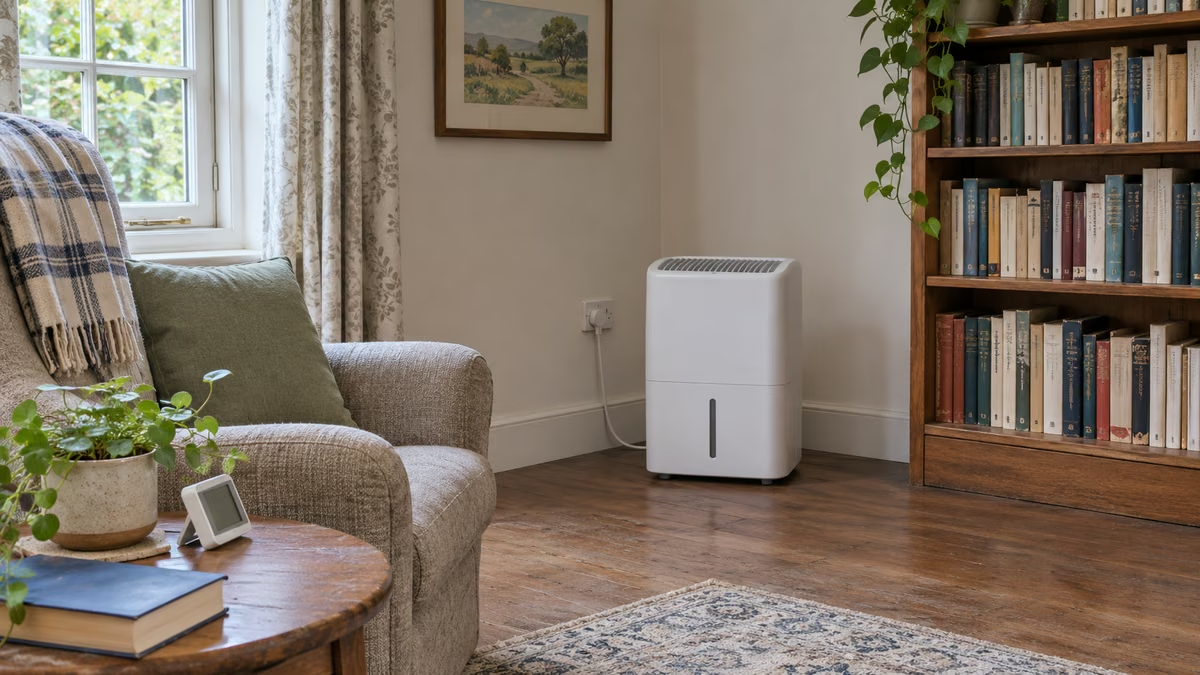
Repair leaks and investigate condensation. Use working ventilation and, where needed, a dehumidifier with clear airflow space. Avoid excessive drying or abrupt changes in conditions, particularly around sensitive bindings. A conservator can advise on an appropriate environment for unusual collections.
Keep shelving off damp floors and away from plumbing, radiators, direct sunlight and walls affected by condensation. An ordinary occupied room with reasonably stable conditions is generally preferable to an uncontrolled attic, garage or damp basement.
Shelve ordinary books upright with support, without packing them tightly against one another or the shelf back. Store oversized volumes flat. Reduce unnecessary cardboard and paper clutter nearby so inspection and cleaning remain practical.
Inspect incoming books and their packaging before shelving them. Clean, dry, pest-free books may benefit from suitable protective enclosures, but a sealed plastic box cannot correct a damp storage location. Trapped moisture and environmental extremes remain concerns even when the lid fits tightly.
When to Call Pest Control
Seek a pest assessment when sightings repeat, new damage appears, insects turn up in several areas, or activity persists despite cleaning and environmental improvements. Share photographs, capture locations and notes about leaks or storage changes. Renters should report continuing activity to their landlord or property manager, particularly where shared building spaces may be involved.
A pest professional identifies the insect, investigates the building and recommends suitable treatment locations and follow-up. Explain that books are present so the plan protects them from pesticide contamination. Any pesticide use must follow the Canadian product label.
A book or paper conservator has a different role: assessing condition, collection value and material-sensitive treatment. You may need both professionals when a valuable collection sits within a building infestation. Phantom’s silverfish service focuses on property inspection, targeted treatment and moisture-prevention advice. Consult a conservator separately for book restoration or specialist collection treatment.
Conclusion
Managing silverfish in books starts with confirming current activity and handling affected items gently. Separate suspect books, clean appropriate surfaces and address the shelving, moisture and hiding places around them. Use controlled treatment only where the material and equipment are suitable, and bring in conservation expertise for vulnerable books.
If activity continues in your home, ask Phantom Pest Control about an inspection to identify the source and appropriate next steps.
Silverfish in Books FAQs
1. Should You Throw Away Infested Books?
No, infestation alone does not mean books must be thrown away. Many sound books can be isolated, assessed and treated while the surrounding problem is addressed. Missing paper will remain missing, but minor old damage may be acceptable in a reading copy.
Consider mould, structural weakness, replacement cost and sentimental or collection value. A conservator can assess important material; replacing a badly deteriorated, readily available copy may be more practical. Keep discarded infested items contained while removing them, and do not donate or sell actively infested books.
2. Can Silverfish Spread Through Used Books?
Yes, silverfish or their eggs can travel with infested books, papers and cardboard packaging. That possibility does not make every second-hand book risky, and a clean-looking copy is not certain to be pest-free.
Inspect covers, accessible page edges, the binding and packaging over a clean surface. If you find insects or suspicious debris, separate the items and seek identification before adding them to your shelves. Avoid automatically freezing valuable used books without considering their materials and condition.