Cannabis Facility Pest Control in Vancouver & Fraser Valley
Phantom Pest Control provides cannabis facility pest control in Vancouver, BC and the Fraser Valley for Health Canada–licensed cultivation, greenhouse and processing sites. We work on the building and its perimeter, never on the plants: every trap, station and monitor is numbered on a device map, and each visit ends with a written report with photos.
Facility type
Licensed grow, greenhouse and processing sites
Common pests
Where they get in
Service area
Why Pests Still Get Into Sealed Grow Rooms
A sealed room keeps the weather out, not the deliveries. Mice ride in on pallets, packaged supplies and delivery trucks, cockroaches in shipping cartons, and drain flies breed in floor drains that irrigation keeps wet. A greenhouse adds vents, gutters and a long foundation to watch.
Health Canada’s Good Production Practices guide lists the parts of a building that keep out insects, rodents and birds as one example of compliance for processing sites: the roof, air intakes, foundation, walls, floors, drains, doors and windows. That’s the ground this program covers, while the crop itself stays with your grower’s pest program.
Cannabis stores follow our retail program, and a stand-alone warehouse that only stores and ships boxed product is covered under warehouse and distribution.
Every person, cart and pallet comes through the same few doors, and a sweep worn short of the floor leaves the gap a mouse needs.
Irrigation runoff keeps the grow rooms’ floor drains wet, and drain flies breed in the film that builds up inside a slow one.
They’re the warm, damp rooms with food and water close by, which is what cockroaches settle into after arriving in a carton.
Dried flower and boxed stock wait here for weeks, and the drugstore and cigarette beetles our stored-product page names among the most common locally feed on dried plant material such as herbs and spices.
Ridge vents, gutters and rooftop units give pigeons and starlings perches and nest sites, and gaps along the foundation let rodents in.
Trim, spent growing media and everyday garbage wait in bins until pickup, and Health Canada’s testing guidance advises storing waste where pests can’t reach it.
Pests Found in Cannabis Grow and Processing Facilities
These are the pests that invade the building, each linked to its service page. Spider mites, russet mites, thrips, aphids, fungus gnats in the growing media and powdery mildew live on the crop, so they stay with your grower and the products registered for use on cannabis.

A mouse needs a gap of about 6 mm, and once inside, rodents chew pots, substrate bags and cardboard and gnaw wiring and insulation.

They breed in the wet film inside floor drains and drain pans and don’t feed on plants, so they’re a building problem, not a crop one.

Both feed on dry plant material, spices among it, and the cigarette beetle on tobacco too; both do well in heated buildings through the winter.

Indian meal moth larvae feed on dried fruit, nuts, herbs and tobacco, and in a heated building they keep breeding through the winter.

They live where food, water and warmth meet, so the staff kitchen and the washrooms are where they settle.

In late summer and fall the workers turn to sweets and garbage, which brings them to break areas and dumpsters.

Pigeons, starlings and house sparrows perch and nest on gutters, vents and rooftop units, and their droppings foul roofs and doorways.
Take a photo with a coin beside it for scale and attach it to your estimate request; we’ll take a look before the walk-through.
When Pest Pressure Peaks Around a Cannabis Facility
Indoors, three pests keep going in every month: drain flies in wet drains, stored-product beetles in the post-harvest rooms, and cockroaches in the staff kitchen and washrooms. The chart tracks the pests that come from outside: ants in spring and summer, wasps from late spring, nesting birds through spring and summer, and rodents when the weather turns cold and wet.
Each bar uses the season on Phantom’s page for that pest, or the federal nesting calendar for migratory birds. The three pests under the chart have no season.
Spring and summer, when colonies grow and send foragers indoors to the staff room and its crumbs.
Along B.C.’s south coast, the federal calendar has most migratory birds nesting from late March to mid-August.
Cold, wet months push more of them off the yard and along the foundation toward warm rooms.
Not seasonal
Irrigated rooms keep their drains wet in any month, so the flies breed indoors all through the winter.
Heated drying and storage rooms let them feed and breed in every season.
Indoors, with heat and water on hand, they breed through the whole calendar.
Where Pests Get Into a Cannabis Facility
The walk-through starts at the fence and the bins, follows the plants from the clone room through flower and drying to the vault, and finishes in the rooms that support them.
- AYard & waste bins
Bins, debris and long grass near the walls give rats food and cover; a trimmed, clear strip along the building takes both away.
- BShipping and receiving dock
Supplies, growing media and empty totes come in here, and a dock door that doesn’t seal lets in rats, mice and birds.
- CMother & clone room
Warm and humid, with staff in and out, so its door sweep and floor drain get the same checks as a flower room’s.
- DFlower and veg rooms
Benches roll over a line of floor drains that irrigation keeps wet, and the gaps where pipes and cables pass through the walls need sealing.
- EGreenhouse bays and vents
Ridge vents, gutter lines and the foundation are the greenhouse’s edges, where birds perch and rodents travel.
- FDrying & curing rooms
Dried plant material hangs or sits in bins for weeks, so pheromone monitors go in to catch beetles and moths early.
- GTrim, packaging & the vault
Boxed stock and cardboard give mice cover, and the vault holds product that can sit for months; both get monitors.
- HFertigation & mechanical room
Tanks, pumps, drain pans and floor drains keep this room wet and warm, which suits drain flies.
- IStaff room & offices
Lunches, crumbs and coffee draw ants and cockroaches, so sightings here go in your team’s log for the technician.
What Your Team Handles, and What a Technician Does
Most prevention happens at the doors, the drains and the bins, where daily habits keep pressure down between visits. Pesticides, rodent devices, fly lights and bird work are a technician’s job.
Your team can
Close airlock and dock doors behind every cart, and report a sweep that light shows under.
Lift the grates and brush the film out of floor drains and drain pans; boiling water or bleach knocks the flies back for a while but leaves the film behind.
Note droppings in the vault, flies over a drain or a nest on a vent with the room and the date, and leave it for the technician. Our guide to mouse and rat droppings tells the two apart.
Needs a technician
B.C.’s Integrated Pest Management Act (section 4) allows pesticide services only under a licence, apart from exemptions in its regulations, and Health Canada’s testing guidance asks that a product used for structural pest control be registered for that use and applied as its label directs.
Traps work inside the building and locked bait stations stand outside it, each one numbered on the device map.
Fly lights for our fly control work hang away from product, and pheromone monitors watch the drying, curing, packaging and vault rooms.
Door, vent and greenhouse gaps are sealed, wasp nests are removed, and pest birds are kept off roofs and vents.
How Our Cannabis Facility Pest Control Program Works
Five steps from the first walk-through to a program that runs around your harvests and room turnovers.
From the fence and bins through the grow rooms, the greenhouse, drying, packaging and the vault to the support rooms, marking each door, drain, gap and nest site on the plan.
Traps inside, locked stations outside, fly lights away from product and pheromone monitors in the post-harvest rooms, each with its number on the map.
Small gaps are sealed, larger openings are quoted as exclusion work, drain breeding sites are cleared, and roofs and vents are made unwelcoming to pest birds.
Visits are planned around harvests, room turnovers and sanitation days, under your site’s sign-in rules.
Each visit closes with a written report and photos: what each device caught, what was sealed or treated, and what your team should look at.
Our regular maintenance program puts the visits on a fixed calendar and keeps a record of each.
Before the First Walk-Through
These let the device map start on the first visit. Our client forms page holds Phantom’s preparation sheets, including the rodent program, pantry moths and beetles.
A plan with the grow rooms, drains, the vault and every exterior door marked lets the device map start on the first visit.
Tell us your security, gowning and sanitation rules, and who will walk the rooms with the technician.
List harvests, room turnovers and sanitation days for the coming months, so visits land where they fit.
Put a coin next to droppings or a dead insect for scale, then attach the photo to your estimate request.
Have your sanitation program, past pest findings and any earlier contractor’s reports at hand.
Plan access to the vault, the drying rooms and the roof, so nothing on the map is left for a second trip.
After the Walk-Through: How Your Program Runs
What follows the first visit. The schedule is agreed with your operations or QA manager.
Walk-through
The first visit maps the yard, the dock, the grow rooms, the post-harvest rooms and the support rooms, and the quote follows from what it finds.
Entry points
The rodent program seals gaps up to the size of a toonie; larger openings, such as a greenhouse vent with torn screening, are quoted as exclusion work.
Device map
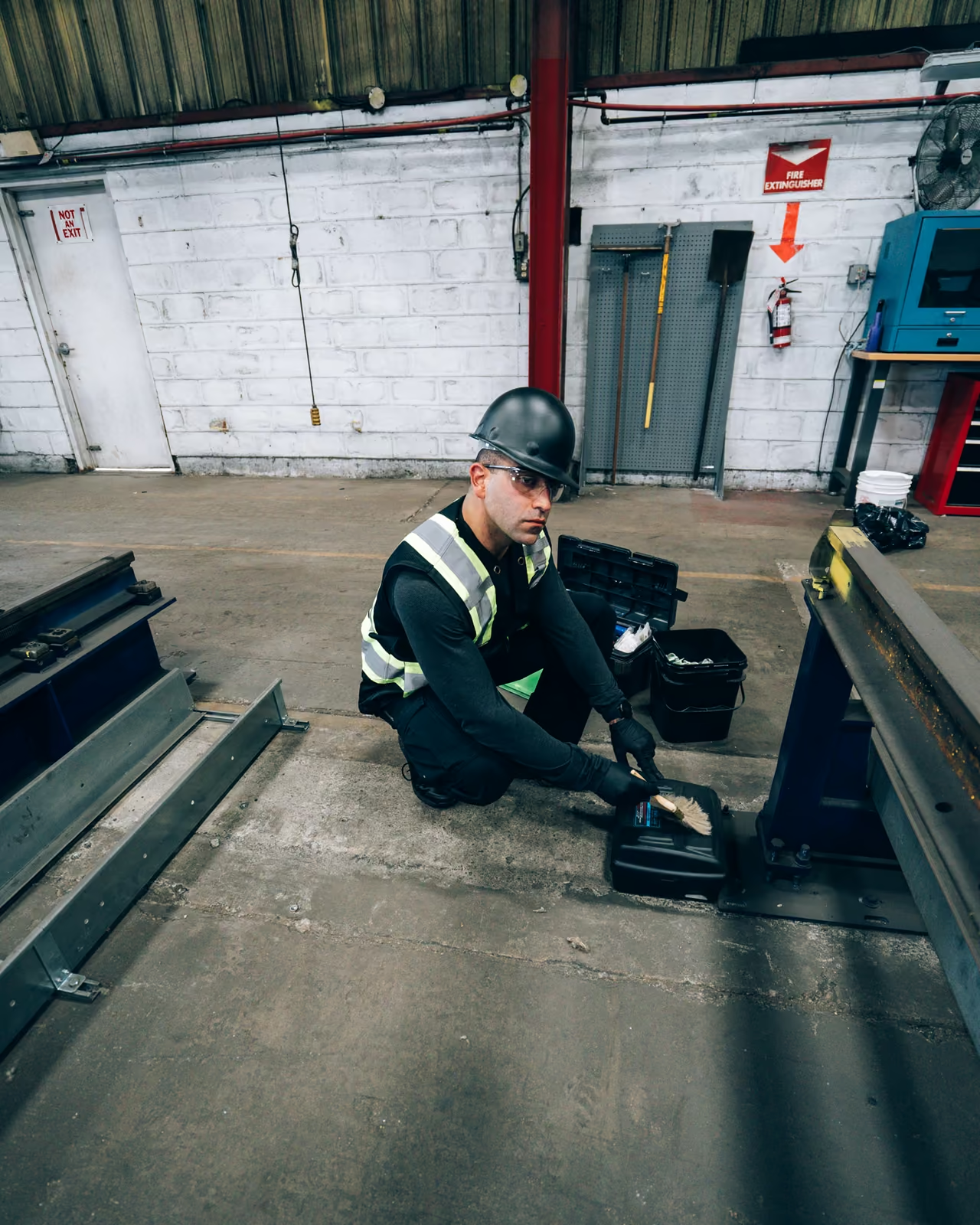
Every device carries a number, and the same number marks its spot on the map in your file.
Service reports
A written report with photos closes every visit, room by room.
Room changes
When a room is emptied, converted or added, its devices move with it and the map is redrawn.
If a trap or station is in the way of a bench move or a cart route, ask us to shift it, so the map stays right.
An empty room is the easiest time to check its drains, wall bases and pipe gaps, so let us know when one is coming.
What a Technician Checks at a Grow-Room Door
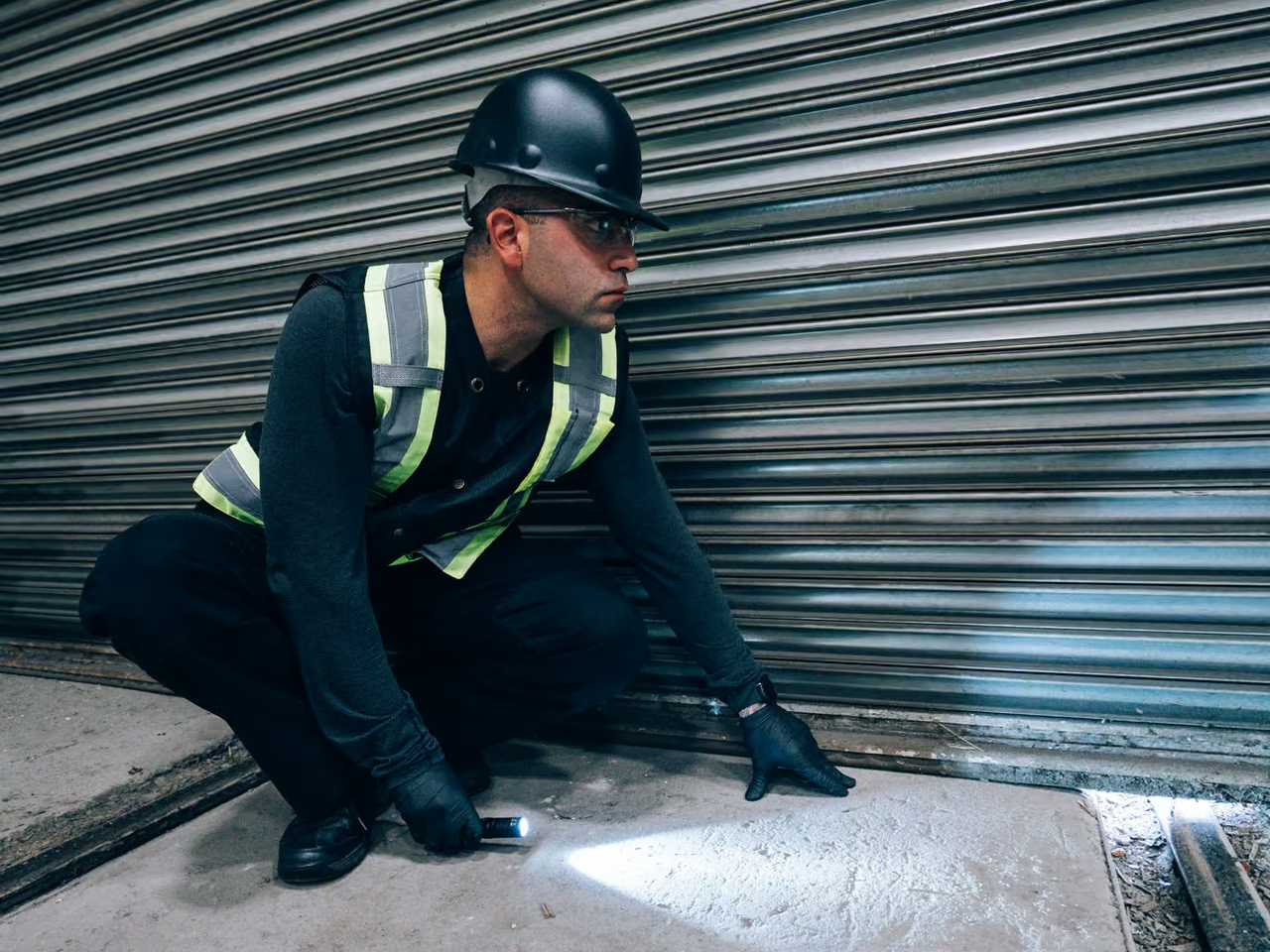
In a sealed room, the door is where rodents and crawling insects arrive and the floor drain beside it is where flies breed, so a check starts with both. A mouse fits through a gap of about 6 mm, and a sweep worn short of the floor can leave one.
Light under the door, a sweep worn short, and droppings or rub marks along the threshold.
Holes where irrigation lines, conduit and ducting pass through the wall, and whether each is sealed.
Film under the grate, standing water and small flies resting on the walls nearby.
Traps along the wall outside the room, checked and logged on the device map.
The technician runs a light along the threshold and the foot of the frame, looking for daylight, droppings and gnawed edges. Every hole where an irrigation line, conduit or duct passes through the wall is checked for a seal, and B.C.’s rodent guide for agricultural operations says to seal any opening bigger than 6 mm. Health Canada’s testing guidance adds filters or mesh in air vents, to keep pests from moving into the facility and from room to room.
At the drain, the grate comes up and the film, the standing water and the trap below are checked. UC IPM puts the drain fly’s life cycle at 8 to 24 days, depending on temperature, so film left between cleanings can raise a new generation. The buildup where they breed is removed, as our flying insect control page describes, and the traps on the corridor side of the wall are checked and logged on the device map.
Why Choose Phantom for Your Cannabis Facility
Credentials, a report after every visit, and work that stays on the building’s side of the line.
Experience
15+ years of pest control experience serving British Columbia
Credentials
Fully licensed, insured and certified
Reporting
A written, photographed report after every visit
Scope
Building and perimeter work only, with nothing applied to plants
EXCELLENT Based on 830 reviews
 Posted on Google

 Ashley WoodWe were having some problems with mice at our home so we contacted Phantom and Darcey came and resolved the issues quickly. Darcey was friendly, great with our dog and made sure we understood everything he was doing and what to expect. Happy to report no more mice! Thank you, Darcey!Posted on Google
 Michelle HerrExcellent pest control service! The team was professional, friendly, and knowledgeable. They arrived on time, explained the treatment process clearly, and made sure everything was taken care of. Their attention to detail and commitment to customer satisfaction were impressive. I really appreciate their prompt service and effective results. Highly recommend them to anyone looking for reliable and professional pest control services!Posted on Google
 Nasib AbdulMark was great and he did a great job and was very knowledgeable.Posted on Google
 HenryDarcey provided exceptional support in resolving our pest concerns. He was punctual, highly knowledgeable, and professional throughout the process. We have been trying to deal with these issues for quite some time without any luck but thankfully the matter is now resolved. We appreciate the dedication he demonstrated and will be sure to reach out should we require his services again.Posted on Google
 Jacqueline BruceI want to let you know that June did an amazing job on our house for the moths. He was really friendly, patient, professional and conscientious. I wasn't fully ready for the treatment when he arrived and he managed to move some clients so he could return later. He explained a lot about the treatment and the moths' habits which really helped with other areas that he wasn't even treating. He kindly helped me moved some things to barricade the area from pets. I would get Phantom back and highly recommend them.Posted on Google
 Fraser HannayDarcey was amazing at helping us deal with a wasp nest. Friendly, knowledgeable and on time! Thank you!Posted on Google
 JanetWe hired Phantom Pest Control to eliminate a wasp nest inside our house and the service was great. Information on the phone when I first called to book an appointment was clear and we got an appointment quickly. Juan, the specialist who arrived to do the job, fully explained the process, did the work, and explained what to watch in the outside chance additional work might be needed. We are happy with the job and were glad to have Juan as our technician.Posted on Google
 Jenny WuWe received exceptional service from Joy. She was both professional and knowledgeable, explaining the service thoroughly.Posted on Google
 Sean AbbottThey showed up on time, early actually. Mark was very professional and explained how the cockroaches work. He was personable and efficient, and hygienic with how he worked (wearing protective boot covers and gloves). I was impressed and would definely call again if needed.
Cannabis Facility Pest Control Across Vancouver & Fraser Valley
By our count of Health Canada’s list of licensed cultivators, processors and sellers (updated November 6, 2026), about 235 sites in B.C. hold a licence, and about half of them include micro-cultivation. Our program covers licensed sites across the Lower Mainland and the Fraser Valley, and each city listed here has its own local page.
Vancouver & North Shore
Burnaby & Tri-Cities
Richmond & Delta
Fraser Valley
Related Services for Cannabis Facilities
Services that can run alongside a cannabis facility program.
Traps indoors, locked stations around the outside, and sealed gaps for rats and mice.
Drain fly work in grow-room, fertigation and staff-room drains.
Pheromone monitoring for beetles and moths in the drying, curing, packaging and vault rooms.
Sealing doors, vents, pipe gaps and greenhouse openings against rodents and birds.
Cannabis Facility Pest Control FAQs
Spraying in grow rooms, Health Canada’s rules, rodent bait, crop pests, greenhouses, security, scheduling, birds, frequency and cost.
Prefer to talk?
Can a pest control company spray in a grow room?
Not on the plants. Under section 81 of the federal Cannabis Regulations, cannabis must not be treated with a pest control product unless it is registered for use on cannabis under the Pest Control Products Act, or otherwise authorized under it. Health Canada’s page on those products adds that licence holders may restrict access to them, watch how they’re applied and test for unauthorized use.
Phantom doesn’t treat plants or growing media. For structural pest control at a cannabis site, Health Canada’s pesticide testing guidance advises products registered for that specific use and no cross-contamination of growing areas, for example by turning off an empty grow room’s ventilation during an application. Inside the rooms, our program relies on traps and monitors. Since January 2, 2019, cannabis has been tested for every active ingredient on Health Canada’s pesticide list, which held 96 in its July 31, 2026 version.
Does Health Canada require a pest control program?
Not by name: the Cannabis Regulations never mention pests. They do require buildings designed, built and kept up so that they prevent contamination of cannabis (section 84), and a written sanitation program (section 87). A processing licence holder must also keep every animal out of any building where cannabis is produced, packaged, labelled or stored (section 88.7).
For processing sites, the Good Production Practices guide gives examples of what may show compliance: pest control devices checked on a schedule, no cats used for pest control, and third-party pest control records. Health Canada notes the guide is still to be updated for the 2025 amendments. On a Phantom program, the device map and the report from each visit can serve as the third-party records the guide mentions.
Can rodent bait be used inside a cannabis facility?
On a Phantom program it isn’t: traps work inside the building and bait stays in locked stations outside. Health Canada’s guide gives as an example of compliance pest control products and devices used in a way that doesn’t contaminate anything.
B.C. also limits second-generation anticoagulant rodenticides to the essential service locations in Schedule 6 of the Integrated Pest Management Regulation. A cannabis production site isn’t named there. The agriculture item borrows its meaning from B.C.’s farm-classification regulation, and the food item covers food facilities, so the applicator confirms whether any item fits a site. Even then, the rule wants rodents or fresh signs of them first, other methods tried without success, a written rodent management plan, and no more than 35 consecutive days or 120 days a year of use.
Who deals with spider mites, thrips and fungus gnats?
Your grower’s crop program. Those pests live on or around the plants, and anything used against them is applied to cannabis, so it must be registered for that use. B.C.’s guide to integrated pest management for commercial cannabis, written for crops grown indoors and in greenhouses, covers them and recommends weekly inspection by a person dedicated to monitoring.
Phantom’s side is what invades the building. Fungus gnats lay their eggs in the growing media and their larvae feed on roots, and shore flies breed in algae on wet surfaces; both are the grower’s. Drain flies breed in the film inside drains and drain pans and don’t feed on plants, so they’re ours, under our flying insect control service. Wet floors and poor drainage in a grow room can breed shore flies and drain flies at once, so drying them out is a shared fix.
Do you work in cannabis greenhouses?
Yes, on the building and its perimeter. B.C. certifies pesticide applicators by category: its Structural category covers pests in, near or on a structure, including insects, rodents and birds, and a separate Agriculture: Greenhouse category is for managing pests in nurseries and greenhouses. At a cannabis greenhouse, our side is the foundation, doors, vents, gutters and the ground around them. Greenhouses growing other crops are covered by our farm pest control program.
B.C.’s cannabis guide recommends screening vents with insect netting and keeping a strip with no weeds or vegetation around the outside of a greenhouse. We seal gaps at the base and the doors, keep pest birds off gutters and vents, and set rodent stations along that perimeter, each one on the device map.
How do technicians work with our security rules?
By following yours. Under sections 68 and 70 of the Cannabis Regulations, access to each operations and storage area at a standard licence holder’s site is limited to people whose duties require them there, and cameras watch those areas; in a grow area, only its entry and exit points. Health Canada’s security guidance lists procedures for temporary access by visitors, vendors and contractors among the parts of restricted access.
Send those procedures when you book, with the name of the person who will walk the rooms with the technician. In a processing building, section 88.92 has anyone who enters wear the clothing, footwear and protective coverings the site requires, including gloves, a hairnet, a beard net and a smock, and that includes our technicians.
Can visits fit around harvests and room turnovers?
Yes. Our office takes bookings Monday to Friday, 9 AM to 5 PM, and we’re open 24/7 for pre-arranged commercial services, so a visit can be set for a turnover, a sanitation day or the quietest hours of the week.
Where a pesticide is used on the structure, WorkSafeBC’s pesticide rules keep workers out of a treated area until the label’s restricted-entry interval has passed. Baits are exempt unless the label says otherwise, and small spot or crack-and-crevice treatments with a slightly toxic product on a structure are exempt when a qualified person finds that workers aren’t at risk of exposure.
Which birds can be kept off a greenhouse or roof?
The pest species. Rock pigeons, European starlings and house sparrows aren’t on the federal list of protected migratory birds, and B.C.’s Designation and Exemption Regulation exempts them from the Wildlife Act’s nest rule, so our bird control service can keep them off gutters, vents and rooftop units. Swallows and gulls are protected: under the Migratory Birds Regulations, 2022, their nests are left alone while they hold a live bird or a viable egg.
How often should a cannabis facility have pest control?
The walk-through sets it. Phantom’s Rodent Program sheet lists ongoing maintenance as monthly, bi-monthly or quarterly, and Health Canada’s guide gives devices checked on a schedule as an example of compliance. Between our visits, the weekly crop checks that B.C.’s cannabis guide recommends are your grower’s, and anything they see at a door or a drain goes into our next report.
How much does cannabis facility pest control cost?
There’s no set price. The commercial site inspection is complimentary, and we write the quote after it. The quote depends on the size of the site and the time the program takes, such as the number of rooms, drains and devices, any greenhouse, and how often visits are needed.
Book a Walk-Through
Tell us about the site, its grow rooms, greenhouse and post-harvest rooms, and what your team has seen, and we’ll plan the first walk-through around your production calendar.
Attach your site rules and harvest calendar to the request, and we’ll plan the first visit around both.