Construction Pest Control in Vancouver & Fraser Valley
Phantom Pest Control provides construction pest control in Vancouver, BC and the Fraser Valley for general contractors, developers and builders, from site preparation to handover. You get locked bait stations on a numbered device map, bird and wasp work, and a written report after every visit.
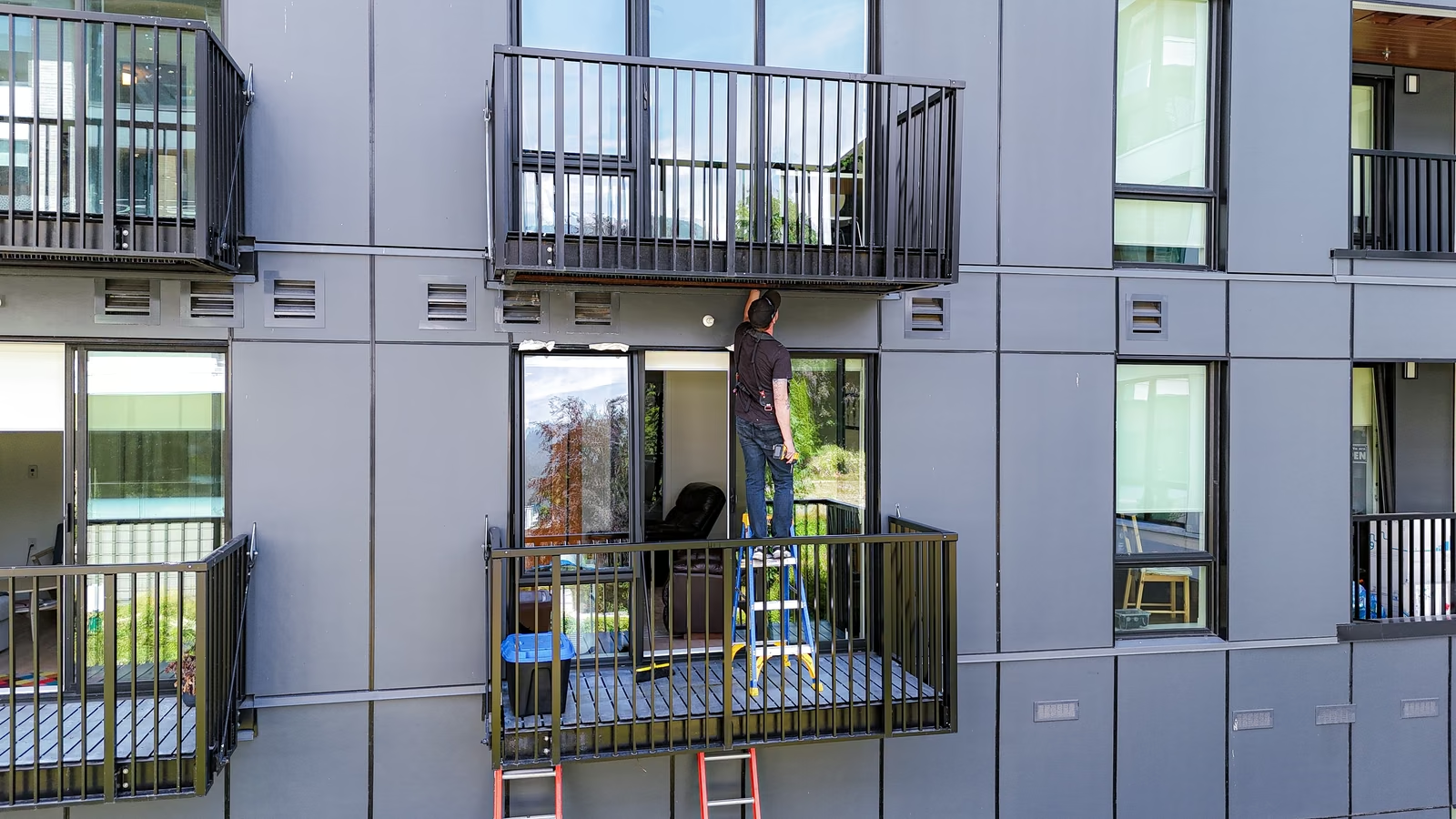
Site type
Job sites & new developments
Common pests
Where they get in
Service area
Why Construction Sites Draw Rats, Birds and Wasps
Construction activity can increase rodent movement as rats and mice search for new nesting areas. Crews add food waste, and open floors, scaffolding and stored materials give pigeons and wasps places to settle during construction, before the building is sealed.
That puts pest control into the site plan from the start, not after the first sighting: stations along the hoarding, food waste kept lidded, bird and wasp work planned around the nesting season, and a pre-handover check before anyone moves in.
Where an old building comes down first, several Lower Mainland cities want a rodent declaration before the demolition permit; our rodent abatement for demolition page covers that step. Other kinds of business start from our commercial pest control overview.
A 2016 City of Vancouver memo named demolitions that skip rat control as a major past cause of rat problems.
Lunch scraps and open bins near the trailers feed rodents and draw flies.
Wood piles and building materials left on the ground help rats settle in and nest.
Pigeons roost and nest on ledges, parkades and rooftops, and an unfinished building has all three.
Small sheltered gaps are enough for a queen wasp to start a colony, and scaffolding has plenty.
Unsealed gaps around pipes and mechanical systems become rodent routes in the finished building.
Pests That Move Onto a Construction Site
The pests a construction site inspection checks for, from the hoarding line to the roof, each linked to its full service page.

Construction moves them in search of new nesting areas, and they enter through small gaps around pipes and foundations.

Pigeons roost and nest on ledges, parkades and rooftops, and starlings use roof voids and vent openings.
Gulls defend rooftop nests, and once eggs are laid a gull nest can’t be moved or disturbed.

Colonies start in early spring and peak in late summer, often in sheltered gaps close to where crews work.

They tunnel into damp or decaying wood to nest, so wet lumber on site is worth a look.

Dampwood termites, the region’s most common kind, move into wood that stays damp or is decaying.

House flies breed in food waste and garbage, so overfull bins by the lunch area draw them.
Describe it or send a photo with your estimate request.
When Pest Pressure Peaks on a Job Site
Building schedules run in every season, so the chart shows what pushes onto a site from outside, month by month. Nesting birds follow Environment and Climate Change Canada’s nesting periods, and our winter rodent prevention tips cover the colder months.
Bars follow the months on Phantom’s own pest pages for the Lower Mainland, and the nesting band follows ECCC zone A1 (late March to mid-August).
On the B.C. coast, the general nesting period runs from late March to mid-August; an active nest can’t be disturbed in any month.
Not seasonal
In mild weather pigeons can breed through the year, so ledges and parkade decks stay on the list.
Crews eat on site whatever the month, so bins and the lunch area can draw rodents in any season.
Pipe and cable openings appear whenever the trades reach them, so they’re checked before walls close.
Where Pests Get Onto a Job Site
A site inspection follows the routes pests take, from the hoarding line and the site yard to the building shell and the gaps to close before handover.
- AHoarding & fence line
Locked bait stations sit along the hoarding, where rodents travel around the site.
- BExcavation & spoil piles
Bank swallows dig nests into steep soil piles, so ECCC advises sloping active piles before mid-April.
- CSite trailers & lunch area
Lunches and scraps around the trailers feed mice and draw flies.
- DBins & material laydown
Open bins feed rats, and wood piles on the ground give them a place to nest.
- EScaffolding & formwork
Small sheltered gaps in scaffolding and formwork are enough for a wasp colony.
- FOpen floors & roof
Pigeons roost on ledges and rooftops, and gulls defend nests on flat roofs.
- GService penetrations
Gaps around pipes and cables are sealed while they can still be reached.
- HParkade & loading doors
Gaps under parkade and loading doors are checked before tenants move in.
- IVents & balconies
Birds nest in open vents, and spikes or wire keep pigeons off ledges and balconies.
What Your Site Team Can Do, and What Needs a Technician
Bins, stored materials and quick reports are the site team’s part between visits. Bait, nests and pesticides stay with a technician.
Your team can
Keep food waste in lidded bins near the trailers, and get them emptied on the pickup schedule.
Stack lumber and building materials off bare ground and away from the hoarding, so rats lose their cover.
Note where and when a rat, nest or wasp turns up, so the next visit starts in the right spot.
Needs a technician
Under section 4 of B.C.’s Integrated Pest Management Act, pesticide services need a licence, and section 3 bars using any pesticide in a way that doesn’t accord with its label.
Locked stations go outside along the hoarding; inside the structure, traps do the work.
Netting, spikes and other deterrents go up only after nests are checked, because most occupied nests are protected.
Nests in scaffolding, hoarding and site trailers are removed by a technician, not the crew.
How Our Construction Pest Control Program Works
Five steps from the first site walk to a building ready for handover, with the visit schedule agreed after the first inspection.
We walk the hoarding line, yard, building shell and roof with your superintendent, and note where each phase of work opens new risks.
Locked bait stations go outside along the hoarding and traps go inside the structure, each numbered on your site map.
Bird deterrents go on with any nest work kept within the federal bird rules, and wasp nests are removed from scaffolding, hoarding and trailers.
A written report follows every visit, so the site file shows what was found and what was done.
Before occupancy, small gaps are sealed, larger openings are quoted as exclusion work, and the developer gets a report.
Our Rodent Program and Bird Deterrence Services put visits on a set schedule.
Getting Ready for the First Site Walk
These six steps let the first walk start from your plans; treatment-specific steps sit on our preparation sheets.
A plan showing the hoarding, gates and laydown areas becomes the base of the numbered device map.
Tell us when excavation, framing and close-in are due, so visits line up with each phase.
Section 24 of the Workers Compensation Act has the prime contractor coordinate safety on a multi-employer site, so send the sign-in, orientation and PPE rules we follow.
One contact, usually the superintendent, receives each report and flags new activity.
Service is open 24/7 for pre-arranged commercial services, so checks can be booked around crane lifts and trade schedules.
We check the roof, scaffolding, parkade and locked storage, so plan keys or an escort.
From Site Walk to Handover
What follows the first inspection. The schedule is agreed with your superintendent.
Site inspection
A complimentary site inspection comes first, then a quote for your project.
Device map
Stations and traps are placed and numbered on your site plan.
Scheduled visits
Visits follow the schedule agreed after the inspection.
Visit reports
Each visit ends with a written report for the site file.
Pre-handover check
Before occupancy, gaps are sealed or quoted, and the developer gets a report.
The map works only if each station stays at its number, so tell us before one has to move for the work.
When a new floor opens up or the roof goes on, tell us, so the next visit covers it.
What B.C. Rules Mean for Rat Control on a Job Site
Four rules shape rodent work on a B.C. construction site. These are the provisions as we read them in October 2026; the regulations and each product’s label have the final word.
Second-generation rodenticides are for listed essential services, and job sites aren’t listed.
Stations lock, and sit within 15 metres of a structure, or up to 100 metres along a fence when fastened down.
Where workers could be exposed, the employer needs an exposure control plan.
Several cities want a rodent declaration before a demolition permit.
B.C.’s SGAR restrictions took effect on January 21, 2023: under section 81 of the Integrated Pest Management Regulation, a licensee may use second-generation anticoagulant rodenticides (SGARs) only at the essential-service locations listed in Schedule 6. Construction sites aren’t among its 28 listed locations, so on a typical job site rodent work relies on prevention, trapping and other rodenticides used within an IPM program, as the province’s rodenticide page explains, and stations follow Health Canada’s bait-station requirements.
WorkSafeBC says that where workers could be exposed to hantavirus, the employer must develop and implement an exposure control plan, and its hantavirus booklet names some construction trade workers among those who may enter rodent-infested sites.
Why Choose Phantom for Your Construction Site
The credentials behind the work, what goes into your site file after each visit, and where to read client reviews.
Experience
15+ years of pest control experience serving British Columbia
Credentials
Fully licensed, insured and certified
Reporting
A written report after every visit
Maintenance
Quotes
Free site inspection, then a quote for your project
EXCELLENTTrustindex verifies that the original source of the review is Google. We were having some problems with mice at our home so we contacted Phantom and Darcey came and resolved the issues quickly. Darcey was friendly, great with our dog and made sure we understood everything he was doing and what to expect. Happy to report no more mice! Thank you, Darcey!Posted on GoogleTrustindex verifies that the original source of the review is Google. Excellent pest control service! The team was professional, friendly, and knowledgeable. They arrived on time, explained the treatment process clearly, and made sure everything was taken care of. Their attention to detail and commitment to customer satisfaction were impressive. I really appreciate their prompt service and effective results. Highly recommend them to anyone looking for reliable and professional pest control services!Posted on GoogleTrustindex verifies that the original source of the review is Google. Mark was great and he did a great job and was very knowledgeable.Posted on GoogleTrustindex verifies that the original source of the review is Google. Darcey provided exceptional support in resolving our pest concerns. He was punctual, highly knowledgeable, and professional throughout the process. We have been trying to deal with these issues for quite some time without any luck but thankfully the matter is now resolved. We appreciate the dedication he demonstrated and will be sure to reach out should we require his services again.Posted on GoogleTrustindex verifies that the original source of the review is Google. I want to let you know that June did an amazing job on our house for the moths. He was really friendly, patient, professional and conscientious. I wasn't fully ready for the treatment when he arrived and he managed to move some clients so he could return later. He explained a lot about the treatment and the moths' habits which really helped with other areas that he wasn't even treating. He kindly helped me moved some things to barricade the area from pets. I would get Phantom back and highly recommend them.Posted on GoogleTrustindex verifies that the original source of the review is Google. Darcey was amazing at helping us deal with a wasp nest. Friendly, knowledgeable and on time! Thank you!Posted on GoogleTrustindex verifies that the original source of the review is Google. We hired Phantom Pest Control to eliminate a wasp nest inside our house and the service was great. Information on the phone when I first called to book an appointment was clear and we got an appointment quickly. Juan, the specialist who arrived to do the job, fully explained the process, did the work, and explained what to watch in the outside chance additional work might be needed. We are happy with the job and were glad to have Juan as our technician.Posted on GoogleTrustindex verifies that the original source of the review is Google. We received exceptional service from Joy. She was both professional and knowledgeable, explaining the service thoroughly.Posted on GoogleTrustindex verifies that the original source of the review is Google. They showed up on time, early actually. Mark was very professional and explained how the cockroaches work. He was personable and efficient, and hygienic with how he worked (wearing protective boot covers and gloves). I was impressed and would definely call again if needed.
Construction Pest Control Across Vancouver & Fraser Valley
Our construction pest control program covers job sites across Metro Vancouver and the Fraser Valley, from Vancouver and Burnaby to Surrey, Langley and Abbotsford.
Vancouver & North Shore
Burnaby & Tri-Cities
Richmond & Delta
Fraser Valley
Related Services for Construction Sites
Services that can run alongside a construction program.
Rodent programs built on trapping, with small gaps sealed up to the size of a toonie.
Netting for parkades and roof voids, and spikes or wire for ledges, parapets and rooflines.
Wasp and yellowjacket nest removal, from scaffolding to site trailers.
Rodent inspections and declarations for city demolition permits.
Construction Pest Control FAQs
Ten questions site teams ask, from start dates and nests to costs and handover.
Prefer to talk?
When should pest control start on a construction project?
Before demolition or excavation, ideally. The City of Richmond notes that demolishing a house with rodents in it can lead to a localized spike in rodent conflicts, so stations go along the hoarding before the work begins. An early start also lets bird work be planned well outside the nesting season, as Environment and Climate Change Canada advises.
Can we remove a bird nest from scaffolding or a roof?
Usually not while it’s in use. Section 5 of the Migratory Birds Regulations, 2022 bars disturbing a nest that holds a live bird or a viable egg, and gulls are migratory birds, so an active gull nest on a roof stays until the young leave. A few nests stay protected even when empty, such as eagle, osprey and heron nests. Starlings, house sparrows and rock pigeons are exempt. For most species, once the nest is empty, Environment and Climate Change Canada allows blocking the spot with a tarp or wire mesh, as long as the bird isn’t disturbed.
What should crews do if they find mouse droppings?
Don’t sweep or vacuum them. The Public Health Agency of Canada advises spraying droppings and nesting material with 1 part bleach to 9 parts water, letting it soak for 10 minutes, then wiping it up with gloves on, and wearing an N95-level respirator in a confined space. In B.C. the hantavirus carrier is typically the deer mouse; our hantavirus guide explains the risk.
Is termite treatment needed during construction in the Lower Mainland?
Only where termites are known to occur. There, the B.C. Building Code gives two options: at least 450 mm of clearance between structural wood and the ground, or wood pressure-treated against termites; its map of known termite locations shades parts of southern B.C. On the coast, the Pacific dampwood termite favours wood that touches the ground or stays damp, and the western subterranean termite also occurs on the south coast. If you find termites, our termite control service can inspect.
What should the crew do about a wasp nest on site?
Leave it, mark the spot and keep people clear. Phantom’s wasp page notes that colonies grow rapidly over the summer and become more aggressive as the season goes on, with activity peaking in late summer and early fall, so a nest found in spring is a smaller job than the same nest in August. Our guide on why you should never remove a wasp nest yourself explains the risk.
How often does a technician visit a construction site?
As often as the site’s risk calls for, agreed after the first inspection. The B.C. rules on this page don’t set a visit interval, and Phantom’s Rodent Program sheet notes that many clients opt for monthly, bi-monthly or quarterly maintenance, and the visit reports show whether the schedule is working.
How much does construction pest control cost?
Each site gets its own quote after a complimentary inspection. Phantom publishes no commercial price list, since the size of the site, how active the problem is and the treatment needed all change the work. The walk shows us your phases and risks, and the quote follows from it.
What if bank swallows dig into a soil stockpile?
Stop work on that pile and keep crews back. Environment and Climate Change Canada’s bank swallow guidance, written for sand and gravel pits, says to stop excavating a colonized bank until the birds leave after the breeding season, keep a buffer of at least 50 metres, and not use scaring devices once a colony is established. The species has lost 98% of its Canadian population over the last 40 years. Next season, slope active piles below 70 degrees before mid-April.
What happens to the bait stations at handover?
They come out when the site program ends. Phantom’s Rodent Program sheet has products removed once treatment is complete, because devices left on site too long can draw insects. If the owners, the strata council or a property manager want monitoring to continue after handover, a new program can start under them; our strata pest control and property management pages cover that side.
Can standing water on a site breed mosquitoes?
Yes. Mosquitoes breed in standing water and can go from egg to adult in as little as one week in warm weather, and West Nile virus has been detected in British Columbia. Excavations, tarps, buckets and rutted ground all hold rainwater, so tipping out or draining it between visits removes breeding spots before the summer peak. Our mosquito control service covers the rest.
Book a Site Walk
Tell us where the site is, what stage the build has reached and what you’ve seen, and we’ll plan the first walk with your superintendent.
Commercial site inspections are free, and your quote follows the walk.