Waste Management Pest Control in Vancouver & Fraser Valley
Phantom Pest Control provides waste management pest control in Vancouver, BC and the Fraser Valley for transfer stations, recycling and bottle depots, sorting plants, compost sites and landfills. We find where rats, flies and birds feed and shelter across the site, treat what’s active, and leave a written report after each visit.
Property type
Transfer stations, depots & landfills
Pests we treat
Where they get in
Service area
Why Waste and Recycling Sites Attract Pests
A waste site brings food, water and shelter together in one place. Loads arrive all day, food scraps wait in bays, bales and bins stack up, and the fence line stays quiet at night. Rats, flies, gulls and wasps follow that supply, so pest control here is part of running the site.
For landfills, the province spells it out. B.C.’s Landfill Criteria for Municipal Solid Waste call for an effective rodent control program, daily cover over the working face to control vectors, wildlife and scavenging, and a bird deterrent program at landfills within 8 km of an airport or where birds gather to feed. The criteria are recommended practice, and they can become enforceable when written into a site’s solid waste management plan, operational certificate or permit.
This page covers sites whose business is waste: transfer stations, recycling and bottle depots, material recovery facilities, organics and compost sites, landfills and waste-to-energy plants, hauler yards, and C&D and scrap recycling plants. Garbage and compactor rooms inside other buildings are covered on our retail pest control, strata pest control and restaurant pest control pages, and our other business services are under commercial pest control. Our guide to rodent risks for Vancouver businesses covers what an infestation can cost.
Waste spilled along push walls and in corners feeds rats and flies between loads.
Food scraps and yard waste give flies a place to breed and rats a steady meal.
Stacked bales and stored bins leave the dark, undisturbed gaps rats use for shelter.
Gulls feed on exposed loads, and pigeons and starlings roost on the buildings.
Norway rats dig burrows near foundations and under debris piles at the edge of the site.
Staff food, sinks and drains draw mice, cockroaches and small flies indoors.
Pests We Control at Waste and Recycling Facilities
Phantom’s rodent, fly and bird pages each name waste areas among the places their pests favour. These are the pests a waste-site inspection looks for, and where each one shows up.

Norway rats burrow at ground level, roof rats climb into roofs and rafters, and their gnawing damages wiring, insulation and equipment.

They breed in food waste and compost, multiply fast in warm weather and carry bacteria from garbage to surfaces.
Small flies breed in wet residue, sorting-line spills and the film of buildup inside floor drains.

Seagulls feed on open loads while pigeons and starlings roost overhead, and their acidic droppings foul equipment and make floors slippery.

Uncovered bins, sweet drink containers and compost draw them in, and colonies grow fast through the summer.

They settle in warm, damp lunchrooms, washrooms and plumbing areas, and come out mostly at night.

Unsecured garbage and recycling bins and compost are among the attractants that bring them onto a site.
Take a photo of the animal, the droppings or the damage, and we’ll identify it at the inspection.
When Pests Peak at Waste Sites in the Lower Mainland
Flies and wasps rise and fall with the weather, rats push in when it turns cold and wet, and a few pests stay active through the winter. Protected birds, gulls among them, nest on the schedule in Environment and Climate Change Canada’s nesting calendar for the B.C. coast.
Each bar maps a season from Phantom’s Lower Mainland pest pages onto the calendar, and Environment and Climate Change Canada supplies the nesting period.
Gulls and other protected species generally nest from late March to mid-August on the B.C. coast.
Cold, wet weather from fall into spring pushes them toward buildings, and a colony with food and shelter on site can survive year-round.
Not seasonal
They live indoors, in the warm, damp rooms of the site.
On the mild coast, bird activity doesn’t slow much in winter.
Some species stay active year-round indoors.
Where Pests Show Up on a Waste Site
A transfer station or recycling site has a tipping hall, processing and storage areas, a yard and a perimeter. These are the places an inspection covers, from the scale house to the fence line.
- ATipping floor & push walls
Spill along the walls and in corners feeds rats and flies between loads.
- BRoller doors
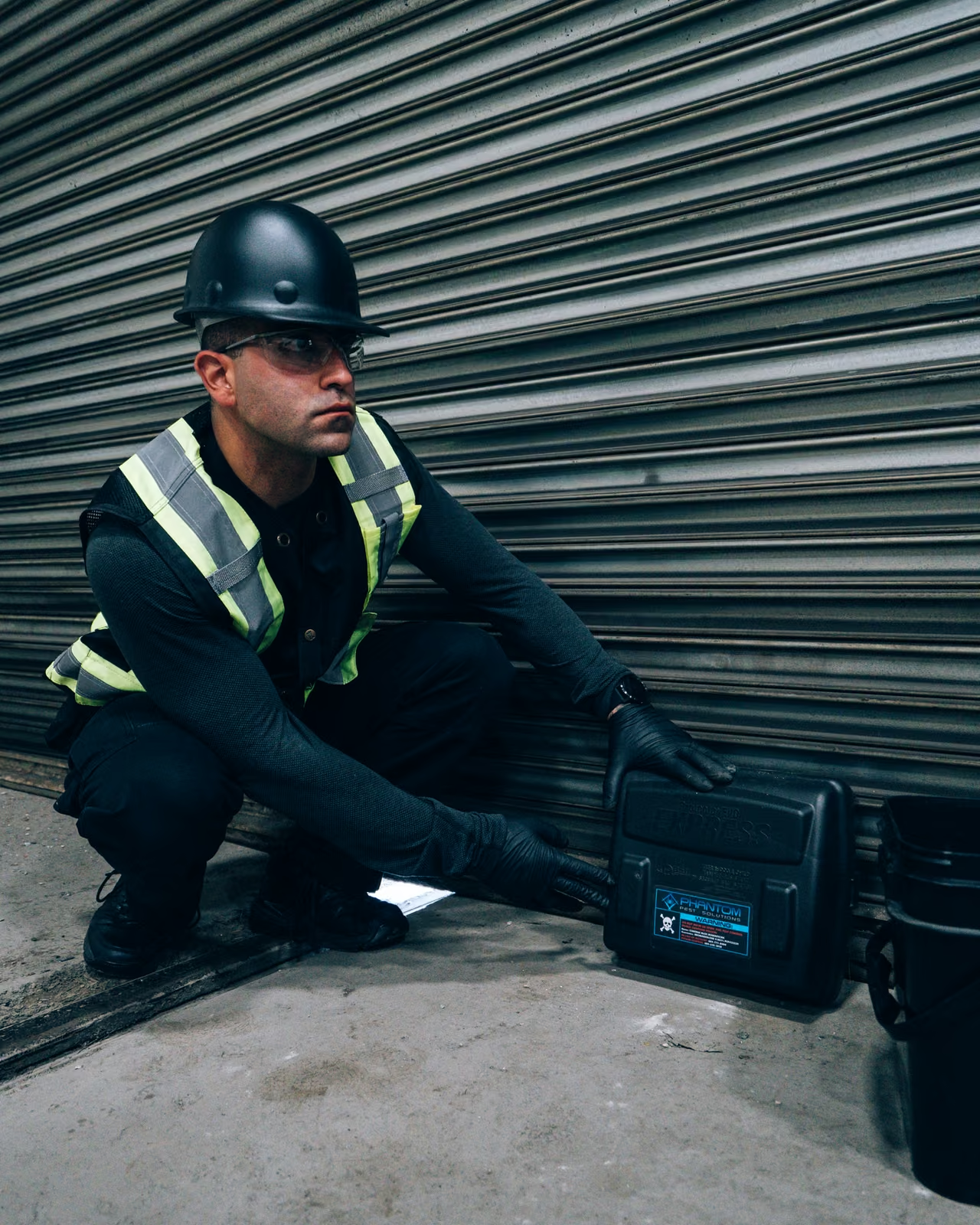
Worn bottom seals and gaps at the floor track let rodents in while the hall is shut.
- CFood-waste bay
Food scraps and yard waste waiting for transfer give flies a breeding site.
- DBaler & bale storage
Bales stacked tight to the walls hide rat runs and nests.
- ERoll-off and container yard
Parked bins with residue inside draw flies, wasps, rats and raccoons.
- FTruck wash & sumps
Standing water and washed-off residue keep small flies breeding.
- GScale house & lunchroom
Staff food, sinks and drains feed mice, cockroaches and small flies.
- HFence line & ditches
Norway rats burrow near foundations and under debris piles at the site’s edge.
- IRoof edges & lights
Pigeons and starlings roost on ledges, rooflines and light fixtures.
What Site Staff Can Do Between Visits
Housekeeping does much of the prevention, and in B.C. it’s also part of the rules. Under the Integrated Pest Management Regulation, reasonable measures to prevent pests come before pesticide use, and the strongest rodent baits can’t be used until those measures are in place.
Your staff can
At the end of each operating day, push the floor clean and scrape along the push walls and corners, so waste doesn’t sit where rats and flies can feed on it.
Ship food scraps and yard waste out on time, keep bins and bay doors closed, and clean up residue and spills before flies can breed in them.
Keep roller doors down when not in use, leave a gap between stored bales and the walls, cut back brush along the fence, and log each sighting with the date and place.
Needs a technician
Burrows along the fence or droppings in the hall call for an inspection, trapping and sealing.
Repeat swarms usually mean a breeding source is still on or near the site, and it has to be found.
Nests on ledges or light fixtures call for exclusion work, timed around the nest rules.
Baiting as a service is licensed work in B.C., and the strongest baits come with extra conditions at waste sites.
How Our Waste Management Pest Control Service Works
Five steps take a site from the first walk-through to routine monitoring. The first visit is a free site inspection, and the customized quote is based on what it finds.
A technician walks the tipping hall, processing and storage areas, the yard, the scale house and lunchroom, and the fence line, looking for burrows, droppings, breeding flies, roosting birds and gaps.
The species sets the plan: Norway rats live and burrow at ground level, roof rats travel through roofs and rafters, and flies are traced back to the residue they breed in.
Trapping for rodents, work on fly breeding sources, wasp nest removal, and netting, spikes or tension wire to keep birds off the buildings.
A rodent program seals gaps up to the size of a toonie. Bigger openings at roller doors, walls or roofs go to exclusion work with steel mesh, flashing and sealants.
Follow-up visits check the traps and monitors, and a written service report is left after each commercial visit, so the site has a record of what was found and done.
Once the first problem is under control, regular maintenance keeps the traps and monitors checked on a schedule.
Before a Treatment at Your Site
Phantom’s rodent program and its crawling and flying insect treatments come with preparation sheets. Both sheets are written for homes, so these are the steps from them that carry over to a waste site. If anything differs, follow the sheet for the service you booked.
Before a rodent program, clear clutter from the rooms and corners being treated, so new droppings and travel routes stand out.
Someone has to open the hall, scale house, storage rooms and locked gates at the booked time, so each area being treated can be reached.
In a lunchroom or office being treated, seal infested food and supplies in plastic bags and take them out of the area.
Move tables, lockers and supplies at least a foot (12 inches) from the walls, so baseboards and wall seams can be reached.
Take everything out of the lower cupboards and drawers, and keep it in sealed bags or containers outside the treatment area.
For a lunchroom or office treatment, Phantom’s crawling and flying insect preparation sheet asks for at least 6 to 8 hours away from the start of treatment, and 24 hours for pets, people with respiratory complications, nursing mothers and children under 2. The preparation sheet for your booked service gives the exact time.
After the Treatment
What usually follows, from the same sheets. Ask your technician what applies to your site.
On return
When staff return, open the windows for another 30 minutes to an hour.
First 3 days
Insect activity should drop significantly within 72 hours.
First weeks
Expect some wandering insects as they meet the treatment, and a second wave may follow as eggs hatch.
Rodent program
A rodent program runs over three service visits of trapping, checks and sealing.
Up to 3 months
If the aftercare is followed, the insect treatment keeps working for up to 3 months.
For at least 4 weeks, don’t vacuum, sweep or mop within 6 inches of treated baseboards, and keep store-bought sprays and cleaners off them.
Write down where and when, keep a photo, and call us. Activity that lasts beyond the wandering period may need a follow-up visit.
Pest Control in Transfer Stations and Tipping Halls
Where a tipping hall takes loads all day and holds bales or food waste until they ship, rats and flies work from its edges: the push walls, the roller doors and the stacked material. An inspection therefore looks at the floor, the doors and the storage together with the yard outside, and the plan covers the routes between them.
Spill along the walls feeds rats and flies between loads.
Gaps at the floor track let rats in after closing.
Bales and food waste waiting to ship give shelter and food.
Roosting birds foul the floor and machinery below.
Activity at one door shows where to look; it doesn’t prove where the rats live. A colony can burrow under a debris pile or beside a foundation near the fence and travel in when the hall goes quiet, so trapping inside goes hand in hand with work on the burrows and the gaps between them.
Above the floor, ledges, roof edges and light fixtures are where pigeons and starlings settle, and their droppings land on the floor and machinery below. The food-waste bay and the truck wash get a close look for fly breeding, and the scale house and lunchroom are checked for mice and cockroaches, because staff food and drains are there. Gaps where pipes and cables pass through the scale house walls are checked too.
Why Choose Phantom for Waste Management Pest Control
The facts behind the service, and the cost of the first visit.
Experience
15+ years of pest control experience serving British Columbia
Credentials
Fully licensed, insured and certified
After each visit
A written service report
Before your visit
What it costs
Free site inspection, then a site-specific quote
EXCELLENTTrustindex verifies that the original source of the review is Google. We were having some problems with mice at our home so we contacted Phantom and Darcey came and resolved the issues quickly. Darcey was friendly, great with our dog and made sure we understood everything he was doing and what to expect. Happy to report no more mice! Thank you, Darcey!Posted on GoogleTrustindex verifies that the original source of the review is Google. Excellent pest control service! The team was professional, friendly, and knowledgeable. They arrived on time, explained the treatment process clearly, and made sure everything was taken care of. Their attention to detail and commitment to customer satisfaction were impressive. I really appreciate their prompt service and effective results. Highly recommend them to anyone looking for reliable and professional pest control services!Posted on GoogleTrustindex verifies that the original source of the review is Google. Mark was great and he did a great job and was very knowledgeable.Posted on GoogleTrustindex verifies that the original source of the review is Google. Darcey provided exceptional support in resolving our pest concerns. He was punctual, highly knowledgeable, and professional throughout the process. We have been trying to deal with these issues for quite some time without any luck but thankfully the matter is now resolved. We appreciate the dedication he demonstrated and will be sure to reach out should we require his services again.Posted on GoogleTrustindex verifies that the original source of the review is Google. I want to let you know that June did an amazing job on our house for the moths. He was really friendly, patient, professional and conscientious. I wasn't fully ready for the treatment when he arrived and he managed to move some clients so he could return later. He explained a lot about the treatment and the moths' habits which really helped with other areas that he wasn't even treating. He kindly helped me moved some things to barricade the area from pets. I would get Phantom back and highly recommend them.Posted on GoogleTrustindex verifies that the original source of the review is Google. Darcey was amazing at helping us deal with a wasp nest. Friendly, knowledgeable and on time! Thank you!Posted on GoogleTrustindex verifies that the original source of the review is Google. We hired Phantom Pest Control to eliminate a wasp nest inside our house and the service was great. Information on the phone when I first called to book an appointment was clear and we got an appointment quickly. Juan, the specialist who arrived to do the job, fully explained the process, did the work, and explained what to watch in the outside chance additional work might be needed. We are happy with the job and were glad to have Juan as our technician.Posted on GoogleTrustindex verifies that the original source of the review is Google. We received exceptional service from Joy. She was both professional and knowledgeable, explaining the service thoroughly.Posted on GoogleTrustindex verifies that the original source of the review is Google. They showed up on time, early actually. Mark was very professional and explained how the cockroaches work. He was personable and efficient, and hygienic with how he worked (wearing protective boot covers and gloves). I was impressed and would definely call again if needed.
Waste Management Pest Control Across Vancouver & Fraser Valley
We provide waste management pest control across Metro Vancouver and the Fraser Valley, and north to Squamish.
Vancouver & North Shore
Burnaby & Tri-Cities
Richmond & Delta
Fraser Valley
More Services for Waste and Recycling Sites
Programs that often go with a waste-site plan.
Netting, spikes and tension wire for roofs, ledges and light fixtures.
Finding the breeding sources behind recurring flies.
Steel mesh, flashing and sealants for doors, walls and roofs.
Scheduled inspection and monitoring visits.
Waste Management Pest Control FAQs
Answers to what site managers and operators ask before booking.
Prefer to talk?
Can a waste or recycling facility use rat poison in B.C.?
Yes, including second-generation anticoagulant rodenticides (SGARs), but only under strict conditions and a pesticide licence, either the site’s own or a licensed pest control company’s. B.C.’s rodenticide rules limit SGARs to essential services, and the IPM Regulation’s list names waste (garbage and organics) processing facilities, recycling processing facilities such as recycling transfer stations and collection locations, and waste disposal facilities such as landfills and waste-to-energy plants (Schedule 6, items 21 to 23). Residential and commercial waste collection areas are left out.
Section 81 then allows SGARs only where rodents are present or recently active, after practical alternatives haven’t worked, for no more than 35 consecutive days and 120 days in a year. A site-specific rodent management plan has to be documented first; the province’s plan checklist asks for one per treatment site, kept for three years.
How do you keep gulls and pigeons off a waste site’s buildings?
With netting, spikes or tension wire, once the nest question is settled. Gulls are on Environment and Climate Change Canada’s list of protected migratory birds, and under the Migratory Birds Regulations, 2022 their nests can’t be disturbed while they hold a live bird or a viable egg. Rock pigeons and European starlings aren’t on that list, and B.C.’s nest rules exempt them. Gulls feeding over an open tipping area are a separate problem that the site’s own bird deterrent program covers.
How should site staff deal with rodent droppings?
As a health hazard, with a written procedure. Droppings, urine and saliva from infected rodents can spread hantavirus, and the Public Health Agency of Canada notes that even healthy people can become seriously ill. WorkSafeBC’s hantavirus booklet covers an exposure control program and sample work procedures for staff who meet rodents or droppings on the job. The clean-up steps:
- Don’t sweep or vacuum droppings; that puts particles in the air.
- Wear rubber or plastic gloves, and an N95-level respirator in a confined space.
- Soak the droppings and the area around them with an approved disinfectant or 1 part bleach to 9 parts water for 10 minutes.
- Wipe up the wet material with paper towels or a wet mop.
- Seal it all in double plastic bags.
Mark where the droppings were before cleaning: fresh ones show where trapping should start. Our hantavirus guide explains the risk in B.C.
What about bears or coyotes at a waste site?
They’re a wildlife-agency matter, not pest control. B.C.’s landfill criteria call for a bear-proof electric fence around a landfill’s working footprint and its attractants where there are signs of bears, and an electric fence may be required for cougars, coyotes or wolves too. Report a dangerous encounter through the province’s human-wildlife conflict line. Phantom’s wildlife work covers animals such as raccoons, skunks and opossums.
How much does pest control cost for a waste facility?
Each site gets its own quote after a free site inspection. Phantom doesn’t publish commercial prices; as the rodent program sheet puts it, pricing varies with the size of the property and the time required, and phone estimates are free. Telling us the type of site, its rough size and what you’ve seen speeds things up.
How often should a transfer station or recycling site have visits?
The inspection decides. Where pests are active, treatment and follow-ups come first. For ongoing prevention, the options in Phantom’s rodent program sheet are monthly, bi-monthly or quarterly visits, and a site handling food waste may need closer checks in the warm months when flies breed fastest.
Can you come when the site is closed?
Yes, when it’s booked ahead. Service is open 24/7 for pre-arranged commercial services, so treatments that need a room empty, or work at the doors and tipping floor, can happen when the site isn’t receiving loads. The office takes calls Monday to Friday, 9 AM to 5 PM.
Can bait stations be used where the public drops off recycling?
Yes, in locked, tamper-resistant stations used by the label. Health Canada requires outdoor bait placed above ground within reach of children, pets or wildlife to be in a tamper-resistant station, and its Tier 1 stations for those spots must also stand up to rain, snow and sun. Indoors, the tier depends on whether children or pets can reach it, which matters at bottle depots and public drop-off areas.
How do you control flies where food waste or compost is handled?
By finding where they breed, then removing it or treating it. Flies lay their eggs in food waste, compost and wet residue, and they multiply fastest in warm weather, so the inspection checks the bays, containers, drains and wash areas for larvae. Moving material out on time and cleaning residue does much of the work, and treatment targets the breeding spots that remain.
What are the early signs of rats at a waste site?
Burrows, droppings and gnawing. Outside, look for fresh burrow holes near foundations and under debris piles. Inside, look for droppings along walls, gnaw marks on packaging, wood or wiring, and greasy smudges along baseboards and at gaps under doors. Shredded paper, insulation or fabric tucked into a corner can be nesting material, so tell your technician where you found it. To tell which rodent left the droppings, compare them with our mouse vs rat droppings guide.
Book a Free Site Inspection
Tell us which pests you’re seeing, where on the site and since when, and we’ll book a free site inspection. Photos help.
Site inspections for businesses are free. Service is open 24/7 for pre-arranged commercial services, and the office answers calls Monday to Friday, 9 AM to 5 PM.