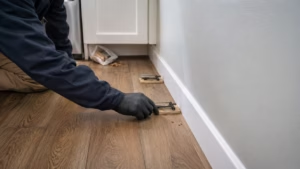
Finding small, dark droppings in a kitchen cabinet, garage, basement, or storage room is usually one of the first clues that a rodent has made its way inside.
The harder question is: are you dealing with mice or rats?
At first glance, mouse and rat droppings can look similar. Both are dark, pellet-shaped, and often appear near food sources or along the routes rodents use at night. But look a little closer and there are several differences that can help you identify what is moving around your property.
Understanding mouse vs rat droppings is useful because the size of the animal can affect where it is entering, where it may be nesting, and how the infestation should be handled.
Below, we’ll break down the differences and explain what to do if you discover rodent droppings in your home or business.
Mouse vs Rat Droppings at a Glance
Here is a quick comparison:
| Feature | Mouse Droppings | Rat Droppings |
|---|---|---|
| Size | Around 3–6 mm long | Roughly 12–20 mm long |
| Shape | Small, narrow, rice-like | Larger and thicker |
| Ends | Usually pointed | Pointed or blunt depending on rat species |
| Quantity | Often numerous | Usually fewer but larger |
| Common Locations | Cabinets, drawers, pantries, wall edges | Basements, garages, crawl spaces, utility areas |
| Typical Appearance | Dark brown to black | Dark brown to black |
The easiest starting point is size. If the droppings look similar to dark grains of rice, mice are more likely. If they are noticeably larger and thicker, a rat may be responsible.
That said, droppings should not be the only clue you use. Location, gnaw marks, noises, tracks, and entry points can all help confirm what type of rodent is present.
What Do Mouse Droppings Look Like?
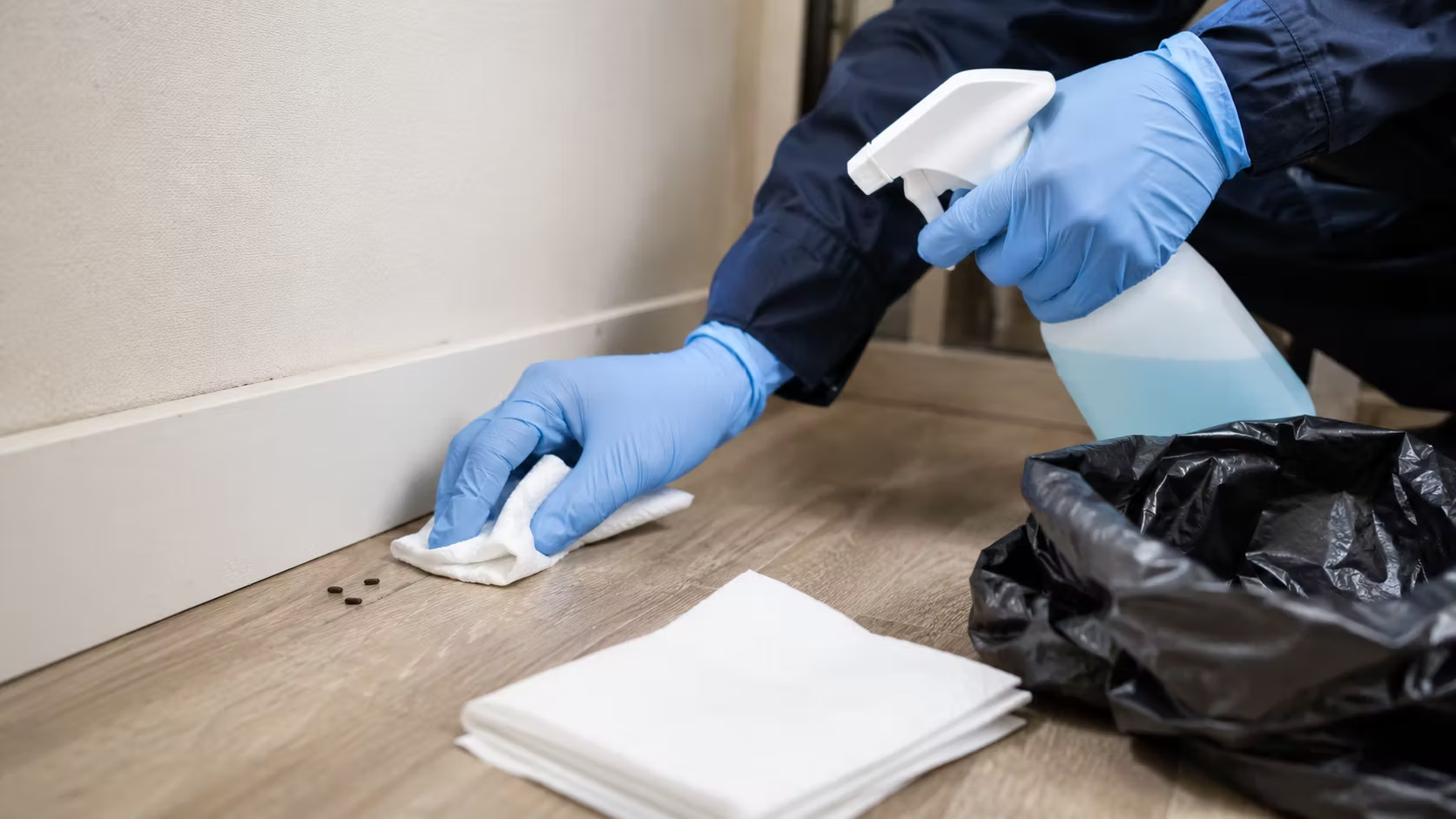
Mouse droppings are small and narrow, generally measuring around 3 to 6 millimetres in length.
They usually have:
- A dark brown or nearly black colour
- An elongated, rice-like shape
- Pointed or tapered ends
- A relatively smooth appearance when fresh
Because mice move around frequently while searching for food, homeowners may find a surprisingly large number of droppings spread throughout an area.
Common places to check include kitchen drawers, underneath sinks, pantry shelves, behind appliances, along baseboards, inside cupboards, and around stored food.
Finding droppings in several rooms does not necessarily mean you have several mice. A single mouse can move through a surprisingly large portion of a home while searching for food and nesting material.
If you are finding evidence regularly, however, it is worth investigating further. Professional rodent control in Vancouver can help identify both the active rodent and the entry points allowing it inside.
What Do Rat Droppings Look Like?
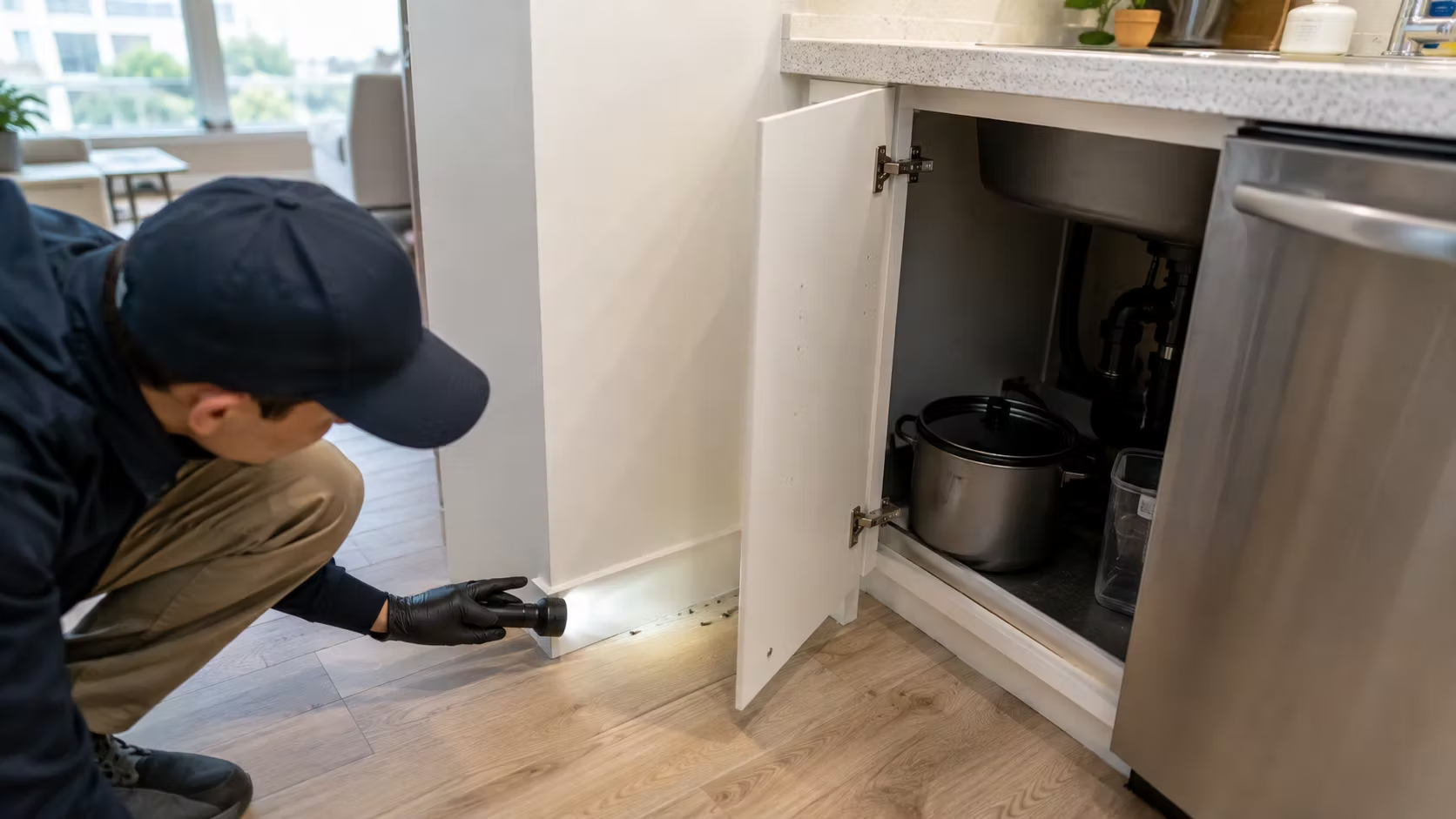
Rat droppings are much larger than mouse droppings and are usually easier to recognize once you know the difference.
Depending on the species, rat droppings can measure roughly 12 to 20 millimetres long.
In British Columbia, two common species are the roof rat and Norway rat.
Roof Rat Droppings
Roof rat droppings are typically:
- Around 13 mm long
- Narrower than Norway rat droppings
- Slightly curved or spindle-shaped
- Pointed at the ends
Roof rats are skilled climbers, so signs of activity may sometimes appear in attics, upper storage areas, roof spaces, or elevated sections of a building.
Norway Rat Droppings
Norway rat droppings tend to be:
- Larger, often approaching 19 mm long
- Thicker than roof rat droppings
- Capsule-shaped
- More likely to have blunt ends
Norway rats generally spend more time closer to ground level and may establish themselves around basements, foundations, crawl spaces, garbage areas, sheds, and exterior structures.
This difference in behaviour is one reason identifying the rodent correctly matters. The animal you are dealing with can influence where an inspection should focus.
The Biggest Difference Between Mouse and Rat Droppings
If you only remember one thing, remember this:
Rat droppings are substantially larger than mouse droppings.
Mouse feces can resemble dark grains of rice. Rat feces are thicker and may look closer to large capsules or oversized pellets.
However, estimating size without a reference can be surprisingly difficult, especially when you discover droppings unexpectedly.
Instead of relying on size alone, look for the surrounding evidence.
Other Signs That Can Help You Identify Mice vs Rats
Droppings tell part of the story. The rest of the property often tells you more.
Gnaw Marks
Both mice and rats need to gnaw regularly.
Mice tend to leave smaller marks on cardboard boxes, food packaging, plastic containers, or lightweight materials.
Rats are stronger and may leave much more obvious damage on wood, plastic, insulation, pipes, and other building materials.
Scratching and Movement
Hearing noises late at night can also provide clues.
Mice often create light scratching, rustling, or quick movement inside walls and cabinets.
Rats are heavier, so their movement may sound louder. Homeowners sometimes describe hearing heavier scratching, running, or movement inside ceilings, crawl spaces, or wall cavities.
Entry Point Size
Mice can enter through remarkably small openings.
This means a gap around plumbing, siding, utility lines, garage doors, or foundations may be enough to let them inside.
Rats require more room but are also capable climbers, diggers, and chewers. Once they discover a reliable source of food and shelter, they may repeatedly use the same access route.
If rodents keep appearing even after trapping, an unresolved entry point is often part of the problem.
Nesting Material
Mice frequently use shredded paper, insulation, fabric, cardboard, and other soft materials to create nests.
Rats may use similar materials, but their nesting areas and disturbances tend to be larger.
Storage rooms are particularly vulnerable because boxes and clutter provide both shelter and nesting material. Taking a few basic steps to rodent-proof your storage areas can make these spaces much less attractive.
Where Are Rodent Droppings Commonly Found?
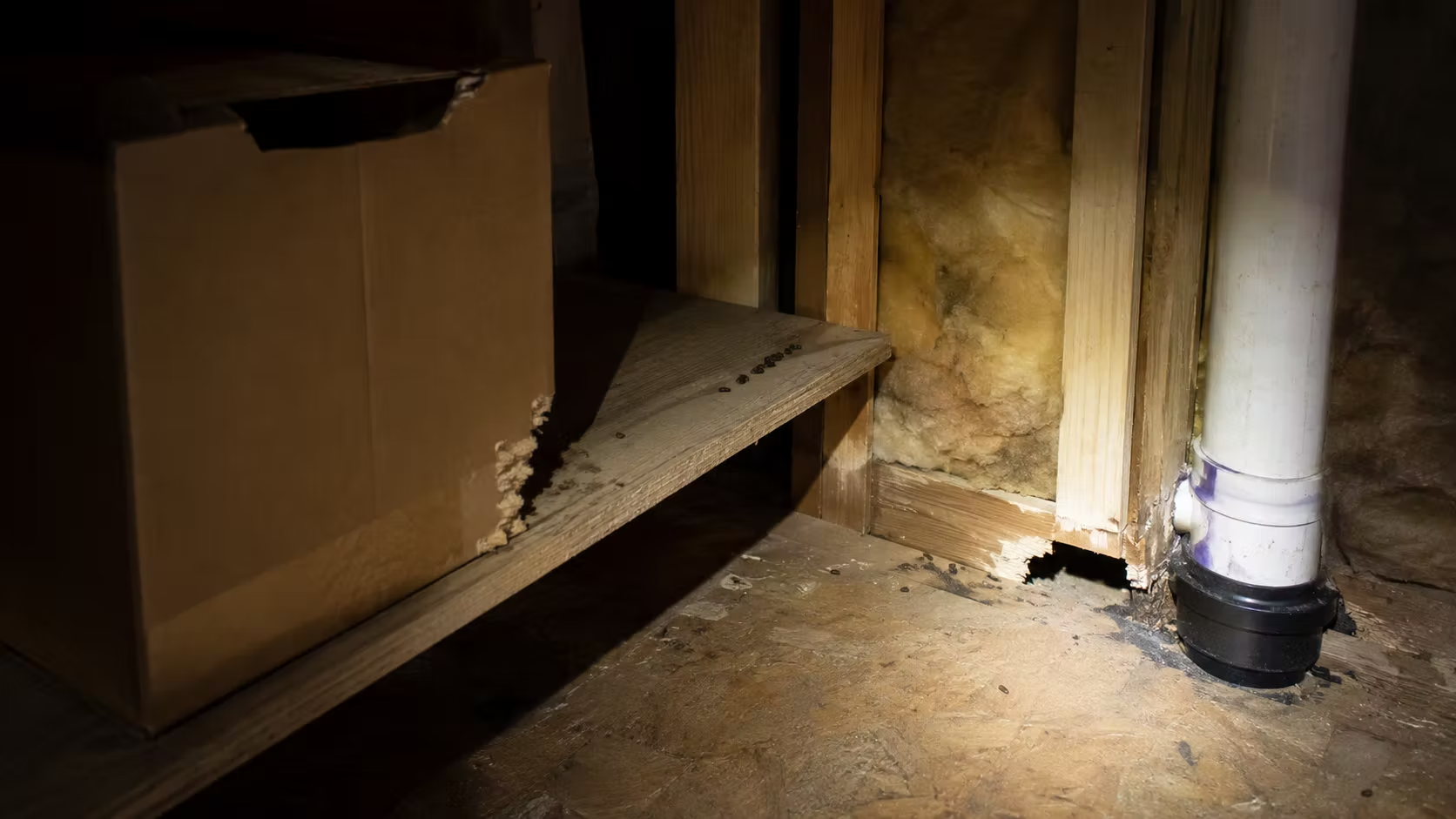
Rodents usually leave droppings where they travel, feed, or spend time.
That means droppings can help you work backwards and identify areas of activity.
Check carefully around:
- Kitchen cabinets
- Pantry shelves
- Behind refrigerators and stoves
- Under sinks
- Garbage and recycling areas
- Basements
- Garages
- Crawl spaces
- Attics
- Storage rooms
- Utility rooms
- Along walls and baseboards
- Near pet food
- Around exterior doors
In Vancouver, rodent activity is not limited to one season. The region’s relatively mild climate and dense urban environment allow mice and rats to remain active throughout much of the year. There are several reasons rodent problems are common in Vancouver homes, from easy access to food and shelter to gaps in older building structures.
Are Fresh and Old Rodent Droppings Different?
They can be.
Fresh rodent droppings are generally darker and may appear slightly shiny or moist. As they age, they become dry, dull, and more likely to crumble.
This distinction can sometimes help determine whether rodent activity is ongoing.
If you clean an area properly and new droppings appear shortly afterward, that is a much stronger indication that a mouse or rat is still active nearby.
Repeatedly finding fresh droppings should not be ignored, especially if they appear alongside scratching sounds, damaged food packaging, gnaw marks, or nesting material.
Are Mouse and Rat Droppings Dangerous?
Rodent droppings should always be treated as potentially contaminated material.
Mice and rats can contaminate food, storage areas, countertops, floors, and other surfaces through feces and urine. Rodent activity can also create sanitation concerns inside homes and commercial properties.
The important thing is not to panic — but also not to casually sweep up dry droppings as if they were ordinary dirt.
Do Not Sweep or Vacuum Dry Droppings
Dry sweeping or vacuuming can disturb contaminated material and send small particles into the air.
A safer approach is to ventilate the area when appropriate, wear protective gloves, wet the droppings thoroughly with a suitable disinfectant, allow the disinfectant time to work according to its instructions, and then wipe the material up carefully with disposable towels.
Large amounts of droppings, contaminated insulation, inaccessible areas, or evidence of a substantial infestation are better handled with professional guidance.
Does Finding One Dropping Mean You Have an Infestation?
Not necessarily.
One isolated dropping does not automatically mean there is a large colony living inside the property.
But rodents rarely leave behind just one sign.
Look around the surrounding area for:
- Additional droppings
- Urine staining
- Chewed packaging
- Small holes or gaps
- Grease marks along walls
- Nesting material
- Scratching sounds
- Unusual pet behaviour
- Damaged insulation
- Food contamination
The more signs you find, the more likely it is that the animal has established regular access to the building.
A professional inspection is often helpful because rodents may nest inside wall voids, ceilings, crawl spaces, or other areas that are difficult to inspect without experience.
For homeowners dealing with unexplained pest activity, Phantom also provides residential pest control services that focus on identifying activity, locating entry points, treating the problem, and helping prevent recurrence.
Why Correct Identification Matters
A mouse problem and a rat problem should not automatically be approached in exactly the same way.
The rodents differ in size, behaviour, feeding patterns, nesting preferences, and the spaces they can access.
For example, traps designed for mice may be poorly suited to rats. Likewise, an inspection focused only on ground-level openings could miss roof rat activity higher on the building.
Correct identification helps answer three important questions:
- What rodent is present?
- How is it getting inside?
- What needs to change to stop it from returning?
Simply removing the animal without addressing access points may provide only temporary relief.
What Should You Do After Finding Mouse or Rat Droppings?
Start by treating the discovery as evidence that deserves investigation rather than something to simply clean up and forget about.
Look around the immediate area for additional signs, but avoid unnecessarily disturbing droppings or nesting material.
Then think about what may be attracting rodents.
That might include:
- Accessible pantry food
- Pet food left overnight
- Bird seed
- Garbage
- Compost
- Cluttered storage
- Exterior vegetation
- Gaps around doors
- Utility penetrations
- Cracks around the foundation
Removing food sources helps, but exclusion is just as important.
A home can be spotless and still have rodents if mice or rats can easily enter from outside.
When Should You Call a Pest Control Professional?
Consider professional help when:
- New droppings continue appearing
- You cannot tell whether you have mice or rats
- You hear regular scratching inside walls or ceilings
- Droppings are appearing in several areas
- Food or packaging is being damaged
- You suspect rodents are inside an attic or crawl space
- You find obvious entry points but are unsure how to seal them
- Trapping has not stopped the activity
- The problem keeps returning
The goal should be more than catching the rodent you happen to see.
A thorough rodent control strategy looks at the building as a whole: where rodents are travelling, what is attracting them, where they may be nesting, and how they entered in the first place.
Mouse vs Rat Droppings: The Bottom Line
When comparing mouse vs rat droppings, size is usually the clearest difference.
Mouse droppings are small, narrow, and often resemble dark grains of rice. Rat droppings are noticeably larger and thicker, with the exact shape varying between roof rats and Norway rats.
But droppings are only one clue.
Their location, quantity, freshness, nearby gnaw marks, noises, nesting material, and possible entry points can provide a much clearer picture of what is happening inside your property.
If you continue finding droppings or other signs of rodent activity, dealing with the source early can prevent a relatively small problem from becoming much harder to manage.
Phantom Pest Control provides professional rodent inspections and pest control services throughout Vancouver and the Lower Mainland, helping homeowners and businesses identify rodent activity, address entry points, and build a practical plan for long-term prevention.
Frequently Asked Questions
How can you tell rat droppings from mouse droppings?
The main difference is size. Mouse droppings are generally around 3–6 mm long and look similar to dark grains of rice. Rat droppings are substantially larger, commonly ranging from about 12–20 mm depending on the species.
What do mouse droppings look like?
Mouse droppings are small, dark, narrow pellets that often have pointed ends. They are commonly found inside kitchen cabinets, drawers, pantries, storage areas, and along walls.
What do rat droppings look like?
Rat droppings are larger and thicker than mouse droppings. Roof rat droppings tend to have more pointed ends, while Norway rat droppings are larger and often have blunter ends.
Are rat droppings bigger than mouse droppings?
Yes. Rat droppings are usually several times larger than mouse droppings, making size one of the easiest ways to distinguish between them.
Should I vacuum mouse or rat droppings?
No. Dry rodent droppings should not be vacuumed or swept before they have been properly disinfected because doing so can disturb contaminated particles. Wet the material with an appropriate disinfectant and follow safe cleanup procedures instead.
Does finding mouse droppings mean mice are still in the house?
Not always. Older droppings may remain from previous activity. However, finding fresh droppings repeatedly after an area has been properly cleaned is a strong indication that rodents may still be active.