Cold Storage Pest Control in Vancouver & Fraser Valley
Phantom Pest Control provides cold storage pest control in Vancouver, BC and the Fraser Valley for cooler and freezer warehouses, cold-chain distribution centres and refrigerated 3PL sites. Traps work inside, locked bait stations outside, every device is numbered on a map, and each visit ends with a written report with photos.
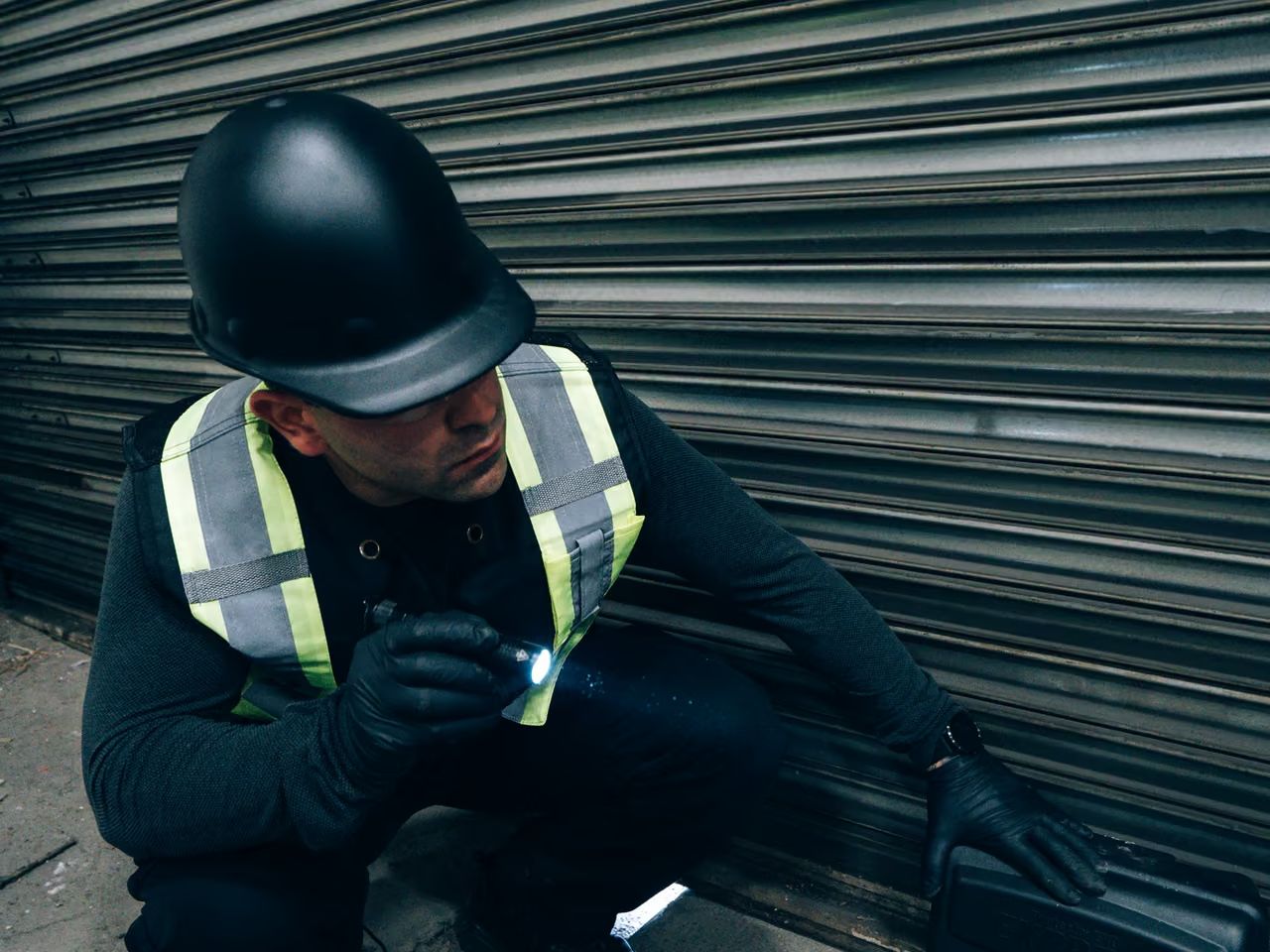
Facility type
Cooler and freezer warehouses, cold-chain DCs
Common pests
Where they get in
Service area
Why Pests Get Into Cold Storage Facilities
Cold slows pests down; it doesn’t keep them out. Dock doors open for every load, the machine room and offices stay warm, and pallets arrive from other buildings all day. A cold store has the same ways in as any warehouse, plus freezer rooms that mice can live in.
CFIA’s pest control guidance for food businesses names the cold rooms directly: coolers and freezers are checked for cleanliness and structural soundness, and the doors leading into them fit tightly so pests can’t get through. A cold store’s program is built around those two lines as much as around its docks.
The beetles and moths that infest dry goods are covered on our stored-product pest and moth control pages, and freezers inside a food processing plant fall under our food processing program.
Each door stays up while a trailer is worked, and a gap at its sides, its bottom seal or the leveller lets rodents slip in.
Machine rooms, battery-charging rooms, offices and lunchrooms stay warm in every season, and warmth and shelter are what mice, rats and cockroaches look for.
CFIA warns that rodents can survive in cold rooms by nesting inside the insulated walls or beneath the floor.
Loads arrive on pallets and in cartons from other buildings, and CFIA’s guidance lists checking incoming goods for infestation as they’re received.
A dropped case or a torn bag feeds mice and stored-product insects until it’s cleaned up and dealt with.
Condensers, rooftop units and dock canopies give pigeons, starlings and sparrows high ledges to roost and nest on.
Pests Found in Coolers, Freezers and Docks
From the yard to the freezer, these are the pests a walk-through looks for, each linked to its service page.

They nest in pallets, cartons and insulated walls, and they can breed inside freezer rooms.
They forage around the yard and the compactor, then follow gaps at dock doors and leveller pits inside.

Warm machine rooms, charging rooms and lunchrooms suit them, and they ride in with deliveries.

Grain beetles and meal moths stop feeding in a cooler without reliably dying, and warmer dry-goods rooms let them breed.

They come in through open dock doors and breed in the garbage and food waste by the compactor.
Drain flies breed in the film inside slow floor drains, and fruit flies in damaged produce and spills.

Pigeons, starlings and sparrows roost on canopies and roof units, and their droppings make the dock slippery.
Send a photo with your estimate request, and we’ll look at it before the walk-through.
When Pest Pressure Peaks Around a Cold Storage Facility
Inside, cockroaches, stored-product insects and any mice already living in a freezer room carry on in every month. The chart follows what comes in from outside: flies in the warm months, nesting birds in spring and summer, and rodents once the weather turns cold and wet.
Bars come from the seasons on Phantom’s own pest pages, and from the federal nesting calendar for migratory birds; the three pests below the chart have none.
Migratory birds, gulls among them, nest mainly from late March to mid-August on B.C.’s south coast, by the federal calendar.
Colder, wetter months push more of them from the yard toward the docks and the warm rooms.
Not seasonal
Mice that settle inside a freezer room can breed there through the winter, whatever the weather outside.
Heated machine rooms and lunchrooms keep them breeding whatever the season.
Dry goods held warmer than a cooler let them feed and breed in any month.
Where Pests Get Into a Cold Storage Facility
The walk-through starts outside and works in: the yard and the docks, then the warm rooms where people and machines work, then the vestibule, coolers and freezers.
- AYard & pallet stacks
Empty pallets and planting along the wall give rats cover right beside the building.
- BCompactor & bins
Food waste at the compactor draws rats, flies and gulls to the back of the dock.
- CDock doors & shelters
A worn bottom seal or a torn shelter pad leaves a gap whenever the door is down or a trailer pulls away.
- DLeveller pits
Debris collects under the leveller deck, and gaps along its sides lead straight inside.
- EMachine & charging rooms
Compressors and forklift chargers keep these rooms warm through the winter, and mice that settle there gnaw wiring and insulation.
- FOffices & lunchroom
Fridges, food and garbage in the staff areas draw mice, cockroaches and ants away from the cold.
- GVestibule & fast doors
Pallets pass through here on their way to the cold rooms, so the gaps around its fast doors and seals are part of the walk-through.
- HCoolers
Cool rooms slow stored-product insects without reliably killing them, and they recover as goods warm, so dry goods kept here get pheromone monitors.
- IFreezer rooms & racking
Mice can nest in stacked pallets, cartons and insulated walls here too; cold alone doesn’t move them out.
What Your Team Can Handle, and What Needs a Technician
Daily habits on the dock and in the cold rooms keep pest pressure down between visits. Pesticides, rodent devices, insect light traps and bird deterrents stay with a technician.
Your team can
Bring dock doors down when no trailer is at the door, and keep fast doors and strip curtains working.
Look over pallets and cartons as they come off the trailer, and set aside anything gnawed, torn or crawling.
Note droppings, gnawed wrap or a nest with the bay and the date, and leave the area as it is for the technician.
Needs a technician
Under section 4 of B.C.’s Integrated Pest Management Act, a pesticide service needs a licence, and each product goes down as its label directs.
Traps work inside, and locked bait stations stay outside and in non-food areas, each numbered on the device map.
Light traps go away from food, and pheromone monitors track stored-product moths and beetles in dry goods.
Netting and spikes go on canopies, ledges and roof units where pest birds roost, through our bird control service.
How Our Cold Storage Pest Control Program Works
Five steps from the first walk-through to a program that runs around your receiving and shipping schedule.
From the yard and the docks through the vestibule and cold rooms, as far as your site rules allow, to the machine room and offices, marking each gap, spill and nest site on the plan.
Traps inside, locked stations outside and in non-food areas, light traps away from food and pheromone monitors in dry goods, each numbered on the map.
Small gaps are sealed, larger openings such as a door that no longer meets the slab are quoted as exclusion work, and canopies are made unwelcoming to pest birds.
Visits are pre-arranged around the dock schedule, so devices are serviced while trailers aren’t moving.
Each visit ends with a report with photos, and the trend summary, device map and product list go into your audit file.
Our regular maintenance program puts the visits on a fixed calendar and documents each one.
Before the First Walk-Through
The first visit goes further when these are ready. Our client forms page has a preparation sheet for each treatment, from rodents and cockroaches to ants and kitchens.
A plan with the rooms, their temperatures and the dock doors numbered lets the device map start from day one.
Tell us your food-safety and visitor rules, any gear needed in the cold rooms, and who will escort the technician.
Record each find with its place and date: droppings in a freezer aisle, gnawed wrap on a pallet, birds in a canopy.
Put a coin next to any droppings for scale before you take the photo, then send it with your estimate request.
Have the last audit’s pest findings, any corrective actions and your current program ready for the first visit.
Pull stock back from the walls at the docks and in the cold rooms, so wall joints and corners are open to inspection.
After the Walk-Through: How Your Program Runs
What happens after the first visit. The schedule is agreed with your facility or QA manager.
Walk-through
The first visit maps the yard, docks, warm rooms and cold rooms, and the quote is based on what it finds.
Entry points
Gaps up to the size of a toonie are sealed as part of the rodent program; anything larger, such as a worn door seal at the slab, is quoted separately as exclusion work.
Device map
Every trap, station, light trap and monitor carries a number that matches the map in your file.
Service reports
Each visit is closed with a written report with photos, and the reports build into a trend summary.
Audit support
Before a CFIA inspection or an SQF, BRCGS or AIB audit, we help put the device map, product list and reports in order.
If a station is in a forklift’s way, tell us rather than moving it, so it isn’t crushed or lost from the map.
CFIA’s guidance has floor drains in coolers and freezers fitted with covers, so put them back after every clean.
What a Technician Checks at a Dock Door
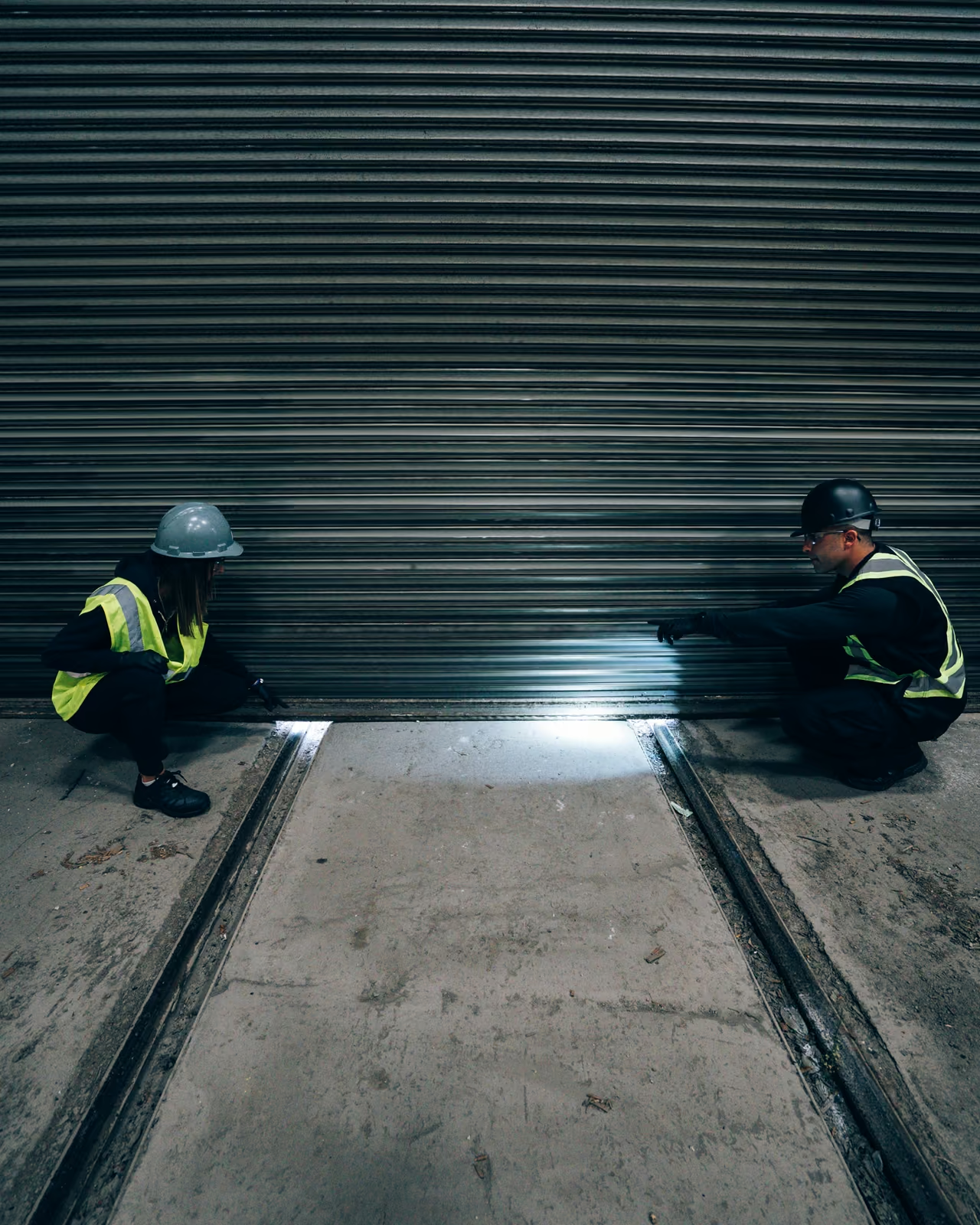
The dock is where the building opens most. CFIA’s pest control guidance asks for the area beneath hydraulic dock levellers to be clean and rodent proof, and for overhead doors to fit tightly along the sides, top and bottom.
Debris and spilled product in the pit, and daylight along the sides of the deck.
Light showing at the bottom or the sides when the door is down.
Tears and gaps where the pads no longer close against a trailer.
A locked station outside each door and a trap inside, both on the device map.
Those two lines are the core of a dock check. The walk-through looks into each leveller pit for debris and for daylight along the sides of the deck, checks the door’s bottom and side seals with the door down, and looks at the shelter pads where they close against a trailer.
Small gaps are sealed under our rodent control program, and a door that no longer meets the slab is quoted as exclusion work. SQF’s Storage and Distribution code lists sealing around trucks among the ways a dock door keeps pests out (12.2.4.6), so a torn shelter pad goes in the visit report.
Why Choose Phantom for Your Cold Storage Facility
Our credentials, what you receive after each visit, and what goes into your audit file.
Experience
15+ years of pest control experience serving British Columbia
Credentials
Fully licensed, insured and certified
Reporting
A written report with photos after every visit, and a trend summary
Audits
Help preparing for CFIA inspections and SQF, BRCGS or AIB audits
EXCELLENT Based on 830 reviews
 Posted on Google

 Ashley WoodWe were having some problems with mice at our home so we contacted Phantom and Darcey came and resolved the issues quickly. Darcey was friendly, great with our dog and made sure we understood everything he was doing and what to expect. Happy to report no more mice! Thank you, Darcey!Posted on Google
 Michelle HerrExcellent pest control service! The team was professional, friendly, and knowledgeable. They arrived on time, explained the treatment process clearly, and made sure everything was taken care of. Their attention to detail and commitment to customer satisfaction were impressive. I really appreciate their prompt service and effective results. Highly recommend them to anyone looking for reliable and professional pest control services!Posted on Google
 Nasib AbdulMark was great and he did a great job and was very knowledgeable.Posted on Google
 HenryDarcey provided exceptional support in resolving our pest concerns. He was punctual, highly knowledgeable, and professional throughout the process. We have been trying to deal with these issues for quite some time without any luck but thankfully the matter is now resolved. We appreciate the dedication he demonstrated and will be sure to reach out should we require his services again.Posted on Google
 Jacqueline BruceI want to let you know that June did an amazing job on our house for the moths. He was really friendly, patient, professional and conscientious. I wasn't fully ready for the treatment when he arrived and he managed to move some clients so he could return later. He explained a lot about the treatment and the moths' habits which really helped with other areas that he wasn't even treating. He kindly helped me moved some things to barricade the area from pets. I would get Phantom back and highly recommend them.Posted on Google
 Fraser HannayDarcey was amazing at helping us deal with a wasp nest. Friendly, knowledgeable and on time! Thank you!Posted on Google
 JanetWe hired Phantom Pest Control to eliminate a wasp nest inside our house and the service was great. Information on the phone when I first called to book an appointment was clear and we got an appointment quickly. Juan, the specialist who arrived to do the job, fully explained the process, did the work, and explained what to watch in the outside chance additional work might be needed. We are happy with the job and were glad to have Juan as our technician.Posted on Google
 Jenny WuWe received exceptional service from Joy. She was both professional and knowledgeable, explaining the service thoroughly.Posted on Google
 Sean AbbottThey showed up on time, early actually. Mark was very professional and explained how the cockroaches work. He was personable and efficient, and hygienic with how he worked (wearing protective boot covers and gloves). I was impressed and would definely call again if needed.
Cold Storage Pest Control Across Vancouver & Fraser Valley
Our cold storage program covers cooler and freezer warehouses across the Lower Mainland and the Fraser Valley, including the industrial land on Annacis Island. Every city below has its own local page.
Vancouver & North Shore
Burnaby & Tri-Cities
Richmond & Delta
Fraser Valley
Related Services for Cold Storage Facilities
Services that can run alongside a cold storage program.
Traps inside, locked stations outside and gap sealing for mice and rats.
Sealing the larger openings at docks, walls and roof penetrations.
Netting and spikes for canopies, ledges and roof units.
Monitoring and treatment for beetles and moths in dry goods.
Cold Storage Pest Control FAQs
Freezer survival, B.C. and federal rules, rodent bait, audits, scheduling, birds, damaged product, re-entry and cost.
Prefer to talk?
Doesn’t the cold in a freezer warehouse kill pests?
Not reliably. The Canadian Conservation Institute’s note on museum insect pests says cooling below 15 °C slows or stops their growth and breeding, and near 0 °C they become comatose, so a cooler holds insects without reliably killing them. Many insects protect themselves down to about −15 °C. The note’s recommended kill treatment is −20 °C for a full week, and insects that aren’t cooled that far, or for that long, recover on warming.
Mice cope better still. A 1946 study in the Proceedings of the Royal Society found house mice apparently living normally in cold stores that never rose above about −9 °C, and breeding there all year round. A USDA review of house mouse biology lists meat cold storage lockers among the places mice breed.
Which rules cover pests in a B.C. cold storage warehouse?
Mainly B.C.’s food rules. Under the Food Premises Regulation, a place where food is stored or transported counts as a food premises, and section 26 has the operator keep it free of pests, free of conditions that let them breed and protected against their entry. Premises governed by the Milk Industry Act or the Fish and Seafood Act are excluded, and section 14 of the same regulation sets frozen food at −18 °C or colder.
A cold store that holds a federal licence under the Safe Food for Canadians Regulations must also be protected against the entry of animals that could contaminate food (section 51). CFIA says most food storage needs no such licence, but storing and handling imported meat in its imported condition does.
Can rodent bait be used inside a cold storage warehouse?
Not in the food areas, as a rule. CFIA’s guidance says only traps should be used inside an establishment, especially in processing areas. Bait stations may go in non-food areas such as offices, and any bait needed in a storage area goes in a station and is used only when no operation is running or the area is empty. On a Phantom program, traps work inside and locked bait stations sit outside and in non-food areas.
Second-generation anticoagulant rodenticides, baits B.C. calls highly toxic, are restricted to essential services, and Schedule 6 of the Integrated Pest Management Regulation lists facilities for food storage among them. Even there, they’re allowed only once rodents or recent signs of them are found and alternatives such as traps haven’t worked. A documented rodent management plan comes first, and use is capped at 35 days in a row and 120 days a year.
What do SQF or BRCGS auditors look at in a cold store?
The pest program and its records. Clause 12.2.4 of the SQF Storage and Distribution code (Edition 10) asks for a documented program that records and trends pest sightings, shows every device by number, location and type on a site map, and lists the chemicals used with their SDS. The contractor must be licensed and report after each inspection or treatment. BRCGS publishes a separate Storage and Distribution standard, and CFIA adds that the business stays responsible for the records of the work a pest control company does.
Phantom helps prepare for CFIA inspections and SQF, BRCGS or AIB audits: the numbered device map is kept current, the product list comes with labels or SDS, and every visit adds a report with photos to the trend summary.
Can you service a cold store that never closes?
Yes, by pre-arranging the visits. Our office books them Monday to Friday, 9 AM to 5 PM, and we’re open 24/7 for pre-arranged commercial services, so a visit can fall between receiving waves or at a shift change. Tell us which rooms need an escort and who will meet the technician.
Can you keep pigeons and starlings off the dock?
Yes, the pest species. Rock pigeons, European starlings and house sparrows aren’t on the federal list of protected migratory birds, so our bird control service can work on them at the dock and on the roof. Gulls are on that list, and the 2022 Migratory Birds Regulations protect a nest while it holds a live bird or a viable egg, so an occupied gull nest is left alone.
What should we do with product a mouse has reached?
Take it out of stock and hold it for your food-safety lead. Section 13 of B.C.’s Food Premises Regulation bars storing or selling food that is contaminated or unfit for human consumption, so gnawed or soiled cases aren’t shipped as they are. At an SQF-certified site, product contaminated by pests is disposed of, and the disposal is recorded (12.2.4.5). Photograph the spot, note the bay and the date, and tell us; our guide to mouse and rat droppings helps tell which rodent it was.
How often should a cold storage facility have pest control?
It’s set after the walk-through, from what the building needs. Phantom’s Rodent Program sheet offers ongoing maintenance monthly, bi-monthly or quarterly, and our regular maintenance program schedules the visits. If an audit scheme or a customer contract sets its own frequency, send it with your booking.
When can staff go back into a treated lunchroom or office?
At least 6 to 8 hours after a cockroach or crawling insect treatment, going by our preparation sheets, and 24 hours for people with respiratory conditions, nursing mothers, children under 2 and pets. Those two sheets are written for homes; for food handling areas, our commercial kitchen preparation sheet has the area vacated for 6 to 8 hours after the treatment is complete.
For any other product, its label sets the interval, so ask for it when you book. Every sheet is on our client forms page.
How much does cold storage pest control cost?
There’s no set price. The quote is written after the site inspection, which is complimentary for commercial clients. It depends on the size of the site and the time the program takes, such as the number of dock doors, cold rooms and devices and how often visits are needed.
Book a Facility Walk-Through
Tell us about the building, its cold rooms and docks, and what your team has seen, and we’ll plan the first walk-through around your receiving schedule.
Commercial site inspections are complimentary, and your quote is written from what the inspection finds.