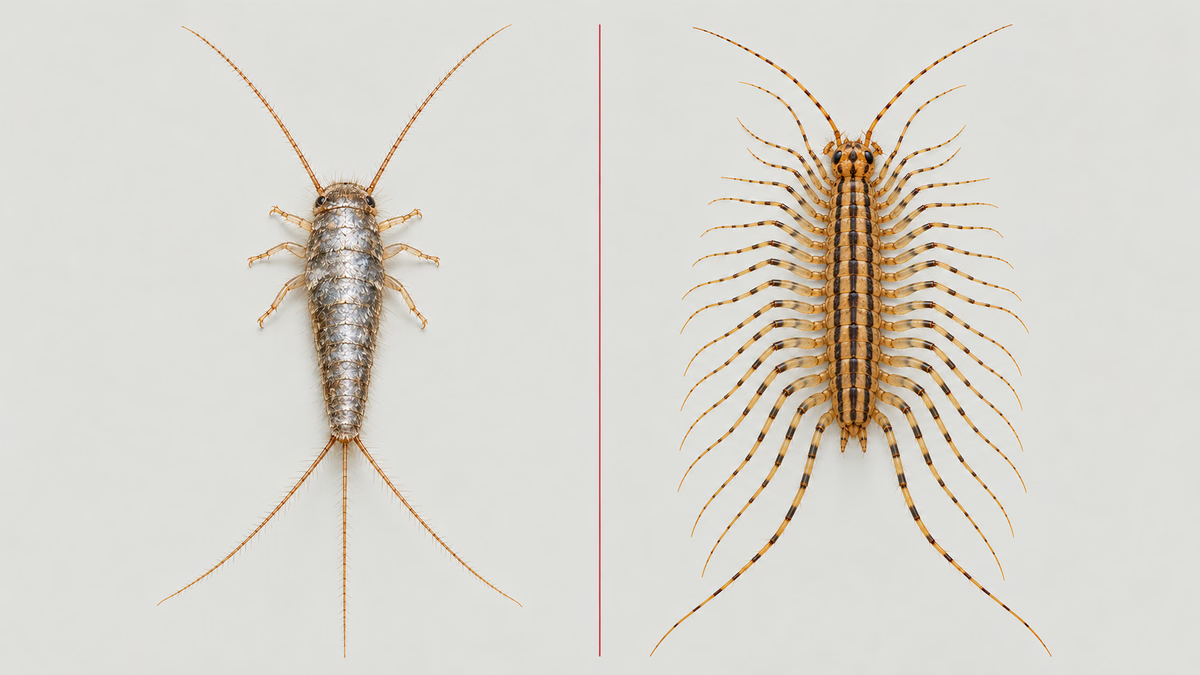
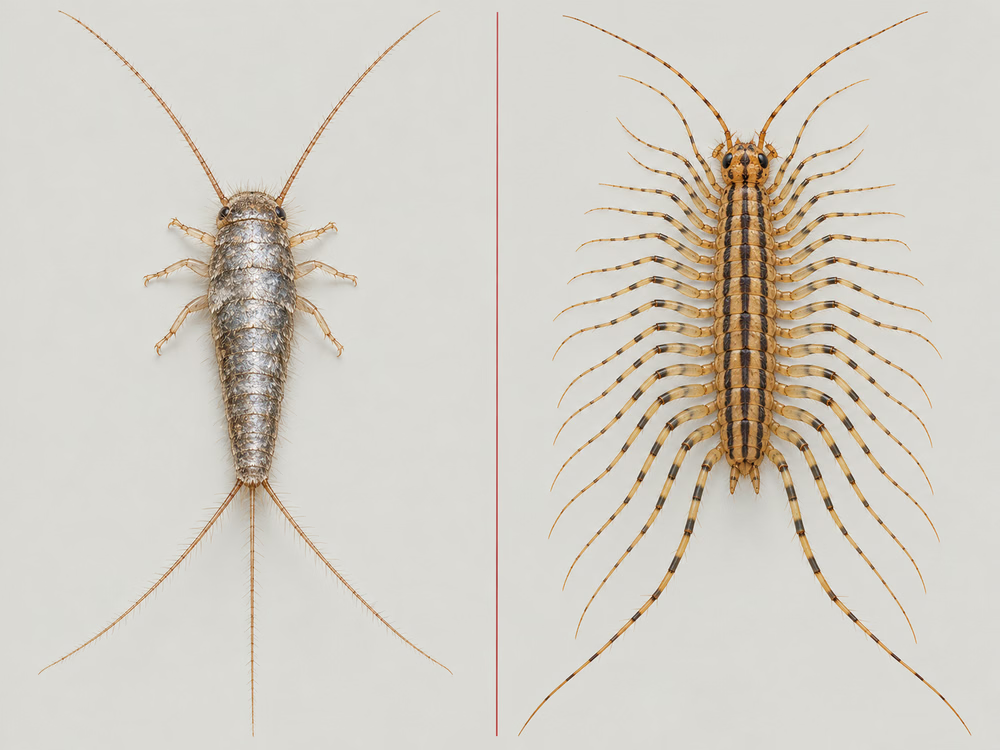
The quickest way to distinguish silverfish vs centipede is to examine the legs and rear end. Silverfish have six legs and three tail bristles; adult house centipedes have 15 pairs of long legs. This comparison focuses on house centipedes, not every centipede species. Both can move quickly.
Start with identification, then decide whether anything needs attention. If silverfish are confirmed and activity persists, Phantom’s silverfish control in Vancouver service addresses that pest. A single unidentified animal, however, is a reason to look more closely before choosing a treatment.
On this page7 sections
- Silverfish and House Centipedes: Key Differences at a Glance
- Why Silverfish and House Centipedes Appear Indoors
- Which Pest Causes More Problems?
- Does Finding Silverfish or a Centipede Mean an Infestation?
- How to Prevent and Control Silverfish and House Centipedes
- Conclusion: Identify the Pest Before Choosing a Control Method
- Frequently Asked Questions
Silverfish and House Centipedes: Key Differences at a Glance
Silverfish are insects. House centipedes are not insects, although both belong to the larger group called arthropods: animals with jointed limbs and an external skeleton. Their different body plans provide better identification clues than where you found them.
| Feature | Silverfish | House Centipede | Identification Note |
|---|---|---|---|
| Legs | Six, near the front of the body | Adults have 15 pairs of long legs | Young house centipedes have fewer pairs. |
| Tail bristles | Three slender rear filaments | No silverfish-type tail bristles | The long rearmost appendages are legs. |
| Body shape | Flattened, tapering towards the rear | Elongated trunk surrounded by spreading legs | Look at the body and attachment points together. |
| Colour or markings | Common silverfish are silvery or pearl grey | Yellowish-grey or brownish, often with three dark lengthwise stripes | Lighting and species affect appearance. |
| Size | Common silverfish body: about 13 mm, sometimes 19 mm | Adult body: around 25 mm | Body lengths exclude antennae, tail bristles and projecting legs. |
| Diet | Starchy materials and other food debris | Small living arthropods | House centipedes can eat silverfish. |
| Indoor locations | Storage, shelves, cracks and moisture-associated spaces | Sheltered areas with suitable prey, often near moisture | Neither is restricted to bathrooms. |
| Main concerns | Possible damage to susceptible belongings | Unwanted sightings; uncommon defensive bites | The appropriate response differs. |
Legs and Tail Bristles: The Clearest Identification Clues
In a clear silverfish photograph, find the head first. Two antennae project from it. Behind the head, three pairs of legs attach to the thorax, the insect’s middle section. At the opposite end, three thin bristles extend from the tapered abdomen.
An adult house centipede has legs along much of its trunk, with one pair on each leg-bearing segment. The last pair can extend far backwards, but these are jointed legs, not tail bristles. Its two antennae originate at the head.
Do not handle either animal to count appendages. Legs may be missing, folded underneath or blurred. Immature house centipedes acquire additional leg pairs as they develop, so fewer than 30 visible legs does not rule one out. Use the overall arrangement rather than demanding a perfect count.
Body Shape, Colour and Size
The common silverfish, Lepisma saccharina, has a compact, carrot-like outline. The house centipede, Scutigera coleoptrata, looks more open and spindly because of its long, often banded legs. The table’s measurements describe bodies, not total appendage span.
Colour supports identification but cannot confirm it. Young silverfish may lack the familiar metallic scales, and several silverfish-like species occur in buildings. A mottled, six-legged insect with three rear filaments may need a different comparison; see silverfish and firebrat identification.
Movement: Why Speed Alone Cannot Identify Either Pest
Both can disappear into cover quickly. Silverfish often show a wriggling movement, while a house centipede’s spreading legs can make its movement look especially striking. Neither impression is a dependable identification test.
Lighting, viewing angle and the distance to shelter affect what you notice. A brief dash across a bathroom floor rarely shows enough detail; a sharp photograph is more useful than a speed estimate.
Why Silverfish and House Centipedes Appear Indoors
Moisture, Hiding Places and Common Household Locations
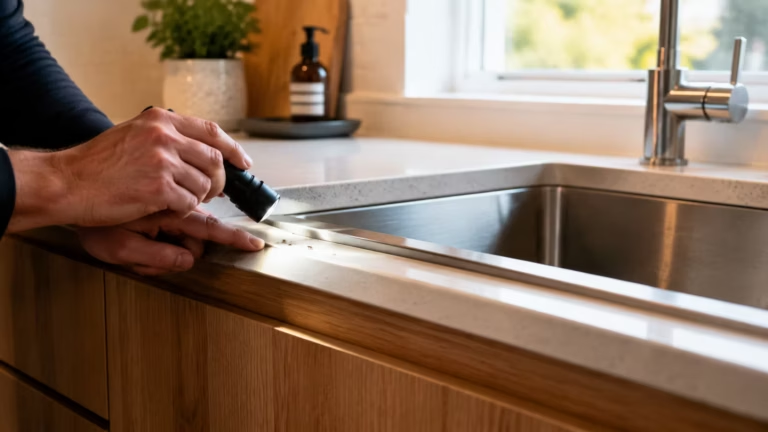
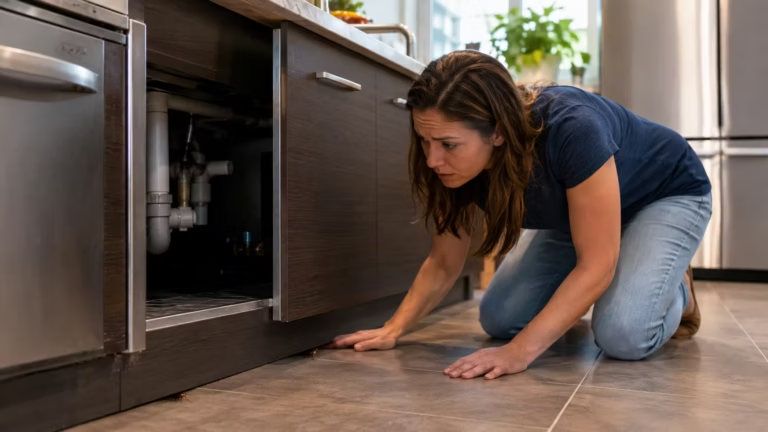
Moisture and protected hiding places can make parts of a home suitable for either animal. Check bathroom edges, laundry areas, basement storage, cupboards around plumbing and gaps behind trim. Silverfish may also arrive with books, cartons or other stored materials.
For a Vancouver homeowner or renter, inspect the conditions in the particular room: recurring condensation, damp stored belongings or a dripping fitting. A sighting alone does not establish a leak, poor hygiene or a weather-related cause.
Moisture tolerances vary between species and conditions. Activity away from a bathroom is possible, and drying one visible surface may leave sheltered conditions elsewhere unchanged.
What Each Pest Eats—and Why House Centipedes Eat Silverfish
Silverfish scavenge. Their food can include starch-based materials, crumbs, dead insects, paper and the paste or sizing associated with paper products. A bookshelf can provide both shelter and food without being visibly dirty.
House centipedes hunt suitable small arthropods, including silverfish, spiders and other household prey. University of Kentucky entomologists describe this diet in their guide to centipedes and millipedes.
Predation does not establish dependable pest control. A house centipede sighting neither proves silverfish are present nor shows that a hidden population is being eliminated. Identify any other animals independently.
Which Pest Causes More Problems?

Silverfish Damage to Books, Wallpaper and Clothing
Silverfish are the more relevant concern when susceptible belongings show feeding damage. They can scrape paper surfaces, affect book bindings and feed on wallpaper paste. Damage may include irregular surface loss or holes that develop as feeding continues.
Textile damage depends on the material and available nourishment. Starch sizing on cotton or residues on clothing can attract feeding; this does not mean every fabric is equally vulnerable. Silverfish are not structural timber pests.
Inspect affected items and nearby hiding places before assigning a cause. Wear, other insects and damp-related deterioration can also damage paper or fabric. Photograph changes so you can distinguish old damage from continuing activity.
House Centipede Bites Compared with Silverfish Risks
Silverfish do not bite people; their main concern is damage to materials. House centipedes do not feed on books or clothing, but they can bite defensively, particularly if handled or accidentally pressed against skin.
Such bites are uncommon. Local pain, redness or swelling can occur, so avoid calling house centipedes either a routine medical threat or incapable of biting. Their venom-delivering structures are modified front appendages rather than ordinary insect jaws.
If a suspected bite occurs, wash the area and use a cool compress. Seek medical advice for worsening symptoms or signs of infection. Do not identify the animal responsible from a skin mark alone.
Does Finding Silverfish or a Centipede Mean an Infestation?
Occasional Sightings vs Repeated Activity and Damage
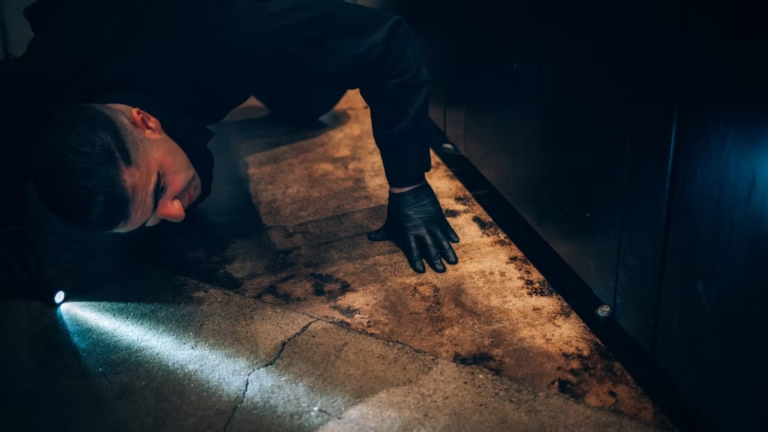
One sighting confirms that an animal was present, not how many are hidden. Repeated observations, activity in several locations and fresh damage provide more reason to investigate. There is no useful universal count that turns sightings into an infestation.
Keep a simple record of dates, rooms and associated conditions. Repeated centipede sightings can justify looking for prey and shelter, but cannot reveal which prey species is present. For silverfish-specific evidence, Phantom’s guide to signs of a silverfish infestation provides further context. Treat stains or debris as clues requiring confirmation.
How to Confirm Identification with a Clear Photo or Monitoring Trap
Take an overhead photograph showing the complete body, antennae and rear appendages. If possible, add a side view and place a ruler nearby without touching or cornering the animal. Keep the original files; excessive digital zoom can obscure details.
Insect monitoring traps may document where activity occurs. Follow product directions, date each monitor and keep it away from children, pets, food-contact surfaces, electrical equipment and access routes.
A blurred photograph or damaged trapped specimen may support only a tentative identification. Trap catches are not a census: placement and animal movement affect results. Empty traps do not prove absence, and trapping alone may leave the source untouched.
How to Prevent and Control Silverfish and House Centipedes
Fix Moisture Problems and Seal Entry Points
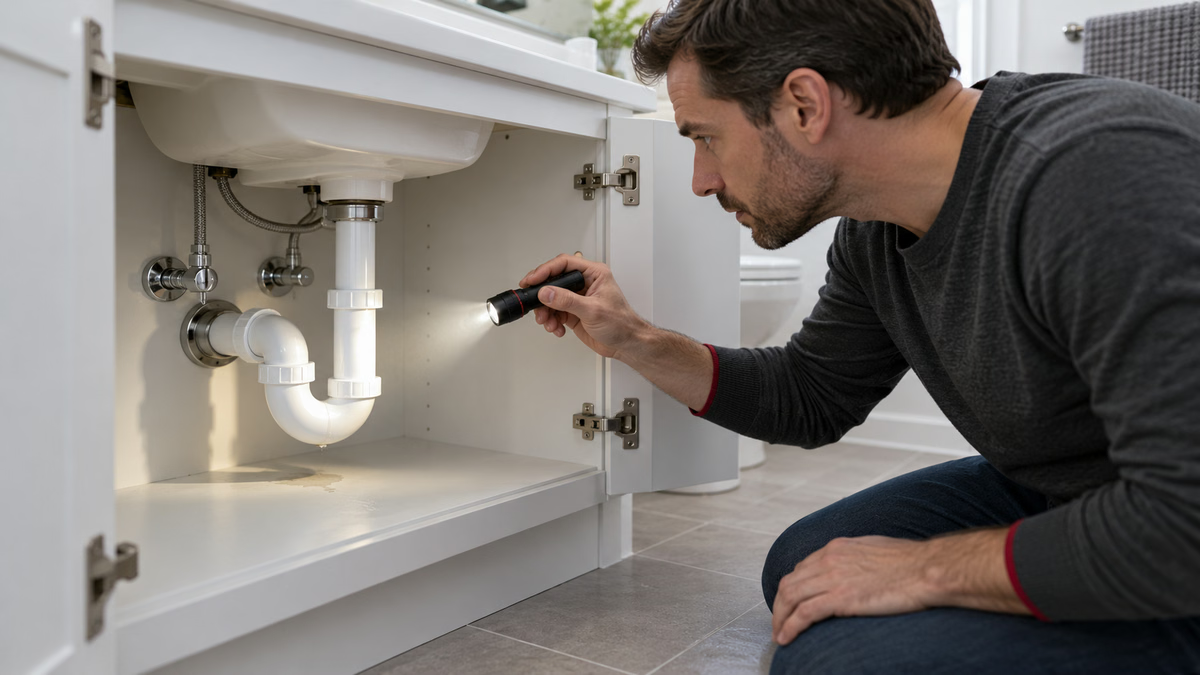
Start where the evidence points. Inspect accessible plumbing for drips, note persistent condensation and check whether bathroom ventilation works. Arrange repairs for confirmed problems and consider appropriate dehumidification where dampness persists.
Seal suitable cracks around trim, window frames and service penetrations, and maintain screens and door seals. In a rental or strata property, report recurring dampness and inaccessible gaps to the responsible manager.
Preserve ventilation openings, drainage, fire-safety features and equipment clearances. Shared service penetrations may need an approved repair rather than improvised filling. Monitor the same locations after changes to see whether activity continues.
Protect Stored Materials and Reduce Food Sources
Inspect vulnerable belongings before reorganizing them. Store clean, dry papers and susceptible textiles in suitable protective containers; avoid sealing damp items inside. Move stored materials off damp floors and reduce unnecessary cardboard or tightly packed clutter.
Vacuum accessible cracks, shelf edges and accumulated debris. Check nearby dry foods and pet food, and use tightly closing containers. These sanitation steps reduce available food and shelter without suggesting that sightings result from poor housekeeping.
For house centipedes, investigate other arthropod activity rather than assuming silverfish are the food source. Moisture reduction and protected storage help, but established activity may need a broader inspection.
When Persistent Activity Needs Professional Pest Control
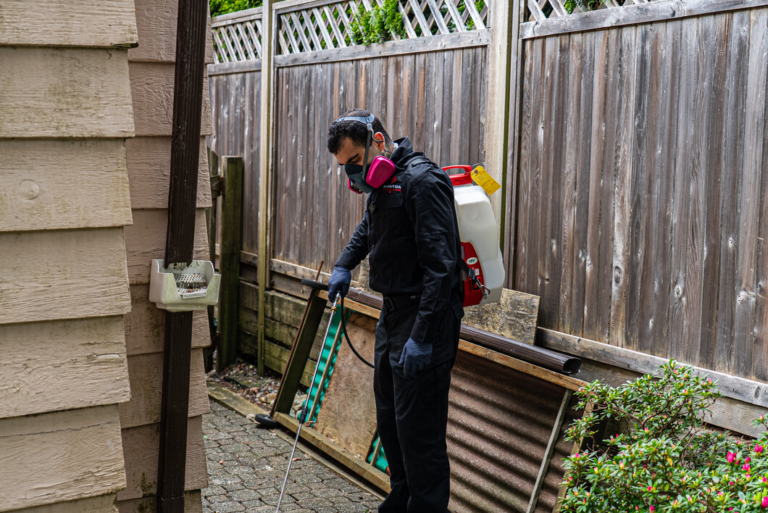
Consider professional assessment when sightings continue after practical corrections, damage recurs, activity appears inaccessible or identification remains uncertain. An occasional house centipede without continuing problems does not automatically require pesticide treatment.
Integrated pest management combines identification, inspection, monitoring, environmental corrections, exclusion and suitable treatment where justified. A useful assessment explains what evidence supports the proposed action and how progress will be checked.
Phantom’s crawling insect control page describes inspections and targeted management, including centipedes among the listed pests. When enquiring, provide photographs, the location, sighting frequency and any associated damage or moisture concerns.
Conclusion: Identify the Pest Before Choosing a Control Method
For silverfish vs house centipede identification, prioritize appendage arrangement: six legs and three rear bristles suggest silverfish; numerous long legs along the trunk suggest a house centipede. Check several features and allow for immature stages or missing limbs.
Then match the response to the evidence: document sightings, protect affected belongings and correct relevant moisture or access problems. If uncertainty, recurring damage or persistent activity remains, Phantom Pest Control serves Vancouver and the Lower Mainland and can discuss an appropriate next step.
Frequently Asked Questions
1. Are Silverfish Baby Centipedes?
No. Silverfish and house centipedes are different animals. Silverfish are six-legged insects with three rear bristles. Young house centipedes have fewer leg pairs than adults and add pairs as they develop. A small or pale specimen is not automatically a silverfish; examine its body and appendage arrangement.
2. Can House Centipedes Eliminate a Silverfish Infestation?
House centipedes can eat silverfish, but they are not a dependable stand-alone control method. You cannot infer how much predation occurs or whether hidden silverfish remain. Confirm the pest, protect vulnerable materials, address supporting conditions and monitor activity. Persistent damage or sightings may warrant a professional assessment.
3. Do Silverfish and House Centipedes Come Up Through Drains?
Finding either near a drain does not establish entry through plumbing. Moisture and gaps around pipes can explain nearby activity. Silverfish may fall into sinks or baths and become trapped by smooth surfaces. Inspect surrounding openings and moisture sources; do not assume a sewer origin or pour pesticide into drains.