Condo & Apartment Pest Control in Vancouver & Fraser Valley
Condo and apartment pest control starts with where the pests are coming from: your own suite, the suites around it, or the building’s shared spaces. We inspect your suite and the places pests cross into it, treat the problem and recommend the next steps, including what to raise with your landlord, property manager or strata.
Property type
Condos & apartments, owned or rented
Common pests
Where they get in
Service area
Pest Control Built for Condos & Apartments
A condo or apartment has fewer outside walls than a house, but it shares walls, floors, pipes and garbage rooms with dozens of other homes.
That changes how pests behave. Bed bugs arrive on luggage, clothing and second-hand furniture, then spread through wall voids, electrical conduits, hallways and shared spaces. German cockroaches follow shared walls and plumbing from one suite to the next. Mice move through walls, ceilings and underground parkades, and the garbage room feeds them. Pigeons settle on balconies and ledges. A problem in your suite may have started next door, or be starting there now.
So an inspection looks past the room where you saw something: beds and furniture, kitchen and bathroom, outlets, baseboards, the gaps around pipes, and the balcony. It also sorts out whose part is whose: inside the suite is usually the owner’s or landlord’s, while corridors, garbage rooms and parkades are the building’s. Strata councils and property managers will find our property management programs more useful; for a house, see single-family and laneway homes.
Bed bugs and cockroaches cross between suites through wall voids, outlets and baseboards.
Pipes and wiring run from floor to floor, and pests follow them up and down.
Gaps under doors, and furniture carried through the hall, move pests between suites.
One room full of food waste draws mice, rats, cockroaches and flies.
Underground parkades and stored boxes give rodents and insects quiet cover.
Pigeons roost on railings and ledges and nest in sheltered corners.
Common Pests in Vancouver Condos & Apartments
The pests that cause the most trouble in condos and apartment buildings, and how each one moves through a shared building. Each row opens that pest’s service page.

Arrive on luggage and second-hand furniture, then spread to nearby suites through walls and hallways.

Live near kitchens and bathrooms and move between suites along shared walls and plumbing.

Find food in garbage rooms, shelter in parkades, and travel inside walls and ceilings.

Roost on railings and ledges and nest in sheltered corners of balconies.

Trail in during spring and summer; pharaoh ants can spread from suite to suite.

Live in damp bathrooms and storage, and move between units along pipes and wall gaps.

Spread between units, and can be waiting in a suite where the last tenant had pets.
Describe it or send a photo with your estimate request.
Seasonal Pest Activity in Vancouver Condos & Apartments
A few of these follow the seasons. The rest follow people, belongings and damp, so they can turn up in any month. For the early warning signs, see the signs of bed bugs.
Months follow the timings Phantom publishes for each pest in the Lower Mainland.
Most active in spring and summer, when colonies grow and look for food. They nest outdoors, so suites near the ground often notice them first.
Active all year in the Lower Mainland and worst in the warmer months. A suite can be infested before you move in if the last tenant had pets.
Nesting peaks in spring and early summer, but in mild weather pigeons can breed all year, so a balcony needs watching in winter too.
They look for food, shelter and warmth inside buildings, especially in the colder and wetter months, then nest in wall cavities where they stay hidden.
Not seasonal
They travel with people and their things, so they turn up whenever an infested bag, couch or visitor does.
Warm kitchens and bathrooms keep them going in every month, wherever shared walls and plumbing connect suites.
Driven by damp, not the calendar: bathrooms, laundry closets and storage lockers with poor airflow.
Where Pests Get Into Your Suite
Pests reach a suite from inside it, through its walls and floors, or from the shared spaces around it. Check these nine places first, from the balcony down to the parkade.
- AKitchen & bathroom pipes
Gaps where pipes enter the wall under sinks open into the wall and the stack.
- BBedroom & furniture
Bed bugs hide in mattress seams, bed frames and furniture near where people sleep.
- COutlets & baseboards
Bed bugs and cockroaches cross from the next suite through outlets and gaps.
- DPlumbing & wiring stacks
Shafts running floor to floor connect the suites above and below.
- ECorridor & suite door
Gaps under the door, and belongings moved through the hall, carry pests along.
- FGarbage room & chute
Food waste in one room draws mice, cockroaches and flies.
- GParkade & storage lockers
Rodents travel through parkades, and stored boxes give insects cover.
- HBalcony
Pigeons roost on railings and nest in sheltered corners.
- IGround-floor patio & planters
Ants and rodents reach the building at ground level.
What You Can Do, and What Needs a Technician
In a building, nobody fixes a pest problem alone. Vancouver Coastal Health says bed bugs “require the combined efforts of the tenant, property owner and qualified pest control technician,” and most pests in a shared building work the same way. Here is your part, and ours.
You can
Bed bugs leave small dark spots along mattress seams and shed skins behind the headboard. Cockroaches leave droppings and egg cases around cupboards, appliances and plumbing. Write down where and when you see them; one clue alone can mislead.
Health Canada’s advice to tenants is to tell your landlord right away. Owners should tell the property manager or strata. Put it in writing with dates, so the building can check the suites around yours.
Don’t drag a mattress or couch through the hallway. Bag belongings before you move them, and skip the bug bombs: they won’t kill most bed bugs or reach cockroaches in cracks, and can push them next door.
Needs a technician
Bed bugs hide in seams, frames, outlets and baseboards; cockroaches in walls, cabinets and behind appliances. Before any bed bug treatment, a K9 detection confirms where they are.
Gel bait, dust and monitoring go where cockroaches live. A spray near the bait repels them, so they never eat it.
When one suite has bed bugs, the suites beside, above, below and across the hall are worth checking. A K9 inspection covers a unit and the common area, and more units can be added.
Gaps around pipes, under sinks and along baseboards are easy to miss. Exclusion work closes them with durable, professional-grade materials.
Our Approach to Condo & Apartment Pest Control
Five steps from the first visit to the follow-up, and what each one means in a building.
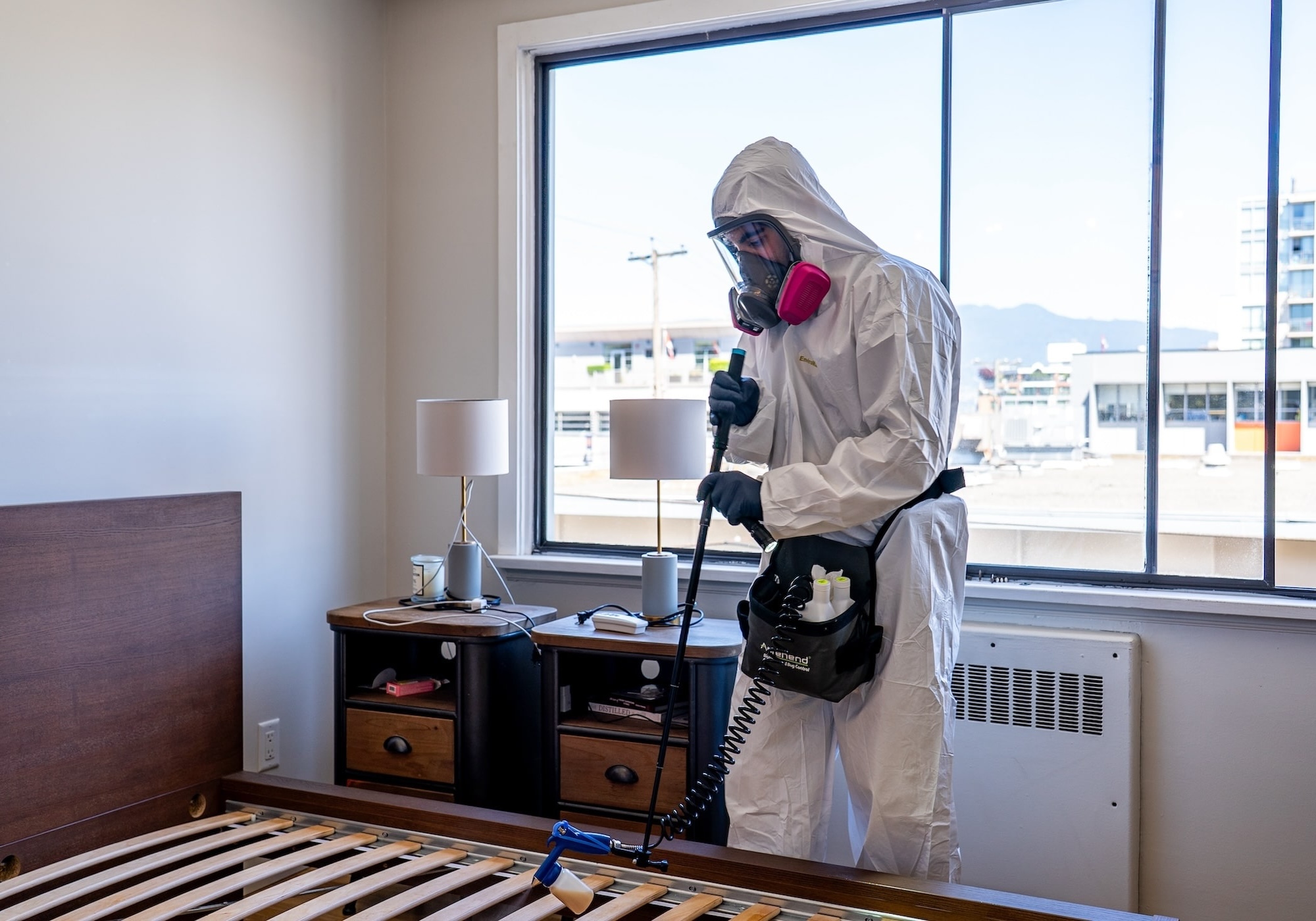
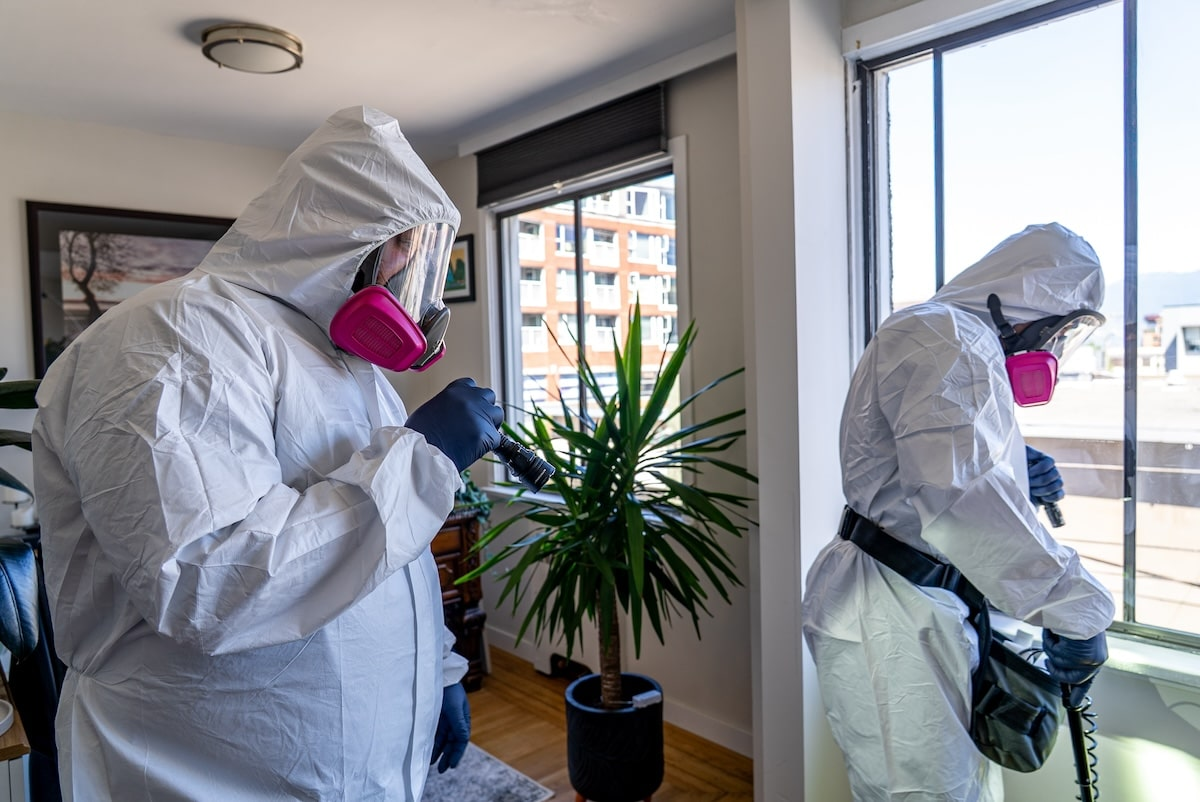
Every service starts with a detailed inspection of the suite: beds and furniture, kitchen and bathroom, outlets, baseboards, the gaps around pipes and the balcony. When the building arranges access, we check the corridor, garbage room and parkade too.
We identify the pest, assess the level of activity and investigate likely entry routes and hiding places. If the findings suggest involvement of neighbouring suites or common areas, we explain what additional inspection may be needed. For bed bugs, Phantom requires K9 detection before treatment.
Targeted treatment where the pest lives: gel baiting, dusting and monitoring for cockroaches, a residual treatment for bed bugs once the suite is prepared, and a three-visit program for rats and mice.
We point out the entry points we found. Gaps up to the size of a toonie are sealed as part of a rodent program, and larger openings go to exclusion work. Openings in common property are for your strata or landlord to fix.
Cockroaches may need a second treatment 15 to 21 days after the first, and bed bugs often need more than one treatment and a follow-up inspection. Your technician will say what to expect for your suite.
Whole building? See the Multi-Unit Property Maintenance Program.
Before Your Suite Is Treated
Every pest has its own preparation sheet. Here is what the bed bug and cockroach sheets ask of a suite.
Bedding, clothing and curtains go through hot water and a dryer on high heat for at least 60 minutes, then into sealed bags. Carry laundry to a shared laundry room already bagged.
Two feet for bed bugs, one foot for cockroaches. Stand mattresses up off their frames, and stack sofa cushions in the middle of the room.
For cockroaches, clear the kitchen and bathroom cupboards, upper and lower, and keep food in covered containers.
Clear floors and follow your preparation sheet for cleaning behind appliances. Remove outlet covers or switch plates only if requested, with power to the circuit switched off. If unsure, ask us first.
Confirm the vacancy period for your booked treatment before the visit. Follow your service-specific preparation sheet and the technician’s re-entry instructions, including any ventilation requirements. Tell us in advance about infants, pregnancy, nursing, respiratory or immune conditions, and pets so we can explain any additional precautions.
Tell your landlord, manager or strata the date. Don’t move belongings to a storage locker or another suite until the treatment is done.
After Treatment
What to expect over the next few weeks, from the bed bug and cockroach aftercare sheets.
Treatment day
Stay out for the full vacancy time, then open the windows for 15 to 30 minutes when you get back.
First week
You should see a significant drop in cockroaches within 4 to 7 days. After a bed bug treatment, keep washing and drying bedding on high heat for 7 to 10 days.
Weeks 2 to 4
Expect some wandering insects in odd places: cockroaches for up to 2 to 3 weeks, bed bugs for up to 3 to 4 weeks as eggs hatch. It means the treatment is working.
First 4 weeks
No vacuuming, mopping or cleaning within 6 inches of baseboards and treated surfaces, and no store-bought sprays or cleaners on them.
Follow-up
A second cockroach treatment may be needed 15 to 21 days after the first. For bed bugs, a K9 detection or a follow-up treatment may be needed to finish the job.
It feels wrong, but the bed bug sheet is clear: sleep where you normally do. Bed bugs come out toward body heat and cross the treated areas. Sleeping on the couch or at a friend’s spreads them.
Note where and when, then call us. More than one treatment is common in a building, so your technician will tell you whether a follow-up is already planned.
Pest Control for Condo Balconies
Balconies are where a condo meets the building’s birds. Pigeons roost on railings and ledges, nest behind planters, storage and air-conditioning units, and leave droppings on everything below.
Where pigeons perch and roost, and where droppings pile up.
The sheltered corners behind them are where nests start.
Clean them up with care, or book our bird cleaning.
Starlings and sparrows nest inside vents and wall gaps, where one nest can affect several suites.
Start with the bird. Health Canada notes that pigeon droppings “may pose a health hazard,” and that “fine netting can be hung across the front of the balcony” if pigeons are a nuisance. Our bird control uses netting, spikes, tension wire and visual deterrents, chosen for the species and the building. Check the species first: rock pigeons aren’t federally protected, but mourning doves and band-tailed pigeons are, and B.C. law protects most occupied nests.
Then ask the strata. Under B.C.’s Standard Bylaws, an owner needs the strata’s written approval before altering “chimneys, stairs, balconies or other things attached to the exterior of a building,” and before altering common property, including limited common property. Many stratas file their own bylaws, so read yours. Renters should ask their landlord, who deals with the strata.
Why Condo Owners & Renters Choose Phantom Pest Control
The facts behind the work, and the price before you book. Strata councils and property managers can see our property management programs for whole buildings.
Experience
15+ years of pest control in Vancouver
Credentials
Fully licensed, insured and certified
Compliance
Work follows B.C. Ministry of Environment rules
Before your visit
What it costs
Inspection $125 + GST for a condo or apartment
EXCELLENTTrustindex verifies that the original source of the review is Google. Just wanted to say that we're very happy to have Darcey Walker as our pest control technician as he's always personable, knowledgeable about taking care of our past pest control issues and does a great job!Posted on GoogleTrustindex verifies that the original source of the review is Google. JC from Phantom was very professional and friendly to work with. He came prepared for the first inspection and carefully reviewed our problem and clearly explained the treatment options and timelines. Then we scheduled the follow-on work on the spot for him to come back. In between the two appointments, I found a wasp nest and was able to communicate that to Phantom to add as additional work. All works were completed without issue and the areas tidied to remove any debris. Thank you for taking care of everything so efficiently! Would definitely go back to JC and the team for future needs.Posted on GoogleTrustindex verifies that the original source of the review is Google. Joy and Yash have been great to work with, very prompt and thorough.Posted on GoogleTrustindex verifies that the original source of the review is Google. June was fantastic!! I was concerned that having a termite inspection done by a pest control company would just lead to an aggressive sales pitch for their services, so I specifically chose a company like Pantone who don’t do free inspections. June did a thorough inspection, checked everything available nook and cranny explained everything he was seeing and allayed my worries. Not once did he try to upsell a service or push for some needless preventative measure. I was very happy with the service.Posted on GoogleTrustindex verifies that the original source of the review is Google. The technicians that came to our building to try and exterminate a wasp nest did a great job. Darcy and June we're very capable of removing the Wasps from the eaves in our roof. I can highly recommend them.Posted on GoogleTrustindex verifies that the original source of the review is Google. Exceptional service from Darcy! Always professional, and knowledgeable. He has a knack for attention to detail, and really takes the time to explain the issues with a resolve. Reliable and very friendly A+ Highly recommend!Posted on GoogleTrustindex verifies that the original source of the review is Google. June was so kind and tremendously helpful!Posted on GoogleTrustindex verifies that the original source of the review is Google. Phantom pest did a great job with our mouse and cockroach problem. JC was a wonder to work with and we will be using them in the future if need be. Thanks!Posted on GoogleTrustindex verifies that the original source of the review is Google. This is a very good company. The technician Mark is so nice and very professional.Posted on GoogleTrustindex verifies that the original source of the review is Google. Had a rodent problem, Darcey came over and took care of it. Appreciate the quick response and great job! Thank you!
Condo & Apartment Pest Control Across Vancouver & Fraser Valley
We serve condo owners, renters and landlords across Metro Vancouver and the Fraser Valley, from downtown towers to low-rise rental buildings.
Vancouver & North Shore
Burnaby & Tri-Cities
Richmond & Delta
Fraser Valley
More Services for Your Home
Where to go next, depending on your building.
All home services and property types.
Building programs for strata councils and property managers.
Detection for a unit, the common area and the suites around it.
Scheduled visits, including a multi-unit property program.
Condo & Apartment Pest Control FAQs
Straight answers to what condo owners, renters and landlords ask most.
Prefer to talk?
I rent my apartment. Is my landlord responsible for pest control?
Usually, for insects. B.C.’s Residential Tenancy Branch says “Landlords are generally responsible for controlling insect infestations, such as bedbugs,” while rodents fall under each city’s Standards of Maintenance bylaw. Tenants must keep the unit reasonably clean and repair damage they cause. Report it to your landlord in writing at the first sign. Your landlord can’t do the treatment themselves either: Fraser Health notes that landlords “cannot legally apply pesticides themselves in their rental suites.” Renting a condo? The owner is your landlord and deals with the strata. This is general information, not legal advice. See the Residential Tenancy Branch.
Who pays for pest control in a condo: the owner or the strata?
It depends on where the problem is and what your bylaws say. B.C.’s Strata Property Act makes the strata corporation repair and maintain common property, such as corridors, garbage rooms and parkades, and the Standard Bylaws make each owner repair and maintain their own strata lot. Many stratas file their own bylaws, which can move that line, so check yours. If the strata wants an owner to pay the cost of remedying a bylaw breach, it must first give the particulars in writing and a reasonable chance to answer. This is general information, not legal advice.
Do the suites around mine need to be checked?
Often, yes. Bed bugs spread between units through wall voids, electrical conduits and shared spaces, and Canada’s National Collaborating Centre for Environmental Health advises that in multi-unit dwellings “all units adjoining an infested unit should be inspected systematically (above, beside, across, and below).” Our K9 bed bug inspection is priced for exactly this: $250 + GST for the first unit and the common area, then $35 + GST for each additional unit. Treating one unit caught early costs a fraction of treating a whole floor. Access to other suites goes through your landlord, property manager or strata.
Do I have to let the technician into my suite?
For a treatment your building arranges, yes, with proper notice. A landlord must give a tenant at least 24 hours’ written notice stating the purpose and the date and time of entry, which must fall between 8 a.m. and 9 p.m. unless the tenant agrees otherwise. Under the strata Standard Bylaws, an owner must allow entry on 48 hours’ written notice to inspect or maintain what the strata is responsible for, or without notice in an emergency. Your strata may have filed different bylaws. This is general information, not legal advice.
How do I prepare my suite for bed bug treatment?
Follow the preparation sheet you receive. In short: wash bedding, clothing and curtains, dry them on high heat for at least 60 minutes and store them in sealed bags or bins. Stand mattresses up off their frames, move furniture at least 2 feet from the walls and take off outlet covers and switch plates. Vacuum floors, baseboards and furniture and seal the contents in a bag. Plan to be out for 6 to 8 hours, or 24 hours for infants, pregnant or nursing mothers, anyone with breathing or immune conditions, and pets. Get the preparation sheets.
How many treatments will it take?
Plan for more than one. For bed bugs, our aftercare sheet says one treatment can significantly reduce an infestation, but a K9 detection or a follow-up may be needed to finish it, and Vancouver Coastal Health tells residents to “be prepared for more than one treatment.” For cockroaches, the first service is gel baiting, dusting and monitoring, and a second treatment may be needed 15 to 21 days later. Rodent control runs as a program of three visits. Your technician will tell you what to expect for your suite.
What does condo pest control cost?
Our published prices for a condo or apartment, before GST: an inspection is $125. For bed bugs, a K9 detection comes first, at $195 to $275 for one unit, and treatment is $525 to $695. Cockroach gel baiting, dusting and monitoring is $250 to $350. A rodent control program of three visits is $395 to $495. Prices can change with the size of the property, how severe the infestation is and the treatment needed, and each service page shows the current figures. Estimates over the phone are free.
Can cockroaches come from a neighbour’s apartment?
Yes. NC State Extension notes that German cockroaches “may enter or move between units through adjoining walls, outlets, or in ceilings,” and shared plumbing gives them more routes. That’s why spraying your own suite can backfire: sprays repel cockroaches from baits, and foggers don’t reach the cracks where they hide. Treatment uses gel bait, dust and monitoring, and once cockroaches are established in a building, coordinated treatment of the units around yours is essential. Finding them doesn’t make your home dirty: Health Canada says their presence “does not necessarily mean unclean conditions exist.” See signs of a cockroach infestation.
How do mice get into a condo on an upper floor?
Usually from inside the building. Mice can get through a dime-sized opening, and in multi-family buildings rodents move from unit to unit through shared walls, ceilings and underground parkades, with garbage rooms nearby for food. In your suite, the B.C. government’s advice is to seal any opening bigger than 6 mm (1/4 inch), especially around pipes under sinks and behind appliances. If you find droppings, tell your building too, because the source may be on another floor. More in why rodent problems are common in Vancouver homes.
How do I keep pigeons off my balcony?
Start by removing what attracts them: food, open storage and sheltered corners behind planters or air-conditioning units. Health Canada says never to leave food out where pigeons can get it, and suggests fine netting across the front of the balcony; our bird control uses netting, spikes, tension wire and visual deterrents. Before anything is attached, get your strata’s written approval; the Standard Bylaws require it for changes to balconies. Check the species too: rock pigeons aren’t federally protected, but mourning doves and band-tailed pigeons are, and B.C. law protects most occupied nests.
Protect Your Suite From Pests
Tell us what you’re seeing, in which room and on which floor, and we’ll recommend the next step. A photo helps.
Inspection $125 + GST for a condo or apartment. Estimates over the phone are free.