Townhouse Pest Control in Vancouver & Fraser Valley
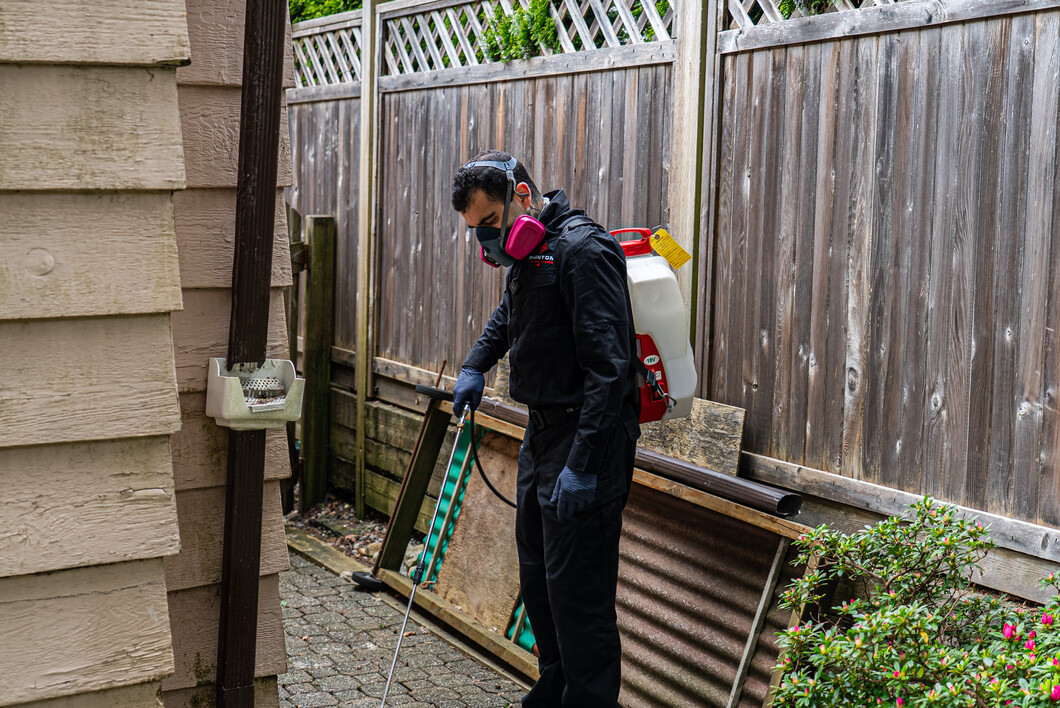
Phantom Pest Control provides townhouse pest control in Vancouver and the Fraser Valley, with inspections, targeted treatments and entry-point recommendations for attached homes. Depending on the pest and building layout, activity may involve shared wall cavities, utility openings, garages or roof spaces. We inspect your unit, assess likely sources and explain when neighbouring units or common areas may also need attention.
Property type
Townhouses, townhomes & strata rows
Common pests
Where they get in
Service area
Pest Control Built for Townhouses & Strata Complexes
A townhouse is your home, but it is also one unit in a row, and pests don’t stop at the property line.
Townhouse layouts vary. Some have shared roof spaces or parkades; others have separate attics and individual garages. Gaps around plumbing, wiring and shared walls can allow pests to move between connected areas, while exterior openings may provide a separate route indoors. Responsibility for repairs depends on the location of the opening, the strata plan and your strata’s bylaws. If an issue involves common property or the building exterior, contact your strata council or property manager before arranging repairs.
That changes how a problem gets solved. We start in your unit but read it as part of the row: which wall the activity is on, what runs behind it, and what is happening in the attic, the garage and the bin area. You get a treatment for what is inside, and we point out the entry points outside it, so you can raise them with your strata council or property manager.
The cavity between two units is a hidden hallway for mice, cockroaches and bed bugs.
Where roof spaces are connected, rodents or wildlife may move between sections of the row. An inspection helps establish which areas are affected.
Gaps around pipes and cables can provide routes through walls and floors, including between units where service spaces are connected.
Small yards, decks and stored wood sit right against the wall, where ants and rodents look for a way in.
Garage doors, storage and pipe entries below the units give rodents a sheltered start.
Shared garbage and compost areas feed the rodents that end up in the walls.
Common Pests in Vancouver Townhouses
The pests we see most often in townhouses and strata rows. Each one links to the full service.

Nest in wall cavities, attics and crawl spaces, and move between units along pipes and wiring.

Spread between units through shared walls and plumbing, starting in kitchens and bathrooms.

Arrive in luggage and furniture, then reach next door through walls, outlets and shared spaces.

Trail in from patios and yards along foundations, decks and fence lines, mostly in spring and summer.

Live in damp bathrooms, basements and storage, and follow plumbing from one unit to the next.

Build under eaves, decks and siding along the row from late spring into early fall.

Gather around windows, patio lights, garages and storage, where insects draw them in.
Describe it or send a photo with your estimate request.
Seasonal Pest Activity in Vancouver Townhouses
Some of these follow the seasons. Others live inside the building and can turn up in any month. For winter rodent habits, see why rodents get into Vancouver homes.
Timings are the ones Phantom publishes on each pest page, and they describe the Lower Mainland.
Most active in the warmer months, when colonies grow and send foragers indoors. In a row of townhouses, a trail that starts on one patio can show up in several kitchens.
Nests start in spring and grow fast through summer, with activity peaking from mid summer into early fall, often under eaves, decks and siding.
Raccoons have their young in spring, and squirrels raise two litters a year. A shared roof space gives them more room to settle than a single house does.
They move indoors for food, shelter and warmth, especially in the colder and wetter months. Once they nest inside the walls they stay active in any season.
Not seasonal
Warm, moist spaces in any month: behind appliances, under sinks and along the plumbing that connects one unit to the next.
Travel with people and belongings, so they arrive whenever an infested item does, then spread through walls and shared spaces.
Follow damp rather than the calendar: bathrooms, laundry areas, basements and the wall voids behind them.
Where Pests Get Into a Townhouse
In an attached home, most problems come down to a handful of places. These are the ones worth checking first, from the roof to the parkade.
- ARoof & soffit vents
Broken screens and loose soffits let rats, squirrels and wasps into the roof space.
- BAttic over the party walls
Where the attic runs across the row, pests can reach every unit from above.
- CPlumbing stacks & chases
Gaps around pipes under sinks and behind toilets link kitchens and bathrooms next door.
- DOutlets & wiring
Bed bugs and cockroaches use outlet boxes and cable runs inside the shared wall.
- EPatio & sliding doors
Worn sweeps and gaps under doors let ants and mice walk straight in.
- FFence line, deck & stored wood
Wood piles and debris against the wall shelter rodents and ants.
- GGarage door seal
A gap at the bottom of the garage door is often the widest opening into the unit.
- HPipe entries & crawl space
Where pipes and cables enter from the parkade or crawl space, rodents follow.
- IShared garbage & green bins
Open or overfilled bins draw rats into the complex, and then toward the walls.
What You Can Do Yourself, and What Needs a Technician
In a townhouse, the work splits three ways: what you do in your unit, what your strata looks after, and what needs a technician. The B.C. government’s rodent guide puts the first job simply: seal every opening bigger than 6 mm (¼ in).
You can
Learn the signs, and where they are
Look for droppings, gnawed packaging or scratching sounds that may indicate rodents, and shed skins or dark spots around mattress seams that may indicate bed bugs. Record the room, location and time of each sighting, and take photos where possible. Activity near a shared wall can help guide the inspection, but it does not establish that the infestation originated in a neighbouring unit.
Take away food, water and cover
Keep food sealed, fix dripping taps, clear clutter away from walls and keep firewood and debris off the patio wall. Close the lid on your garbage and green bin, keep the bin area clean, and freeze smelly food scraps until collection day.
Tell your strata early, in writing
If you see pests, or a gap in the outside wall, roof or fence, let your strata council or property manager know. Many of those repairs are theirs, and pests that are moving between units are rarely solved one unit at a time.
Needs a technician
Activity in your kitchen can start in a party wall, the attic or the unit next door. Working out the route is what makes the treatment last.
Cockroaches, bed bugs and silverfish live inside walls and around pipes. Treatment has to reach those spaces, not only the floor you can see.
Our rodent program seals small gaps up to the size of a toonie. Larger openings are closed through exclusion work, and gaps on the exterior usually need your strata’s approval.
Follow-up visits, monitoring and, where it suits the complex, a scheduled maintenance program, so new activity is caught before it spreads along the row.
Our Approach to Townhouse Pest Control
Five steps, from the first look to the follow-up, and what each one covers in an attached home.
We check your unit room by room, with extra time on the walls you share, under the sinks, the attic hatch, the garage and the patio. Activity on one side of the unit often points to where it is coming from.
We confirm the pest, how established it is and the likely route in, whether that is mice in a party wall, cockroaches along the plumbing or bed bugs from next door.
Treatment goes where the pest lives: trapping for rodents, gel bait, dust and residual treatment for crawling insects, and a bed bug treatment that can be paired with a K9 bed bug inspection.
We show you the entry points we found, both inside your unit and on the exterior. Rodent programs seal small gaps up to the size of a toonie; larger ones go to exclusion work.
We check that the treatment worked. A rodent program runs over three visits, and a follow-up treatment may be needed for bed bugs, depending on the activity after the first.
Looking after a whole complex? See our Multi-Unit Property Maintenance Program.
Before Your Townhouse Treatment
Each treatment has its own preparation sheet. These are the steps that apply to most townhouse visits.
If the problem may be shared, tell the units on either side and your strata council before the visit. Activity on their side of the wall changes what the treatment needs to cover.
Move furniture and stored items at least one foot from the walls, or two feet for a bed bug treatment, so the baseboards and shared walls can be reached.
For cockroaches, take everything out of the lower and upper cupboards, shelf paper included, and clear dishes and food away.
For rats, the attic opening must be reachable, with the closet below cleared for a ladder. Clear a path in the garage and storage areas too.
Vacancy and re-entry requirements depend on the treatment and products used. Follow the preparation sheet for your booked service and the technician’s written instructions. Before the visit, tell us about children, pregnancy, pets or relevant health concerns so we can explain any additional precautions.
Note where and when you saw activity, room by room and wall by wall. It is the quickest way to trace a pest that is moving through the building.
After Treatment
What happens next, and when. These windows come from the cockroach and bed bug aftercare sheets; rodent programs run on a schedule of visits instead.
Day of treatment
Stay out for 6 to 8 hours, or 24 hours where that applies, then open the windows to air the unit.
Days 4 to 7
A cockroach treatment should show a significant knockdown, though insects can still appear from later life stages.
First 2 to 4 weeks
Wandering insects can show up in plain view for 2 to 3 weeks. Bed bug activity can continue for 3 to 4 weeks as eggs hatch and reach the treatment.
First 4 weeks
Don’t vacuum, mop or clean within 6 inches of the baseboards, and don’t use store-bought sprays over the treated areas.
Up to 3 months
The residual treatment keeps working for up to three months, catching new insects as they come out.
Keep furniture away from treated areas for the period specified in your aftercare sheet. This helps preserve the treatment and makes new activity easier to monitor.
Tell us where and when, and on which wall. If it keeps coming from the same side, the unit next door or the attic may need attention as well, and your strata should know.
Pest Control for Shared Walls & Strata Property
A party wall belongs to two homes at once. Inside it, the pipes, wiring and the gap at the top link your unit to the one next door and to the attic above.
The cavity between units carries mice, cockroaches and bed bugs out of sight.
One roof space over several units lets rodents and wildlife travel the length of the row.
Pipes that run through every floor give insects a sheltered route between kitchens and bathrooms.
Shared spaces below and beside the units feed and shelter rodents.
Who fixes what depends on your bylaws. Under B.C.’s Strata Property Act, the strata corporation must repair and maintain common property and common assets, and the Standard Bylaws make it responsible, even inside a strata lot, for the structure and the exterior of the building, exterior doors and windows, and the fences that enclose patios and yards. Owners repair and maintain their own strata lot. Many stratas have filed their own bylaws, so check yours.
In practice, that means most of the openings in a townhouse belong to the strata. The Condominium Home Owners Association’s Condo Smarts column puts it this way: “With the exception of bed bugs, pests almost always involve infestation of common property or at the very least access through the common property.” When a council wants to recover costs from one owner, it has to link the infestation to that strata lot, which is why it pays to have the source identified by a professional inspection.
Why Townhouse Owners Choose Phantom Pest Control
What stands behind the work: how long we have been at it, what we are held to, and what it costs to find out. Strata councils and property managers can also see our property management programs.
Experience
15+ years of pest control in Vancouver
Credentials
Fully licensed, insured and certified
Compliance
Work follows B.C. Ministry of Environment rules
Before your visit
What it costs
A townhouse inspection is $125 + GST, plus $50 for an attic or crawl space, waived if service is booked the same day
EXCELLENTTrustindex verifies that the original source of the review is Google. Just wanted to say that we're very happy to have Darcey Walker as our pest control technician as he's always personable, knowledgeable about taking care of our past pest control issues and does a great job!Posted on GoogleTrustindex verifies that the original source of the review is Google. JC from Phantom was very professional and friendly to work with. He came prepared for the first inspection and carefully reviewed our problem and clearly explained the treatment options and timelines. Then we scheduled the follow-on work on the spot for him to come back. In between the two appointments, I found a wasp nest and was able to communicate that to Phantom to add as additional work. All works were completed without issue and the areas tidied to remove any debris. Thank you for taking care of everything so efficiently! Would definitely go back to JC and the team for future needs.Posted on GoogleTrustindex verifies that the original source of the review is Google. Joy and Yash have been great to work with, very prompt and thorough.Posted on GoogleTrustindex verifies that the original source of the review is Google. June was fantastic!! I was concerned that having a termite inspection done by a pest control company would just lead to an aggressive sales pitch for their services, so I specifically chose a company like Pantone who don’t do free inspections. June did a thorough inspection, checked everything available nook and cranny explained everything he was seeing and allayed my worries. Not once did he try to upsell a service or push for some needless preventative measure. I was very happy with the service.Posted on GoogleTrustindex verifies that the original source of the review is Google. The technicians that came to our building to try and exterminate a wasp nest did a great job. Darcy and June we're very capable of removing the Wasps from the eaves in our roof. I can highly recommend them.Posted on GoogleTrustindex verifies that the original source of the review is Google. Exceptional service from Darcy! Always professional, and knowledgeable. He has a knack for attention to detail, and really takes the time to explain the issues with a resolve. Reliable and very friendly A+ Highly recommend!Posted on GoogleTrustindex verifies that the original source of the review is Google. June was so kind and tremendously helpful!Posted on GoogleTrustindex verifies that the original source of the review is Google. Phantom pest did a great job with our mouse and cockroach problem. JC was a wonder to work with and we will be using them in the future if need be. Thanks!Posted on GoogleTrustindex verifies that the original source of the review is Google. This is a very good company. The technician Mark is so nice and very professional.Posted on GoogleTrustindex verifies that the original source of the review is Google. Had a rodent problem, Darcey came over and took care of it. Appreciate the quick response and great job! Thank you!
Townhouse Pest Control Across Vancouver & Fraser Valley
We serve townhouse owners, tenants and strata councils across Metro Vancouver and the Fraser Valley, from older rows in the city to newer complexes in the suburbs.
Vancouver & North Shore
Burnaby & Tri-Cities
Richmond & Delta
Fraser Valley
More Services for Your Townhouse
Next steps, depending on what you need.
Programs for strata councils and managed complexes.
Seal the gaps pests use to get in.
Scheduled visits, including the multi-unit program.
All home services and other property types.
Townhouse Pest Control FAQs
Quick answers to the questions townhouse owners, tenants and strata councils ask most.
Prefer to talk?
Who pays for pest control in a strata townhouse in B.C.?
It depends on where the problem is and on your bylaws. The Strata Property Act (s. 72) says the strata corporation must repair and maintain common property and common assets, and under the Standard Bylaws owners repair and maintain their own strata lot. Because pests usually reach a unit through walls, attics and other common property, the Condominium Home Owners Association’s advice is that an infestation affecting more than one unit or common property is best handled by the strata corporation. Your strata’s own bylaws may say more, so read them first.
Can I treat only my own unit?
Yes, and it is often where things start. But in an attached home, the pests you see may be living in a party wall, the attic or the unit next door. Cockroaches, bed bugs and silverfish all move between units along shared walls and plumbing. If activity keeps coming back on the same wall, ask your strata council about inspecting the neighbouring units and common areas at the same time, so the treatment covers the whole route.
Do I have to let the strata’s pest control company in?
Under the Standard Bylaws, an owner, tenant or occupant must let a person authorized by the strata corporation enter the strata lot “in an emergency, without notice, to ensure safety or prevent significant loss or damage,” and otherwise “at a reasonable time, on 48 hours’ written notice” to inspect, repair or maintain what the strata is responsible for. The notice must give the date, the approximate time and the reason. Your strata may have different bylaws, so check them.
My neighbour has pests. What can I do?
Start by writing to your strata council or property manager, with dates, rooms and the walls where you see activity. The Standard Bylaws say no one may use a strata lot in a way that causes a nuisance or hazard to another person. If the infestation can be linked to one unit, the council can look at recovering the cost from that owner under its bylaws. An inspection of your own unit helps show where the problem is coming from.
I rent my townhouse. Who handles pests?
Tell your landlord in writing as soon as you see signs. Under B.C.’s Residential Tenancy Act (s. 32), a landlord must keep the rental property in a state of repair that complies with health, safety and housing standards and makes it suitable to live in, and a tenant must maintain reasonable health, cleanliness and sanitary standards. In a strata townhouse your landlord may also need to involve the strata council.
How do mice get into a townhouse?
Through very small openings. The B.C. government’s rodent guide for residents says to seal every opening bigger than 6 mm (¼ in), seal gaps where pipes meet walls, and check every utility line, vent and drain that enters the building. In townhouses the common routes are the garage door, pipe entries from the parkade or crawl space, the roofline and the party wall from next door. Our rodent program runs over three visits.
Can bed bugs spread between townhouses?
Yes. Bed bugs can move between units through walls, outlets and shared spaces, which is why Health Canada advises checking “any entry points on walls that you share with neighbours, and openings that allow access to the inside of the wall.” Treatment starts with careful preparation of your unit, and a K9 bed bug inspection can confirm where they are. More in how you get bed bugs.
How much is a townhouse inspection?
A residential inspection for a condo, apartment or townhouse is $125 + GST. Attic or crawl space access adds $50, and that is waived if service is booked the same day. Treatment prices depend on the pest, the size of the unit and how established the problem is; each service page lists its own range for condos, apartments and townhouses.
How do I prepare my townhouse for treatment?
Every treatment has its own preparation sheet, and the main steps are the same: furniture off the walls, cupboards emptied for cockroaches, bedding laundered for bed bugs, the attic hatch and garage reachable, and everyone out for 6 to 8 hours, or 24 hours for infants, pregnant or nursing mothers, people with respiratory or immune conditions, and pets. For a rodent program, if the conditions aren’t met and the treatment can’t go ahead, a $78 visit fee applies. Get the preparation sheets.
Which areas do you serve?
Townhouses throughout Vancouver, Burnaby, Richmond, Surrey, Coquitlam, Port Coquitlam, Langley and Maple Ridge, and other communities across the Lower Mainland and the Fraser Valley. The full list of areas we cover is further up this page.
Protect Your Townhouse
Tell us what you’re seeing and which walls it’s on, and we’ll recommend the next step. A photo helps.
A townhouse inspection is $125 + GST.